White Label vs Turnkey vs Custom Casino: The 2026 Operator's Reality Check

What exactly is the difference between a white label and a turnkey casino?
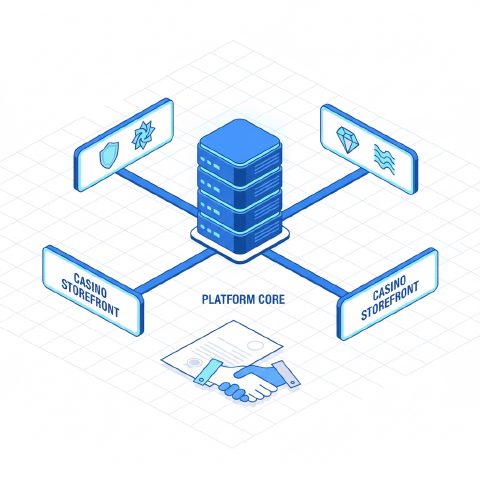
A white label casino runs on the platform provider's master license and infrastructure — you brand it, they own the backend and hold the regulatory relationship. A turnkey casino is a fully packaged solution deployed under your own license and legal entity. You own the operation; the vendor just built and configured the stack.
The distinction sounds subtle but it's operationally enormous. With a white label from a provider like SoftSwiss or EveryMatrix, you are essentially a sub-operator. Their master Curaçao or MGA license covers your site. That means faster time-to-market — sometimes as short as four weeks — but it also means you cannot independently negotiate game supplier deals, you cannot access your own player data in full, and you are contractually bound to their payment and compliance infrastructure. If they change their rev-share terms or lose their license, your business is immediately at risk.
A turnkey solution, by contrast, hands you a complete, configured casino platform — game aggregation, back-office, CRM, payment gateway integrations — but you apply for and hold your own license. Providers like Softgamings, BetConstruct, and EveryMatrix's white-label-to-full-license track all offer this. The platform code and integrations are theirs; the regulatory entity is yours. That distinction matters enormously when you want to raise investment, sell the business, or expand into regulated markets that require a named licensee with demonstrated compliance history.
In practice, many operators start white label, validate player acquisition economics, then migrate to turnkey once monthly GGR justifies the overhead. The migration is painful — you cannot transfer player accounts seamlessly across platforms — so build that exit cost into your initial model. I've seen operators get stuck on a white label for two years longer than planned because the migration cost kept getting pushed to 'next quarter.'
| Dimension | White Label | Turnkey | Custom Build |
|---|---|---|---|
| License holder | Platform provider | You (operator) | You (operator) |
| Time to launch | 4–8 weeks | 3–6 months | 12–18+ months |
| Upfront cost (est.) | $10K–$30K setup | $50K–$150K | $300K–$1M+ |
| Ongoing cost structure | 15–25% GGR rev-share | License fees + SaaS | Infra + dev team |
| Player data ownership | Shared/limited | Full | Full |
| Customisation ceiling | Low | Medium | Unlimited |
| Best for | Market testing | Serious launch | Scaled operators |
How much does each model actually cost to launch in 2026?
White label entry costs run $10K–$30K in setup fees, but the real cost is the ongoing 15–25% GGR rev-share. Turnkey launches typically require $50K–$150K upfront plus licensing fees. Custom builds rarely come in under $300K all-in for a credible first version, and most operators underestimate that figure by 40%.
Let me break down where the money actually goes. On a white label, the setup fee is almost a red herring — $15K to $25K is typical from mid-tier providers. The real number is the rev-share compounding over time. If your casino generates $200K GGR per month and you're paying 20% to the platform, that's $40K monthly — $480K annually — for infrastructure you don't own. At that volume, a turnkey migration pays back in under 18 months. Most operators don't run that math until they're already locked in.
Turnkey costs split into three buckets: platform licensing (typically $50K–$100K first year from providers like SoftSwiss B2B or Altenar if you're adding sportsbook), your gambling license (Curaçao gaming sublicense runs around $15K–$25K all-in through a master license holder; MGA is €25K application plus €25K annual; a US state iGaming license like New Jersey is a different beast entirely — budget $500K+ and 18 months), and integration/setup labor. The labor line is where operators get surprised. Even with a packaged turnkey, configuring payment methods, KYC flows, responsible gambling tools, and game content for your specific market can run $20K–$50K in professional services.
Custom builds are for operators who've already proven the model. A realistic custom casino backend — proprietary game aggregation layer, bespoke CRM, custom bonus engine, payment orchestration — requires a dedicated team of 8–15 engineers for 12–18 months. At Eastern European or LATAM dev rates that's $300K–$600K. At Western European or North American rates, double it. Then add ongoing maintenance: a custom platform doesn't maintain itself, and you'll need 3–5 engineers permanently on retainer. The operators who do this well — bet365, Rush Street Interactive, DraftKings — all built on top of years of operational data and regulatory relationships. They didn't start here.
Which licensing jurisdictions work with each model, and does that affect your choice?
Jurisdiction and model are deeply intertwined. Curaçao and Anjouan sub-licenses are the natural home of white label operations. MGA and UKGC require a named licensee with demonstrated compliance infrastructure — pointing toward turnkey or custom. US state licenses (NJ, PA, MI) effectively mandate custom or enterprise-grade turnkey builds.
Curaçao remains the dominant jurisdiction for white label operations, largely because master license holders like Antillephone and Gaming Curacao allow sub-operators to launch under their umbrella. The 2023 Curaçao gaming reform (National Ordinance on Offshore Games of Hazard) tightened this — sub-operators now need their own registered entity and a formal agreement with the master licensee, but the fundamental white label structure still works there. Anjouan (Comoros) has emerged as a cheaper alternative at roughly $15K for a full license, though its acceptance by payment processors is more limited.
The Malta Gaming Authority is categorically not a white label jurisdiction in the traditional sense. The MGA issues licenses to named operators who must demonstrate their own compliance framework, AML policies, responsible gambling infrastructure, and technical audit. You can use a turnkey platform — SoftSwiss, EveryMatrix, and Paysafe's iGaming division all have MGA-approved technical setups — but the license and the compliance obligation sit squarely with you. Budget 9–12 months for MGA approval and €50K+ in legal and application costs.
For LATAM operators, the picture varies dramatically by country. Colombia's Coljuegos requires a local entity and a formal concession — white label structures don't map cleanly onto that. Peru's MINCETUR has similar requirements. Mexico's SEGOB online gaming framework is still evolving as of 2025–2026, but the trend is toward named operators with local presence. If you're targeting LATAM seriously, a turnkey under a local or offshore license with a clear path to local licensing is the pragmatic choice. Don't let a white label provider tell you their master license covers Colombian players — it doesn't, legally.
What are the real operational trade-offs operators don't find out until after launch?
The three post-launch surprises that hurt most: white label operators discover they can't negotiate direct game supplier deals (meaning worse rev-share on content), turnkey operators find their payment stack needs significant custom work to convert in their target market, and custom build operators realize maintenance costs weren't in the original budget.
On white label: game content is aggregated through the platform, which means you're getting whatever rev-share the platform negotiated with studios — not what you could negotiate yourself. For popular content from Pragmatic Play, Evolution Gaming, or Hacksaw, direct deals at scale can mean 2–4 percentage points better economics. At volume, that's significant. You also typically can't access raw event-level player data, which cripples your CRM and retention marketing. You're running acquisition campaigns blind relative to what a turnkey operator can do with a proper data warehouse.
Turnkey operators hit payment friction hard. The platform may have 15 payment methods integrated, but whether those methods actually convert in your target market depends on local banking relationships, processor approval for your specific license and jurisdiction, and fraud rules calibrated to your player base. I've seen turnkey launches in LATAM where the flagship payment method had a 40% failure rate at checkout for the first three months because the processor's fraud model wasn't tuned for local debit card behavior. That's a retention killer. Budget for a payment operations specialist or a payment orchestration layer like Nuvei or Payroc from day one.
Custom build operators almost universally underestimate the regulatory compliance maintenance burden. UKGC updates its technical standards. MGA revises its player protection requirements. US states push new responsible gambling mandates. Every one of those changes requires engineering time on your proprietary platform. On a SaaS turnkey, the vendor absorbs most of that. On a custom build, it's your team's problem. I've watched two well-funded operators burn through $200K in unplanned compliance engineering in a single year after a regulatory wave hit. Build a compliance engineering retainer into your P&L from the start.
How do white label, turnkey and custom compare on speed to revenue?
White label wins on raw speed — four to eight weeks to first deposit is achievable. But 'live' and 'profitable' aren't the same thing. Turnkey operators typically see first meaningful GGR in month four to six. Custom build operators should not expect to be cash-flow positive from the platform itself for 18–24 months minimum.
Speed matters most when you're trying to validate a market hypothesis before a competitor does, or when you have a short window on a marketing opportunity. A white label from SoftSwiss's Turnkey Casino product or EveryMatrix's white-label track can genuinely be live in six weeks if you have your brand assets, payment method approvals, and content selections ready. That's a real advantage for operators entering a new geography where they're not sure player acquisition economics will work.
The speed-to-revenue curve bends differently for each model, though. White label operators often spend months optimizing within the constraints of their platform — limited bonus engine flexibility, fixed payment flows, no ability to A/B test checkout. Turnkey operators take longer to launch but tend to ramp revenue faster post-launch because they have more levers: direct CRM access, configurable bonus mechanics, ability to add or swap payment methods quickly. The 3–6 month launch timeline for a well-run turnkey is front-loaded pain for back-loaded performance.
Custom builds have a completely different revenue profile. You are building infrastructure that compounds in value over years, not months. The operators who've done this successfully — and there are genuinely only a handful in each regulated market — treat the first 18 months as pure investment. They're building proprietary data assets, unique product features, and regulatory relationships that become durable competitive advantages. If you're modeling break-even inside 24 months on a custom build, revisit your assumptions. Most honest operators I know target 36–48 months to full payback on a custom platform investment.
| Model | Live Date (est.) | First Meaningful GGR | Realistic Break-Even |
|---|---|---|---|
| White Label | 4–8 weeks | Month 1–2 | Month 6–12 (if market works) |
| Turnkey | 3–6 months | Month 4–6 | Month 12–24 |
| Custom Build | 12–18 months | Month 12–18 | Month 36–48+ |
Which platform providers should operators actually evaluate in 2026?
For white label: SoftSwiss, EveryMatrix, and Softgamings are the tier-one options with proven infrastructure. For turnkey: BetConstruct, Digitain, and SoftSwiss's full B2B suite. For custom builds, operators typically assemble components — game aggregation from Relax Gaming or Hub88, payment orchestration from Nuvei, and proprietary backend from an in-house team.
SoftSwiss deserves its reputation in the white label space. Their casino management system is genuinely mature — solid back-office, good bonus engine, decent analytics. Their Curaçao sub-license track is well-worn and their account management is responsive. The trade-off is that you're one of hundreds of operators on their infrastructure, and their rev-share model gets expensive fast. EveryMatrix is the other serious contender — their CasinoEngine aggregator covers 10,000+ games, and their Turnkey product has a cleaner API layer for operators who want to eventually migrate to a proprietary backend. Softgamings is worth evaluating for operators targeting emerging markets where their payment integrations are stronger than the tier-one providers.
For turnkey, BetConstruct has a strong track record in Europe and LATAM, particularly for operators who want sportsbook alongside casino. Their compliance tooling has improved significantly since 2022. Digitain is competitive on price and has good coverage of Eastern European and CIS payment methods — relevant if you're targeting those player bases. I'd be more cautious about smaller turnkey vendors who claim to have everything integrated but whose 'integrations' are actually manual processes dressed up as APIs. Ask for a technical architecture document and a reference call with an existing operator before signing.
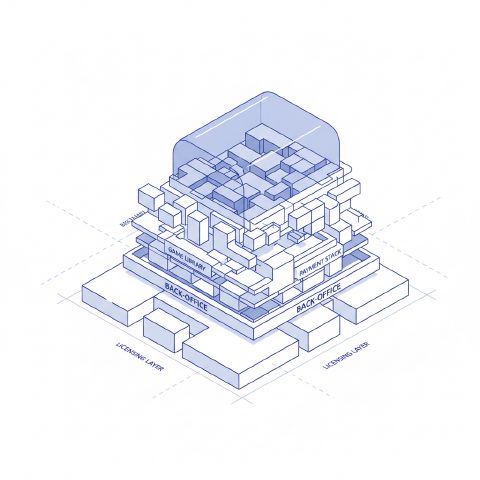
Custom build operators in 2026 are increasingly using a composable architecture: best-of-breed components assembled via APIs rather than a monolithic platform. Hub88 and Relax Gaming's aggregation layer for game content, Nuvei or Paysafe for payment orchestration, Sumsub or Jumio for KYC, and a proprietary bonus and CRM engine built in-house. This approach reduces build time versus a full custom build while preserving the data ownership and differentiation advantages. It's the model I'd recommend to any operator with $500K+ to spend and a clear market thesis.
How does the white label vs turnkey decision change for US iGaming operators?
In the US, the white label model as it exists offshore essentially doesn't apply. New Jersey, Pennsylvania, Michigan, and other regulated states require a named licensee with a full compliance infrastructure. Every serious US iGaming operator is either on an enterprise turnkey (like Kambi for sportsbook, or IGT/Scientific Games for casino) or a fully custom build.
US state iGaming regulation operates on a fundamentally different axis than offshore licensing. The New Jersey Division of Gaming Enforcement, Pennsylvania Gaming Control Board, and Michigan Gaming Control Board all require applicants to disclose every material vendor relationship, every beneficial owner, and every technology component in the platform stack. A Curaçao-licensed white label operation is not going to pass that review. The compliance burden alone — internal controls documentation, responsible gambling frameworks, geolocation requirements, tax reporting — requires dedicated compliance staff and enterprise-grade technology.
The practical result is that US iGaming is dominated by three structures: large operators with proprietary platforms (DraftKings, FanDuel/Flutter), operators on enterprise B2B platforms with their own state licenses (BetMGM on IGT's platform, for example), and market-entry operators who partner with a licensed land-based casino under a 'skin' arrangement. That skin arrangement is the closest US equivalent to a white label — you operate under the land-based casino's license and compliance infrastructure — but the economics and regulatory obligations are very different from an offshore white label.
If you're an operator planning a US entry in 2026, the decision tree is: do you have or can you obtain a land-based partner in a regulated state? If yes, the skin/partnership model is your fastest path. If not, you're looking at a standalone license application, which in New Jersey alone takes 18+ months and requires demonstrable financial stability (net assets requirements vary but expect scrutiny of your balance sheet). Budget accordingly — US iGaming compliance is not a line item, it's a department.
What should operators ask platform providers before signing a white label or turnkey contract?
Ask about data portability, migration clauses, rev-share escalators, and what happens to your player accounts if the provider loses their license. Most operators don't ask these questions until they're trying to exit the contract. By then, the leverage is gone.
The five questions I tell every operator to ask before signing: First, what is the data portability clause — can you export full player data including transaction history in a machine-readable format, and what's the contractual timeline for that export? Second, is there a rev-share escalator — does the percentage you pay change at certain GGR thresholds, and in which direction? Some contracts have punitive escalators above certain volumes. Third, what is the license continuity clause — if the provider's master license lapses or is suspended, what are your contractual rights and timeline? Fourth, what is the minimum contract term and what are the exit penalties? I've seen operators locked into three-year white label contracts with six-figure exit fees. Fifth, who owns the player relationships legally — in some white label structures, the platform provider is technically the data controller under GDPR, which has real implications for your marketing rights.
On the technical due diligence side, ask for uptime SLAs with financial penalties, not just best-effort commitments. Ask which payment processors are pre-integrated and — critically — which ones are actually live and processing versus 'available on request.' There's a meaningful difference. Ask about the bonus engine's flexibility: can you create custom bonus mechanics, or are you limited to the platform's pre-built templates? For many operators, the bonus engine constraint is the first thing they hit post-launch.
Finally, get a reference from an operator in your target market who has been live on the platform for at least 18 months. Not a reference handpicked by the vendor's sales team — ask for access to their operator community or find someone independently. The difference between a vendor's demo environment and their production performance under real traffic is something only existing operators can tell you honestly.
- SoftSwiss — Tier-one white label and turnkey provider with mature CMS, strong Curaçao sub-license track, and broad game aggregation. Best for operators wanting a proven, well-supported platform with European compliance tooling.
- EveryMatrix — Strong turnkey and white label option with CasinoEngine aggregating 10,000+ games. Cleaner API layer than most competitors — useful for operators planning eventual migration to proprietary infrastructure.
- BetConstruct — Solid turnkey choice for operators wanting combined casino and sportsbook. Strong LATAM and European market coverage, improved compliance tooling since 2022.
- Softgamings — Competitive for emerging markets with stronger local payment integrations than tier-one providers. Good option for LATAM and African market entries where local payment method coverage is critical.
- Digitain — Price-competitive turnkey with strong Eastern European and CIS payment method coverage. Worth evaluating for operators targeting those player geographies.
- Hub88 (Game Aggregation Layer) — Preferred game aggregation component for custom and composable builds. Clean integration layer with direct studio relationships — reduces the content integration burden for operators building proprietary backends.
- Nuvei — Payment orchestration platform widely used by turnkey and custom build operators. Strong iGaming-specific acquiring relationships and local payment method coverage across LATAM, EU, and North America.




Comments
No comments yet, be the first.