In Which Country Is Best to Open an Online Casino in 2026: A Jurisdiction-by-Jurisdiction Breakdown

Why does jurisdiction choice make or break an online casino launch?
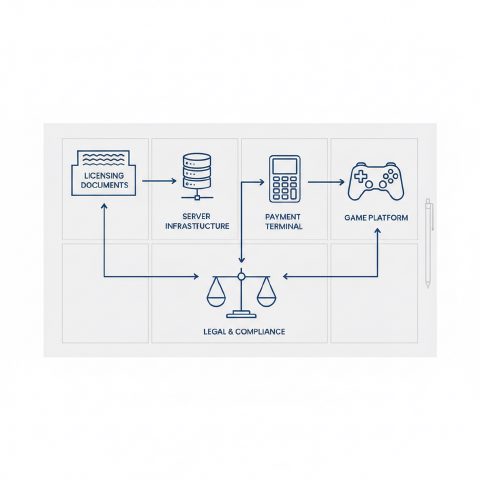
The jurisdiction you license under determines which payment processors will work with you, which game studios will sign you, what tax rate you pay on GGR, and whether regulated EU or US players are legally accessible. Get it wrong and you spend months fixing banking problems that a different license would have avoided entirely.
I've watched operators burn six months and $80,000 trying to retrofit a payment stack onto a license their PSPs wouldn't touch. The license isn't just a legal formality — it's the commercial infrastructure every other vendor decision sits on top of. Stripe, Nuvei, and most tier-one acquirers maintain internal jurisdiction blacklists. A Curaçao GCB license clears more of those lists today than an old sub-license did in 2022, but it still won't open the same doors as an MGA B2C license.
Game content is the other underrated constraint. Pragmatic Play, Evolution, and NetEnt all have market-access schedules tied directly to your operator license. Some studios will certify their RNG content for Curaçao-licensed operators; others require MGA or a specific state certification before they'll countersign an aggregator deal. If you're planning a crypto-forward product, this matters less — smaller studios and aggregators like Softswiss Game Aggregator or Slotegrator are more flexible — but if you want the full Evolution live casino suite on day one, your license choice directly controls that.
Tax treatment is the third lever. Curaçao levies a flat 2% on net profit (not GGR) for licensed entities, which is genuinely low. Malta charges 5% GGR up to €3M and steps up from there, but gives you access to EU banking and the ability to market openly in most of Europe. Gibraltar sits at 1% GGR (capped at £425,000 per year as of recent years — confirm current cap before filing). Isle of Man is 0.1%–1.5% depending on GGR band. These numbers matter enormously at scale, but at launch the difference between 1% and 5% on €200K GGR is noise compared to the operational lift of getting the wrong license.
Which offshore jurisdictions are the most practical for a 2026 launch?
For a new operator launching in 2026, Curaçao under the new GCB framework and Anjouan (Comoros) are the two most practical offshore options. Both offer sub-six-month timelines and sub-$50,000 all-in costs. Curaçao has broader PSP acceptance; Anjouan is cheaper and faster but with a narrower banking network.
Curaçao went through a significant regulatory overhaul starting in 2023. The old master-license / sub-license model — where you'd pay a master holder like Antillephone or Cyberluck a few thousand dollars a month to operate under their umbrella — is being phased out. The new Gaming Control Board (GCB) of Curaçao requires operators to hold their own direct license. As of mid-2025, the transition was still rolling out with existing sub-licensees given migration windows, but new applicants should budget for the direct license process: roughly $25,000–$45,000 all-in (government fees, registered agent, compliance documentation, AML/KYC policy drafting) and 3–5 months. That's more expensive than the old sub-license route but still dramatically cheaper than MGA.
Anjouan, part of the Comoros island group, issued its first gaming licenses around 2022 and has gained traction quickly. The all-in cost sits around $15,000–$25,000 with timelines of 6–10 weeks in straightforward cases. The regulator is the Anjouan Online Gaming Commission. The honest trade-off: fewer tier-one PSPs have internal approval for Anjouan-licensed operators compared to Curaçao, so you'll lean more heavily on crypto payments and specialist iGaming acquirers. For a crypto-first product targeting LatAm or Southeast Asia, that's not a dealbreaker. For a fiat-first product targeting Western Europe, it creates friction.
Isle of Man and Gibraltar are worth mentioning as mid-tier offshore options with better banking access than Curaçao, but they're meaningfully more expensive ($80,000–$150,000 range) and slower (9–15 months). They make sense if you're targeting UK-adjacent markets and want a stepping stone before a full UKGC application, but they're not launch vehicles for most bootstrapped operators.
| Jurisdiction | Est. All-In Setup Cost | Timeline | GGR / Profit Tax | PSP Acceptance | Best For |
|---|---|---|---|---|---|
| Curaçao (GCB) | $25,000–$45,000 | 3–5 months | 2% net profit | Moderate–Good | Fiat + crypto, global soft launch |
| Anjouan (Comoros) | $15,000–$25,000 | 6–10 weeks | Flat annual fee (~$15K) | Limited–Moderate | Crypto-first, LatAm, SEA |
| Isle of Man | $80,000–$150,000 | 9–15 months | 0.1%–1.5% GGR | Good | UK-adjacent, pre-UKGC operators |
| Gibraltar | $80,000–$130,000 | 9–12 months | 1% GGR (capped) | Good | EU/UK markets, established ops |
Is Malta (MGA) still worth it for operators launching in Europe?
Yes, but not as your first license. The Malta Gaming Authority B2C license remains the strongest EU credential for payment access, studio partnerships and player trust — but the €150,000–€300,000 setup cost, 12–18 month timeline and ongoing compliance overhead mean it's a consolidation move, not a launch move, for most operators.
The MGA's B2C Gaming Service License covers both casino (Type 1) and sports betting (Type 2) and is the most widely recognized EU gambling credential. From a payments perspective, it's the closest thing to a master key: most European acquirers, Trustly, Zimpler, and even some high-street banks will work with MGA-licensed operators. Evolution will countersign your aggregator deal. Pragmatic Play won't make you jump through extra certification hoops. That commercial infrastructure is genuinely worth paying for — once you have the revenue to justify it.
The setup cost reality: you're looking at a €25,000 non-refundable application fee, a €25,000 compliance contribution, share capital requirements (€100,000 for a B2C license), plus legal fees for the application itself (typically €30,000–€80,000 depending on complexity) and the cost of a Malta-based compliance officer or outsourced compliance function. All-in, operators I've worked with have landed between €150,000 and €280,000 before they've processed a single bet. Annual fees and the compliance function add another €80,000–€150,000 per year ongoing.
The MGA also runs a fit-and-proper process that scrutinizes UBOs, source of funds, and business plans in real depth. If your corporate structure has layers, budget extra time and legal fees for the disclosure process. The regulator has gotten stricter since 2021 — they've revoked licenses and issued significant fines for AML failures, which has raised the bar for what a credible application looks like. If you're serious about the EU market long-term, start the MGA process in parallel with your Curaçao launch, not after.
How does the UK Gambling Commission license compare for new operators?
The UKGC license gives you access to the UK's £14B+ annual GGR market — one of the most valuable player pools in the world. But it's also one of the most demanding regulatory environments: affordability checks, strict advertising rules, and a compliance overhead that requires a dedicated UK-facing team. Realistic all-in setup cost is £100,000–£250,000.
The UK market is not for first-time operators. The Gambling Commission has been on an enforcement drive since 2021, issuing record fines (£19.2M against Entain in 2023, £14M against various smaller operators across 2022–2024) and introducing mandatory affordability checks that require operators to collect financial data from players showing signs of stress. These checks create friction in the funnel and require robust CRM tooling to implement correctly — most white-label platforms will need customization to comply.
The application process itself involves submitting a full business plan, AML/KYC policies, responsible gambling framework, software testing certificates (from UKGC-approved test houses like BMM or GLI), and evidence of financial stability. The Commission charges a non-refundable application fee on a sliding scale based on projected GGR — roughly £5,000–£25,000 for a new operator. Timeline from submission to license grant runs 4–6 months if your application is clean; longer if they come back with questions, which they usually do on the first submission.
The ongoing compliance cost is the real number to model. A UK-compliant operation needs a dedicated MLRO (Money Laundering Reporting Officer), regular third-party audits, and systems that can produce the data the Commission requests in its compliance assessments. Budget £60,000–£120,000 per year in compliance overhead before you've paid a single affiliate. For operators generating £500K+ GGR monthly, that math works. Below that threshold, the UK is a money pit.
Which US states offer the best opportunity for online casino operators in 2026?
New Jersey, Pennsylvania, and Michigan are the three live, mature online casino markets in the US as of 2026. Michigan has shown the fastest GGR growth trajectory. All three require a physical presence, a state-licensed 'casino operator' partner, and compliance costs that dwarf any offshore setup. This is a $500,000+ entry play minimum.
US online casino regulation is state-by-state and, critically, requires a brick-and-mortar casino partner in most jurisdictions. You cannot simply apply for a standalone iGaming license in New Jersey or Pennsylvania — you need a 'skin' arrangement with a land-based casino licensee who sponsors your application. That partner typically takes 15–25% of GGR as their cut. It's a significant revenue share, but without it you're not in the market legally.
New Jersey (Division of Gaming Enforcement) is the most mature market with the most established compliance infrastructure and the most experienced B2B vendors. Pennsylvania (Gaming Control Board) has higher tax rates — 36% on slot GGR, 16% on table games — which is brutal compared to offshore rates, but the player pool is large and growing. Michigan (MGCB) launched in 2021 and has been the fastest-growing state market, with BetMGM, FanDuel, and DraftKings all reporting strong Michigan numbers. Connecticut, West Virginia, and Delaware are live but smaller. Several additional states (New York, Illinois, Maryland) were in various stages of legislative consideration as of 2025 — check current status before planning around them.
The compliance stack for a US state operation is genuinely different from anything offshore. You need GLI-certified RNG and game testing, geolocation software (GeoComply is the de facto standard), identity verification that meets state KYC standards, responsible gambling tools including self-exclusion integration with state databases, and regular reporting to the gaming control board. SoftSwiss, EveryMatrix, and GAN all have US-certified platform variants, but the integration and certification process adds 6–12 months to any timeline. For operators already running a profitable offshore operation and looking to enter the US legitimately, New Jersey or Michigan are the right starting points — but go in with a realistic $500,000–$1,000,000 budget for year one.
| State | Regulator | Casino GGR Tax Rate | Market Maturity | Key Requirement | Est. Year-1 Entry Cost |
|---|---|---|---|---|---|
| New Jersey | Division of Gaming Enforcement (DGE) | 15% slots / 15% tables (iGaming) | High — launched 2013 | Land-based partner / skin deal | $600K–$1M+ |
| Pennsylvania | Gaming Control Board (PGCB) | 36% slots / 16% tables | High — launched 2019 | Land-based partner / skin deal | $700K–$1.2M+ |
| Michigan | Michigan Gaming Control Board (MGCB) | 20–28% (tiered) | Growing — launched 2021 | Land-based partner / skin deal | $500K–$900K+ |
| West Virginia | Lottery Commission (WVLC) | 15% GGR | Small but live | Land-based partner | $400K–$700K+ |
How do LatAm regulated markets like Colombia and Peru compare?
Colombia (Coljuegos) and Peru (MINCETUR) are the two most operator-friendly regulated LatAm markets in 2026. Colombia is more mature with clearer PSP pathways; Peru is newer but growing fast. Both require local entity registration, Spanish-language compliance documentation, and ongoing GGR tax payments — but offer access to large, underserved player pools.
Colombia has had regulated online gambling since 2016 under Coljuegos. The license fee is a fixed annual concession of approximately COP $1.2 billion (roughly $300,000 USD at recent exchange rates — verify current rate) plus a 15% GGR tax. You need a local Colombian legal entity and a local bank account, which is the main friction point. Several operators I know used a local legal partner to set up the entity before applying, which adds 2–3 months but smooths the banking process considerably. Coljuegos has been actively enforcing against unlicensed operators, including ISP blocking, which gives licensed operators a real competitive moat.
Peru's MINCETUR framework is newer and still maturing. The 2023 online gambling regulations created a licensing pathway that didn't formally exist before. License fees and GGR tax rates are lower than Colombia's, but the regulatory infrastructure is less developed, meaning compliance requirements may shift as the framework matures. For operators already running a Spanish-language product on Curaçao, Peru is a natural expansion target — the player acquisition cost is lower than Colombia and the competitive field is less crowded.
Mexico is the elephant in the room for LatAm. SEGOB issues online gambling permits, but the framework is notoriously opaque and the process of obtaining a permit has historically been slow and relationship-dependent. Several large operators run Mexican-facing products under Curaçao licenses and accept the gray-market risk. That's a legitimate business decision for some operators, but it creates banking friction and limits your ability to market openly. Brazil's new federal online gambling regulation (implemented under the Secretaria de Prêmios e Apostas / SPA framework in 2024–2025) is the biggest LatAm story of the decade — but that's a full article on its own.
What's the fastest way to get a ready-to-launch online casino business operational?
The fastest path to a live, revenue-generating online casino in 2026 is a white-label platform under a Curaçao GCB or Anjouan license. Providers like SoftSwiss (SOFTSWISS White Label), EveryMatrix, or Turnkey Sports can have you live in 8–14 weeks from contract signing, assuming your license application runs in parallel.
White-label casino platforms bundle the platform software, game aggregation, payment integrations, and back-office tools under a revenue-share or flat monthly fee model. SoftSwiss is probably the most operator-cited provider in the offshore space — their white-label product includes access to the SoftSwiss Game Aggregator (5,000+ games), a built-in bonus engine, and crypto payment support out of the box. EveryMatrix's CasinoEngine and PlayerEngine stack is more modular and better suited to operators who want to customize the player experience more deeply. Both will help you with the Curaçao license application as part of their onboarding, which is genuinely useful if you're doing this for the first time.
The revenue-share model is the main cost lever to understand. Most white-label providers take 15–30% of GGR in exchange for the platform, hosting, and game content. On $100K monthly GGR, that's $15,000–$30,000 per month going to the platform provider — which sounds steep but includes costs you'd otherwise pay separately (platform licensing, game aggregation fees, hosting, support). The break-even point where a turnkey or custom build becomes cheaper is typically around $300K–$500K monthly GGR, depending on the provider deal structure.
The honest caveat about white-label speed: the 8–14 week timeline assumes your KYC documents are in order, your corporate structure is clean, and you're not making major customization requests. Operators who want a heavily customized front-end, non-standard payment integrations, or a specific game studio deal that isn't pre-integrated will add 4–8 weeks minimum. Start with the platform's standard template, get live, generate data, then invest in customization once you know what your players actually respond to.
How do you start an online casino in Europe without an MGA license?
Several European operators run successfully under Curaçao or Isle of Man licenses while targeting EU players in gray markets — countries without local licensing requirements. The key is understanding which EU countries actively block or prosecute unlicensed operators versus those with unenforced or no specific online gambling laws.
The EU has no single gambling regulator. Each member state sets its own rules. Germany (GGL regulator), Sweden (Spelinspektionen), Denmark (Spillemyndigheden), and the Netherlands (KSA) all have active enforcement regimes — they block unlicensed operators, fine payment processors, and in some cases pursue operators legally. Operating in these markets without a local license is a real legal and financial risk, not just a theoretical one. The Netherlands in particular has been aggressive: the KSA has issued substantial fines to operators who targeted Dutch players without a license, even operators based offshore.
On the other end of the spectrum, several EU and EEA countries have either no specific online gambling legislation or unenforced frameworks. Finland's Veikkaus monopoly is under pressure from EU competition law, and the framework is expected to change — some operators accept Finnish players under Curaçao licenses with limited enforcement risk as of 2025, but this is a moving target. Similar dynamics exist in some Southern and Eastern European markets. I'm not going to name specific countries as safe gray markets because that changes faster than any article can keep up with — get a current legal opinion from a firm like Wiggin, Bird & Bird, or Castrén & Snellman before targeting any EU country without a local license.
The practical approach for operators who want EU reach without MGA costs is to launch under Curaçao, target markets where enforcement risk is genuinely low (LatAm, parts of Asia, crypto-native audiences), build a revenue base, and then apply for MGA once you have 12 months of audited financials and a proven product. The MGA application is much smoother when you can show a functioning business rather than a business plan.
What are the real costs operators miss when choosing a jurisdiction?
The license fee is the smallest line item. The costs operators consistently underestimate are the corporate structure setup, ongoing compliance function, payment processing setup fees and reserves, and the cost of geo-blocking technology and responsible gambling tools required by most regulators.
Payment processing setup is where budgets blow up most often. Acquiring a merchant account for online gambling — even with a solid Curaçao license — typically requires a 5–10% rolling reserve held by the acquirer for 180 days, plus setup fees of $5,000–$20,000 per gateway. If you're planning to offer multiple currencies and payment methods (cards, e-wallets, bank transfer, crypto), you're looking at 3–5 gateway relationships minimum, each with their own setup process, reserve requirements, and integration costs. Budget $50,000–$100,000 in working capital just to cover rolling reserves in your first six months.
AML compliance tooling is another line item that surprises operators. Most jurisdictions now require automated transaction monitoring, and while some white-label platforms include basic tools, enterprise-grade AML software (ComplyAdvantage, Sardine, or similar) runs $1,000–$5,000 per month depending on transaction volume. Add a part-time MLRO or compliance consultant ($2,000–$5,000/month) and you've got a $40,000–$80,000 annual overhead that wasn't in the vendor's pitch deck.
Geolocation and age verification are mandatory for any serious operation. GeoComply is the industry standard for US-facing products; for offshore operations, MaxMind or similar IP-based tools plus document verification (Jumio, Onfido, Sumsub) are standard. Sumsub's iGaming tier runs roughly $0.50–$2.00 per verification depending on volume and document type. At 1,000 new players per month, that's $500–$2,000 monthly in KYC costs alone — not huge, but not zero, and it scales with growth.
Which jurisdiction is the smartest choice for a crypto casino in 2026?
For a crypto-first or crypto-native casino in 2026, Curaçao GCB and Anjouan are the dominant choices. Both explicitly permit crypto wagering. Anjouan in particular has become popular with crypto casino operators because of its low cost and fast issuance. Malta and UKGC have much stricter crypto advertising and payment rules.
The crypto casino market has matured significantly since 2020. Operators like Stake, Rollbit, and BC.Game built large businesses on Curaçao sub-licenses before the GCB reform. The new direct license framework still permits crypto operations, and Curaçao's regulator has been pragmatic about crypto — they don't require you to convert crypto wagers to fiat for accounting purposes, which simplifies the operational model considerably. The 2% net profit tax applies to crypto GGR as well, calculated at the prevailing exchange rate at time of settlement (confirm current interpretation with your registered agent).
Anjouan has positioned itself explicitly as crypto-friendly. Several aggregators and crypto casino platform providers — including some built on the SoftSwiss stack — have pre-approved Anjouan as an acceptable license for their content. The practical limitation is that Anjouan-licensed operators have a harder time getting fiat payment processing, which matters if you want to offer card deposits alongside crypto. For a pure crypto product, it's a non-issue.
If you're planning a crypto casino that also wants to serve regulated EU markets, you're in a genuine bind: MGA has strict rules around crypto advertising and requires crypto assets to be converted to fiat at point of deposit for accounting purposes, which changes the product experience. The UKGC effectively prohibits crypto deposits for gambling as of 2023 guidance. The honest answer for most crypto casino operators is: Curaçao or Anjouan license, crypto-native audience, avoid EU regulated markets until the regulatory picture clarifies — which may be years away.
What's the recommended launch sequence for a new operator in 2026?
The sequence that works most consistently: secure a Curaçao GCB or Anjouan license in parallel with onboarding a white-label platform, soft-launch to a defined target market, hit $100K monthly GGR, then evaluate whether to re-license under MGA or pursue a US state market. Don't over-engineer the first version.
Step one: define your target market before choosing a license. If you're targeting LatAm fiat players, Curaçao is the right starting point. If you're building a crypto product for a global audience, Anjouan is faster and cheaper. If you have EU ambitions within 18 months, start the MGA application at month three of your Curaçao operation — don't wait until you need it, because the timeline means you'll be waiting another year.
Step two: choose a white-label platform that matches your market. SoftSwiss is the most operator-friendly for crypto-integrated products. EveryMatrix is stronger for fiat-first EU-facing products with its payment hub (PaymentIQ) and CRM tooling. Turnkey Sports and BtoBet are worth evaluating if you want sports betting alongside casino. Get references from existing operators on each platform — specifically ask about payment integration support and how quickly they respond to compliance issues. Vendor sales decks are useless; operator references are gold.
Step three: soft-launch with a defined acquisition budget and clear KPIs. Don't spend heavily on affiliates until you've validated your payment funnel converts. I've seen operators spend $50,000 on affiliate traffic in month one only to discover their payment page was failing 40% of deposit attempts due to a misconfigured gateway. Fix the funnel first. Set a 90-day checkpoint: if you're not at $30K–$50K monthly GGR with a positive retention trend, diagnose the product before scaling spend. Once you're consistently above $100K monthly GGR, you have the data and the financials to make a credible MGA application or explore US market entry.
- Curaçao (GCB Framework) — Best overall offshore option for 2026 — reformed direct license, $25K–$45K all-in, 3–5 months, moderate PSP acceptance, crypto-friendly.
- Anjouan (Comoros) — Fastest and cheapest offshore license at $15K–$25K in 6–10 weeks. Ideal for crypto-first products targeting LatAm or Southeast Asia.
- Malta (MGA) — Gold standard for EU market access, payment processing and studio partnerships. €150K–€300K+ setup cost, 12–18 months. A post-traction license, not a launch vehicle.
- UK Gambling Commission (UKGC) — Access to the UK's £14B+ GGR market, but one of the world's most demanding compliance environments. £100K–£250K setup, strict affordability rules, dedicated compliance team required.
- Colombia (Coljuegos) — Best regulated LatAm market for fiat online casino operators. ~$300K annual concession fee plus 15% GGR tax. Requires local entity; active enforcement against unlicensed operators.
- Michigan (MGCB) — Fastest-growing US online casino state. Requires land-based partner, GLI-certified platform, GeoComply integration. 20–28% tiered GGR tax. $500K–$900K year-one budget minimum.
- Isle of Man — Mid-tier offshore with better banking access than Curaçao. $80K–$150K setup, 9–15 months, 0.1%–1.5% GGR tax. Good stepping stone toward UKGC for UK-adjacent operators.




Comments
No comments yet, be the first.