How to Start an Online Casino in the US in 2026: The Operator's Honest Roadmap
Is it actually legal to start an online casino in the US right now?
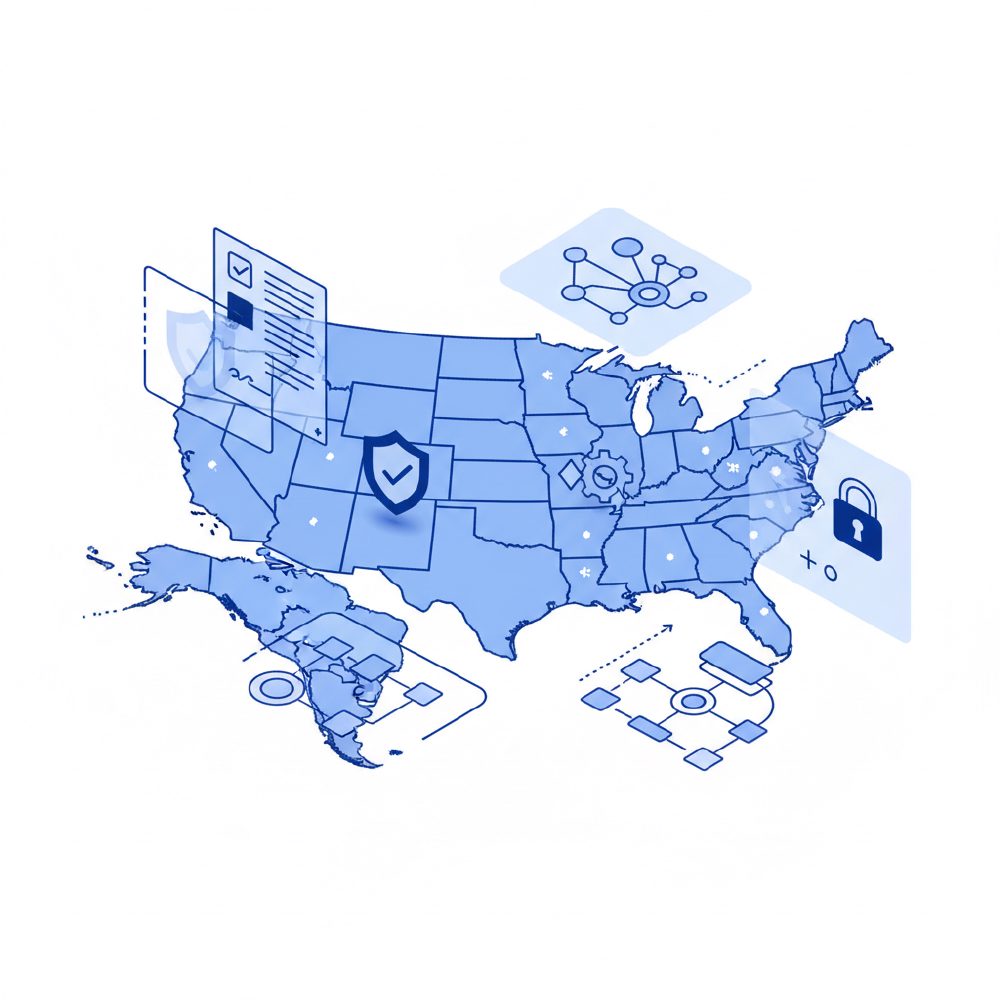
Yes, but only inside the six to seven states that have passed enabling legislation and stood up a regulatory framework. Outside those states, operating a real-money online casino is a federal crime under the Wire Act and UIGEA. The legal market is real, growing fast, and genuinely profitable — but geographically constrained in ways that matter enormously to your business plan.
As of mid-2025, the states with live, regulated online casino markets are New Jersey, Pennsylvania, Michigan, West Virginia, Delaware, Connecticut, and Rhode Island. Nevada permits online poker only. Several others — New York, Illinois, Maryland, Indiana — have active legislative efforts that could produce live markets by 2026 or 2027, but I wouldn't build a launch timeline around a bill that hasn't passed yet. I've seen operators burn runway waiting on New York for four consecutive years.
The federal legal picture matters too. The 1961 Wire Act, as reinterpreted by the DOJ in 2019 and then partially walked back in 2021, creates real uncertainty about interstate data flows. Most regulated operators solve this by keeping game servers physically within state lines or in compliant data centers, which adds infrastructure cost. UIGEA (2006) doesn't ban online gambling outright — it targets the payment processing side, which is why your payment stack will be the most frustrating part of this build.
One thing I see founders get wrong constantly: they conflate the legality of sports betting (legal in 38+ states) with casino. These are separate regulatory regimes. A DraftKings or FanDuel sports betting license does not automatically give you the right to offer slots or table games. Casino iGaming requires a separate license, a separate technical certification, and in most states, a partnership with a land-based licensee. That last point alone reshapes your entire go-to-market strategy.
Which US states should you target for a 2026 online casino launch?
Michigan and New Jersey are the two states most worth targeting for a 2026 launch. Michigan has a more navigable licensing process for new entrants, a population base that supports real revenue, and a regulator (MGCB) that has demonstrated it can process applications in a reasonable timeframe. New Jersey has the deepest player pool but is dominated by entrenched operators and requires a more complex Atlantic City partnership structure.
Michigan went live in January 2021 and has matured into a genuinely competitive market — but not yet a closed one. The Michigan Gaming Control Board licenses both platform operators and suppliers separately, which means you can get your supplier certification while your operator application is in process. The application fee is $50,000 for an initial operator license, and the MGCB has been relatively transparent about its review criteria. You'll need a Michigan-based tribal or commercial casino as your "skin" partner unless you are acquiring or building one, which almost no startup operator will do.
New Jersey remains the highest-revenue state — GGR consistently runs $150M–$175M per month across the market — but the barrier to entry is steep. You need a transactional waiver or a formal license from the Division of Gaming Enforcement, and you must affiliate with one of the nine Atlantic City casinos. The established operators (BetMGM, Caesars, DraftKings, FanDuel, Golden Nugget/Rush Street) have locked up most of the desirable casino partners and have brand recognition that's genuinely hard to overcome with a marketing budget under $5M.
Pennsylvania is worth watching but has a high licensing fee structure — the interactive gaming certificate costs $10M, which is effectively a market-entry tax that filters out smaller operators. West Virginia and Connecticut are smaller markets with lower fees but also lower revenue ceilings. Delaware is essentially a state lottery monopoly; don't bother. For a 2026 launch with a realistic budget, I'd prioritize Michigan, then evaluate New Jersey once you have operational proof of concept.
| State | Regulator | Operator License Fee | Monthly Market GGR (approx.) | Land-Based Partner Required? | New Entrant Difficulty |
|---|---|---|---|---|---|
| Michigan | MGCB | $50,000 application | $130M–$160M | Yes (tribal or commercial) | Medium |
| New Jersey | DGE | $400K–$500K fees + waiver | $150M–$175M | Yes (Atlantic City casino) | High |
| Pennsylvania | PGCB | $10M certificate | $180M–$220M | Yes (licensed PA casino) | Very High |
| West Virginia | WVLCB | $250K license | $15M–$25M | Yes (licensed WV casino) | Medium |
| Connecticut | CTDCP | Tribal compact only | $30M–$45M | Yes (Mohegan/Mashantucket) | Very High |
| Rhode Island | RILOT | State lottery model | $10M–$15M | Effectively state monopoly | Closed |
What does a Michigan online casino launch actually cost?
A realistic Michigan online casino launch budget runs $3M to $8M for the first 18 months, depending on your platform choice, marketing ambitions, and whether you're building a payment infrastructure from scratch. The $500K white-label pitch you'll hear from some vendors is technically possible but produces a product that can't compete — and you'll spend the difference on player acquisition anyway.
Here's how the cost breakdown actually shakes out in Michigan. Licensing and legal: budget $200K–$400K for the MGCB application, legal counsel, background investigation costs (the MGCB does a thorough suitability review of all principals), and compliance infrastructure setup. This is non-negotiable and non-refundable if you're denied. Your land-based partner will also charge a revenue share — typically 15%–25% of net gaming revenue — which is an ongoing cost that never goes away.
Platform and technology: if you go white-label with a provider like SoftSwiss's white-label offering or a US-focused turnkey like GAN (which powers several US operators), you're looking at $150K–$400K upfront plus monthly revenue share of 5%–15%. If you want a licensed platform build on EveryMatrix or a comparable aggregator, add $500K–$1.5M for integration, certification, and customization. The platform must pass GLI or BMM technical certification before you go live — budget $50K–$150K for that process alone, and 3–6 months of calendar time.
Payment infrastructure is where budgets blow up. US iGaming payments are genuinely hard. You'll need to integrate ACH (VIP Preferred or similar), a PayNearMe cash-at-retail solution, Play+ or a comparable prepaid card program, and at least one credit/debit card processor willing to work with iGaming MCC codes. Each integration has setup fees, per-transaction costs, and approval timelines measured in months. Budget $100K–$300K for payment setup and expect ongoing processing costs of 2%–4% of deposits. Then there's working capital — you need enough on hand to cover player liabilities, regulatory reserve requirements, and at least 12 months of operating losses while you build a player base. Don't launch with less than $1.5M in liquid reserves beyond your build budget.
White-label, turnkey, or proprietary build — which platform model fits a US launch?
For most new US market entrants in 2026, a turnkey build on an established B2B platform is the right call. White-label is too margin-constrained and limits your ability to differentiate; a full proprietary build is a multi-year, multi-million dollar project that makes no sense until you've proven the market. Turnkey gives you speed, certification history, and enough control to actually build a product.
White-label in the US context typically means operating as a skin on a platform that already holds the necessary technical certifications and has existing integrations with US-compliant payment providers. GAN, for example, powers several US casino skins and handles the GLI certification, the payment rails, and the back-office. The upside is speed — you can theoretically be live in 6–9 months. The downside is that you're sharing infrastructure with competitors, your customization options are limited, and your revenue share stack (platform + land-based partner + content providers) can easily consume 40%–55% of GGR before you've paid a single marketing dollar.
Turnkey on a platform like SoftSwiss, EveryMatrix, or Kambi's casino stack gives you your own certified instance, your own player account management system, and the ability to negotiate direct content deals. You control the bonus engine, the CRM, and the front-end UX. The tradeoff is 12–18 months to launch (longer if your state's technical certification process is slow) and a higher upfront build cost. But you own the product, and in a market where player lifetime value is the whole game, owning the product matters.
Proprietary builds — building your own PAM, integrating game APIs directly, building your own bonus engine — are what established operators like DraftKings and BetMGM run. It's not a realistic option for a new entrant in 2026 unless you're a well-capitalized technology company with existing iGaming engineering talent. The certification process alone would take 2+ years. I've seen operators start down this road and pivot to turnkey 18 months in, having spent $3M and launched nothing.
| Model | Time to Launch | Upfront Cost | Ongoing Rev Share | Customization | Best For |
|---|---|---|---|---|---|
| White-Label (e.g., GAN skin) | 6–9 months | $150K–$400K | 10–20% of GGR to platform + 15–25% to land partner | Low | Operators testing the market with limited capital |
| Turnkey Build (e.g., SoftSwiss, EveryMatrix) | 12–18 months | $500K–$2M | 5–12% of GGR to platform | High | Serious operators building a differentiated brand |
| Proprietary Build | 24–36+ months | $5M–$15M+ | Minimal (own stack) | Full | Large, well-capitalized operators with existing tech teams |
What are the actual steps to launch an online casino in a regulated US state?
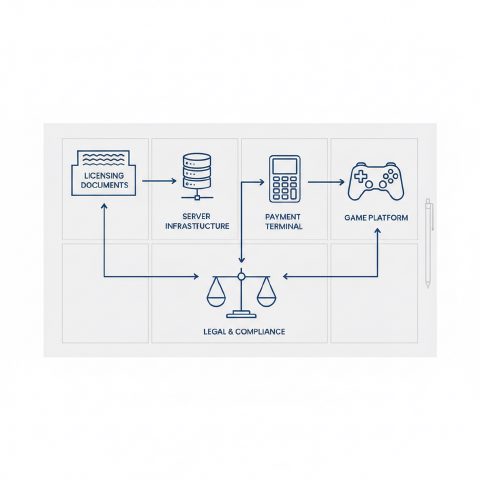
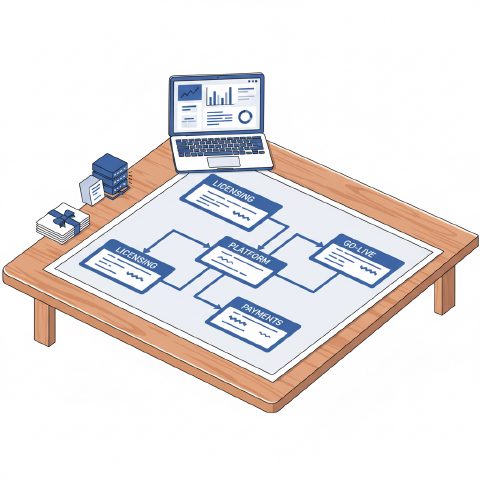
The process has roughly eight stages from entity formation to first bet, and most operators underestimate how many of them run in parallel rather than sequentially. The licensing and technology certification tracks both take 12–18 months in most states, and they must progress simultaneously — waiting for a license before starting platform work is how operators lose a year.
Step 1 — Market selection and land-based partner negotiation. Before you file anything, you need a land-based partner in your target state (unless you're acquiring one, which is a different and much larger conversation). Negotiate the revenue share, the brand rights, and the operational responsibilities in writing. This relationship will define your economics for years. Step 2 — Entity formation and legal structure. Set up a US entity (typically a Delaware C-Corp or LLC) with clean cap tables and no problematic investors — regulators do deep background checks on anyone with 5%+ ownership. International investors from certain jurisdictions can be disqualifying. Step 3 — License application filing. File with the relevant state regulator. Prepare for an extensive personal disclosure process for all principals, financial audits, and a business plan review. Budget 6–18 months for approval depending on the state.
Step 4 — Platform selection and contract execution. While the license is in review, select and contract your B2B platform provider. Negotiate SLAs, data ownership, and exit clauses carefully — some platform contracts make it genuinely painful to migrate later. Step 5 — Content licensing. In regulated US states, every game studio must also be licensed by the state regulator. IGT, Scientific Games (now Light & Wonder), Everi, NetEnt, and Evolution Gaming all have US certifications. Smaller EU studios often don't, which limits your game library significantly compared to offshore products. Step 6 — Technical certification. Submit your platform to a state-approved testing lab — GLI (Gaming Laboratories International) and BMM Testlabs are the two most common. They'll test RNG integrity, game math, responsible gambling tools, and geolocation compliance. This process takes 3–6 months and costs $50K–$150K.
Step 7 — Payment stack integration and testing. Get your ACH, prepaid card, and cash-at-retail integrations live and tested in a staging environment. Run end-to-end transaction testing with your processor before going live — payment failures on launch day are reputationally damaging and operationally chaotic. Step 8 — Responsible gambling and AML compliance infrastructure. Every regulated US state requires robust responsible gambling tools (deposit limits, self-exclusion, reality checks) and AML/KYC processes. You'll need a compliance officer, documented procedures, and in most states, integration with the state's self-exclusion database. Budget $100K–$200K annually for compliance operations once live.
How do US online casino payment stacks actually work, and why are they so difficult?
US iGaming payments are hard because most card networks and banks still treat online gambling as high-risk, and UIGEA compliance obligations fall on processors and banks, not just operators. Your payment stack needs multiple rails — ACH, prepaid cards, cash-at-retail — because no single method will cover more than 40%–50% of your player base. Expect 2%–4% blended processing costs and significant decline rates on card deposits.
The practical reality: Visa and Mastercard technically permit gambling transactions in regulated US states, but individual issuing banks can and do block them at a high rate — some estimates put the decline rate on credit card deposits at 30%–60% depending on the issuing bank. This is why VIP Preferred (ACH bank transfer) has become the dominant funding method in US iGaming. It's slower than a card swipe, but it works. Integrating VIP Preferred requires a contract with Everi (which acquired VIP Preferred), KYC verification of the player's bank account, and a 3–5 day settlement window. Not glamorous, but essential.
PayNearMe is your cash-at-retail solution — it lets players fund their accounts with cash at CVS, 7-Eleven, and similar locations. It sounds niche, but it serves a meaningful segment of the population that is underbanked or simply prefers cash. The integration is straightforward; the operational cost runs about $3–$5 per transaction. Play+ (Sightline Payments) is the dominant prepaid card solution in US iGaming — it's a reloadable debit card that players can fund via ACH and use for instant deposits and withdrawals. Several major operators use it as their primary payment method precisely because it sidesteps bank-level blocking.
Withdrawals are where players get frustrated and where you lose them. ACH withdrawals take 3–5 business days. Check by mail takes 7–14 days. PayPal is available in some states (NJ, PA, MI) and dramatically improves the withdrawal experience, but requires a separate integration and approval process with PayPal's gambling division. Venmo and cash app integrations are emerging but not yet standard. The operators who nail fast, reliable withdrawals — DraftKings and BetMGM have invested heavily here — see measurably better retention. It's worth the engineering investment.
What game content can you actually offer in a regulated US online casino?
Your game library in a regulated US state will be smaller than an offshore or EU casino — typically 300–600 titles versus 3,000+ offshore — because every studio must independently obtain a license in each state. The dominant suppliers are IGT, Light & Wonder, Everi, Evolution (live dealer), and a handful of EU studios like NetEnt and Red Tiger that have pursued US certification. This constraint is real but not fatal.
The US certification requirement for game studios is a genuine market filter. A small Maltese slot studio with 50 titles might have zero US-certified games simply because the certification cost ($20K–$50K per game in some states) doesn't pencil out for their volume. This means you'll be competing on the same core library as your competitors, which makes your UX, bonus structure, and player experience the actual differentiators. Evolution Gaming has made live dealer the standout content category in US iGaming — their live blackjack, roulette, and game show products are certified in most regulated states and drive significant engagement. If you're not featuring Evolution prominently, you're leaving money on the table.
IGT and Light & Wonder (formerly Scientific Games) dominate the slot library in most states because they already had land-based certification relationships with state regulators. Their content is solid but not particularly innovative — these are the same titles you'd find on a casino floor. NetEnt (now part of Evolution Group) has US certification in NJ, PA, and MI, which gives you access to Starburst, Gonzo's Quest, and their broader library. Everi has a growing digital portfolio and good US regulatory relationships.
One strategic angle worth considering: exclusive or first-to-market content deals. If you can negotiate early access to a studio's US certification pipeline — meaning you're the first US operator to feature their newly certified titles — you get a genuine marketing hook. It requires relationship-building with studio BD teams, but it's more sustainable than trying to out-spend DraftKings on player acquisition.
How long does the US online casino licensing process take from start to launch?
Realistically, 18–24 months from the decision to launch to your first live bet in a regulated US state. Michigan has been faster for some operators — 12–15 months is achievable if your principals have clean backgrounds and your application is complete on filing. New Jersey and Pennsylvania consistently run longer. Anyone promising you live in six months either doesn't understand the process or is selling you something.
The licensing timeline has two parallel tracks that both take longer than operators expect. The regulatory track — filing, background investigation, suitability review, license approval — takes 9–18 months depending on the state and the complexity of your ownership structure. International investors, prior regulatory issues anywhere in the world, or incomplete disclosures will extend this significantly. The MGCB in Michigan has a reputation for being more responsive than the DGE in New Jersey, but 'more responsive' is relative — you're still talking about a government agency reviewing sensitive financial and personal information on every principal.
The technical certification track runs in parallel and takes 3–6 months once you have a complete platform ready for submission. The key word is 'complete' — labs like GLI won't start the clock until they have a fully built, documented system to test. That means your platform build must be substantially complete before you submit for certification, which means you need to have selected and built on your platform well before you have your license in hand. This is the sequencing mistake I see most often: operators wait for license approval before committing to a platform, then discover they've added 6–12 months to their timeline.
My honest recommendation: start your platform selection and contract negotiations within 60 days of filing your license application. Treat the license approval as a parallel process, not a prerequisite. The money you spend on platform development before license approval is at risk if you're denied — that's a real risk you need to price in — but the time you save by running these tracks in parallel is worth it. Most operators who launch in 18 months are running them in parallel; most who take 30 months are running them sequentially.
What does the competitive landscape look like for a new US online casino operator in 2026?
The US online casino market in 2026 is dominated by four to five major operators — DraftKings, BetMGM, FanDuel (via Flutter), Caesars, and Rush Street Interactive (BetRivers) — who collectively hold 70%–80% of market share in most states. That's a real moat. But it doesn't mean the market is closed; it means you need a differentiated positioning strategy, not just a better sign-up bonus.
The major operators have structural advantages that can't be overcome with marketing spend alone: established player databases from sports betting crossover, brand recognition, superior loyalty programs tied to land-based properties, and technology infrastructure built over years. DraftKings alone spent over $1 billion on sales and marketing in 2023. You're not winning a head-to-head acquisition war against that budget. The operators who have found sustainable niches in regulated US markets have done so by targeting underserved segments — specific demographics, specific game preferences, superior live dealer experiences, or genuinely better responsible gambling tools that attract a more quality-focused player.
The land-based partnership requirement is actually a competitive dynamic worth understanding. Smaller tribal casinos and regional commercial casinos that haven't yet launched online skins are potential partners — and they may be more flexible on revenue share and co-marketing than the major Atlantic City or Detroit properties that have already committed to a major operator. In Michigan, for example, there are tribal nations with gaming compacts that haven't fully deployed their online skin rights. That's a market entry point worth exploring.
One realistic path for a new entrant: launch in Michigan or West Virginia with a focused product — strong live dealer, a curated slot library, and a genuinely better player experience — and build a profitable operation at smaller scale before expanding. The operators who try to compete nationally on day one against DraftKings and FanDuel are the ones who run out of money. The ones who build a defensible regional position first have a much better survival rate.
What are the tax and revenue-sharing obligations for US online casino operators?
US online casino operators face a layered tax structure: state GGR taxes (ranging from 15% in Michigan to 36% in Pennsylvania), federal corporate income tax, and the land-based partner revenue share on top. Pennsylvania's effective tax burden on online slots is among the highest in any regulated market globally — 54% GGR tax on slots specifically. This is not a market where margins are generous, and your financial model must reflect the actual tax stack.
Michigan's tax structure is relatively operator-friendly by US standards: 20%–28% GGR tax on online casino (the rate depends on the game type and whether the operator is tribal or commercial), plus the land-based partner share of 15%–25%. Pennsylvania is brutal — online slots are taxed at 54% of GGR, table games at 16%. When you stack the PA slots tax against the land-based partner share, payment processing costs, and platform fees, the margin math gets very tight very quickly. This is one reason why PA has fewer active skins than Michigan despite having higher total market GGR.
New Jersey's GGR tax is 15% for online casino, which is the most operator-friendly rate in the country. Combined with the depth of the NJ player market, this is why NJ remains the most profitable state for operators who can get in. The problem, as I noted earlier, is the high barrier to entry and the entrenched competition. West Virginia taxes online casino at 15% as well, which makes it worth considering for smaller operators despite the smaller total market.
On the federal side, online casino operators pay standard US corporate income tax on net income (21% federal rate for C-Corps, plus state income taxes). There's no special federal gambling tax beyond the standard corporate structure — unlike some offshore jurisdictions, the US doesn't add a separate federal GGR levy. But you do have significant compliance costs around AML reporting (SARs, CTRs) and player tax reporting (W-2G forms for jackpot winners above $1,200), which require dedicated compliance staff and systems.
| State | Online Slots Tax Rate | Online Table Games Tax Rate | Notes |
|---|---|---|---|
| Michigan | 20–28% | 20–28% | Rate varies by operator type (tribal vs. commercial) |
| New Jersey | 15% | 15% | Lowest rate in regulated US market |
| Pennsylvania | 54% | 16% | Highest slots tax rate in the US — models must account for this |
| West Virginia | 15% | 15% | Competitive rate; smaller market |
| Connecticut | 18% | 18% | Tribal compact structure; limited new entrant access |
| Delaware | ~43.5% (state takes majority) | ~43.5% | State lottery model; not viable for independent operators |


Comments
No comments yet, be the first.