How Much Does It Cost to Start an Online Casino in 2026: Real Numbers, Hidden Fees, and the ROI Timeline Nobody Talks About
Starting an online casino in 2026 costs anywhere from $30,000 for a bare-bones white-label to $2M+ for a fully licensed, custom-built operation — and the gap between those numbers is where most founders get burned. This guide breaks down every cost layer with real figures.

Total startup costs range from roughly $30,000 for a white-label offshore operation to $1.5M–$2.5M for a fully proprietary, regulated platform in a tier-1 market. The honest middle ground — a turnkey build with a real license, payment stack, and 6-month marketing runway — lands most operators between $150,000 and $500,000 before they process their first deposit.
License costs run from about $15,000 for a new Curaçao CGA license to $35,000+ for an MGA license — but the license fee itself is rarely the biggest expense. Annual renewal fees, compliance officer salaries, responsible gambling tooling, and legal fees for the application routinely double or triple the sticker price within the first year.
Casino platform costs break into two models: a one-time setup fee plus monthly SaaS, or a revenue share on GGR. SaaS-based platforms like SoftSwiss or EveryMatrix charge $10K–$30K setup and $5K–$15K/month. Revenue share models look cheaper upfront but typically cost more once you hit any meaningful volume — 3–5% of GGR adds up fast.
Game aggregators charge 15–25% of GGR on the games they supply, which sounds manageable until you realize that slots often represent 70–80% of your revenue. Direct studio deals with providers like Pragmatic Play or Evolution can reduce that take rate to 10–18%, but require minimum guarantee commitments — typically $5K–$20K/month per studio — that only make sense at scale.
Payment processing is one of the most underbudgeted line items in any casino launch. Card processing fees for gambling transactions run 3–8% per transaction — two to three times the rate for standard e-commerce. Add chargebacks, rolling reserves (typically 5–10% held for 180 days), and PSP setup fees, and payments can consume 8–15% of gross deposits in your first year.
The costs that blindside operators post-launch cluster around four areas: AML/KYC compliance tooling, responsible gambling infrastructure, affiliate fraud, and customer support at scale. Together, these can add $8K–$20K per month to your operating costs — none of which appears prominently in vendor proposals.
Player acquisition is where most casino business plans fall apart. CPA rates for depositing casino players range from $150–$250 in softer markets to $400–$700+ in competitive regulated markets like the UK or New Jersey. Budget for player acquisition as a major capital line item — not an afterthought — and model your LTV carefully before committing to CPA deals.
A properly funded offshore casino operation typically reaches break-even at 12–24 months, assuming competent execution and adequate player acquisition spend. Regulated EU or US market entries stretch that to 24–36 months. Operators who launch underfunded — meaning less than 6 months of operating runway beyond setup costs — rarely make it to profitability.
White-label is the fastest and cheapest entry but the lowest-ceiling business — revenue share to the white-label provider (30–50% of GGR) makes scaling painful. Turnkey with your own license is the sweet spot for most serious operators: higher upfront cost but you own your margins. Custom builds only make economic sense above $5M/year in GGR.
Compliance costs are the most consistently underbudgeted line item in casino business plans. Between legal counsel, AML program development, data protection compliance (GDPR where applicable), and ongoing regulatory reporting, operators in regulated markets routinely spend $50K–$150K/year on compliance infrastructure — not including the cost of actual violations.
Crypto casinos cost less to launch — primarily because they sidestep the hardest part of fiat casino operations: getting card processing. A crypto-native offshore casino can launch for $40K–$120K with faster timelines and lower payment processing fees. The trade-off is a narrower addressable market and evolving regulatory treatment of crypto gambling in many jurisdictions.
Explore the launch guides
 spoke
spoke
Hidden Costs of Starting an Online Casino
Launching an online casino looks cheaper on vendor decks than it actually is. This breakdown exposes the hidden costs — from integration fees to compliance retainers — that routinely blow first-year budgets for new operators.
 spoke
spoke
Online Casino Software Price What You Really Pay
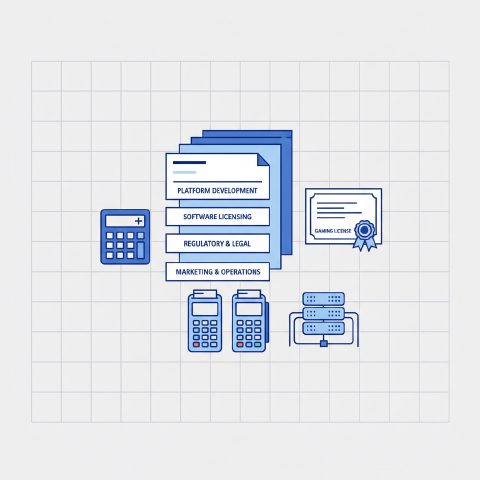
Online casino software pricing is rarely what vendors quote on a discovery call. This breakdown covers every cost layer — platform, games, payments, compliance and infrastructure — so you can build an honest budget before you sign anything.
 spoke
spoke
White Label Casino Cost Full Pricing Breakdown
White label casino solutions look affordable until you read the contract. This breakdown covers every real cost layer — setup, licensing, platform fees, revenue share, payments and compliance — so you can model a launch budget before you sign anything.
 pillar
How Much Does It Cost to Start an Online Casino 2026
Starting an online casino in 2026 costs anywhere from $30,000 for a bare-bones white-label to well over $2 million for a licensed, custom-built operation — and the gap between those figures comes down to decisions most founders make before they fully understand the consequences.
 pillar
How Much Does It Cost to Start an Online Casino
Starting an online casino in 2026 means choosing between radically different technology stacks — and the cost difference between a white-label and a custom build can exceed $1 million before you sign a single player. This breakdown gives you real figures, provider comparisons, and the hidden costs vendors rarely mention upfront.
Get our 2026 cost & licensing breakdown by email.