What Is a White Label Casino in 2026: The Operator's Honest Guide to How It Actually Works
What Is a White Label Casino, Exactly?
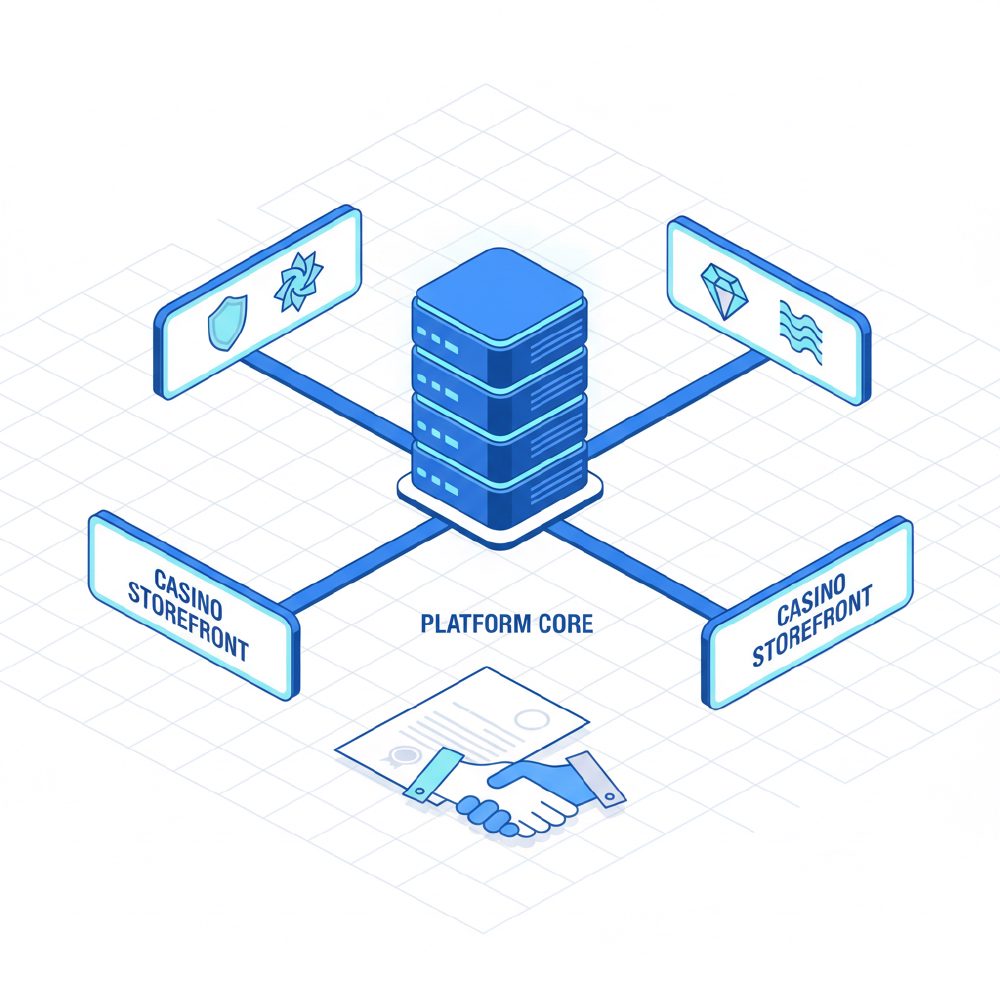
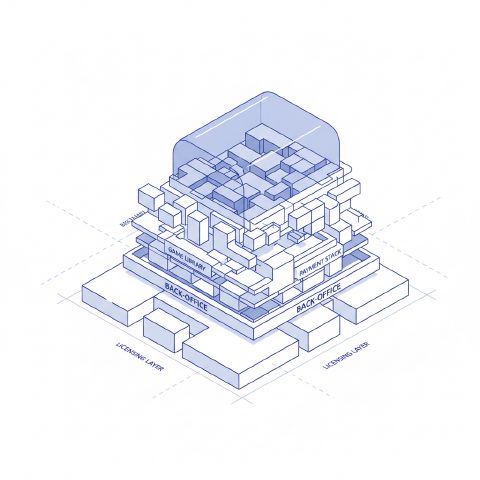
A white label casino is a ready-made online gambling platform that a B2B provider operates behind the scenes while you apply your own brand on top. You get a sublicensed gambling operation — games, payments, back-office, customer support tooling — without building or directly licensing any of it yourself. Think of it as franchising, not ownership.
The mechanics are straightforward. A platform provider such as SoftSwiss or EveryMatrix holds a master gambling licence — most commonly issued by Curaçao eGaming, the Malta Gaming Authority (MGA), or increasingly Anjouan — and allows operators to run branded casinos under that licence as sublicensees. You sign a B2B agreement, pay a setup fee (typically €15 k–€50 k depending on the provider and package), and agree to a revenue-share arrangement on gross gaming revenue (GGR). The provider handles the regulatory relationship, the platform software, the game integrations and, in most packages, the payment processing layer.
What you actually control varies by provider, but in a standard white label arrangement you own the brand, the marketing strategy, the player acquisition budget, and — critically — the player database. That last point matters enormously if you ever want to migrate. Some contracts make it painful to export player data; read that clause before you sign anything. You also typically control the bonus and promotion configuration within the limits the platform exposes, and you can usually curate which games from the aggregated catalogue appear on your site.
The model is distinct from simply licensing casino software. When you license software (say, a platform from Softgamings or a game aggregator API from Relax Gaming), you still need your own gambling licence, your own payment accounts and your own compliance team. A white label bundles all of that — which is precisely why it appeals to first-time operators who haven't yet built relationships with payment processors or regulators. The trade-off is dependency: if the master licence gets suspended, your casino goes dark. That happened to a wave of Curaçao sublicensees in 2023 when eGaming Curaçao began enforcing its new sub-licence framework more aggressively.
One thing vendors often gloss over in their sales decks: the 'white label' label gets applied loosely in this industry. Some providers call their offering white label when it's closer to a managed service with minimal operator control. Others use 'turnkey' for what is functionally a white label with a standalone licence option bolted on. Ask any prospective provider three specific questions: Do I hold the licence or do you? Who owns the payment merchant accounts? Can I export my full player database on 30 days' notice? The answers will tell you more than any slide deck.
How Does the White Label Casino Model Work Step by Step?
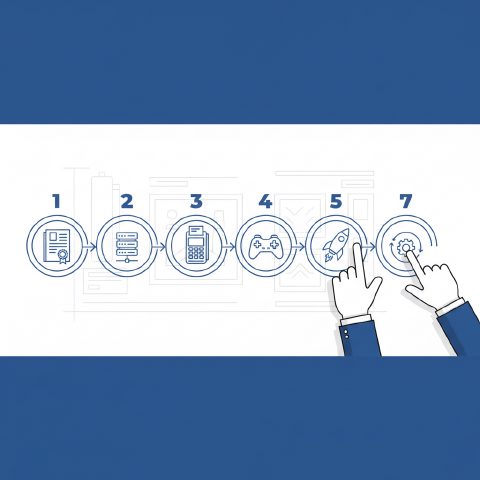
The process runs in roughly four phases: commercial negotiation and contract signing, technical onboarding and brand configuration, compliance and KYC setup, and soft launch followed by live operations. Most providers quote 4–12 weeks from signed contract to live site, though 8 weeks is a more realistic median when payment integrations and compliance documentation are included.
Phase one is commercial. You select a provider, negotiate the revenue-share percentage (typically 30–50 % of GGR, though high-volume operators can push this toward 25 %), agree the setup fee, and sign the B2B platform agreement plus a sublicence addendum. At this stage you should also negotiate SLAs for platform uptime, support response times and — if you can get it — a data portability clause. Most providers won't volunteer that last one.
Phase two is technical onboarding. The provider deploys your branded instance of their platform, usually on shared infrastructure (dedicated servers cost more and are rarely necessary below €1 M GGR/month). You supply brand assets — logo, colour scheme, domain — and configure the front-end via a CMS. Game catalogue selection happens here: most white label packages come with 2,000–7,000 titles aggregated from studios like Pragmatic Play, Evolution, NetEnt and Hacksaw Gaming. You're not signing direct deals with those studios; you're accessing them through the provider's aggregation layer, which means an additional aggregation margin is already baked into your GGR split.
Phase three is compliance. Even as a sublicensee you'll need to implement AML/KYC procedures, set up responsible gambling tools (self-exclusion, deposit limits, reality checks) and, depending on the jurisdiction, submit documentation to the master licensor. Under the new Curaçao framework introduced in 2023–2024, sublicensees face more direct scrutiny than they did under the old system. Your provider should handle the regulatory interface, but you are still operationally responsible for your players. Budget for a part-time compliance officer from day one — this is not optional in any serious market.
Phase four is launch and operations. You drive traffic, the provider's platform handles sessions, the payment processor settles funds, and at the end of each accounting period — usually monthly — the provider deducts their revenue share, platform fees and any chargebacks before remitting your net. The back-office dashboard gives you reporting on GGR, player activity, bonus costs and payment conversion rates. How granular that data is depends heavily on the provider; EveryMatrix's EvenBet and SoftSwiss's Casino Engine both offer reasonably detailed operator reporting, but some smaller white label shops give you surprisingly little visibility into your own numbers.
| Phase | Activities | Realistic Duration |
|---|---|---|
| Commercial & Legal | Provider selection, contract negotiation, sublicence agreement | 2–4 weeks |
| Technical Onboarding | Brand setup, domain config, game catalogue selection, CMS customisation | 2–4 weeks |
| Compliance & Payments | KYC/AML setup, payment provider onboarding, responsible gambling tools | 2–4 weeks |
| QA & Soft Launch | Testing, staff training, limited traffic launch | 1–2 weeks |
| Full Live Operations | Marketing ramp-up, ongoing optimisation | Ongoing |
What Is the Difference Between a White Label Casino and a Turnkey iGaming Software Solution?
The core distinction is licence ownership. In a white label arrangement, the provider holds the gambling licence and you operate as a sublicensee under it. A turnkey iGaming solution supplies the same bundled technology — platform, games, payments — but you apply for and hold your own gambling licence. That difference has major implications for liability, regulatory standing and long-term exit options.
Turnkey iGaming software solutions — offered by providers like SoftSwiss (their turnkey package), Slotegrator, and BetConstruct — are essentially the same technology stack as a white label, but the operator takes on direct licensing. You apply to the MGA, Curaçao, UKGC, or wherever your target market dictates, pay the application fees, and once approved, the platform runs under your own licence. The provider is now a pure B2B software supplier rather than a co-regulator. This changes your contractual leverage considerably: you can negotiate harder on revenue share because the provider needs you as a client, not as a sublicensee they could theoretically terminate.
The practical cost difference is significant upfront but often reverses over time. A white label setup fee might be €20 k–€40 k with no licence cost, whereas a turnkey setup adds €15 k–€50 k in MGA licence fees (plus a €25 k compliance contribution) or roughly €15 k–€30 k for a Curaçao sub-licence under the new framework. However, because you own the licence, you're not paying a 30–50 % GGR rev-share to a master licensor. At modest volumes (under €200 k GGR/month) the white label is cheaper to run. Above that threshold, the maths typically flips within 12–18 months.
There's also a regulatory credibility gap. Payment processors, especially those serving EU markets, increasingly ask for direct licence documentation rather than sublicence certificates. Some PSPs flatly refuse to board sublicensees for high-risk merchant accounts, which forces white label operators into a narrower — and often more expensive — set of payment options. If you're targeting Germany, Sweden or any regulated EU market, a direct licence is practically mandatory; white label under a Curaçao master licence will not get you legal access to those markets regardless of what a provider's sales team implies.
| Factor | White Label Casino | Turnkey iGaming Solution |
|---|---|---|
| Licence Holder | Provider (you sublicence) | Operator (you hold directly) |
| Time to Launch | 4–10 weeks | 6–18 months (licence processing adds time) |
| Upfront Cost | €15 k–€50 k setup fee | €30 k–€100 k+ (setup + licence fees) |
| Ongoing Cost | 30–50% GGR rev-share to provider | Platform fee (flat or lower % GGR); no master licensor cut |
| Regulatory Risk | Master licence suspension affects you | Your licence risk is your own to manage |
| Payment Processor Access | Limited — sublicence reduces PSP options | Broader — direct licence preferred by most PSPs |
| Long-term Control | Low — provider controls stack | High — you own the relationship |
| Best For | First launch, limited capital, fast test | Scaling operators, regulated EU markets, long-term builds |
What Does a White Label Casino Actually Cost in 2026?
Expect a one-time setup fee of €15 k–€60 k and an ongoing revenue share of 25–50 % of GGR, depending on volume and provider. Additional costs — payment processing fees, bonus costs, affiliate commissions, customer support — are layered on top and can push your total cost of revenue above 70 % of GGR in the first year if you're not modelling carefully.
The setup fee covers platform deployment, brand configuration and initial game catalogue access. SoftSwiss, one of the larger providers, has historically quoted setup packages in the €30 k–€60 k range for their white label product, though this shifts with market conditions and negotiation. Smaller providers targeting offshore markets — Slotegrator's white label, for instance — have offered entry packages closer to €15 k–€25 k, but with correspondingly thinner game catalogues and less robust back-office tooling. Always ask what's included: some providers charge separately for the CMS, the bonus engine, the affiliate module and the payment gateway integration. Those line items add up fast.
The revenue share is the number that matters most over time. A 40 % GGR rev-share means that for every €100 your players lose, €40 goes to the platform provider before you've paid a single affiliate, processed a single withdrawal, or covered your server costs. Layer in a 25–35 % affiliate commission (standard in competitive markets), payment processing fees of 3–8 % on deposits, and a 10–15 % bonus cost rate, and you're looking at a very thin margin — or none — in your first 6–12 months. This is not a reason to avoid the model; it is a reason to model it honestly before you sign.
There are also costs that don't appear in the provider's pricing sheet. A compliance officer or outsourced AML service runs €2 k–€5 k/month. Customer support, even if you use a third-party BPO, adds €3 k–€8 k/month depending on volume. Domain, hosting (even if the platform is hosted by the provider, you'll have CDN and front-end costs), email marketing tools, and fraud prevention software collectively add another €1 k–€3 k/month. Budget a realistic first-year operating cost of €150 k–€300 k beyond the setup fee for a lean but functional operation — more if you're in a competitive acquisition market like LATAM or Central and Eastern Europe.
Which Jurisdictions Can You Use for a White Label Casino Licence?
Curaçao remains the dominant white label jurisdiction in 2026, covering the majority of offshore operators globally. Anjouan (Comoros) has grown as a lower-cost alternative since 2022. The MGA and UKGC do not permit sublicensing arrangements in the traditional white label sense — those markets require direct licence applications, which puts them firmly in turnkey territory.
Curaçao eGaming completed a significant regulatory overhaul between 2023 and 2024, replacing the old master/sublicence structure with a new framework under the National Ordinance on Offshore Games of Hazard (NOOGH). Under the new system, each operator must hold their own Curaçao licence rather than simply operating under a master licensor's umbrella. This has changed the white label landscape: providers who previously offered pure sublicence arrangements now need to either help operators obtain their own Curaçao licences or restructure their model. The practical effect is that the line between white label and turnkey has blurred somewhat in Curaçao, though many providers continue to manage the licence relationship on the operator's behalf as a managed service.
Anjouan (the Autonomous Island of Anjouan, part of the Comoros) emerged as a popular alternative for operators who want a fast, low-cost licence without Curaçao's increased scrutiny. Anjouan licences have been issued in weeks for fees in the range of €15 k–€25 k (figures vary and should be verified with a current licensing agent), and several white label providers have built their offshore packages around it. The jurisdiction is not recognised by any major regulated market, so it's purely an offshore play — suitable for markets like parts of LATAM, Southeast Asia and Africa where local regulation is absent or unenforced, not for EU or US players.
For operators targeting regulated markets, the picture is different by jurisdiction. In the US, each state issues its own licence — New Jersey, Pennsylvania, Michigan and Connecticut have active iGaming markets, each with direct licensing requirements, no sublicensing, and multi-year application timelines. LATAM is fragmented: Colombia (Coljuegos) and Peru (MINCETUR) require direct operator licences; Brazil's newly regulated market (SECAP/MF) is direct-licence only. Mexico (SEGOB) technically allows some forms of platform sharing but is notoriously slow and opaque. The EU is similarly direct-licence territory — Sweden (Spelinspektionen), Germany (GGL), Spain (DGOJ) and the Netherlands (KSA) all require operators to hold their own licences with no sublicence pathway.
Who Are the Main White Label Casino Providers in 2026?
The established names are SoftSwiss, EveryMatrix, BetConstruct, Delasport and Slotegrator. Each has a different positioning: SoftSwiss leans toward crypto-friendly offshore builds, EveryMatrix toward regulated EU markets, BetConstruct toward sportsbook-led products, Delasport toward sports betting with casino add-on, and Slotegrator toward cost-accessible entry packages for emerging markets.
SoftSwiss is probably the most cited white label provider for crypto-accepting offshore casinos. Their Casino Engine platform powers a large number of branded casinos across Curaçao and Anjouan, and they've built strong integrations with crypto payment processors — a meaningful advantage if your player base skews toward Bitcoin and stablecoin deposits. Their setup fees and rev-share are at the higher end of the market, but the product quality and game catalogue depth (5,000+ titles through their aggregation layer) justify it for operators who can generate volume. Their managed services arm also handles compliance and player support if you want a genuinely lean operator structure.
EveryMatrix takes a more modular approach with their CasinoEngine, SlotMatrix aggregator and OddsMatrix sportsbook products. You can assemble a white label or turnkey build from their components, and their regulatory track record in EU markets (MGA-licensed, with integrations supporting UKGC and other regulated frameworks) makes them a credible choice for operators who want to eventually move into regulated markets. The trade-off is complexity — their platform has a steeper onboarding curve than some competitors, and their sales process tends to be slower.
For operators who want a combined sportsbook and casino from day one, BetConstruct and Delasport both offer competitive white label packages. BetConstruct has a long track record in Eastern Europe and CIS markets, with strong live betting infrastructure. Delasport is newer but has gained ground in Southern and Eastern Europe with a clean UI and solid API documentation — important if you want to do any custom front-end work on top of their platform. Both operate primarily on a revenue-share model with setup fees in the €20 k–€40 k range.
Slotegrator (now partly rebranded in some markets) remains the go-to for operators entering markets like Africa, Southeast Asia and parts of LATAM on a limited budget. Their entry-level white label packages are accessible, but the platform's back-office tooling is less sophisticated than SoftSwiss or EveryMatrix, and the game catalogue — while broad — relies heavily on aggregation through their APIgrator product, which adds another layer of margin. For a proof-of-concept launch or a market where competition is thin, it works. For a competitive EU or LATAM market, you'll likely outgrow it within 18 months.
What Are the Real Risks of the White Label Casino Model?
The three risks operators consistently underestimate are master licence dependency, revenue-share erosion at scale, and data portability lock-in. A fourth — payment processor access — has become increasingly acute as PSPs tighten their sublicensee policies. None of these appear prominently in any provider's sales material.
Licence dependency is the most acute operational risk. If your white label provider's master licence is suspended, revoked or subject to enforcement action, your casino goes dark — regardless of your own compliance record. This is not hypothetical. The Curaçao regulatory reform of 2023–2024 caused operational disruption for dozens of sublicensees whose master licensors were slow to comply with the new framework. Operators had no recourse; they were dependent on a third party's regulatory standing. The mitigation is simple in principle: choose a provider with a clean, long-standing regulatory track record and a direct licence in at least one credible jurisdiction. In practice, this means paying more for a provider like EveryMatrix (MGA-licensed) versus a cheaper offshore-only shop.
Revenue-share erosion is a slower-moving problem. At €50 k GGR/month, a 40 % rev-share is painful but survivable. At €500 k/month, you're paying €200 k/month — €2.4 M/year — to a provider for infrastructure that, at that scale, you could replace with a direct platform deal and standalone licence for a fraction of that cost. The migration cost (new licence, platform rebuild, player database transfer) is real but finite; the ongoing rev-share is perpetual. Most operators who've been through this transition say they wish they'd started planning the migration at €200 k GGR/month rather than waiting until the pain was acute.
Data portability is the contract clause that determines whether you actually own your business. Some white label agreements give the provider effective ownership of the player database, or impose such onerous export conditions that migration is practically impossible. I've reviewed contracts where the player data export clause required 90 days' notice, provider approval, and a data transfer fee calculated as a percentage of the database's projected lifetime value. That is not a partnership; that is a trap. Get a lawyer to review the data portability, termination and IP ownership clauses before you sign — not after.
How Do Payments Work in a White Label Casino Setup?
In most white label packages, the provider controls the payment merchant accounts and you receive net GGR after their deductions. This means you have limited visibility into payment conversion rates, chargeback ratios and settlement timing — and no direct relationship with the payment processors. For operators in competitive markets, this is a significant operational handicap.
The payment layer is where white label operators quietly lose margin they never see. When the provider holds the merchant accounts, they negotiate the processing rates — and those rates are not always passed through to you at cost. A provider paying 3 % on card deposits might charge you an effective 5 % in their revenue calculation, pocketing the spread. This is legal, common, and rarely disclosed in the initial commercial conversation. The way to surface it is to ask for a full reconciliation example: show me a sample month's GGR calculation with every deduction itemised. If the provider resists, that tells you something.
Payment method coverage is the other constraint. Because you're operating under the provider's merchant accounts, you're limited to the payment methods they've integrated and the acquiring banks they work with. In markets like LATAM, where local payment methods — PSE in Colombia, PIX in Brazil, OXXO in Mexico, Khipu in Chile — are essential for conversion, a provider without those integrations will cost you 20–40 % of potential deposits. Always audit the payment method list for your specific target market before committing to a provider, not after.
Crypto payments are a partial workaround. Several white label providers, SoftSwiss most prominently, have built robust crypto payment infrastructure that operates somewhat independently of traditional acquiring. If your player base is crypto-native — common in offshore markets targeting Eastern Europe, Southeast Asia and parts of LATAM — a crypto-first white label can actually give you better payment coverage than a fiat-only setup with a restrictive acquiring bank. The caveat is that crypto volatility and regulatory uncertainty in some jurisdictions add their own operational complexity.
For operators who eventually want direct payment relationships, the path is to move to a turnkey or standalone model, apply directly to PSPs like Nuvei, Paysafe or local acquirers, and negotiate your own rates. At that point, your payment conversion data — which you should have been tracking obsessively in your white label back-office — becomes your strongest negotiating asset. A clean chargeback ratio below 0.5 % and documented monthly volume are what PSPs want to see.
Is a White Label Casino the Right Choice for Your Launch?
A white label is the right choice if you're entering a new market with limited capital, need to validate a brand concept quickly, or lack the regulatory relationships to obtain a direct licence in a reasonable timeframe. It is the wrong choice if you're targeting regulated EU or US markets, expect to scale past €300 k GGR/month within 18 months, or want full control over your payment stack from day one.
The use case where white label genuinely makes sense: you're an experienced affiliate or media operator who wants to launch a branded casino in an offshore or lightly regulated market, you have a clear player acquisition strategy, and you want to test the economics before committing to a full platform build. In that scenario, a white label gets you live in 6–8 weeks, caps your upfront exposure at €30 k–€60 k, and lets you learn the operational fundamentals — bonus abuse patterns, payment conversion by method, player LTV by acquisition channel — before you invest in a more expensive infrastructure.
The use case where white label is a trap: you're targeting Germany, Sweden, the Netherlands or any US state. None of those jurisdictions permit sublicence operations. If a provider tells you their Curaçao white label can serve German players, they are either misinformed or misleading you. The German GGL (Gemeinsame Glücksspielbehörde der Länder) requires a direct licence, German-language responsible gambling tools, a local bank account and compliance with strict advertising rules. There is no shortcut via an offshore master licence.
A third scenario worth considering: the white label as a bridge. Some operators launch white label to generate revenue and build a player base while simultaneously pursuing a direct licence application — which can take 6–18 months depending on the jurisdiction. This is a legitimate strategy, but it requires careful legal structuring to ensure the white label operation doesn't create complications for the direct licence application, particularly in jurisdictions that scrutinise prior operating history. Get legal advice specific to your target jurisdiction before combining the two approaches.
| Scenario | White Label Suitable? | Reason |
|---|---|---|
| Offshore market entry, limited capital | Yes | Fast launch, capped upfront cost, no direct licence needed |
| Concept validation / market test | Yes | Low commitment, operational learnings before full build |
| Targeting Germany, Sweden, Netherlands, UK | No | Direct licence mandatory; sublicence not accepted |
| US state iGaming market (NJ, PA, MI, CT) | No | State-issued direct licence required; no sublicence pathway |
| Colombia (Coljuegos) or Peru (MINCETUR) | No | Direct operator licence required by law |
| Scaling past €300k GGR/month | Marginal | Rev-share economics deteriorate; plan migration at this point |
| Crypto-native offshore audience | Yes (with right provider) | SoftSwiss and similar have strong crypto payment infrastructure |
| Sportsbook + casino combined product | Yes (with right provider) | BetConstruct, Delasport offer combined white label packages |




Comments
No comments yet, be the first.