How to Start an Online Casino Like Bet365 in 2026: The Operator's Honest Roadmap
What Actually Made Bet365 Successful — and What That Means for a New Operator?
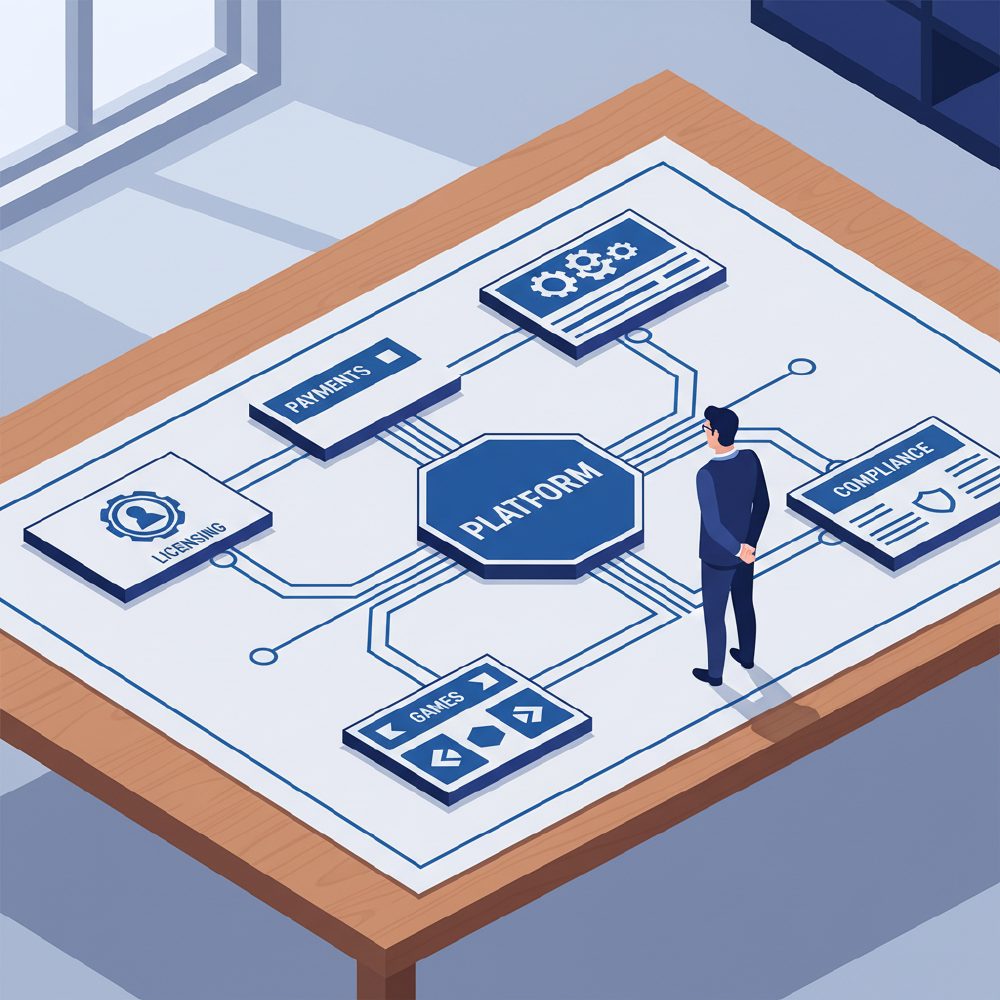
Bet365 succeeded through vertical integration, proprietary technology, and early mover advantage in the UK market — none of which you can replicate overnight. What you can replicate is the operational philosophy: a single wallet across products, aggressive retention mechanics, and a payment experience that converts. That's the blueprint worth copying.
Peter Coates founded Bet365 in 2001 out of a Portakabin in Stoke-on-Trent with a Gambling Commission license and a vision for online sports betting. By 2010, they had built their own platform from the ground up, refusing to rely on third-party suppliers for core infrastructure. That decision cost them years and tens of millions in development, but it gave them margins and flexibility that white-label operators simply don't have. Their EBITDA margins reportedly sit above 20%, which is exceptional in a sector where most operators run at 8–14%.
For a new operator in 2026, the honest takeaway is this: you are not building Bet365. You're building the version of Bet365 that can exist with your capital, your market focus, and your timeline. That means a licensed operation, a credible game library from aggregators like Relax Gaming or Pariplay, a payment stack that handles your target geography, and retention mechanics that keep players coming back. The technology stack is a means to that end — not the end itself.
The one thing Bet365 did that every serious operator should internalize: they picked a regulated market, got a proper license, and built trust before they scaled. Operators who launch on a thin Anjouan license targeting Tier 1 markets without geo-compliance infrastructure are not building a Bet365 — they're building a liability. Regulatory credibility is the actual moat.
Which Gambling License Do You Need to Build a Casino Like Bet365?
Bet365 holds a UK Gambling Commission license — the gold standard, but also the most demanding and expensive to obtain. For most new operators, the realistic starting points are an MGA license for EU-facing markets or a Curaçao eGaming sublicense for offshore play. Each comes with distinct costs, timelines, and market access implications you need to price in before you commit.
The UK Gambling Commission (UKGC) requires a physical UK presence, a fit-and-proper assessment of all key personnel, detailed AML policies, and ongoing compliance reporting. Application fees alone run £25,000–£50,000+, and the process takes 12–18 months. For a first-time operator, this is rarely the right starting point — unless you have a compliance team already in place and a UK-focused investor backing you.
The Malta Gaming Authority (MGA) is the most respected offshore license for EU-adjacent markets. A B2C gaming service license costs roughly €25,000 in application fees, requires a €100,000 player fund guarantee, and takes 4–6 months if your documentation is clean. MGA-licensed operators can access most EU payment processors and have a credible story to tell payment partners. This is where I'd point most operators targeting Europe or English-speaking markets.
Curaçao eGaming (and the newer Curaçao Gaming Control Board framework, which replaced the old sublicense model in 2023) is faster and cheaper — setup costs around $15,000–$30,000 and timelines of 6–10 weeks are common. But banking access is harder, payment processors charge higher risk premiums, and you're locked out of regulated markets like Germany, Sweden, and the Netherlands. It's a viable entry point for LATAM, parts of Asia, and crypto-focused operations, but don't mistake speed for quality. The new CGC framework is more rigorous than the old sublicense regime, which is a good thing for the sector's long-term credibility.
For US market ambitions, forget the offshore route entirely. You need a state-by-state license — New Jersey (DGE), Pennsylvania (PGCB), Michigan (MGCB) — each requiring a local entity, a local partner or skin arrangement with an existing licensee, and background checks that can take 18–24 months. The capital requirements are substantial and the compliance burden is ongoing. Bet365 entered the US market in 2023 via a New Jersey license and a partnership with Hard Rock — that's the model to study.
| License | Jurisdiction | Approx. Cost | Timeline | Best For | Key Limitation |
|---|---|---|---|---|---|
| UKGC | United Kingdom | £25,000–£50,000+ | 12–18 months | UK-focused operators | High compliance burden, physical UK presence required |
| MGA | Malta | €25,000–€40,000 | 4–6 months | EU/international markets | €100k player fund guarantee; ongoing audit requirements |
| Curaçao (CGC) | Curaçao | $15,000–$30,000 | 6–10 weeks | LATAM, crypto, offshore | Limited payment processor access; excluded from regulated EU markets |
| Anjouan (GLLL) | Comoros | $10,000–$20,000 | 4–8 weeks | Crypto/emerging markets | Weakest regulatory credibility; banking very difficult |
| US State (e.g. NJ DGE) | New Jersey, PA, MI, etc. | $500,000–$2M+ | 18–24 months | US regulated iGaming | Requires local entity and often a land-based partner |
Should You Build Your Own Online Casino Platform or Use a White-Label Solution?
For 99% of new operators, white-label or turnkey is the right starting point. Building proprietary technology like Bet365 requires $5M+ and 3–5 years before you have a competitive product. White-label gets you live in 3–6 months with proven infrastructure. The real question is whether you want a revenue-share model (white-label) or a license-fee model (turnkey) — and that depends entirely on your projected GGR.
White-label platforms — think SoftSwiss's Casino Engine, EveryMatrix's CardsChat, or Turnkey Casino solutions from BetConstruct — give you a branded frontend sitting on top of the provider's shared infrastructure. You pay a setup fee ($20,000–$80,000 typically) and a revenue share of 15–30% of GGR. The upside: fast launch, built-in integrations with payment processors and game aggregators, and ongoing technical support. The downside: you're sharing infrastructure with other operators, your customization ceiling is low, and the revenue share compounds painfully at scale.
Turnkey platforms are a step up. You're licensing the software and running it on your own infrastructure, which means more control, better data ownership, and no ongoing revenue share beyond a monthly license fee ($5,000–$25,000/month depending on the vendor). Providers like Softgamings, GamingSoft, and Digitain operate in this space. The tradeoff is higher upfront cost, more technical responsibility, and longer integration timelines — typically 4–8 months to launch.
Custom builds — the Bet365 model — make sense only when you have a specific product differentiation that no existing platform can deliver, a development team with iGaming experience, and the runway to sustain 2–3 years of development before revenue. I've seen operators burn $3M on custom builds that delivered a product inferior to what SoftSwiss ships out of the box. Unless you have a genuinely novel product concept, custom is a vanity project at the early stage.
My recommendation for most operators: start white-label with a provider that has a clean contract allowing you to migrate your player database if you eventually move to a turnkey or custom setup. Lock-in is the hidden risk in white-label contracts — read the data portability clauses before you sign anything.
| Model | Setup Cost | Time to Launch | Ongoing Cost | Customization | Best For |
|---|---|---|---|---|---|
| White-Label | $20,000–$80,000 | 3–6 months | 15–30% GGR rev-share | Low–Medium | First-time operators, lean capital, fast market entry |
| Turnkey | $80,000–$250,000 | 4–8 months | $5,000–$25,000/month license | Medium–High | Operators with tech team, scaling beyond white-label |
| Custom Build | $1M–$5M+ | 24–48 months | In-house dev team costs | Full | Funded operators with unique product differentiation |
What Games and Software Providers Do You Need to Compete With Established Casinos?
Bet365 Casino carries 700+ slots and table games from studios including Evolution, Pragmatic Play, NetEnt, and Playtech. You don't need all of them at launch, but you do need a credible aggregator integration — one contract that unlocks 3,000+ titles — plus a live casino solution from Evolution or Pragmatic Play Live. Without live casino, you're not competitive in 2026.
The fastest path to a deep game library is through a game aggregator. Providers like Pariplay (part of Aspire Global), Relax Gaming, and Softswiss's Game Aggregator give you access to 5,000–10,000+ titles through a single API integration. You pay a platform fee plus a revenue share per game — typically 1–4% of GGR per studio, aggregated through the platform. The aggregator handles certification, updates, and studio relationships. For a new operator, this is almost always the right move over direct studio deals.
Direct deals with studios like Pragmatic Play or Play'n GO make sense once you're generating enough volume to negotiate meaningful commercial terms — roughly $500,000+ GGR per month per studio. Below that threshold, you're not interesting enough to get preferential rates, and the integration overhead isn't worth it. Stick with the aggregator model until you have the leverage to negotiate directly.
Live casino is non-negotiable for any operator positioning as a premium brand. Evolution Gaming holds roughly 70% of the live casino market globally and their product — Lightning Roulette, Crazy Time, Blackjack — is what players expect. Pragmatic Play Live is a credible alternative with more competitive pricing for smaller operators. Budget for a dedicated live casino integration; some white-label platforms include it, others charge separately. Expect $5,000–$15,000/month in minimum guarantees from Evolution if you're a new operator.
Sports betting is where Bet365 built its brand, but it's also the most technically complex and margin-thin vertical. If you're launching a casino-first product, I'd recommend deferring sportsbook integration until you have a stable casino operation. Turnkey sportsbook solutions from Kambi, SBTech (now part of DraftKings), or BetConstruct add significant cost and compliance complexity. One vertical done well beats two done poorly.
How Do You Build a Payment Stack That Actually Converts Like a Major Operator?
Bet365 has direct acquiring relationships with Visa and Mastercard built over 25 years — you won't have that. What you can build is a layered PSP stack: one primary processor for card payments, a crypto gateway for flexibility, and local payment methods for your target market. The goal is 85%+ approval rates on first-attempt deposits. Most new operators launch with 60–70% and wonder why their FTD conversion is poor.
Payment processing is the unglamorous part of casino operations that determines whether your business actually works. New operators are classified as high-risk merchants, which means higher interchange rates (1.5–3.5% per transaction vs. 0.5–1.5% for standard merchants), rolling reserves (5–10% of monthly volume held for 6 months), and more frequent account terminations. Your first acquiring relationship will not be your best one — plan for it.
For a Curaçao-licensed operation, your PSP options are limited but workable. Providers like Payvision, Safecharge (now Nuvei), and Praxis Tech specialize in high-risk gaming merchants. Nuvei in particular has become a dominant player in iGaming payments with solid approval rate optimization tools. For MGA-licensed operators, you have access to mainstream processors like Worldpay and Paysafe, which materially improves your conversion rates and reduces your processing costs.
Local payment methods matter enormously and are consistently underestimated. If you're targeting Brazil, Pix is mandatory — it's free, instant, and processed more than 40 billion transactions in 2023. LATAM generally requires local bank transfer options. Germany needs Klarna and SOFORT. The UK needs PayPal and faster payments. Launching without the dominant local payment method in your target market is like opening a restaurant without a kitchen — technically possible, practically disastrous.
Crypto payment integration is increasingly standard even for fiat-primary operators. Providers like CoinsPaid or BitPay handle the conversion layer so you settle in fiat while players deposit in BTC, ETH, or USDT. This opens a meaningful segment of players who prefer the privacy and speed of crypto, and it gives you a fallback when card processing gets disrupted. Don't build a crypto-only operation unless your license and market specifically support it — hybrid is the pragmatic 2026 model.
What Does It Actually Cost to Start an Online Casino in 2026?
A realistic all-in budget for a licensed white-label online casino in 2026 — covering license, platform, game content, payments setup, compliance tooling, and a modest marketing budget — runs $200,000–$500,000 for year one. That's not the Bet365 number, but it's the number that gets you a credible, operational business. Undercapitalized launches below $100,000 almost universally fail within 18 months.
Let me break this down in a way that vendor sales decks never do. Licensing: $15,000–$50,000 depending on jurisdiction, plus ongoing annual fees. Platform (white-label setup): $20,000–$80,000 upfront, then 15–25% GGR rev-share ongoing. Game aggregator integration: often included in the platform deal, but expect $5,000–$15,000 in one-time integration costs and monthly minimums. Live casino (Evolution or equivalent): $5,000–$15,000/month in guaranteed minimums before you've generated a dollar of revenue.
Payment setup is another area where costs hide. PSP setup fees, rolling reserves (cash you don't have access to), chargeback management software, and fraud prevention tools (Kount, Sift, or built-in platform tools) add up to $10,000–$30,000 in year one. AML and KYC tooling — mandatory for any licensed operation — runs $500–$2,000/month depending on verification volume. Sumsub and Jumio are the market leaders here.
Compliance and legal is chronically underbudgeted. A compliance officer (full-time or fractional) costs $60,000–$120,000/year. Legal fees for license applications, terms and conditions drafting, and ongoing regulatory correspondence: $20,000–$50,000 in year one. Responsible gambling tooling (self-exclusion integration with GAMSTOP for UK, or equivalent national systems) is mandatory and non-trivial to implement correctly.
Marketing is where most operators either overspend recklessly or underspend fatally. Bet365 spends hundreds of millions annually on acquisition. You are not doing that. A realistic first-year acquisition budget for a focused market entry is $50,000–$150,000, primarily through affiliate partnerships (CPA deals, revenue share with affiliate networks like Income Access or Affilka). SEO and content marketing are your long-game channels — budget 6–12 months before organic traffic meaningfully contributes to player acquisition.
How Do You Handle Responsible Gambling and AML Compliance Without a Full Compliance Team?
Every licensed jurisdiction now mandates responsible gambling tooling — deposit limits, self-exclusion, reality checks — and AML transaction monitoring. You can outsource the technology layer to providers like Sumsub (KYC) and ComplyAdvantage (AML screening), but someone in your organization needs to own compliance decisions. A fractional compliance officer costs $3,000–$8,000/month and is worth every dollar for a new operator.
The MGA's Player Protection framework, updated in 2023, requires operators to implement a responsible gambling system with deposit limits, session limits, cooling-off periods, and self-exclusion — all accessible within three clicks from any page. UKGC requirements go further, mandating affordability checks and interaction with players showing markers of harm. These aren't optional features you add later; they're launch requirements that your platform needs to support out of the box. Confirm this explicitly with your white-label or turnkey provider before signing.
AML compliance is where new operators get caught off guard. Transaction monitoring — flagging unusual deposit patterns, structuring behavior, and high-risk player profiles — requires either a dedicated tool or a platform with built-in monitoring. ComplyAdvantage and Refinitiv World-Check are standard for sanctions and PEP screening. Your KYC provider (Sumsub, Jumio, or Onfido) handles identity verification, but AML is a separate layer that monitors ongoing behavior, not just onboarding.
The practical solution for a lean operator: use a white-label platform that includes AML monitoring and responsible gambling tooling as part of the package (SoftSwiss's platform includes this), and layer on a third-party KYC provider for identity verification. Hire a fractional compliance officer — someone who has worked inside an MGA-regulated operator — to review your policies quarterly and handle regulatory correspondence. This setup costs $5,000–$10,000/month total and keeps you compliant without a full in-house team.
How Long Does It Take to Launch an Online Casino From Scratch?
A white-label casino on a Curaçao license can technically launch in 8–14 weeks. An MGA-licensed turnkey operation realistically takes 6–10 months from company formation to first player. A US state license adds 18–24 months on top of everything else. The timeline is set by your slowest dependency — almost always the license, not the technology.
Here's a realistic timeline for the most common operator path — MGA license, white-label platform, EU/international market: Company formation in Malta (2–4 weeks). MGA application submission (4–6 weeks to prepare documentation properly). MGA review and approval (3–5 months, assuming no requests for additional information). Platform selection and contract signing (can run parallel to license application: 4–8 weeks). Game aggregator integration and payment setup (6–10 weeks). Soft launch and QA (2–4 weeks). Total: 6–9 months if everything runs smoothly. Budget for 10–12 months in reality.
The Curaçao path is faster but comes with tradeoffs already discussed. If speed to market is your primary constraint — perhaps you have a time-sensitive market opportunity or a seasonal launch window — Curaçao or Anjouan licensing with a white-label platform is the only way to hit a 10–14 week timeline. Just understand that you're trading regulatory credibility and payment access for speed.
US state licensing is a different animal entirely. New Jersey's Division of Gaming Enforcement (DGE) process involves personal background investigations for all principals, financial audits, and a probationary license period. Pennsylvania and Michigan have similar frameworks. Operators who've gone through this describe it as a 18–24 month process that feels like a second full-time job. Budget for dedicated legal counsel — typically $150,000–$300,000 in legal fees alone for a US state application.
What Technology Infrastructure Does a Scalable Online Casino Actually Require?
A scalable casino needs four core technology layers: a gaming platform (back-office, wallet, CRM), a game aggregation API, a payment processing layer, and a fraud/compliance stack. Bet365 built all four in-house. You'll integrate all four through third-party providers. The integration quality between these layers — not any individual component — determines your operational reliability.
The gaming platform is your operational core. It handles player accounts, wallet management, bonus engine, reporting, and affiliate tracking. Whether you're on SoftSwiss, EveryMatrix, or a turnkey provider, the back-office quality determines how efficiently your team can run promotions, investigate disputes, and generate the regulatory reports your license requires. Before signing with any platform, ask to see a demo of the back-office — not just the player-facing frontend. The back-office is where you'll spend most of your operational time.
Your CRM and retention tooling sits on top of the platform. Bet365's retention mechanics — personalized bonuses, reactivation campaigns, VIP management — are a major driver of their lifetime value per player. For new operators, platforms like SoftSwiss include a basic CRM, but serious retention programs require either a dedicated CRM tool (Optimove is the iGaming standard) or a custom integration. Budget $2,000–$8,000/month for a proper CRM once you're past the initial launch phase.
Hosting and CDN infrastructure matters more than most operators realize. Casino games are latency-sensitive — a 500ms delay in a live roulette stream degrades the player experience measurably. AWS or Google Cloud with CDN delivery through Cloudflare is the standard setup. If your white-label platform handles hosting, confirm their SLA and uptime guarantees in writing. 99.9% uptime sounds good until you realize that's 8.7 hours of downtime per year — potentially during peak weekend play.
How Do You Acquire Players Without Bet365's Marketing Budget?
Bet365 spends north of $500M annually on marketing globally. You're not competing with that budget — you're competing with their efficiency. For new operators, affiliate marketing delivers the best cost-per-acquisition in year one, followed by SEO-driven content, then paid social in markets where gambling ads are permitted. The operators who survive year one are the ones who know their player LTV before they set a CPA.
Affiliate marketing is the dominant acquisition channel for new online casinos, and for good reason: you only pay when a player deposits. CPA deals typically run $100–$300 per first-time depositor depending on market and player quality. Revenue share deals (25–40% of net gaming revenue) are better for affiliates with high-value players but create ongoing cost obligations. Hybrid deals split the difference. Networks like Income Access, MyAffiliates, and Affilka by SoftSwiss make it straightforward to set up a tracked affiliate program within your platform.
SEO is the long game that most operators either ignore or do badly. A well-structured casino review site or bonus comparison page can drive thousands of qualified visitors per month at near-zero marginal cost — but it takes 6–12 months to build domain authority. If you have the patience and the content budget ($3,000–$8,000/month for quality iGaming content), SEO is the highest-ROI acquisition channel at 18–24 months post-launch. The operators who invested in SEO in 2021–2022 are now reaping the benefits; the ones who didn't are paying ever-higher CPAs.
Paid social and search advertising is legally complex in iGaming. Google restricts gambling ads to licensed operators in approved countries, and the certification process takes 4–6 weeks. Facebook/Meta has tightened gambling ad policies significantly since 2021. If you're targeting the UK, all marketing must comply with UKGC's strict advertising codes — no celebrity endorsements that appeal to youth, no misleading bonus terms. Compliance with advertising standards is not optional and the fines for violations are material.
What Are the Biggest Mistakes New Operators Make When Trying to Build a Casino Like Bet365?
The three most common and expensive mistakes: launching without a credible license and then being unable to access payment processing, underestimating compliance costs and getting hit with regulatory sanctions in year one, and building a custom platform before proving product-market fit. Every one of these is avoidable with proper due diligence, and every one of them has killed well-funded operations.
The payment trap kills more new casinos than any other single factor. Operators launch on a thin license, sign with a payment processor who accepts them initially, then lose their merchant account 60–90 days in when the processor's risk team reviews the portfolio. Suddenly you're live with players who can't deposit. I've seen this happen to operators who raised $500,000 and were generating real revenue — gone in a month because their payment infrastructure wasn't stable. The fix: secure two independent payment processors before launch, and confirm in writing that your license is acceptable to both.
Compliance underinvestment is the slow-motion version of the same problem. An MGA-licensed operator who doesn't implement proper AML monitoring will eventually receive a regulatory inquiry. The MGA issued €8.5M in fines across multiple operators in 2022–2023 for AML and responsible gambling failures. A fine at that level is existential for a small operator. The cost of proper compliance infrastructure — $5,000–$10,000/month — is trivial compared to the alternative.
The custom platform trap is the most seductive mistake, usually pushed by a technical co-founder who believes they can build something better than SoftSwiss. Maybe they can, eventually. But 18 months into a custom build, you've spent $1.5M, you have no revenue, and the market has moved. I've watched this happen multiple times. The operators who succeed are the ones who launch fast on proven infrastructure, generate revenue, learn what their players actually want, and then invest in differentiation from a position of financial stability — not from a position of hope.


Comments
No comments yet, be the first.