White Label Casino Solutions: The Operator's Full Guide to Launching Smart in 2026
What exactly is a white label casino solution and how does it differ from turnkey?
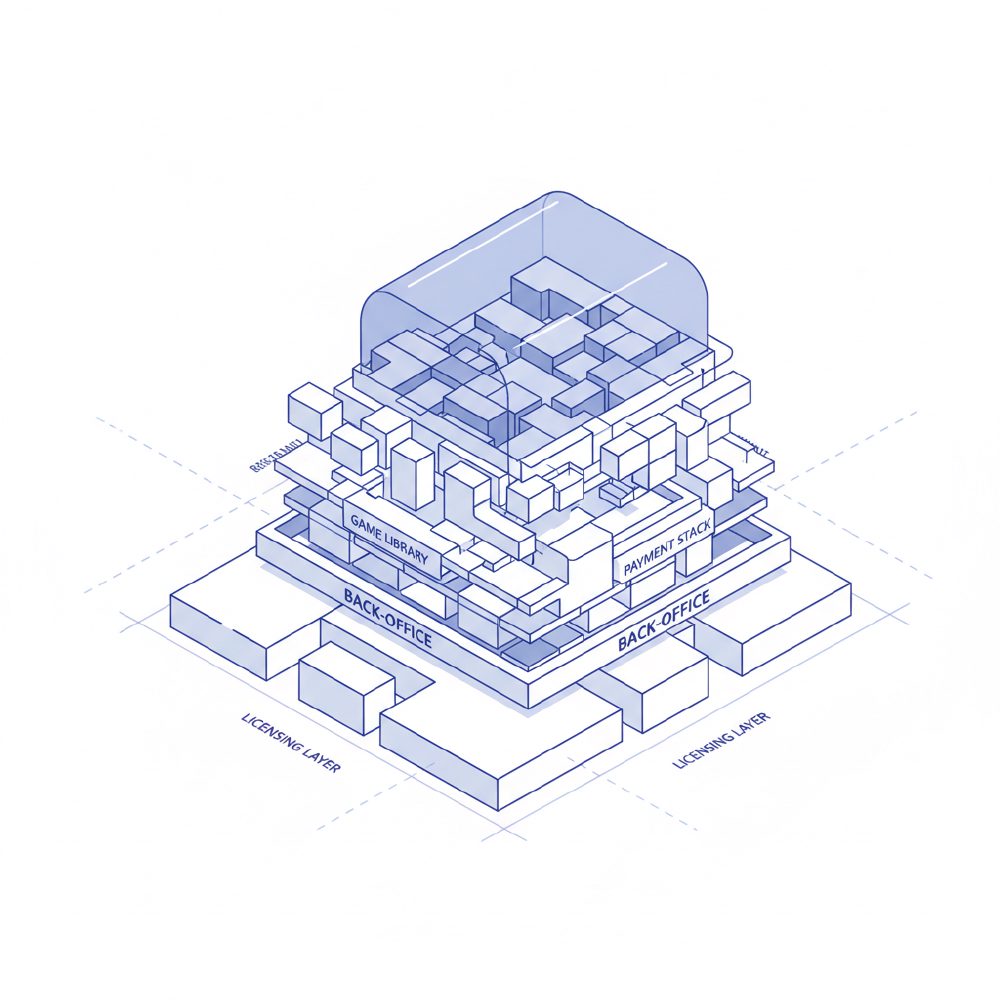
A white label casino is a pre-built gambling platform — games, payments, back-office, CRM — that a provider operates on your behalf under your brand. You control marketing and player acquisition; the provider controls the infrastructure and holds (or sub-licenses) the gambling license. A turnkey solution ships the same stack but hands you full operational and legal ownership.
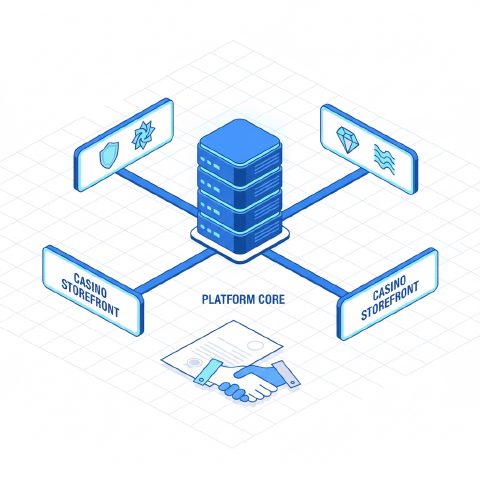
The distinction matters more than most vendors let on. With a white label arrangement, the platform provider — think SoftSwiss, EveryMatrix, Slotegrator, or BtoBet — remains the merchant of record and often the license holder. You're essentially a marketing affiliate with a branded front end. That's not an insult; it's a deliberate trade-off that makes sense for operators who want to test a market without committing to a direct license application, which can take 6–18 months and cost $50,000–$200,000 in legal and regulatory fees alone.
Turnkey flips that equation. The provider builds and configures the platform, integrates the game content and payment methods, then transfers operational control to you. You apply for your own license — Curaçao eGaming, Anjouan, MGA, whatever fits your market — and you run the back-office yourself. The upfront cost is higher (typically $100,000–$400,000 for a full turnkey build from a reputable provider), but you own the player data, the payment relationships and the P&L without a permanent revenue share draining your margin.
There's a third category worth naming: headless or API-first platforms like Softswiss Casino Platform or EveryMatrix's modular stack, where you license individual modules — game aggregation, wallet, CRM — and build your own front end on top. This sits between white label and full custom development in both cost and flexibility. For operators with a development team and a clear product vision, it's often the smartest path. For everyone else, the white label is the pragmatic starting point.
| Dimension | White Label | Turnkey | Custom Build |
|---|---|---|---|
| Time to launch | 4–12 weeks | 3–6 months | 12–24+ months |
| Upfront cost (est.) | $15K–$80K | $100K–$400K | $500K–$2M+ |
| Ongoing cost | 15–45% GGR rev-share | Platform fee + lower rev-share | Hosting + staff + maintenance |
| License ownership | Provider's sub-license | Your own license | Your own license |
| Player data ownership | Shared or provider-held | Yours | Yours |
| Platform control | Low | Medium–High | Full |
| Best for | Market testing, lean launches | Serious operators, Series A+ | Large operators, proprietary IP |
What does a white label casino solution actually cost in 2026?
Expect a setup fee of $15,000–$80,000 and an ongoing revenue share of 15–45% of GGR, depending on the provider and your negotiated volume tiers. Some providers add monthly minimum fees of $2,000–$10,000. The revenue share is the number that kills margins at scale — model it carefully before signing anything.
The setup fee is the easy part. It covers platform configuration, front-end skinning, payment gateway integration and the sub-license fee passed through from the provider. SoftSwiss, one of the most widely used white label providers, has historically charged in the $30,000–$60,000 range for setup, though exact current pricing is under NDA and varies by market. Slotegrator and Digitain tend to sit lower on setup but compensate with higher rev-share floors. Always get a full cost schedule in writing — line by line — before the letter of intent.
The revenue share is where operators get surprised. A 30% GGR rev-share sounds manageable when you're doing $50,000 a month. At $500,000 monthly GGR, you're handing $150,000 to the provider every single month — $1.8M a year — for infrastructure you could license independently for a fraction of that. I've seen operators hit that scale and immediately start a parallel turnkey migration, which is expensive and disruptive. The time to model the breakeven point is before launch, not after.
Additional cost layers that don't always appear in the headline quote: payment processing fees (typically 2–5% per transaction on top of whatever the provider negotiates with PSPs), game licensing fees if certain studios aren't included in the bundle, responsible gambling tooling (increasingly mandatory even on Curaçao post-2023 reform), and fraud/AML screening software. Budget an extra $2,000–$8,000 per month for these ancillary costs at a modest operator scale. Some providers bundle them; most don't.
Which licensing jurisdictions work with white label casino setups?
Curaçao eGaming and Anjouan (ACCS) are the two jurisdictions where white label sub-licensing is standard practice and fastest to activate — typically 4–8 weeks for a sub-license. MGA (Malta), UKGC and most regulated EU markets require a direct operator license and are structurally incompatible with most white label arrangements.
Curaçao has been the default offshore white label jurisdiction for two decades, and it's still the most common entry point. The 2023 Curaçao gaming reform (National Ordinance on Offshore Games of Hazard) tightened things up — operators now need to demonstrate more substance, and the regulator is actively reviewing master license holders. The practical impact for white label operators: your provider's master license quality matters more than it used to. Ask specifically which master license holder covers your sub-license and check their standing with the Curaçao Gaming Control Board (GCB). Providers operating under shaky master licenses are a compliance liability you don't want.
Anjouan (Comoros Islands) has emerged as a credible alternative since 2022, with the Anjouan Council for Commerce and Sports (ACCS) issuing operator licenses directly rather than via sub-licensing. It's cheaper than Curaçao (license fees in the $10,000–$25,000 range, though these shift) and the application timeline is fast — sometimes under four weeks. The trade-off is lower brand recognition with payment processors and B2B suppliers, which can complicate PSP onboarding. For crypto-first operations, Anjouan works well. For fiat-heavy models targeting Europe, Curaçao still has better PSP relationships.
For operators targeting regulated markets — Ontario, New Jersey, Pennsylvania, Colombia (Coljuegos), Peru (MINCETUR), Mexico (SEGOB), or any EU member state — white label is generally a transitional tool at best. These regulators require the operator to hold the license directly, demonstrate technical compliance (RNG certification, responsible gambling controls), and often mandate local data storage. The white label provider can help you build toward that application, but the license has to be yours. Trying to serve regulated-market players on a Curaçao sub-license is a compliance risk that ends careers and companies.
| Jurisdiction | White Label Sub-license? | Approx. Timeline | Approx. Annual Fee | Key Constraint |
|---|---|---|---|---|
| Curaçao eGaming | Yes (via master license) | 4–8 weeks | $15K–$30K (varies) | Master license quality; 2023 reform scrutiny |
| Anjouan (ACCS) | Direct license, not sub-license | 2–5 weeks | $10K–$25K | PSP acceptance lower than Curaçao |
| Malta (MGA) | No — direct license only | 6–12 months | €25K app + annual fees | Full B2C operator requirements |
| UKGC | No — direct license only | 4–9 months | £5K–£100K+ (GGR-based) | Strictest AML/RG standards |
| Coljuegos (Colombia) | No — direct license only | 6–18 months | ~$150K+ total cost | Local entity, peso payments required |
| US States (NJ/PA/MI) | No — direct license only | 12–24+ months | $250K–$500K+ total cost | Extensive suitability review |
Which white label casino providers are worth evaluating in 2026?
SoftSwiss, EveryMatrix, Slotegrator, Digitain, and BtoBet are the most established names with verifiable operator track records. Each has a different strength: SoftSwiss leads on crypto support, EveryMatrix on modularity, Slotegrator on speed and cost for lean launches. No single provider is best — it depends on your market, payment mix and growth plan.
SoftSwiss Casino Platform is probably the most-cited name in white label circles, and for good reason. Their integrated crypto processing (BitcoinPay, native wallet support), game aggregator with 15,000+ titles, and CRM tools are genuinely well-built. They operate under a Curaçao master license and have a track record of supporting operators through license upgrades. The downside: they're not cheap, the rev-share negotiation is tough unless you come in with strong volume projections, and their customer support has been inconsistently rated by operators I've spoken with at scale. Still, for a crypto-forward or hybrid fiat/crypto operation, they're a serious option.
EveryMatrix takes a more modular approach. Their CasinoEngine aggregator, OddsMatrix sportsbook, and MoneyMatrix payment platform can be licensed separately or as a bundle. This is useful if you already have one piece of the stack and just need the other. Their white label offering is less prominent than their B2B module licensing, but they do support white label arrangements for operators who qualify. They hold an MGA B2B license and have integrations with most major EU-regulated markets — valuable if your roadmap includes a regulated market entry.
Slotegrator is the budget-friendly option that often gets overlooked by operators chasing the premium names. Setup fees are lower, they move fast, and their APIgrator aggregation product gives access to 10,000+ games from 100+ studios. The trade-off is less hand-holding, a lighter CRM, and fewer payment integrations out of the box. For a lean launch with a tight budget and a team that can handle operational complexity, Slotegrator is worth a serious look. Digitain and BtoBet are stronger on the sportsbook side — if your model is casino-led, they're not the first call I'd make.
A few providers that have grown fast since 2023 and deserve due diligence: Turnkey Sport (now expanding into casino), Hub88 (aggregator-first, increasingly used as a white label backbone), and Altenar (sportsbook-focused but with casino module). The market has fragmented — there are now dozens of credible providers, which means your negotiating position is better than it was five years ago. Use that. Get three competing quotes before signing anything.
What games and content come with a white label casino package?
Most white label packages include access to a game aggregator with 5,000–15,000+ titles from 50–150+ studios. The key variables are which Tier 1 studios are included (Pragmatic Play, Evolution, Hacksaw), whether live casino is bundled, and whether studio-specific revenue share is hidden inside the platform fee or billed separately.
The game library headline number — '10,000 games!' — is marketing. What matters operationally is the quality and completeness of Tier 1 content. Pragmatic Play (slots and live), Evolution Gaming (live casino), Play'n GO, Hacksaw Gaming, and Nolimit City drive the majority of player GGR in most markets. If your white label provider doesn't have direct or aggregated deals with at least three of those five, your lobby is going to underperform regardless of how many total titles you have. Ask for the specific studio list, not just the total count.
Live casino is the expensive piece. Evolution holds a near-monopoly on premium live dealer content and charges accordingly — their revenue share for operators is typically 15–20% of live casino GGR, and that's on top of whatever your platform provider takes. Some white label providers bundle Evolution access into their platform fee; others pass the cost through directly. Clarify this before signing. A white label operator running a high-volume live casino operation without clarity on Evolution's share structure has found a very unpleasant surprise waiting in their first monthly reconciliation.
Aggregators that commonly underpin white label game libraries include SoftSwiss Game Aggregator, Relax Gaming Silver Bullet, Pariplay Fusion, and Hub88. Each has different studio relationships and geographic restrictions — some studios restrict their content by jurisdiction, which means a game available in your demo environment may not be licensable in your target market. Run a content audit against your target jurisdiction before launch. I've seen operators go live with 20% of their lobby greyed out because they skipped this step.
How do payments and banking work for a white label online casino?
Your white label provider typically handles PSP relationships on your behalf, which speeds up launch but limits your control. You'll usually get 3–8 payment methods at launch — card processing, one or two e-wallets, and sometimes crypto. Adding methods later is slower and more expensive than operators expect, especially for fiat processors in restricted banking categories.
Payment processing is where white label operators feel the most friction, and it's the area vendors underplay most aggressively in sales conversations. Online gambling is a high-risk merchant category. Most mainstream acquirers won't touch it. The PSPs that do — Nuvei, Payvision, PayRetailers for LATAM, Praxis Cashier as a payment orchestration layer — charge 3–6% per transaction and require significant due diligence before onboarding. When your white label provider handles this on your behalf, they've already done that onboarding, which is genuinely valuable. But you're also on their merchant account, which means chargebacks from other operators on the same account can affect your processing rates.
Crypto payments are the cleanest path for offshore operators. Providers like CoinsPaid (now rebranded as CP Money) or BitcoinPay integrate natively with most white label platforms and process Bitcoin, Ethereum, Litecoin, and stablecoins with minimal friction. Crypto eliminates the banking risk entirely for deposits, though withdrawal compliance (KYC/AML on crypto withdrawals) is increasingly scrutinized by Curaçao and Anjouan regulators post-2023. Don't treat crypto as a compliance shortcut — treat it as a payment method that happens to have different infrastructure requirements.
For operators targeting specific regional markets — LATAM, Southeast Asia, or Africa — local payment methods are non-negotiable for conversion. Brazilian PIX, Mexican SPEI, Colombian PSE, or Southeast Asian e-wallets like GCash and TrueMoney won't be in your white label package by default. You'll need to negotiate add-ons, and some providers simply don't have these integrations. If your target market requires local payment rails, validate that your provider can deliver them before you commit to a contract. PayRetailers and Pagsmile cover much of LATAM; Payz and AstroPay have broader emerging market reach.
How long does it actually take to launch a white label casino?
A realistic white label launch timeline is 6–14 weeks from contract signing to going live, assuming your KYC documents are in order, your domain is ready, and you don't change scope mid-project. The 4-week timelines some providers advertise assume zero complications — budget for 10 weeks and be pleasantly surprised.
The critical path usually looks like this: Week 1–2, contract execution and KYC/AML documentation submission (this is often the bottleneck — have your corporate structure, UBO documentation, and source-of-funds paperwork ready before you sign). Week 2–4, platform configuration, brand asset delivery, and front-end skinning. Week 4–8, payment integration and testing — this is where timelines slip most often, because PSP onboarding has its own timeline independent of your provider. Week 8–10, game content audit, responsible gambling tool configuration, and UAT. Week 10–12, soft launch with limited traffic. Week 12–14, full launch.
Sub-license activation runs in parallel with the platform build and typically takes 4–8 weeks for Curaçao. If your provider already has a master license and a streamlined sub-licensing process, this doesn't gate your launch. If they're applying for a new sub-license or you're working with a provider whose master license is under review (relevant post-2023 Curaçao reform), it can add 4–6 weeks of uncertainty. Confirm the sub-license status before you start the platform build clock.
What actually causes delays in practice: scope changes after the project kicks off (adding a sportsbook module, changing the payment stack, requesting custom bonus mechanics), slow document submission from the operator's side, and PSP onboarding delays. I've seen launches slip from 8 weeks to 22 weeks because the operator changed their payment requirements three times. Lock your scope in the SOW and hold it. Every change order costs time and usually money.
What are the biggest risks and hidden costs operators discover after launch?
The three risks that catch operators off guard most often are: revenue share erosion at scale (which makes the unit economics look completely different at $200K vs $20K monthly GGR), platform dependency creating leverage for the provider at contract renewal, and player data ownership disputes if you ever want to migrate off the platform.
Revenue share erosion is the slow bleed. At a 30% GGR rev-share, your effective platform cost as a percentage of revenue stays constant regardless of how efficiently you run your operation. Unlike a SaaS fee that stays flat as you scale, the rev-share grows with every dollar of player revenue. Operators who hit $300,000–$500,000 monthly GGR start doing the math and realizing they're paying $90,000–$150,000 per month to a provider for infrastructure they could license independently for $15,000–$25,000/month. The problem is that migrating off a white label platform mid-operation is genuinely painful: player data portability is often restricted by contract, bonus balances need to be honored, and the technical migration takes 3–6 months minimum.
Player data ownership is the clause operators read too late. Some white label providers retain ownership or co-ownership of the player database — meaning if you terminate the contract, you can't take your players with you. This is a deal-killer for any operator with a serious long-term plan. Negotiate explicit player data portability and ownership into the contract before signing. Get it in writing, get it reviewed by an iGaming lawyer, and don't accept vague language about 'reasonable data export.' Specify format, timeline and completeness.
Contract renewal leverage is real. After 18–24 months on a white label platform, your operation is deeply embedded: your players are used to the UX, your CRM automations are built on the provider's tools, your payment methods are tied to their merchant accounts. The provider knows this. I've seen providers raise rev-share rates by 5–8 percentage points at renewal with operators who had no credible exit option. The antidote is to start planning your migration or renegotiation at month 12, not month 23. And always negotiate a 30-day termination clause with data portability rights — most providers will agree to this if you push at the initial contract stage.
Other costs that surface post-launch: responsible gambling tool upgrades (Curaçao's 2023 reform and increasing PSP requirements are pushing these from optional to mandatory), fraud and bonus abuse (budget 2–5% of GGR for fraud losses in the first six months until your detection is tuned), and affiliate platform fees if you're running an affiliate program — most white label providers don't include a full affiliate management system, so you'll be paying for Income Access, MyAffiliates, or a similar platform separately.
How should operators evaluate and compare white label casino providers?
Evaluate providers across six dimensions: platform stability and uptime SLA, game library depth (especially Tier 1 studios), payment method coverage for your target market, licensing quality, contract terms (rev-share, data ownership, exit clauses), and post-launch support quality. Get references from live operators on the platform — not just the sales deck.
Start with the contract, not the demo. The demo will always look good. The contract is where you find out whether the provider is a real partner or a revenue-extracting landlord. Key clauses to scrutinize: revenue share rate and volume tiers, minimum monthly fees, data ownership and portability rights, SLA for uptime and incident response, exclusivity restrictions (some providers restrict you from launching competing brands), and the termination clause. Have an iGaming-specialist lawyer review it — not a general commercial lawyer. The iGaming contract nuances around player data, sub-licensing and game content rights are specific enough that a generalist will miss things.
Platform stability is harder to assess from the outside, but not impossible. Ask for an uptime report from the past 12 months. Ask which infrastructure provider they run on (AWS, GCP, Azure — a provider running on a single bare-metal server in an unspecified location is a red flag). Ask about their incident response process and whether you get a dedicated account manager or a shared support queue. Talk to two or three operators currently live on the platform — not references the provider selects, but operators you find independently through LinkedIn or industry events. The difference between what a provider's sales team says and what their live operators experience is often significant.
Game library due diligence: request the full studio list, confirm which studios are direct integrations versus aggregated (aggregated content has an extra rev-share layer), and cross-reference against your target jurisdiction's restricted content list. Run this against your payment stack — some studios have geo-restrictions that apply at the payment level, not just the game level. This sounds tedious. It is. Do it anyway.
| Evaluation Dimension | What to Ask / Check | Red Flags |
|---|---|---|
| Platform uptime SLA | Request 12-month uptime report; ask infrastructure provider | No SLA in contract; vague 'best efforts' language |
| Game library | Full studio list; Tier 1 coverage; aggregator vs direct deals | Headline count only; no Pragmatic Play or Evolution |
| Payment coverage | PSP list for your target market; local methods included? | Card processing only; no local payment rails for your region |
| Licensing quality | Master license holder name; GCB standing (Curaçao); current status | Refuses to name master license holder; license under review |
| Contract terms | Rev-share rate; data portability; termination clause; minimums | No data portability; auto-renewal with rate increase clause |
| Support quality | Dedicated account manager or shared queue; response SLA | Support only via ticket system; no named contact |
Is a white label casino still the right choice for operators launching in 2026?
White label is still the right starting point for operators with under $200,000 in launch capital, those testing a new market before committing to a direct license, or those who need to be live in under three months. For operators with a clear market, strong funding and a 24-month GGR target above $3M annually, a turnkey or headless build will almost always generate better long-term unit economics.
The white label market has actually gotten more competitive since 2022, which is good for operators. More providers, more modular options, and better-negotiated terms are available if you know what to ask for. The core trade-off hasn't changed: you're buying speed and simplicity at the cost of margin and control. That's a rational trade for the right operator profile.
Where I see operators make the wrong call is treating white label as a permanent operating model rather than a launch vehicle. If your business plan shows $5M+ annual GGR within three years, the rev-share math is brutal. Model it explicitly: take your GGR projection, apply the rev-share rate, and compare that to the cost of a turnkey build amortized over three years. In most cases, the turnkey pays back within 18–24 months at meaningful scale. The white label is cheaper to start; the turnkey is cheaper to operate at scale.
The regulatory environment in 2026 also adds a layer of complexity that didn't exist three years ago. Curaçao's ongoing reform, increased PSP scrutiny of offshore gambling merchants, and the expansion of regulated markets in LATAM and North America mean that an offshore white label operation has a shorter runway before it needs to either migrate to a regulated license or exit certain markets. Build that into your planning. The operators who are thriving on white label in 2026 are the ones who launched on it, validated their model, and are now 12 months into a regulated market license application — not the ones who assumed the offshore model would run indefinitely without regulatory pressure.





Comments
No comments yet, be the first.