How to Start an Online Crypto Casino in 2026: A Step-by-Step Operator Blueprint

What exactly is a crypto casino and how is it different from a standard online casino?
A crypto casino accepts cryptocurrency as its primary deposit and withdrawal method, often settling player balances in BTC, ETH, LTC or stablecoins like USDT. The back-end mechanics are identical to a standard casino. The real differences are in the payment layer, the KYC threshold rules, and the licensing jurisdiction that tolerates crypto settlement.
The term 'crypto casino' covers a spectrum. At one end you have pure-play crypto sites that never touch fiat at all, run provably fair games on-chain, and operate with minimal KYC under an Anjouan or Curaçao sub-licence. At the other end you have hybrid operators, think Stake or BC.Game scale, that accept dozens of cryptocurrencies alongside EUR, USD and BRL fiat, hold an MGA or Curaçao master licence, and run full AML programmes. Most new operators in 2026 are building toward that hybrid model because the pure-crypto-only approach caps your addressable market too aggressively.
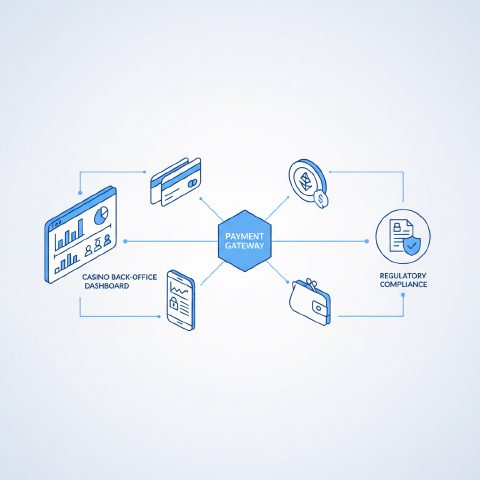
From a platform architecture standpoint, the main additions over a standard casino are a crypto payment gateway (CoinsPaid, B2BinPay and NOWPayments are the three most commonly integrated), a wallet layer that handles multi-coin balances, and a currency conversion module if you want to display balances in USD-equivalent. None of this is exotic, SoftSwiss and EveryMatrix both ship these modules as part of their white-label stack. The complexity comes in reconciliation and AML screening, because blockchain transaction monitoring tools like Chainalysis or Scorechain need to plug into your back-office.
Regulatorily, crypto casinos occupy a grey area in most jurisdictions. The EU's MiCA regulation (fully in force from December 2024) classifies crypto assets but does not directly regulate gambling; you still need a gambling licence. The US treats crypto gambling the same as fiat gambling, state by state, with no federal carve-out for blockchain payments. Offshore, Curaçao's 2023 gaming ordinance and the subsequent 2024 implementation rules explicitly addressed crypto operators for the first time, requiring crypto transaction monitoring as a condition of the new master licence.
Which gambling licence should you choose for a crypto casino launch?
For most new crypto casino operators, Curaçao's new master licence (under the National Ordinance on Offshore Games of Hazard, effective 2024) or an Anjouan licence is the fastest and cheapest offshore path. If you plan to serve EU residents or want European banking, MGA is the credible option, but expect a 12-18 month process and a six-figure compliance budget.
Curaçao overhauled its licensing framework in 2023-2024. The old sub-licence model (where operators rented a licence from a master holder) is being phased out. New applicants now apply directly to the Curaçao Gaming Control Board for a master licence. The application fee is around USD 5,000, annual licence fees are roughly USD 20,000-30,000 (figures as of early 2025, verify with a local agent because the fee schedule was still being finalised at publication), and you need a locally incorporated entity. Processing time is typically 3-6 months. Critically, the new regime requires crypto transaction monitoring and a registered AML officer, so budget for that infrastructure from day one.
Anjouan (Comoros) has become a genuine alternative for operators who want a low-cost, fast-to-obtain offshore licence. The Anjouan Offshore Finance Authority issues gambling licences in roughly 4-8 weeks for around USD 15,000-25,000 annually. The licence is recognised by fewer payment processors than Curaçao, so you need to verify processor acceptance before you commit. It works well for crypto-heavy operations where you are leaning on crypto PSPs rather than card acquirers.
MGA (Malta Gaming Authority) is the gold standard for EU-facing operators. It gives you access to European banking, Visa/Mastercard acquiring, and the credibility to sign direct contracts with top-tier game studios. The downside: the application process runs 12-18 months, the initial compliance setup costs EUR 100,000-250,000 in legal and technical fees, and ongoing compliance costs are significant. If you are starting a crypto casino and aiming at the EU market seriously, MGA is the right long-term target, but most operators launch on Curaçao first and migrate or dual-licence later.
A word on US-facing crypto casinos: do not do it without state-specific licences. No offshore licence provides legal cover for US residents. The DOJ's Wire Act position and state-level enforcement have not softened for crypto operations. If you want the US market, you need to go through regulated state frameworks, currently New Jersey, Pennsylvania, Michigan, Connecticut and West Virginia for online casino, and those frameworks require USD fiat payment rails, not crypto-first stacks.
| Jurisdiction | Regulator | Est. Timeline | Annual Cost (USD) | Crypto Explicitly Covered | EU Banking Access |
|---|---|---|---|---|---|
| Curaçao (new master) | Curaçao GCB | 3-6 months | 20,000-30,000 | Yes (post-2024 ordinance) | Limited |
| Anjouan | AOFA | 4-8 weeks | 15,000-25,000 | Yes (operator-declared) | Very limited |
| Malta (MGA) | Malta Gaming Authority | 12-18 months | 25,000+ (plus compliance) | Permitted, not mandated | Strong |
| Isle of Man | GSC | 6-12 months | 35,000-50,000 | Permitted | Moderate |
| Gibraltar | GRA | 9-15 months | 100,000+ | Permitted | Moderate-strong |
Should you use a white-label platform, a turnkey solution or build custom?
For a first crypto casino launch, white-label is almost always the right call. You get a live product in 8-14 weeks, proven payment integrations, and a game library out of the box. Custom builds make sense only if you have a genuinely differentiated product concept and a technical team that has shipped casino back-office before. Turnkey sits in between and is worth considering if you want more control over the front-end.
White-label platforms like SoftSwiss Casino Platform, EveryMatrix CasinoEngine, and Digitain provide everything under one contract: game aggregation, payment processing, CRM, bonus engine, back-office, and often a Curaçao sub-licence (though the new master-licence regime is changing that). Setup fees typically run USD 20,000-60,000 with a revenue share of 15-25% of GGR. The trade-off is that you are constrained by the platform's roadmap, you share infrastructure with other operators, and your differentiation is mostly in brand, bonus strategy and traffic acquisition.
Turnkey solutions give you a licensed, hosted platform that you can customise more deeply at the front-end. Providers like Softswiss (their Turnkey product), BetConstruct and Digitain offer this model. You own more of the player experience but still rely on the provider for core infrastructure. Costs are higher, expect USD 50,000-150,000 upfront plus ongoing fees, and timelines stretch to 12-20 weeks. This is a reasonable middle ground if you have a strong brand vision and a development team to handle front-end work.
Custom builds are genuinely expensive and slow. A properly architected casino back-office, payment routing, game integration layer, wallet, CRM, fraud and AML tooling, takes 12-18 months and costs USD 500,000 to USD 2M+ depending on scope and team location. The operators who succeed with custom builds are typically second or third ventures by founders who already understand the domain deeply. If this is your first casino, a custom build is how you spend a year and a lot of money to learn what white-label operators already know.
| Dimension | White-Label | Turnkey | Custom Build |
|---|---|---|---|
| Time to launch | 8-14 weeks | 12-20 weeks | 12-18 months |
| Upfront cost (USD) | 20,000-60,000 | 50,000-150,000 | 500,000-2,000,000+ |
| Ongoing cost model | Rev share 15-25% GGR | Rev share or flat fee | Internal team + infra |
| Customisation | Low-medium | Medium-high | Full |
| Crypto payment support | Built-in (SoftSwiss, etc.) | Configurable | Build or integrate |
| Best for | First launch, lean teams | Operators with dev resource | Scaled, differentiated products |
How do you build a payment stack that handles both crypto and fiat?
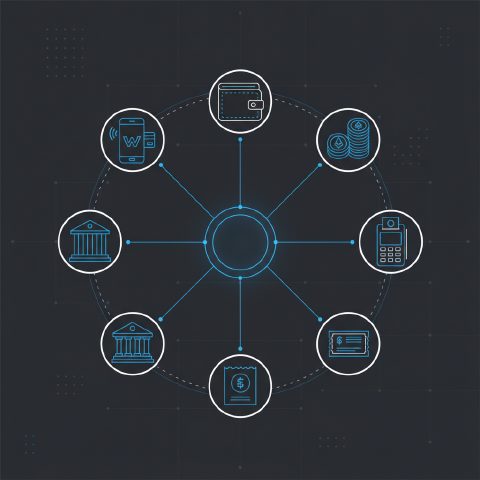
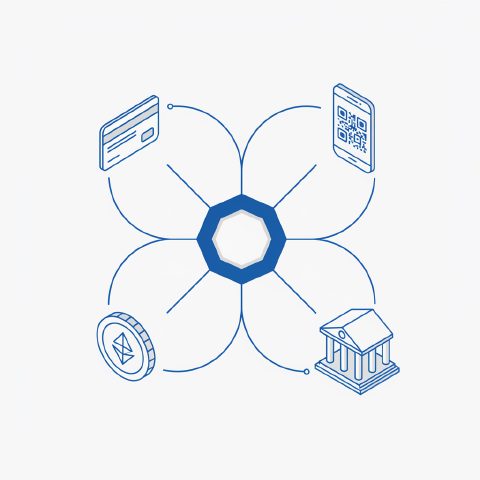
A hybrid payment stack for a crypto casino needs at minimum one crypto payment gateway, one fiat card acquirer and one alternative payment method covering your target markets. CoinsPaid and B2BinPay dominate the crypto gateway space for operators. For fiat, your options depend entirely on your licence jurisdiction, MGA-licensed operators have far more acquirer choices than Curaçao operators.
On the crypto side, CoinsPaid is the most widely integrated gateway in the B2B iGaming space, supporting 50+ cryptocurrencies, auto-conversion to EUR/USD, and direct integrations with SoftSwiss, EveryMatrix and most major platforms. B2BinPay is a strong alternative with better coverage of newer altcoins and a more flexible API. NOWPayments is popular for operators who want a lighter-touch, lower-volume integration. Processing fees across these providers typically run 0.4-1.0% per transaction, which is significantly cheaper than card acquiring.
Fiat acquiring for crypto casinos is the genuinely hard part. High-street banks and Tier-1 acquirers avoid gambling merchants in most jurisdictions. Your realistic options are: specialist iGaming acquirers (Payvision, Fonix, Unlimint, Genome), e-wallets (Skrill, Neteller, both owned by Paysafe and both requiring MGA or equivalent for onboarding), and local bank transfer solutions for specific markets (PIX for Brazil, UPI for India if you serve those markets). Expect card acquiring fees of 3-6% for offshore-licensed operators versus 1.5-2.5% for MGA-licensed ones. That spread is a real cost that compounds at scale.
For operators targeting European players specifically, the combination of MGA licence plus Skrill/Neteller plus a mid-tier card acquirer like Unlimint or Genome is a proven baseline. Add CoinsPaid for crypto and you have covered 80%+ of European player payment preferences. LATAM operators need to layer in local methods: PIX (Brazil), OXXO (Mexico), PSE (Colombia) and Khipu (Chile) are non-negotiable in those markets. No crypto gateway replaces these, players in those markets expect local payment options regardless of whether the casino accepts BTC.
One structural decision that catches operators off guard: decide early whether you will hold player balances in crypto or convert to fiat on receipt. Holding in crypto exposes you to volatility risk on your liability book. Most operators using white-label platforms default to auto-conversion to USD or EUR at deposit, which is the operationally simpler choice. Pure crypto casinos that hold in BTC are making a deliberate treasury bet, that is fine if it is intentional, but it is not a default you want to stumble into.
What game content do you need and how do you source it for a crypto casino?
At launch, 1,500-3,000 titles from a game aggregator is a credible library. You do not need 10,000 games on day one, you need the top 200 performers from providers like Pragmatic Play, Hacksaw Gaming, Nolimit City and Evolution Gaming for live dealer. A single aggregator contract through Softswiss Game Aggregator, Relax Gaming Hub or Slotegrator covers most of this.
Game aggregators are the practical route for new operators. Rather than negotiating 15-20 separate studio contracts, you sign one deal with an aggregator who has already done the legal and technical integration work. Softswiss Game Aggregator, Relax Gaming Hub, Pariplay (now Ignite), and Slotegrator are the major players. Revenue share through an aggregator typically runs 10-15% of GGR on top of the studio's own share, so your effective game content cost is higher than a direct deal, but the time savings are worth it at launch. You can always migrate high-volume studios to direct contracts once you have the traffic to justify the minimum guarantees they will ask for.
For a crypto casino specifically, a few content decisions matter more than usual. Provably fair games are a differentiator for crypto-native players, these are games where the outcome can be verified on-chain by the player. BGaming is the leading studio in this space and their titles are available through most aggregators. Including 20-30 provably fair titles signals to the crypto community that you take transparency seriously. It is a relatively cheap signal with disproportionate brand value in that segment.
Live dealer is non-negotiable for any serious casino product in 2026. Evolution Gaming holds roughly 70% of the live casino market and their content is available through most aggregators. Pragmatic Play Live and Ezugi are credible alternatives at lower cost. Budget for live dealer separately because the revenue share rates are often higher (12-18% of GGR) and Evolution in particular has minimum commitment requirements that can be significant for smaller operators. Do not launch without at least a basic live dealer lobby, players who hit a slots-only site bounce fast.
How do KYC and AML requirements work for a crypto casino?
Crypto casinos are not a KYC-free zone in 2026, even Curaçao's new master licence requires identity verification at defined thresholds and blockchain transaction monitoring. The specific thresholds vary by jurisdiction, but the direction of travel everywhere is toward stricter standards. Build your KYC infrastructure before launch, not as an afterthought.
Under Curaçao's 2024 gaming ordinance, operators must implement a risk-based AML programme, collect identity documents at defined deposit thresholds (the exact figures were subject to regulatory guidance updates through 2025, confirm with your compliance counsel), and screen customers against sanctions lists. Anjouan has similar requirements on paper, though enforcement has historically been lighter. MGA operators face the most rigorous standard: full KYC before first withdrawal, source-of-funds checks at escalating deposit levels, and mandatory reporting to the FIAU (Malta's financial intelligence unit).
For crypto-specific AML, the key tool is blockchain analytics. Chainalysis KYT (Know Your Transaction) and Scorechain are the two most operator-friendly solutions. They screen incoming crypto deposits against known illicit wallet clusters, flag high-risk transactions, and generate the audit trail your regulator will want to see. Pricing is typically volume-based, budget USD 1,000-3,000 per month for a small operator, scaling with transaction volume. This is not optional; it is the difference between keeping your licence and losing it.
KYC identity verification vendors commonly used in iGaming include Jumio, Onfido, Sumsub and Veriff. Sumsub has strong iGaming-specific workflows and is widely used by crypto casino operators. Pricing runs roughly USD 1-3 per verification depending on volume and document type. Your white-label platform may include a KYC integration, SoftSwiss integrates with Sumsub natively, for example, but verify the configuration matches your licence obligations rather than assuming the default setup is compliant.
What does it actually cost to start a crypto casino in 2026?
A realistic budget for a white-label crypto casino launch on a Curaçao licence runs USD 80,000-200,000 for the first year, covering licensing, platform setup, payment integration, compliance tooling and initial marketing. That figure can double quickly if you underestimate payment processor deposits, legal fees or player acquisition costs.
Breaking down the major cost buckets: licensing and legal runs USD 20,000-50,000 in year one (Curaçao application, local company formation, legal review of operator agreement and T&Cs). Platform setup on a white-label is USD 20,000-60,000 upfront plus ongoing revenue share. Payment processor setup requires security deposits with acquiring banks, these can run USD 10,000-50,000 per processor and are held as rolling reserves. Compliance tooling (KYC vendor, blockchain analytics) adds USD 15,000-30,000 annually. And then there is customer acquisition, which is where most new operators dramatically underestimate spend.
Player acquisition for a new crypto casino is expensive. Affiliate commissions in the crypto casino space typically run 25-40% revenue share or USD 100-300 CPA per depositing player. If your first-year target is 1,000 depositing players at an average CPA of USD 150, that is USD 150,000 in affiliate costs alone, before you account for bonuses (which typically add another 20-30% of GGR). Budget for a 12-month runway that covers both fixed costs and acquisition spend, because most crypto casinos take 6-9 months to reach positive monthly cash flow.
The costs that operators most frequently underestimate: rolling reserves held by payment processors (often 10% of processing volume held for 180 days, meaning your cash flow is constrained for the first six months); legal costs for player disputes and regulator correspondence; and the ongoing cost of maintaining a compliance programme as regulations evolve. A responsible budget for year one is USD 150,000-300,000 for a lean but properly structured operation. Anything below USD 80,000 and you are cutting corners that will cost more to fix later.
How do you handle responsible gambling and player protection requirements?
Responsible gambling tooling is a licence condition on every reputable jurisdiction, not a nice-to-have feature. At minimum you need deposit limits, session limits, self-exclusion, and links to problem gambling resources. MGA operators additionally need to integrate with GAMSTOP (for UK-facing players) and Malta's self-exclusion register. Build these into your platform spec from day one.
Most white-label platforms include a responsible gambling module as standard. SoftSwiss, EveryMatrix and BetConstruct all ship deposit limit, loss limit, session time limit and self-exclusion features. The important thing is to configure them correctly for your licence jurisdiction, the default settings are not always compliant. For example, MGA regulations require that self-exclusion requests take effect immediately and cannot be reversed for a minimum cooling-off period. Some platform defaults allow players to reverse a self-exclusion too quickly.
For Curaçao-licensed operators, the 2024 ordinance introduced explicit responsible gambling requirements for the first time, including mandatory display of problem gambling helpline information and a self-exclusion mechanism. The enforcement is still maturing, but the direction is clear. Operators who build compliant RG tooling from launch are in a much better position when the regulator inevitably tightens standards further.
Third-party tools worth knowing: GamCare and BeGambleAware are the UK-focused resources most players recognise. Gambling Therapy (operated by Gordon Moody) is the international equivalent. Your T&Cs and responsible gambling page should reference the relevant organisation for your target markets. This is both a compliance requirement and a reputational signal, affiliate networks and media buyers increasingly vet operators on RG standards before agreeing to promotion deals.
What does the tech stack look like for a crypto casino and what should you prioritise at launch?
At launch, prioritise platform stability, payment success rates and mobile performance over feature breadth. A crypto casino with a reliable checkout flow and fast crypto confirmations will outperform a feature-heavy site with payment friction every time. Your platform provider handles most of the stack, your job is to configure and test it properly.
If you are on a white-label, your tech stack is largely determined by your platform provider. The pieces you actively manage are: the front-end (your theme, UX and mobile optimisation), the bonus engine configuration, the payment gateway API settings, and the CRM/marketing automation setup. SoftSwiss uses a modular architecture that separates the game aggregation layer from the payment layer, which makes it easier to swap out payment providers without disrupting the game lobby. EveryMatrix's CasinoEngine is similarly modular and has strong documentation for operators who want to customise deeply.
Crypto-specific technical considerations: transaction confirmation times matter for player experience. BTC confirmations take 10-60 minutes; ETH is faster but still variable. Most operators configure their platform to credit player accounts on zero-confirmation (mempool detection) for small deposits and require 1-3 confirmations for larger amounts. This is a balance between UX and fraud risk, your platform provider will have a recommended configuration, but understand the trade-off before you accept the default.
Mobile performance is often the first thing that gets deprioritised in a launch crunch. Do not let that happen. In most markets, 65-75% of casino sessions happen on mobile. A slow mobile checkout or a game lobby that does not render cleanly on iOS Safari will cost you conversion rates that no bonus offer will recover. Test on real devices, not just Chrome DevTools, before you go live. This sounds obvious but it is routinely skipped under launch pressure.
How do you market a crypto casino and acquire players compliantly?
Affiliate marketing is the dominant acquisition channel for crypto casinos, accounting for 40-60% of new depositing players for most operators. Crypto-specific affiliate networks like Income Access, Affmore and dedicated crypto casino affiliate forums (BitcoinTalk, CasinoMeister) are your primary channels. Paid social is heavily restricted for gambling, and Google Ads requires a certified gambling licence for most jurisdictions.
Setting up an affiliate programme is one of the first operational tasks after launch. You can run your own programme using affiliate management platforms like Income Access (now part of Paysafe), MyAffiliates or Affilka (SoftSwiss's native affiliate tool). Alternatively, join an affiliate network like Catena Media, Better Collective or Gambling.com Group as a featured operator. The trade-off: running your own programme gives you more control and lower commission overhead, but building a network of active affiliates takes 6-12 months. Joining an established network gives you faster traffic but at higher cost and less brand control.
Crypto-native marketing channels are genuinely valuable for this product category. Telegram groups and Discord servers dedicated to crypto gambling have large, engaged audiences. Sponsoring crypto influencers on YouTube and Twitter/X can drive significant traffic if the audience aligns with your target player profile. This is less regulated than traditional gambling advertising in most jurisdictions, but it is not unregulated, the FTC in the US and ASA in the UK have both issued guidance on influencer disclosure for gambling promotions.
SEO is a long-term play but worth investing in from day one. Crypto casino is a competitive keyword cluster, but there are valuable long-tail terms around specific cryptocurrencies, payment methods and game types where a new operator can rank within 6-12 months with quality content. Build your content programme around real operator knowledge, the same kind of specificity that makes this article useful, rather than thin affiliate-style content that Google has been systematically downranking since 2023.
What are the biggest mistakes operators make when launching a crypto casino?
The three most expensive mistakes are: launching with an inadequate payment stack and discovering it after players cannot deposit, buying a cheap licence without verifying processor acceptance, and underestimating the working capital needed to fund rolling reserves and player bonuses simultaneously. All three are avoidable with proper pre-launch due diligence.
Licence mismatches with payment processors are the single most common launch-killing problem I see. An operator buys a Curaçao sub-licence (or now a cheap Anjouan licence), integrates a crypto gateway, and then tries to add a fiat card acquirer six months in, only to discover that the acquirer requires a master Curaçao licence, an MGA licence, or a specific list of approved jurisdictions that does not include what they have. The fix is to confirm payment processor acceptance of your specific licence before you apply for it, not after. Call the processor's merchant onboarding team. Get it in writing.
Bonus abuse and fraud is another area where new operators get hurt badly. Crypto casinos attract bonus hunters who use multiple wallets to circumvent deposit limits and claim welcome bonuses repeatedly. Without a robust fraud detection layer, Sumsub's fraud module, ThreatMetrix or a similar device fingerprinting tool, you can lose a significant chunk of your bonus budget to organised abuse within the first few weeks. Your white-label platform should have some protection built in, but configure it aggressively for launch and loosen it as you understand your actual player base.
Finally, underestimating the time and cost of ongoing compliance is a recurring theme. Operators budget for the initial licence application and then discover that maintaining compliance, AML programme updates, regulatory reporting, licence renewal, responding to player complaints escalated to the regulator, consumes 15-20 hours of staff time per week at a minimum. Either hire a dedicated compliance officer or budget for an outsourced compliance consultancy from day one. The alternative is cutting corners that eventually result in licence suspension or, worse, processor termination.



Comments
No comments yet, be the first.