Online Casino Payment Gateway Guide 2026: What Operators Actually Need to Know Before Signing Anything
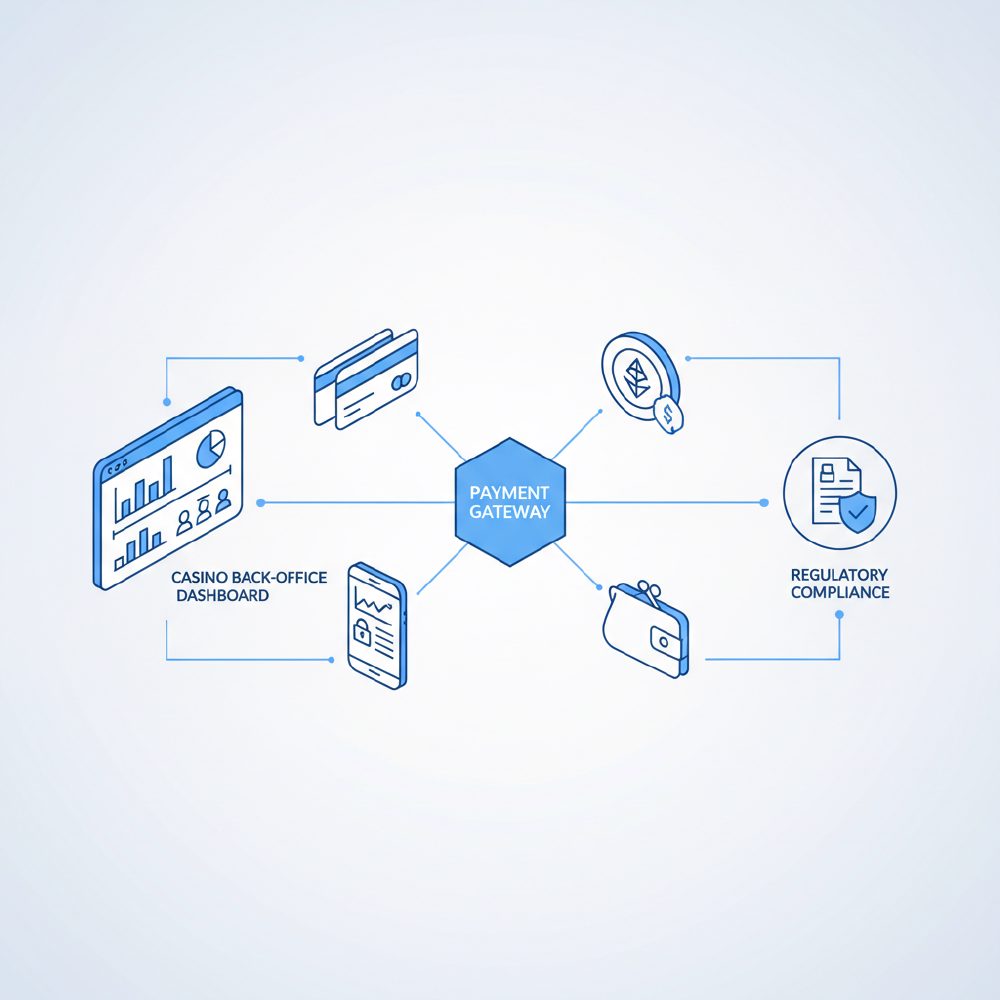
What exactly is an online casino payment gateway and how does it differ from a standard payment gateway?
An online casino payment gateway is a high-risk payment processing layer purpose-built to handle the compliance, chargeback and banking-relationship demands of licensed gambling operators. Standard gateways, Stripe, Braintree, Square, explicitly prohibit gambling in their terms of service and will terminate your account without notice. Casino-specific gateways carry the acquiring relationships, MCC codes and fraud tooling that gambling actually requires.
The technical difference is smaller than the commercial one. Both gateway types tokenize card data, route authorization requests to acquiring banks and return a response in under two seconds. What separates them is the entire ecosystem sitting behind that flow. A casino payment gateway operates under MCC code 7995 (betting and lottery), which most mainstream acquirers refuse to touch. The providers that serve this vertical, Payvision (now part of ING's wind-down legacy), PaymentIQ by Devcode, Praxis Cashier, Nuvei, and a handful of specialist acquirers, have spent years building acquiring relationships specifically for gambling merchants. That infrastructure is what you're really paying for.
The compliance layer is equally distinct. A casino gateway must support real-time transaction monitoring for AML purposes, pass KYC data between the cashier and the operator's back-office, and in regulated markets like the UK or Sweden, enforce deposit limits and self-exclusion checks at the payment step. None of that exists in Stripe's SDK. Providers like PaymentIQ integrate directly with platforms such as SoftSwiss, EveryMatrix and Softgamings, so the cashier widget, the wallet and the payment routing all share a single data layer, that integration depth is what drives conversion rates above 70% on first-deposit attempts.
Operators moving from another vertical often underestimate how relationship-dependent this space is. The acquiring bank behind your gateway is taking real reputational and regulatory risk by processing gambling transactions. When chargeback rates spike above 1%, which happens easily during bonus abuse campaigns, your acquirer can pull the relationship with 30 days' notice. A specialist casino gateway provider manages multiple acquiring relationships and can reroute your volume before you even notice a disruption. That redundancy is worth every basis point of the premium you pay over a generic processor.
Which payment gateway providers actually serve online casino operators in 2026?
The realistic shortlist for licensed casino operators in 2026 includes PaymentIQ (Devcode), Praxis Cashier, Nuvei, Paysafe, Paydoo, Safecharge (now Nuvei), Trustly for open banking, and a growing tier of crypto-native processors like CoinsPaid and TripleA. Each sits at a different point on the cost-versus-coverage spectrum. There is no single 'best' provider, the right choice depends on your license, target markets and average transaction size.
PaymentIQ by Devcode is the closest thing to an industry standard on the platform integration side. It ships pre-built connectors to over 250 payment providers, which means your cashier can offer Visa, Mastercard, Trustly, Skrill, Neteller, MuchBetter and a dozen local methods without your team writing a single API integration. The trade-off is that Devcode charges a platform fee on top of whatever your underlying acquirer charges, so your blended processing cost is higher than going direct. For most operators doing under $5M monthly GGR, the integration savings outweigh the margin hit.
Nuvei (which absorbed Safecharge in 2019) is the enterprise tier, they work with large regulated operators and can offer direct acquiring in multiple jurisdictions including some US states. Their setup process is slower and their minimum volume requirements are real; don't expect to get approved if you're pre-launch with no processing history. Paysafe remains dominant in the e-wallet space via Skrill and Neteller, and their direct acquiring arm handles mid-market operators reasonably well, though their chargeback dispute process is notoriously slow.
For crypto, CoinsPaid processed over €700M in monthly crypto gambling volume as of their 2023 public figures, they are the de facto standard for operators wanting USDT and BTC deposits without building their own wallet infrastructure. TripleA is a strong alternative for operators targeting Asian markets where USDT-TRC20 is the dominant rail. Both integrate via simple REST APIs and settle in either crypto or EUR/USD depending on your preference. The compliance posture differs: CoinsPaid requires operator KYB and offers transaction monitoring dashboards; some smaller crypto processors do not, which creates regulatory exposure you may not notice until an audit.
| Provider | Best For | Setup Fee (approx.) | Processing Fee Range | Crypto Support | Notable Limitation |
|---|---|---|---|---|---|
| PaymentIQ (Devcode) | Platform-integrated operators, multi-method cashier | $3,000-$8,000 | 0.2-0.5% platform fee + acquirer rate | Via third-party connectors | Adds a layer of cost over direct acquiring |
| Nuvei | Regulated EU/US operators, high volume | $10,000-$25,000+ | 1.5-3.5% blended | Yes (limited) | High volume minimums; slow onboarding |
| Praxis Cashier | White-label operators, quick cashier deployment | $2,000-$6,000 | Platform fee + acquirer rate | Yes | Fewer direct acquirer relationships than PaymentIQ |
| Paysafe (Skrill/Neteller) | E-wallet-heavy player bases, EU markets | Varies by product | 2-4% on card acquiring | No (e-wallet only) | Slow chargeback resolution |
| CoinsPaid | Crypto-primary offshore operators | $0-$2,000 | 0.8-1.5% per transaction | Yes, core product | Fiat acquiring not offered |
| Trustly | Open banking deposits, Nordics/EU | Negotiated | 0.5-1.5% per transaction | No | Limited to open banking markets; no card acquiring |
What does a casino payment gateway actually cost, setup, transaction fees and hidden charges?
Total cost of payment processing for an online casino in 2026 runs between 2% and 6% of gross deposit volume when you account for all layers: acquirer interchange, gateway platform fees, rolling reserves, chargeback fees and currency conversion. The headline rate a vendor quotes in the sales call is rarely the number that shows up on your monthly statement.
Let's break down the real cost stack. Interchange, what the card network (Visa, Mastercard) charges, is set at roughly 1.5-2.2% for consumer cards in the EU under regulated interchange caps, and can run 2.5-3.5% for US-issued cards with no cap. On top of that, your acquirer adds a margin of 0.5-1.5%. Then your gateway platform (PaymentIQ, Praxis, etc.) adds a platform fee of 0.1-0.5% or a fixed per-transaction fee. By the time you add currency conversion on cross-border deposits, you're at 3-5% before you've touched a chargeback.
Rolling reserves are the cost operators most consistently underestimate. A standard casino merchant account carries a rolling reserve of 5-10% of gross processing volume, held for 90-180 days. On $1M in monthly deposits, that's $50,000-$100,000 of your cash sitting with the acquirer for up to six months. It's not a fee, you get it back, but it's a working capital drain that hits hardest in your first year when you're already burning through launch budget. Negotiate the reserve percentage before you sign; some acquirers will reduce it to 5% after 6 months of clean processing history.
Chargeback fees are the real wildcard. A standard chargeback fee runs $25-$50 per dispute. If you're processing $500K per month and have a 1.5% chargeback rate, not unusual for operators without strong 3DS2 enforcement, that's 750 disputes at $37.50 average, or $28,000 in fees alone, before you lose the disputed transaction value. Some acquirers will also charge a monthly 'high-risk monitoring fee' of $500-$2,000 if your chargeback ratio exceeds their threshold. The practical advice: enforce 3DS2 on all card deposits from day one, even if it marginally hurts conversion, because the chargeback cost math is brutal.
Setup fees vary widely. Budget-tier providers and white-label cashier solutions can onboard you for $2,000-$5,000. Enterprise providers like Nuvei or direct acquiring relationships with banks will want $10,000-$25,000 upfront plus legal and compliance documentation costs. Factor in the time cost too, a Nuvei onboarding can take 8-14 weeks; a PaymentIQ integration with an existing acquirer relationship can be live in 2-4 weeks. If you're on a hard launch deadline, that timeline gap matters more than the fee difference.
How does your gambling license affect which payment gateways will work with you?
Your license jurisdiction is the single biggest determinant of which gateways and acquirers will take you on. MGA and UKGC-licensed operators get access to the widest range of card acquirers and banking partners. Curaçao eGaming and Anjouan-licensed operators face a narrower field, and that field is shrinking as EU banks tighten correspondent banking policies for offshore gambling.
The licensing hierarchy in payment terms looks roughly like this: UKGC and MGA at the top, followed by Gibraltar, Isle of Man, Malta, and then regulated national licenses like Sweden's Spelinspektionen or Denmark's Spillemyndigheden. These jurisdictions have mandatory AML frameworks, player protection requirements and regulatory oversight that acquirers and banks can point to when justifying the relationship to their own compliance teams. That paper trail is what unlocks Visa and Mastercard direct acquiring.
Curaçao eGaming (now transitioning under the new Gaming Control Board framework introduced in 2023) sits in a middle tier. Plenty of payment providers serve Curaçao operators, but you're largely limited to specialist high-risk acquirers, e-wallets and crypto. Mainstream card acquiring through Visa/Mastercard is effectively unavailable unless you route through a sub-acquirer or payment facilitator who absorbs the compliance risk, and that sub-acquirer charges accordingly, often 4-6% blended. The new Curaçao GCB framework, which operators must comply with by 2025-2026, adds AML and KYC requirements that may improve banking access over time, but that improvement won't be immediate.
Anjouan (OJSC) and some other offshore licenses are at the bottom of the banking hierarchy. If you're operating under Anjouan, your realistic payment stack in 2026 is crypto-primary with e-wallets as secondary. That's not necessarily fatal, plenty of crypto-native operators run profitably on this model, but you need to design your product and player acquisition strategy around it from day one, not retrofit it after you've already built a card-first cashier.
US state licenses are a separate universe. New Jersey, Pennsylvania, Michigan and other regulated states require operators to work through state-approved payment processors and banking partners. The options are limited but stable, Sightline Payments, Everi and a small number of ACH processors dominate the US iGaming payment space. Card deposits are complicated by the Unlawful Internet Gambling Enforcement Act (UIGEA), which makes bank-to-operator transfers the dominant model. If you're entering a US state market, your payment infrastructure conversation starts with the state's approved processor list, not with a global gateway shortlist.
What payment methods should a casino gateway support in 2026?
A competitive casino cashier in 2026 needs to cover at minimum: Visa/Mastercard (where acquirable), open banking via Trustly or similar, major e-wallets (Skrill, Neteller, MuchBetter), local bank transfer methods by market, and crypto (USDT, BTC, ETH at minimum). The exact mix depends on your target markets, what works in the UK is different from Brazil, Germany or the Philippines.
Card payments remain the highest-volume deposit method in most regulated Western markets, but acceptance rates are declining. UK banks block a meaningful percentage of gambling card transactions under voluntary codes, estimates from the Gambling Commission suggest 20-30% of attempted card deposits fail at the issuer level. That's not a gateway problem; it's an issuer policy problem. The practical response is to make alternative methods visible and frictionless in your cashier flow, not to hide them below the fold. Operators who front-load Trustly or PayID in their cashier see measurably better first-deposit conversion in markets where open banking penetration is high.
Open banking via Trustly (dominant in Nordics and UK), Volt, or TrueLayer is the fastest-growing deposit channel in regulated EU markets. Transaction fees are lower than cards (often 0.5-1.5%), there are no chargebacks (it's a push payment), and settlement can be near-instant. The limitation is geography, open banking infrastructure in LATAM, Southeast Asia and most of Africa is still immature. For those markets, local bank transfer methods (PIX in Brazil, GCash in the Philippines, SPEI in Mexico) are the equivalent workaround and should be non-negotiable if you're targeting those regions seriously.
Crypto has moved from 'nice to have' to 'operationally necessary' for offshore operators. USDT on TRC20 is the dominant rail because transaction fees are negligible and settlement is fast. BTC and ETH remain important for brand perception and for players who prefer those assets, but USDT handles the volume. If you're on a Curaçao or Anjouan license, I'd argue your cashier should present crypto options at least as prominently as cards, the conversion reality for offshore operators in 2026 supports that layout.
| Market | Primary Deposit Method | Secondary Methods | Crypto Relevance | Key Local Provider |
|---|---|---|---|---|
| United Kingdom | Debit card (Visa/MC) | Open banking (Trustly), PayPal, e-wallets | Low (regulated market) | Trustly, Paysafe |
| Germany | Open banking, e-wallets | Debit card, PayPal | Low-medium | Trustly, Skrill |
| Brazil | PIX | Credit card, boleto | Medium-high | PagSeguro, Zoop |
| Mexico | SPEI / OXXO Pay | Debit card | Medium | OpenPay, Conekta |
| Philippines | GCash, Maya | Debit card, bank transfer | High (offshore operators) | GCash, DragonPay |
| Offshore/Crypto-native | USDT (TRC20) | BTC, ETH, e-wallets | Primary channel | CoinsPaid, TripleA |
| US (regulated states) | ACH bank transfer | PayNearMe, Sightline Play+ | Prohibited in most states | Sightline, Everi |
How do rolling reserves and chargeback thresholds work in practice for casino merchants?
Rolling reserves are a percentage of your gross processing volume held by your acquirer as a security deposit against future chargebacks and disputes, typically 5-10% held for 90-180 days. Chargeback thresholds, usually set at 1% of transaction count by Visa and Mastercard, trigger monitoring programs that can escalate to account termination if breached. Both are negotiable but rarely discussed until after the contract is signed.
Here's how the rolling reserve math plays out in practice. You process $800,000 in card deposits in month one. Your acquirer holds 8% ($64,000) for 180 days. In month two you process another $800K, another $64K held. By month six, you have roughly $384,000 sitting in reserve. That money is yours, and you'll get it back in rolling monthly releases starting at month seven, but for the first six months of operation you're effectively lending your acquirer a six-figure sum interest-free. If you're capitalized tightly, this cash flow gap can genuinely threaten your operation. Build it into your financial model before launch, not after.
Chargeback thresholds are where operators get caught by their own marketing teams. A generous welcome bonus with loose wagering requirements attracts bonus abusers who deposit, claim the bonus, and then chargeback the deposit claiming unauthorized use. One bad acquisition campaign can spike your chargeback rate from 0.3% to 2% in a single month. Visa's Dispute Monitoring Program triggers at 0.9% chargeback rate or 100 disputes per month; Mastercard's Excessive Chargeback Merchant program triggers at 1.5%. Once you're in a monitoring program, you have 90 days to remediate or face fines ($25-$50 per dispute initially, escalating) and eventual termination.
The mitigation toolkit is well-established: 3DS2 authentication on all card deposits (shifts liability to the issuing bank on authenticated transactions), velocity checks on new depositor accounts, bonus terms that require card verification before withdrawal, and a dedicated chargeback response team or outsourced representment service. Providers like Chargebacks911 or in-house representment through your gateway's dispute portal can recover 20-40% of challenged transactions if you respond with proper documentation. The operators who ignore this until they're in a monitoring program pay for it with termination and the six-to-twelve months it takes to establish a new acquiring relationship.
What is the integration process for adding a payment gateway to a casino platform?
Integration complexity depends heavily on whether you're on a white-label platform with pre-built gateway connectors or building on a custom stack. White-label operators on SoftSwiss, EveryMatrix or Softgamings can activate a new payment method in days via existing integrations. Custom builds require full API integration, testing and compliance review, typically 4-12 weeks depending on the provider and your internal resources.
If you're on SoftSwiss SOFTSWISS Casino Platform (formerly known as SGSP), the payment integration layer is handled through their back-office. They maintain direct integrations with PaymentIQ, Praxis and several crypto processors. Activating a new payment method is largely a configuration exercise, you're mapping merchant credentials, setting deposit limits and configuring the cashier display order. The actual technical lift is minimal. The bottleneck is almost always the merchant account application with the underlying acquirer, which requires KYB documentation, proof of license, processing history (if any) and sometimes a site review. Budget 3-6 weeks for that process.
On EveryMatrix's CasinoEngine and MoneyMatrix stack, the payment hub is MoneyMatrix, which aggregates multiple payment providers behind a single API. The advantage is that once you're onboarded to MoneyMatrix, adding a new payment method is a configuration change rather than a new integration. The disadvantage is that you're dependent on which providers MoneyMatrix has contracted with, if your preferred local payment method isn't in their catalog, you're either waiting for them to add it or building a custom integration outside the hub.
Custom builds are a different story. A full payment gateway integration, API authentication, deposit flow, withdrawal flow, webhook handling, reconciliation reporting and 3DS2 implementation, is a 4-8 week engineering project for a competent team, assuming the gateway's documentation is good. Factor in another 2-4 weeks for QA, pen testing of the payment flow, and staging environment testing with real test cards. Then add the acquirer onboarding timeline on top. I've seen operators underestimate this by a factor of three and push their launch back by two months because they didn't start the acquirer application early enough.
One integration detail that bites operators: withdrawal flows are almost always more complex than deposit flows. Deposits are push transactions, the player initiates, the gateway handles it. Withdrawals require your platform to initiate a payout, handle bank account verification, comply with same-payment-method-first rules (most regulators require you to return funds to the original deposit method), and manage the settlement timing. Build your withdrawal flow with the same rigor as your deposit flow. Operators who treat withdrawals as an afterthought end up with manual processing queues and player complaints that damage retention more than any technical issue.
How does AML compliance intersect with casino payment gateway operations?
Your payment gateway is a core component of your AML framework, not a separate system. Every licensed jurisdiction requires transaction monitoring, suspicious activity reporting and source-of-funds checks above certain thresholds, and the gateway is where that data originates. Operators who treat AML as a compliance checkbox rather than an operational requirement discover the consequences during audits or when their banking partner runs its own AML review.
The practical AML requirements at the payment gateway level include: transaction monitoring rules that flag unusual deposit patterns (e.g., multiple small deposits just below reporting thresholds, structuring), velocity limits per player per time period, automatic holds on withdrawals pending enhanced due diligence above threshold amounts, and integration between the payment layer and your KYC/CDD system so that a player's payment behavior feeds their risk profile. Most enterprise casino platforms handle this through integrated compliance modules, SoftSwiss has built-in AML tooling, and PaymentIQ's back-office includes transaction monitoring dashboards.
The thresholds that trigger enhanced due diligence vary by jurisdiction. Under MGA rules, operators must apply EDD for players depositing above €2,000 in a single transaction or €10,000 in a rolling 30-day period (the exact figures are in MGA's AML/CFT guidelines and can change, always verify against current guidance). Under UKGC rules, the trigger is more behavioral than threshold-based, with operators expected to apply risk-based EDD proportionate to the player's activity. In practice, UKGC operators run automated affordability checks at much lower thresholds, often £500-£1,000 monthly net loss, following the 2023 White Paper implementation.
Crypto transactions add a layer of complexity. If you're accepting USDT or BTC, your AML framework needs to include blockchain analytics, tools like Chainalysis, Elliptic or CipherTrace that score incoming crypto transactions for exposure to sanctioned addresses, darknet markets or mixing services. CoinsPaid includes basic blockchain monitoring, but for operators doing significant crypto volume, a dedicated blockchain analytics subscription is worth the $1,000-$3,000 monthly cost. The alternative is accepting deposits from wallets with sanctions exposure and discovering it during a regulatory audit.
What are the biggest mistakes operators make when setting up their casino payment stack?
The most damaging mistakes, and I've watched operators make all of them, are: relying on a single acquirer with no backup, ignoring rolling reserve cash flow impact, launching with card-only deposits in markets where cards are blocked, and signing gateway contracts without negotiating chargeback and reserve terms. Most of these are fixable before launch and expensive to fix after.
Single-acquirer dependency is the most common and most dangerous mistake. Acquirers terminate casino merchant accounts. It happens because of chargeback spikes, regulatory changes, the acquirer's own banking relationship shifting, or simply internal policy changes at the bank. If your entire card processing volume runs through one acquirer and they give you 30 days' notice, you have 30 days to find a replacement, which typically takes 6-10 weeks. The solution is to have at least two acquiring relationships active simultaneously, routing volume between them. PaymentIQ's smart routing can split volume automatically; if you're on a simpler setup, manual routing split is still better than nothing.
The second mistake is treating the cashier as a late-stage feature. I've seen operators spend six months building their platform and then allocate three weeks for payment integration. The cashier is the most conversion-sensitive part of your product. Deposit flow UX, payment method display order, loading times on the payment widget, the error messaging when a card is declined, all of these have measurable impact on first-deposit conversion rates. Operators who A/B test their cashier layout consistently find 10-20% conversion differences between variants. Start the cashier design and payment integration in parallel with the rest of the platform, not after.
A third mistake specific to operators entering multiple markets simultaneously: using one payment stack for all markets rather than localizing. A cashier optimized for UK players (debit card + open banking) will underperform in Brazil (PIX-first) or Germany (open banking + e-wallet). The local payment method isn't just a convenience feature, in many markets it's the difference between a 60% first-deposit conversion rate and a 30% one. PaymentIQ's routing rules allow market-specific payment method prioritization, which is the right way to handle this at scale.
How is the casino payment gateway landscape changing in 2026, what should operators prepare for?
Three forces are reshaping casino payment processing in 2026: tighter card network enforcement on gambling MCCs, the mainstreaming of open banking as a deposit channel, and regulatory pressure on crypto payment providers to implement full AML/KYC frameworks. Operators who built their payment stack in 2022 and haven't revisited it are likely running on infrastructure that's increasingly misaligned with where the market is heading.
Visa and Mastercard have been quietly tightening their gambling MCC policies since 2021. The UK's mandatory gambling block tools, implemented by major issuers following the Gambling Commission's requirements, have reduced card deposit acceptance rates. Similar issuer-level blocking is spreading to other European markets. The practical implication for operators is that card deposits as a percentage of total deposit volume will continue declining in regulated markets, likely from 50-60% to 35-45% over the next two years in the UK and Germany. Building a cashier that treats cards as the primary method and everything else as secondary is increasingly the wrong architecture.
Open banking is the structural replacement for cards in EU markets, and the regulatory tailwind is real. PSD2 has been in effect since 2019, but the infrastructure quality has improved significantly, Trustly's Pay N Play product, which combines deposit and KYC verification in a single bank login flow, has been adopted by dozens of operators in the Nordics and is expanding into the UK and Germany. The conversion advantage is significant: no card number entry, no 3DS friction, instant deposit confirmation. The limitation remains geographic, open banking in LATAM, Africa and Southeast Asia is years behind Europe.
On crypto, the FATF travel rule implementation is the key regulatory development operators need to track. The travel rule requires VASPs (virtual asset service providers) to share originator and beneficiary information on transfers above $1,000 (or equivalent). As crypto payment processors implement travel rule compliance, the frictionless anonymous USDT deposit experience that many offshore operators rely on will change. CoinsPaid, TripleA and similar providers are building travel rule compliance into their platforms. Operators should expect more identity verification friction on crypto deposits by 2026-2027, and should be designing their KYC flow to handle this gracefully rather than treating crypto as a KYC bypass channel, which regulators are explicitly targeting.



Comments
No comments yet, be the first.