The iGaming Alternative Payment Solution Stack for LATAM Casinos in 2026: PIX, SPEI and PSE Decoded
Why does LATAM demand a dedicated igaming alternative payment solution rather than cards alone?
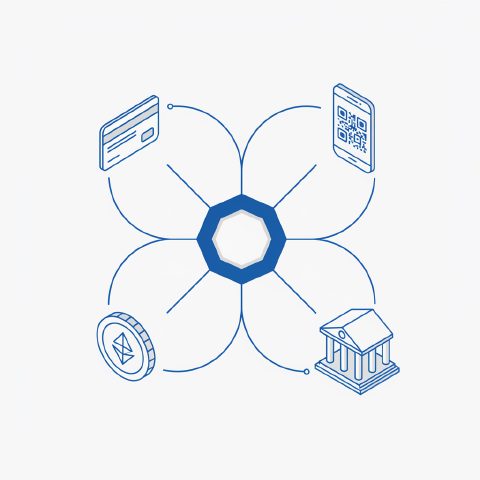
Card penetration in Brazil, Mexico, and Colombia is lower than most operators assume, and even cardholders frequently prefer local instant-transfer rails for gambling transactions. PIX, SPEI, and PSE collectively cover the majority of real-money deposits in their respective markets. An operator launching in LATAM with only Visa and Mastercard will see conversion rates well below 30 percent at checkout.
The structural reality is that a large portion of LATAM adults are underbanked or use prepaid accounts that do not support card-not-present transactions. Brazil's Banco Central estimates that more than 150 million individual PIX keys were registered within two years of the system's November 2020 launch. That adoption curve is steeper than any card network ever achieved in the region. For an iGaming operator, that means PIX is not a niche alternative, it is the default expectation of your Brazilian player base.
Mexico tells a similar story. Roughly 37 percent of Mexican adults remain unbanked according to CNBV data, but SPEI reaches any account holder at a Banxico-regulated institution, and OXXO Pay extends the reach further into cash-preferred demographics. Operators who have launched in MX with only card processing report deposit failure rates above 40 percent on mobile, driven largely by 3DS friction and issuer-side declines on gambling MCCs. SPEI bypasses all of that because the transaction originates from the player's own banking app.
Colombia's PSE (Pagos Seguros en Línea) is a different animal: it is a bank-redirect system operated by ACH Colombia, and it requires the operator to work through a registered payment facilitator that has a direct agreement with ACH Colombia. Coljuegos-licensed operators are required to use payment methods that can be audited for AML purposes, and PSE's closed-loop architecture makes it easier to satisfy that requirement than open card networks. The trade-off is that PSE flows are slower than PIX, settlement can take one to two business days, and the user experience involves more redirects, which hurts mobile conversion.
The broader point is that treating LATAM as a single payment market is the most expensive mistake an operator can make. Each country has its own central bank rails, its own regulatory overlay, and its own player psychology around financial transactions. A payment stack that works in Brazil will not map cleanly onto Mexico or Colombia without meaningful re-engineering. Build for each market, or use an aggregator that has already done that work, but understand what you are paying for that convenience.
How does PIX work for Brazilian iGaming operators and what are the real integration requirements?
PIX is Brazil's instant payment system, operated by Banco Central do Brasil, running 24/7 with sub-ten-second settlement. For iGaming operators, it functions primarily as a deposit rail via QR code or PIX key, and increasingly as a withdrawal method. Integration requires either a direct Brazilian banking partner or a licensed payment facilitator with a PIX arrangement, since foreign entities cannot access Banco Central's SPI rails directly.
The technical flow is straightforward: the operator's platform generates a PIX cob (charge) with a unique QR code or a copy-paste string, the player scans it in their banking app, and the funds land in the operator's receiving account typically within five seconds. The operator's back-office then credits the player wallet. Latency between PIX confirmation and wallet credit depends entirely on your platform's webhook processing, SoftSwiss and EveryMatrix both handle this natively if you are on a white-label or turnkey setup, but custom builds need a dedicated PIX notification listener or you will see player complaints about delayed balances.
The compliance layer is where operators underestimate the work. Brazil's Lei 14.790/2023 (the federal sports betting and casino regulation) and subsequent SEAE/MF ordinances require licensed operators to collect CPF (Brazilian tax ID) at registration and tie every PIX transaction to that CPF. This means your PIX key or QR code generation must include the player's CPF in the transaction metadata, and your AML engine must be able to flag mismatches where the PIX sender's CPF differs from the registered account holder. Payment facilitators like Pagsmile and PagBrasil handle this mapping automatically, but you need to confirm it in their API documentation rather than taking a sales rep's word for it.
On fees: PIX itself carries no per-transaction fee for individuals, but payment facilitators charge operators between 1.5 and 3.5 percent per deposit transaction depending on volume tiers and the facilitator's own banking costs. Withdrawals via PIX (player cashouts) are typically cheaper, often under 1 percent, because the risk profile is lower. If you are processing above R$5 million per month, it is worth negotiating a direct sub-acquirer agreement with a Brazilian fintech like Adyen Brazil or Dock rather than staying on a pure aggregator model.
One practical gotcha: PIX transaction limits vary by bank and by time of day. Banco Central allows individual banks to set nighttime limits (typically midnight to 6am) as low as R$1,000 per transaction. For a high-roller segment, this is a real friction point. Some operators solve this by offering an alternative deposit method at night or by prompting players to adjust their own PIX limits in their banking app. Neither is a perfect solution, but knowing the constraint before launch beats discovering it from player complaints at 2am on a Friday.
| Approach | Providers (examples) | Typical Merchant Fee | Settlement Speed | CPF Compliance Handling | Best For |
|---|---|---|---|---|---|
| Payment aggregator | Pagsmile, PayRetailers, PagBrasil | 1.8% - 3.5% per deposit | Instant to operator account | Built-in (verify in API docs) | Operators under R$5M/month or new entrants |
| Sub-acquirer / direct fintech | Adyen Brazil, Dock, Zoop | 0.9% - 1.8% negotiated | Instant to operator account | Operator must implement mapping | High-volume operators with dev resources |
| White-label platform PIX module | SoftSwiss, EveryMatrix, Softgamings | Bundled in rev-share or flat fee | Instant (platform-dependent) | Platform-managed | Operators on turnkey with no payment team |
What do operators need to know about SPEI before launching a casino in Mexico?
SPEI (Sistema de Pagos Electrónicos Interlancarios) is Banxico's real-time gross settlement system connecting all Mexican regulated financial institutions. It is available 24/7 since 2014 and processes transfers using an 18-digit CLABE account number. For iGaming, it is the backbone of most deposit flows, but operators must work through a Mexican payment facilitator since direct SPEI access is restricted to Banxico-licensed entities.
The CLABE (Clave Bancaria Estandarizada) is the critical technical element. Every SPEI transaction routes to a specific 18-digit CLABE, and operators typically generate a unique CLABE per player per session, this is called a CLABE dinámica approach and it is how your reconciliation engine knows which player sent which deposit. If you use a static CLABE per player instead, you risk reconciliation failures when a player makes two deposits in quick succession. OpenPay (owned by BBVA Mexico) and Conekta both support dynamic CLABE generation and are commonly used by licensed iGaming operators in Mexico.
The regulatory context matters here. Mexico's Ley Federal de Juegos y Sorteos and its implementing rules under SEGOB require operators to maintain records of all financial transactions tied to player identity. SPEI's architecture helps with this because every transfer carries the sender's CLABE, which is traceable to a named account at a regulated institution. This is actually a compliance advantage over cash-based methods like OXXO, where the AML trail is harder to maintain. That said, SEGOB licenses have historically been difficult to obtain and the backlog for new applications has stretched to 18 months or more in recent years, factor that into your market entry timeline.
Transaction limits under SPEI are set by the sending bank rather than Banxico centrally, which means a player at HSBC Mexico may have different daily limits than one at Banorte or Santander MX. Typical retail limits run from MXN 8,000 to MXN 40,000 per transaction, though premium banking clients can have much higher ceilings. For operators targeting a mid-to-high value player segment, it is worth publishing a clear deposit limit guide in your cashier so players know to check their own bank settings before attempting large transfers.
One thing vendors rarely mention upfront: SPEI settlement to your merchant account at the facilitator is instant, but the facilitator's payout to your operating account (the float transfer) often happens in batches once or twice daily. This creates a working capital gap if your withdrawal volume is high. Build that float requirement into your treasury model before you sign a facilitator contract, and ask specifically about intraday settlement options, some facilitators offer them at a premium.
How does PSE function in Colombia and what compliance obligations does Coljuegos impose on payment flows?
PSE (Pagos Seguros en Línea) is Colombia's primary online bank-redirect system, operated by ACH Colombia and used by virtually every Colombian bank. Players select their bank, authenticate on the bank's portal, and the payment is routed back to the merchant. For Coljuegos-licensed operators, all real-money transactions must be processed through approved payment channels, and PSE is the most common compliant option for deposits.
The integration path for a foreign operator is: obtain a Coljuegos license (or operate under a licensed local partner), then contract with a Colombian payment facilitator that holds an ACH Colombia merchant agreement. Providers commonly used in the Colombian iGaming space include PayU Colombia, Wompi (owned by Bancolombia), and ePayco. None of these will onboard a gambling merchant without seeing your Coljuegos license or a letter from a licensed operator confirming the relationship, so do not start payment integration before the licensing process is at least conditionally approved.
PSE's UX flow involves more steps than PIX or SPEI: the player selects PSE at checkout, chooses their bank from a dropdown, gets redirected to the bank's authentication page, completes the transfer, and is redirected back to the casino. On desktop this is manageable. On mobile, the redirect chain frequently breaks if the player's banking app does not handle deep links cleanly, and this is a known conversion killer. Operators report PSE mobile conversion rates 15 to 25 percentage points below desktop in some cohorts. A practical mitigation is to offer Nequi (Bancolombia's digital wallet) and Daviplata (Davivienda's wallet) as parallel options, both are widely adopted in Colombia and offer a smoother mobile flow than bank-redirect PSE.
Coljuegos imposes specific AML requirements tied to payment methods. Operators must verify that the PSE account holder matches the registered casino player identity, Colombia's Cédula de Ciudadanía number must be collected at registration and cross-referenced against the PSE transaction metadata. Coljuegos auditors have flagged operators for mismatches in this area, and the fines are meaningful: the regulator can suspend operations pending remediation. Your payment facilitator should provide transaction-level data exports compatible with Coljuegos reporting templates; ask for a sample before signing.
On the withdrawal side, PSE is not used for payouts. Colombian operators typically disburse via bank transfer (transferencia bancaria) directly to the player's registered account, or increasingly through Nequi and Daviplata wallets. Settlement on withdrawals takes one to two business days through most facilitators. Players in Colombia are accustomed to this timeline, but your CRM should set expectations clearly to avoid support volume spikes after bonus payouts.
| Method | Type | Mobile UX | Settlement to Player | AML Traceability | Typical Operator Fee |
|---|---|---|---|---|---|
| PSE | Bank redirect | Moderate (redirect breaks on some devices) | 1-2 business days | High (linked to bank account + Cédula) | 1.5% - 2.8% per transaction |
| Nequi | Digital wallet (Bancolombia) | Smooth (native app) | Near-instant | High (KYC at wallet level) | 1.2% - 2.2% per transaction |
| Daviplata | Digital wallet (Davivienda) | Smooth (native app) | Near-instant | High (KYC at wallet level) | 1.2% - 2.0% per transaction |
| Efecty (cash) | Cash voucher network | N/A (in-store) | Instant on deposit | Lower (cash-based) | 2.5% - 4.0% per transaction |
Should operators use a payment aggregator or build direct integrations for PIX, SPEI, and PSE?
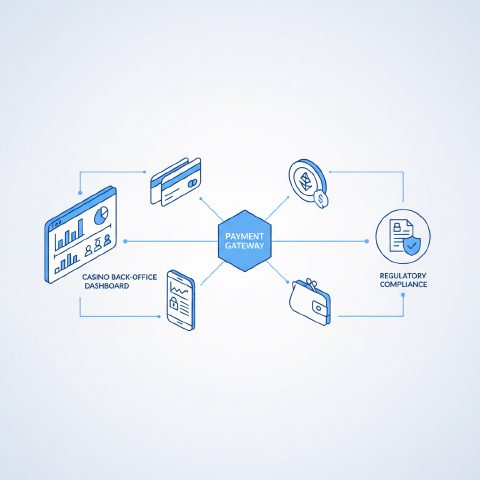
For most operators entering LATAM, a regional aggregator is the right starting point. Direct integrations with local processors require local entity setup, banking relationships, and compliance infrastructure that takes 6 to 18 months to establish. Aggregators like PayRetailers, Pagsmile, and EBANX bundle PIX, SPEI, and PSE under a single API and handle local compliance. The trade-off is a higher per-transaction fee and less control over settlement timing.
The aggregator model makes sense when you are in the first 12 to 24 months of a market, your monthly processing volume is below roughly USD 500,000 per country, and your internal team does not have dedicated LATAM payments expertise. PayRetailers, for instance, covers Brazil, Mexico, Colombia, Peru, Chile, and Argentina under one contract, which is genuinely useful if you are running a multi-country LATAM strategy. Their onboarding for licensed iGaming operators typically takes four to eight weeks and requires your gaming license, corporate documents, and a compliance questionnaire. EBANX has a stronger brand in Brazil specifically and handles PIX, Boleto Bancário, and card processing with a single dashboard.
The case for going direct gets stronger once you cross meaningful volume thresholds. At USD 1 million per month in Brazil, the difference between a 2.5 percent aggregator fee and a 1.2 percent direct sub-acquirer fee is USD 13,000 per month, that is over USD 150,000 per year. That delta funds a local treasury manager and a banking relationship. Operators who have made this transition typically do it around the 18-month mark after launch, once they have established local legal entities required by Brazilian financial regulations.
There is a hybrid approach worth considering: use an aggregator for the first year to validate your payment stack and player behavior, then selectively go direct on your highest-volume method (almost always PIX in Brazil) while keeping the aggregator for smaller-volume markets. This is the playbook several mid-tier operators have used successfully. The aggregator contract usually allows this, just read the exclusivity clauses carefully, because some aggregators try to lock you in on specific payment methods.
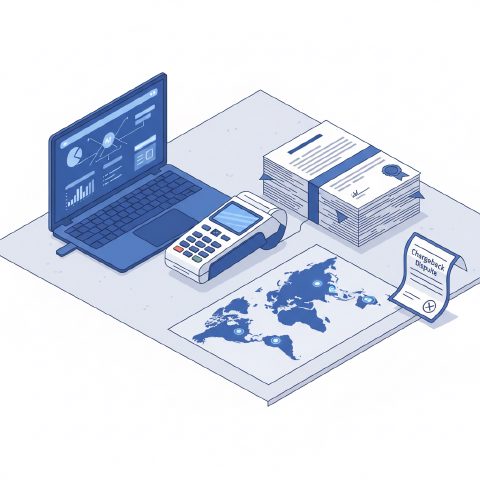
One underappreciated factor is chargeback and dispute handling. With an aggregator, disputes are managed through the aggregator's process, which adds a layer of abstraction. If a player files a fraudulent claim, your ability to provide evidence quickly depends on the aggregator's dispute portal. Ask prospective aggregators specifically about their dispute win rate for iGaming merchants and the average resolution timeline, these numbers vary significantly and directly affect your fraud losses.
| Factor | Aggregator (e.g., PayRetailers, EBANX) | Direct / Sub-Acquirer |
|---|---|---|
| Integration timeline | 4-8 weeks | 3-12 months |
| Typical fee (Brazil PIX) | 1.8% - 3.5% | 0.9% - 1.8% |
| Local entity required | No (aggregator holds local licenses) | Yes (in most cases) |
| Settlement control | Batch, aggregator-determined | Configurable, often intraday |
| Compliance responsibility | Shared / aggregator-led | Operator-led |
| Minimum volume requirement | None to low | Often USD 500K+ per month |
| Best fit | New entrants, multi-country launches | Established operators, single-market scale |
What AML and KYC obligations are tied to local payment methods across Brazil, Mexico, and Colombia?
Each jurisdiction attaches specific AML and KYC requirements to payment method usage, and these are not interchangeable. Brazil requires CPF verification tied to every PIX transaction. Mexico mandates CLABE traceability under SEGOB rules. Colombia requires Cédula matching for PSE flows under Coljuegos oversight. Operators who implement a one-size-fits-all KYC layer fail audits in at least one of these markets.
Brazil's AML framework for iGaming is anchored in COAF (Conselho de Controle de Atividades Financeiras) reporting requirements and the specific provisions of Lei 14.790/2023. Operators must file suspicious transaction reports (STRs) for transactions above BRL 10,000 or any pattern that suggests structuring. PIX's real-time nature means your transaction monitoring engine needs to be able to flag and freeze a transaction within the same session window, not in a next-day batch review. This is a genuine technical challenge that many operators underestimate when spec-ing their compliance stack.
Mexico's LFPIORPI (Ley Federal para la Prevención e Identificación de Operaciones con Recursos de Procedencia Ilícita) applies to gambling operators and requires reporting of transactions above MXN 645 per day in aggregate (the threshold has been revised periodically, so verify the current figure with local counsel). SPEI's CLABE traceability helps satisfy the record-keeping requirement, but operators are still responsible for their own enhanced due diligence on high-value players. SEGOB inspectors have historically focused on whether the operator's transaction records are complete and whether the player identity verification matches the payment method account holder.
Colombia's Coljuegos has one of the more prescriptive AML frameworks in LATAM. Licensed operators must implement a SIPLAFT (Sistema Integral para la Prevención y Control del Lavado de Activos y Financiación del Terrorismo), which is a formal AML program that must be filed with Coljuegos and updated annually. The PSE payment flow must be documented within this program, including the specific controls for identity matching. Operators who use Nequi or Daviplata as alternatives also need to document those flows, because Coljuegos auditors will ask for end-to-end transaction evidence for any payment method listed in the operator's approved payment matrix.
A practical recommendation: do not try to build a single AML policy document that covers all three markets. Build country-specific annexes that reference the local regulatory requirements precisely. Your payment facilitators should be able to provide you with transaction data exports formatted for each regulator's reporting template. If they cannot, that is a red flag worth raising before you sign the contract.
How do withdrawal flows differ from deposits for PIX, SPEI, and PSE?
Withdrawal mechanics differ significantly from deposits across all three systems. PIX supports near-instant payouts and is widely used for casino cashouts in Brazil. SPEI supports outbound transfers but operators must manage float and batch processing carefully. PSE is not used for withdrawals in Colombia; operators pay out via direct bank transfer or digital wallets. Getting withdrawals wrong destroys player retention faster than almost any other operational failure.
PIX withdrawals (called Pix Saque in some contexts, though the casino use case is simply an outbound Pix transfer) are one of the best withdrawal experiences available in any market globally. The player requests a cashout, provides their PIX key (CPF, phone number, email, or random key), and the funds arrive in their account within seconds. Banco Central's rules require that the sender's account be identified, so your payment facilitator will appear as the sending entity. Players occasionally flag this as a concern, they see an unfamiliar company name in the transfer, so it is worth adding a brief explanation in your cashier about who the payment processor is.
SPEI withdrawals work similarly in technical terms: you initiate an outbound SPEI transfer to the player's CLABE. The transfer settles in real time during Banxico's operating windows (SPEI has brief maintenance windows, typically on Sunday mornings). The operational challenge is that your Mexican payment facilitator needs to hold sufficient MXN float in their account to fund withdrawals on demand. If your withdrawal volume spikes after a major sports event, a facilitator with a thin float position may queue your payouts for hours. Ask prospective facilitators about their float management policy and their maximum daily withdrawal throughput before signing.
In Colombia, PSE simply does not do outbound transfers to individuals. Withdrawals go via transferencia bancaria (direct bank transfer) to the player's registered account, or through Nequi and Daviplata for players who prefer wallet-based payouts. The bank transfer route takes one to two business days, which is standard in Colombia and generally accepted by players. The wallet route is faster and increasingly preferred by younger players. Your cashier should offer both options and make the expected timing clear, ambiguity about withdrawal timelines is one of the top drivers of player complaints and chargebacks in the Colombian market.
What are the realistic costs of building a LATAM payment stack for an iGaming platform?
A realistic LATAM payment stack for Brazil, Mexico, and Colombia costs between USD 15,000 and USD 80,000 to build and integrate, depending on whether you use an aggregator API or direct connections, and whether you are on a white-label platform or a custom build. Ongoing fees run 1.5 to 3.5 percent of deposit volume. These ranges are estimates, actual figures depend on volume, provider, and negotiation.
The setup cost breakdown looks roughly like this for an operator using a regional aggregator: integration development (assuming you have an in-house dev team or a contractor) runs USD 8,000 to USD 25,000 for API integration, webhook handling, reconciliation logic, and cashier UI. Compliance documentation and legal review for three jurisdictions adds USD 10,000 to USD 30,000 if you use a specialist LATAM gaming lawyer. Some aggregators charge an onboarding or setup fee of USD 1,000 to USD 5,000, though this is negotiable. If you are on a turnkey platform like SoftSwiss or EveryMatrix, the payment integration cost is often bundled into the platform fee, but you still need legal and compliance work done locally.
The ongoing cost is where operators get surprised. A 2.5 percent blended fee across PIX, SPEI, and PSE sounds manageable until you model it at scale. On USD 2 million per month in LATAM deposits, that is USD 50,000 per month in payment processing costs, or USD 600,000 per year. Compared to a European market where card processing might run 0.8 to 1.2 percent, LATAM is expensive. The higher fees reflect the cost of local banking relationships, currency risk management, and the compliance overhead of operating in these jurisdictions. You can reduce this over time through volume negotiations and selective direct integrations, but do not model your LATAM P&L at European payment cost rates.
Currency conversion is a separate cost that often gets missed in initial modeling. If you run a USD-denominated operation and your players deposit in BRL, MXN, or COP, you are taking FX exposure on every transaction. Most payment facilitators offer FX conversion at a spread of 0.5 to 2 percent above mid-market rates. At scale, this is worth managing actively, either by holding local currency balances or by using a treasury management service. Operators who ignore FX costs in their unit economics models often find their actual margins are 3 to 5 percentage points below their projections.
Which payment aggregators and processors have the strongest track record in LATAM iGaming?
PayRetailers, EBANX, Pagsmile, and OpenPay are the most commonly used aggregators among LATAM iGaming operators as of 2025 to 2026. Each has distinct strengths by country and volume tier. No single provider is best across all three markets simultaneously. The right choice depends on your primary target country, monthly volume, and whether you need a single-contract multi-country solution or best-in-class coverage per market.
PayRetailers is the most broadly used LATAM gaming aggregator and covers Brazil, Mexico, Colombia, Peru, Chile, and Argentina under one contract. Their iGaming client list is substantial and their compliance team has experience with Coljuegos, SEGOB, and Brazilian MF licensing requirements. Their fees are not the lowest in the market, but their operational reliability and the breadth of their local payment method coverage make them a safe default for operators who want one contract to cover the region. Their API documentation is solid and they have a dedicated gaming merchant support team, which matters when you have a payment issue at midnight on a Saturday.
EBANX is the strongest option if Brazil is your primary market. They have deep relationships with Brazilian banks, their PIX integration is mature and well-documented, and they handle Boleto Bancário and card processing alongside PIX. For a Brazil-first strategy, EBANX's local infrastructure is hard to beat. Their LATAM coverage outside Brazil is thinner, so if you are running a true multi-country strategy, you may end up pairing EBANX for Brazil with a different provider for Mexico and Colombia.
Pagsmile is a strong contender for Brazil and has been expanding its LATAM footprint. They are known for competitive fees and a developer-friendly API, and they have been actively courting iGaming merchants. Their compliance infrastructure is newer than EBANX's or PayRetailers', so do more due diligence on their AML reporting capabilities before committing. OpenPay (BBVA Mexico) is the go-to for Mexico specifically, their SPEI and OXXO integrations are rock-solid, and being owned by BBVA gives them banking relationships that independent fintechs cannot match. For Colombia, PayU Colombia remains the dominant player, with Wompi gaining ground among digitally-native operators.
How should operators handle currency and FX risk across BRL, MXN, and COP?
Currency risk is a real operational cost in LATAM iGaming that most operators undermodel at launch. BRL, MXN, and COP all carry meaningful volatility against USD, and an operator running a USD-denominated P&L will see margin compression during depreciation cycles. The practical options are: hold local currency balances, use forward contracts, or accept the FX spread from your payment facilitator. Each approach has different cost and complexity trade-offs.
The simplest approach is to let your payment facilitator handle FX conversion on every transaction. They convert BRL, MXN, or COP to USD at the time of settlement, and you receive USD. The cost is their FX spread, typically 0.8 to 2 percent above the interbank rate. This is operationally clean but expensive at volume. At USD 3 million per month in LATAM deposits with a 1.5 percent FX spread, you are paying USD 45,000 per month purely for currency conversion. That is a significant drag on unit economics.
A more sophisticated approach is to hold local currency balances in your facilitator's merchant account and net them against local currency withdrawals before converting. If your Brazilian players deposit BRL 5 million and withdraw BRL 4 million in a given week, you only need to convert BRL 1 million to USD, dramatically reducing your FX exposure and costs. This requires a treasury management process and someone who is actively monitoring your local currency positions, but it is standard practice for any operator doing meaningful LATAM volume.
Forward contracts and FX hedging through providers like Convera or Corpay are worth considering if your monthly LATAM volume exceeds USD 1 million and you have predictable cash flow patterns. These tools let you lock in exchange rates for future settlement, protecting your USD margin during periods of BRL or MXN weakness. Brazilian real in particular has historically been volatile around election cycles and commodity price swings. An operator who launched in Brazil in early 2022 without any FX hedging saw meaningful margin erosion during the BRL depreciation period that year.
Comments
No comments yet, be the first.