Best iGaming Payment Solutions for 2026: What Operators Actually Need to Know Before Signing a Contract
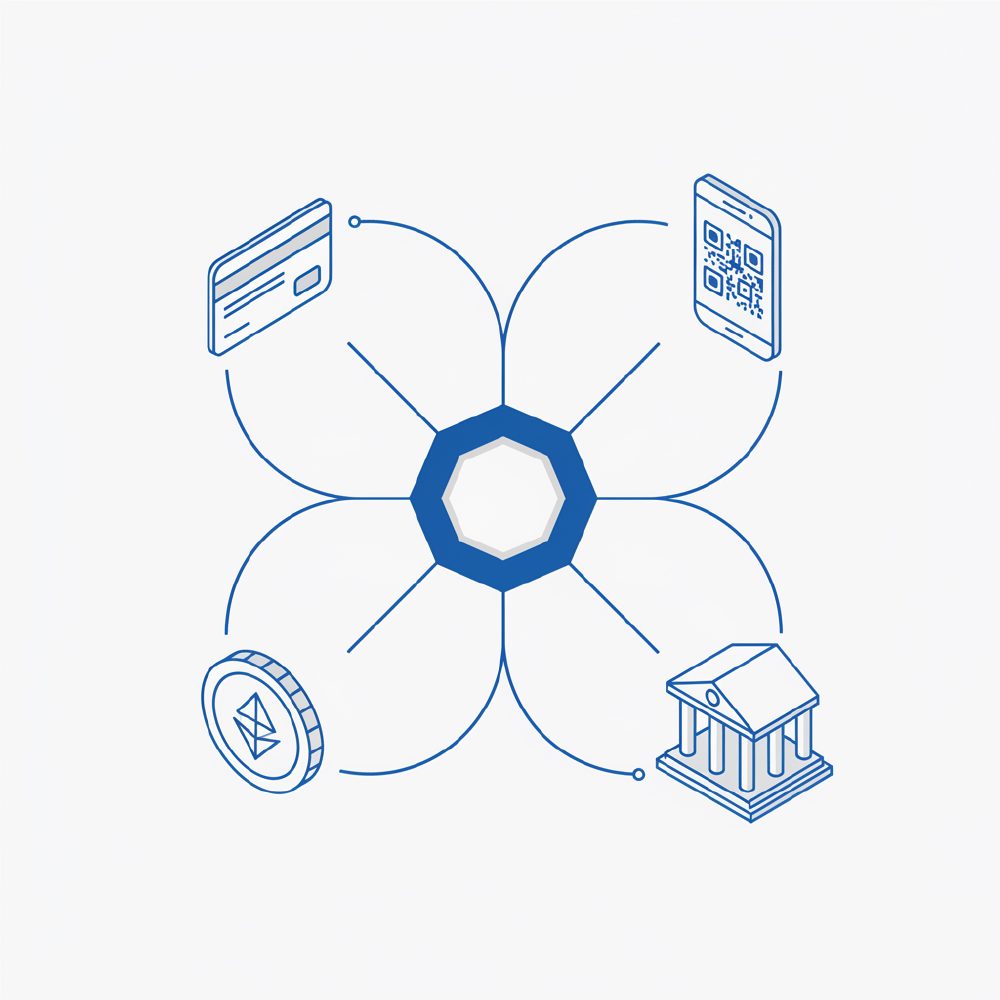
What makes an igaming payment solution different from a standard payment gateway?
Standard payment gateways are built for low-risk e-commerce. iGaming is MCC 7995, the highest-risk merchant category code in card scheme rules. That single classification changes everything: underwriting requirements, chargeback thresholds, reserve structures, and which acquiring banks will process you at all. A purpose-built igaming payment solution handles these constraints by design rather than as an afterthought.
When I was running product integrations for a mid-tier platform operator around 2017, we tried to save money by routing through a generic Stripe-adjacent gateway. It lasted eleven days before the account was terminated without notice. The lesson wasn't that we needed a better relationship, it was that iGaming requires acquirers who have a dedicated MCC 7995 program, risk models calibrated for gambling chargeback patterns, and legal agreements that explicitly permit the vertical. Generic gateways don't have any of that.
Purpose-built casino payment service providers maintain direct relationships with acquiring banks that have approved gambling portfolios, often across multiple jurisdictions. They also handle the regulatory compliance layer: AML transaction monitoring, responsible gambling deposit limits, self-exclusion checks at the payment level, and the audit trails that regulators like the MGA and UKGC demand. A standard gateway gives you none of this, you'd have to build it yourself, and that's a six-figure engineering project minimum.
The practical difference also shows up in chargeback management. Gambling chargebacks frequently arrive with the 'services not rendered' or 'unauthorized transaction' reason codes, and dispute rates above 1% will get a standard merchant terminated. iGaming-specialist acquirers set thresholds at 2-3% and provide dispute resolution tooling trained on gambling-specific cases. That gap matters enormously when your players are depositing impulsively at 2am and sometimes regretting it by morning.
Finally, igaming payment solutions are built around the wallet model, players hold a balance on your platform rather than paying per transaction. That means the payment layer needs to handle rapid micro-deposits, instant withdrawal expectations, and bonus-to-cash conversion events. Standard gateways have no concept of a player wallet; you'd be duct-taping two incompatible systems together.
Which casino payment providers dominate the market in 2026?
The market in 2026 is dominated by a handful of specialist providers: Nuvei (formerly SafeCharge), Paysafe Group, Worldpay for Gaming, PaymentIQ by Devcode, Praxis Cashier, CoinsPaid on the crypto side, and regional specialists like Payneteasy in Eastern Europe. No single provider covers every market, operators running multi-jurisdiction books typically use three to five providers simultaneously.
Nuvei is probably the most complete single-vendor option for regulated markets. After acquiring SafeCharge, they built out a genuine global acquiring network with specific programs for MGA, UKGC, and several US state licenses. Their transaction fees typically run 1.8-2.5% for card processing on gambling portfolios, and they offer local acquiring in a growing number of markets, which meaningfully improves approval rates. The trade-off is that their onboarding is slow, expect 6-10 weeks to go live, and their minimum monthly volumes are high enough to make them uneconomical for early-stage operators.
Paysafe remains the dominant e-wallet and prepaid card provider through Skrill, NETELLER, and paysafecard. Their player base is enormous and loyal, particularly in the UK and Germany. The problem is that Paysafe's B2B terms have tightened considerably since their 2021 SPAC listing and subsequent restructuring. Rolling reserves are standard, their onboarding compliance team is demanding, and the commercial terms they offer new operators are noticeably worse than what established brands get. Still, if you're targeting European recreational players, not having Skrill and NETELLER at launch is a real conversion gap.
PaymentIQ by Devcode and Praxis Cashier occupy a different category, they're payment orchestration layers, not acquirers themselves. They sit between your platform and dozens of underlying PSPs, letting you route transactions, run A/B tests on payment methods, and switch providers without re-integrating. For operators who are still figuring out their payment mix, this flexibility is worth the additional layer of cost (typically $1,500-$4,000/month in platform fees plus pass-through transaction costs). I'd generally recommend starting with an orchestration layer rather than integrating PSPs directly, the ability to swap providers without engineering sprints pays for itself fast.
CoinsPaid has become impossible to ignore. They process crypto deposits and withdrawals natively, support 30+ coins with auto-conversion to fiat, and their API integration is genuinely clean. On offshore skins running under Curaçao or Anjouan licenses, crypto often represents 35-45% of total deposit volume by 2025 data. Their fees are lower than card processing (typically 0.8-1.2% per transaction), and there's no chargeback risk by definition. The KYC/AML burden shifts to blockchain analytics tools like Chainalysis, but that's a manageable trade-off.
| Provider | Type | Best For | Typical Fee Range | Key Markets |
|---|---|---|---|---|
| Nuvei | Acquirer + Gateway | Regulated multi-market operators | 1.8-2.5% cards | UK, EU, Canada, US states |
| Paysafe (Skrill/NETELLER) | E-wallet + Prepaid | EU recreational player base | 1.9-2.9% + fixed | UK, DE, AT, Nordics |
| PaymentIQ (Devcode) | Orchestration Layer | Operators wanting PSP flexibility | $1.5k-$4k/mo + pass-through | Global |
| Praxis Cashier | Orchestration Layer | Rapid multi-PSP deployment | $1k-$3k/mo + pass-through | Global |
| CoinsPaid | Crypto Gateway | Offshore / crypto-first operators | 0.8-1.2% per tx | Global (offshore focus) |
| Worldpay for Gaming | Acquirer | Large regulated operators | Custom (volume-based) | UK, EU, US |
| Payneteasy | Regional PSP | Eastern Europe, CIS markets | 1.5-2.2% | UA, KZ, RU-adjacent |
| TripleA | Crypto Gateway | Operators needing MAS-compliant crypto | 0.8-1.0% | APAC, EU, Global |
How does your license jurisdiction determine which casino payment service providers will work with you?
Your license is effectively a pre-filter for your entire payment stack. MGA and UKGC licenses open doors to Tier-1 card acquirers and major e-wallets. Curaçao eGaming (now the new 2023 framework) gets you mid-tier acquirers and strong crypto options. Anjouan and similar offshore licenses mostly restrict you to crypto rails and high-risk specialist PSPs. This isn't a soft preference, it's a hard underwriting reality.
I've watched operators spend $80,000 on a Curaçao license expecting it to unlock Visa and Mastercard acquiring at reasonable rates, then discover that most Tier-1 acquirers simply won't underwrite Curaçao-licensed gambling. The ones that will charge 3.5-5% with 10% rolling reserves held for 180 days. That's not a payment stack, that's a cash flow problem. The honest answer is that if card processing at competitive rates is critical to your business model, you need an MGA or UKGC license, and you need to budget $150,000-$400,000 and 6-12 months to get there.
The new Curaçao framework (operational since late 2023 under the National Ordinance) has improved things somewhat. Curaçao Gaming Authority (CGA) licenses now carry more regulatory credibility than the old sublicense model, and a small number of mid-tier acquirers have updated their risk policies to accept them. But 'improved' is relative, you're still looking at higher decline rates, higher fees, and more restrictive reserve terms than MGA operators get. The practical implication: Curaçao operators should lean heavily into crypto and alternative payment methods (APMs) to compensate for card processing limitations.
US state licenses present a completely different landscape. Pennsylvania, New Jersey, Michigan, and Connecticut iGaming licenses give you access to ACH/bank transfer processors and state-specific gaming payment processors, but card processing remains complicated because US card issuers apply their own blocking policies under the UIGEA framework. VIP Preferred (ACH), PayNearMe (cash-to-card), and Play+ prepaid accounts have emerged as the dominant deposit methods in regulated US states precisely because of these card limitations. If you're entering the US market, your payment strategy needs to be built around these rails from day one.
| License | Tier-1 Card Acquiring | E-Wallets | Crypto | ACH/Bank Transfer | Typical Card Rate |
|---|---|---|---|---|---|
| UKGC | Yes (full access) | Skrill, NETELLER, PayPal | Restricted | Open Banking (strong) | 1.5-2.2% |
| MGA (Malta) | Yes (most acquirers) | Skrill, NETELLER | Permitted | SEPA, local banks | 1.8-2.5% |
| Curaçao (CGA 2023) | Limited (mid-tier only) | Limited | Strong | Limited | 3.0-5.0% |
| Anjouan | Very limited | Rare | Primary method | Rare | 4.0-6.0%+ |
| US State (NJ/PA/MI) | Restricted (UIGEA) | PayPal (NJ only) | Prohibited | ACH dominant | 2.0-3.5% |
What are rolling reserves and how much cash will they lock up?
Rolling reserves are a percentage of your gross processing volume held by the acquirer as a risk buffer, typically 5-10% of transactions, held for 90 to 180 days before release. On a casino processing $500,000/month, a 10% reserve held for 180 days means $300,000 of your cash is sitting in the acquirer's account at any given time. This is the single most underestimated cash flow constraint in early-stage operator launches.
Most operators I talk to focus on the transaction fee percentage and completely miss the reserve math until they're six months in and wondering why their bank account looks wrong. Here's how it works: if your acquirer holds 8% of gross volume for 90 days, and you process $200,000 in month one, $16,000 goes into reserve. By month three, you have $48,000 locked up. If your volume grows, the locked amount grows proportionally. You don't see that money until the reserve period rolls off, which means fast-growing operators can actually face a cash crunch even while their P&L looks healthy.
Reserve percentages and hold periods are negotiable, but your leverage depends entirely on your track record. New operators with no processing history typically get the worst terms, 10% for 180 days is common. After 6-12 months of clean chargeback history (below 1%), you can push for 5% and 90 days. Established operators with 2+ years of clean history and significant volume can sometimes negotiate reserves down to 3-5% or eliminate them entirely in favor of a cash deposit. Get this conversation started at contract negotiation, not after you've already signed.
One practical mitigation: use multiple PSPs from day one. If you're routing 60% of volume through your primary acquirer and 40% through a secondary, you're spreading your reserve exposure. Payment orchestration platforms make this easy to manage. It also gives you leverage in renegotiating terms, when you can credibly threaten to shift volume to a competitor, acquirers become more flexible. I've seen operators negotiate reserve reductions worth $150,000+ in freed-up cash simply by demonstrating they had an active alternative integration ready to go.
How should operators evaluate crypto as part of their igaming payment solution stack?
Crypto isn't a niche anymore, it's a core payment rail for offshore operators and a growing option even in some regulated markets. The key decision isn't whether to offer crypto, but which provider handles conversion, custody and compliance. CoinsPaid and TripleA are the two specialists worth serious evaluation. Both offer instant settlement, zero chargebacks, and lower transaction fees than card processing.
The operational case for crypto in iGaming is strong. No chargebacks eliminates one of the biggest cost and risk factors in card processing. Settlement is near-instant compared to the T+2 or T+3 timelines of card acquirers. Fees run roughly 0.8-1.2% versus 2-3% for cards. And for offshore operators, crypto often represents the only frictionless deposit method available to players in markets where card blocking is aggressive, Latin America, Southeast Asia, and parts of the Middle East being the obvious examples.
The compliance layer is where operators often underestimate the work. Accepting crypto doesn't mean ignoring AML, it means doing AML differently. You need blockchain analytics tooling (Chainalysis, Elliptic, or TRM Labs) to screen incoming transactions for high-risk wallet addresses, mixers, and darknet market exposure. CoinsPaid has built some of this screening into their platform, which reduces the integration burden. TripleA, which holds a MAS (Monetary Authority of Singapore) license, is the better choice if you're serving markets where regulatory credibility around crypto matters. Neither is a free pass on compliance, they're a starting point.
One thing I'd flag that vendors don't advertise: volatility risk during the conversion window. If a player deposits 0.01 BTC and the price drops 8% before your processor converts to fiat, you've lost margin. Most operators solve this by using stablecoins (USDT, USDC) as the primary crypto deposit method, with BTC and ETH as secondary options. CoinsPaid supports auto-conversion to fiat at point of deposit, which eliminates volatility exposure entirely at the cost of the conversion fee. For most operators, that trade-off is worth it.
Regulatory treatment of crypto varies enormously by jurisdiction. UKGC licensees face significant restrictions on crypto deposits. MGA allows crypto but requires specific AML procedures. Curaçao and Anjouan have no meaningful restrictions. US state-licensed operators cannot accept crypto at all under current frameworks. Know your regulatory position before building a crypto-heavy payment strategy.
What is payment orchestration and do smaller operators actually need it?
Payment orchestration sits between your casino platform and multiple PSPs, routing transactions to maximize approval rates and minimize fees. For operators processing over $100,000/month, the approval rate improvements alone, typically 3-8 percentage points, more than cover the orchestration platform cost. Below that volume, the ROI math is tighter, but the flexibility benefit still has real value at launch.
The core value proposition is routing intelligence. When a player's Visa card is declined by PSP A, an orchestration layer can automatically retry through PSP B in under a second, the player never sees the failure. This 'cascade' logic, combined with BIN-level routing (routing UK cards to your UK acquirer, German cards to your EU acquirer), can lift authorization rates by 5-10 percentage points on a mature setup. On $500,000/month in deposit volume, a 5% approval rate improvement is $25,000 in additional revenue that would have otherwise been lost to declines. The orchestration platform costs $2,000-$4,000/month. The math is obvious.
PaymentIQ (now part of Devcode, which was acquired by Everi in 2022) is the most widely deployed orchestration solution in iGaming. It has pre-built integrations with over 200 PSPs, e-wallets and APMs, and most major casino platforms (SoftSwiss, EveryMatrix, Softgamings) have native PaymentIQ connectors. Praxis Cashier is a strong alternative with a slightly simpler onboarding process and competitive pricing for smaller operators. Both support the wallet model, bonus-to-cash conversion rules, and the withdrawal verification flows that regulated operators need.
For operators launching on a white-label platform, the orchestration question is often moot, the platform provider handles payment routing as part of the service. The trade-off is that you're limited to their PSP network and their negotiated rates. If you're launching on a turnkey or custom platform, building your own direct PSP integrations without an orchestration layer is a false economy, you'll spend more in engineering time maintaining those integrations than the platform fee would have cost you.
What are the real costs of setting up a casino payment stack from scratch?
The honest answer: a functional multi-method payment stack for a new operator costs $15,000-$60,000 in setup fees plus $3,000-$8,000/month in ongoing platform and minimum volume fees, before any transaction costs. That's before reserves, before chargebacks, and before the compliance tooling you'll need to keep your acquiring relationships healthy. Most operators underbudget this by 40-60%.
Here's how the cost components actually stack up. Integration and setup fees vary by provider but expect $2,000-$10,000 per PSP for direct integrations, or $5,000-$15,000 for an orchestration platform setup. If you're using an orchestration layer, you're paying that once instead of per-PSP, which is the right approach. Legal and compliance documentation for PSP onboarding, KYB packages, AML policies, responsible gambling procedures, typically costs $5,000-$15,000 in consultant or legal fees if you don't have these ready. Most new operators don't.
Ongoing costs include the orchestration platform monthly fee ($1,500-$4,000), transaction fees on every deposit (1.8-3.5% depending on method and acquirer), chargeback dispute fees ($25-$50 per dispute regardless of outcome), and the capital tied up in rolling reserves. If you're processing $300,000/month with an 8% reserve held 90 days, you need $72,000 in working capital permanently allocated to reserves. This is real money that isn't available for marketing, bonuses or operations.
The compliance tooling layer is often forgotten entirely. Blockchain analytics for crypto (Chainalysis starts around $30,000/year for a basic license), fraud scoring tools (Kount, SEON, or Sardine run $500-$3,000/month depending on volume), and velocity rule management all add up. Acquirers increasingly require evidence of fraud tooling as part of their underwriting, it's not optional if you want competitive rates. Budget $1,500-$5,000/month for this layer and treat it as a cost of doing business, not a nice-to-have.
How do open banking and alternative payment methods change the operator calculus in 2026?
Open banking (account-to-account payments) has moved from pilot to mainstream in the UK and Nordics, and it's materially changing deposit economics. Fees run 0.3-0.8% versus 1.8-2.5% for cards, there are zero chargebacks, and instant settlement is the standard. For operators in these markets, not having an open banking option in 2026 means leaving significant margin on the table.
In the UK, open banking payment volumes in gambling grew by an estimated 60-80% between 2023 and 2025 (based on industry reports from Pay.UK and open banking infrastructure providers, I'd treat exact figures with some caution, but the directional trend is unambiguous). Providers like TrueLayer, Volt, and Token.io have built specific gambling integrations that handle the FCA's open banking requirements and connect to 95%+ of UK current accounts. The player experience is genuinely better than card payments, one tap to authenticate via banking app, instant settlement, no card details to enter.
In the Nordics, Trustly has been the dominant open banking-style payment method in gambling for years. Swedish, Finnish, and Norwegian players are extremely comfortable with it, and Trustly's gambling-specific product (Trustly Pay N Play) actually lets operators skip traditional registration entirely, using bank verification as the KYC mechanism. This is a significant conversion optimization, removing the registration step can lift first-deposit conversion by 20-35% in markets where it's available. Trustly's fees are higher than raw open banking (typically 1.0-1.5%), but the conversion lift justifies it for most operators.
Latin America presents a different APM picture. PIX in Brazil has become the dominant payment method since its 2020 launch, and any operator targeting Brazilian players, even offshore, needs PIX integration. OXXO and SPEI in Mexico, PSE in Colombia, and PagoEfectivo in Peru each serve large player bases that don't have or don't trust card payments. Regional specialists like PayRetailers, Localpayment, and dLocal have built aggregated access to these methods. The fees are higher (2-4%), but the addressable market you unlock is substantial.
What should operators look for in payment provider contracts before signing?
Four clauses matter most: the reserve structure and release schedule, the termination rights (specifically whether the provider can terminate for 'reputational risk' without cause), the chargeback threshold that triggers review or termination, and the settlement timeline. Get all four in writing with specific numbers. Vague language in any of these will cost you money or your entire processing relationship.
The 'reputational risk' termination clause is the one that bites operators hardest. It's buried in most PSP contracts and gives the provider the right to terminate with 30 days notice (sometimes less) if they decide your brand creates reputational exposure for them. This is deliberately vague, and I've seen it invoked for reasons as arbitrary as a negative press article or a competitor complaint. Negotiate to have this clause removed, or at minimum require that 'reputational risk' be defined with specific, objective criteria. If they won't negotiate it, price that risk into your decision, this provider can disappear on you with minimal notice.
Settlement timelines are negotiable and most operators don't negotiate them. Standard terms are T+3 to T+5 (three to five business days after transaction). For a casino processing $1 million/month, the difference between T+3 and T+1 settlement is roughly $65,000-$130,000 in float that's either in your account or in the PSP's. T+1 settlement is achievable for established operators with good history, ask for it. Even getting to T+2 from T+5 is a meaningful working capital improvement.
Chargeback thresholds deserve specific attention. Visa's standard threshold for termination is 1% chargeback rate (by transaction count) and 1% by volume. Most gaming-specialist acquirers set their internal review threshold lower, typically 0.8%, and will put you on a remediation plan before you hit Visa's hard limit. Get the specific thresholds in writing, understand what 'remediation' means in practice (usually enhanced monitoring, higher reserves, and a 90-day improvement window), and make sure your fraud tooling is calibrated to keep you well below those thresholds. Hitting 1.5% chargebacks is not just a PSP problem, Visa can place you on their MATCH list, which effectively blacklists you from card processing globally for five years.
How do payment needs differ between white-label, turnkey and custom casino builds?
White-label operators inherit the platform's payment stack, fast to launch, limited control. Turnkey operators own the license but often still use platform-managed payments. Custom builds require building the entire payment layer independently, which is the most expensive and time-consuming option but gives full control over routing, fees and provider relationships. The right choice depends on your timeline, budget and long-term margin targets.
On a white-label platform, SoftSwiss's White Label Casino, EveryMatrix's turnkey product, or Softgamings, the platform provider manages PSP relationships, handles compliance, and takes a revenue share or flat fee that includes payment processing. You're paying 15-30% of GGR (gross gaming revenue) in some models, and part of that cost covers the payment infrastructure. The upside is speed: you can be live in 4-8 weeks with a functional multi-method payment stack. The downside is that you have zero visibility into decline rates, zero ability to negotiate directly with acquirers, and no leverage to improve terms as your volume grows. You're a passenger.
Turnkey builds, where you own the license and the brand but use a platform provider's infrastructure, sit in the middle. Some turnkey providers give operators direct PSP relationships with the platform acting as a technical integration layer; others keep payment management centralized. Clarify this in your contract negotiation. If the platform controls your PSP relationships, you're in a similar position to white-label, dependent on their relationships and their negotiating leverage. If you have direct PSP contracts, you get the benefits of ownership while still using the platform's integration work.
Custom builds give you the full picture, direct contracts with every PSP, full control over routing logic, and the ability to optimize every basis point of transaction cost. The price for this control is 6-18 months of engineering time and $200,000-$800,000+ in development costs, plus the ongoing cost of maintaining integrations as PSP APIs change. This path makes sense for operators targeting significant scale ($5M+ GGR annually) where the margin improvements from payment optimization justify the investment. For everyone else, start with an orchestration layer on a turnkey build and migrate to direct relationships once you have the volume to justify it.
- Nuvei — Best for regulated multi-market operators needing Tier-1 card acquiring with MGA, UKGC and US state license support. Comprehensive but slow to onboard and volume-minimum dependent.
- PaymentIQ by Devcode — Best payment orchestration layer for iGaming operators wanting PSP flexibility without repeated re-integrations. 200+ pre-built PSP connectors and native integrations with major casino platforms.
- Paysafe (Skrill + NETELLER) — Dominant e-wallet provider for European recreational players. Essential for UK, German and Austrian markets despite tighter commercial terms for new operators post-2022.
- CoinsPaid — Leading crypto payment gateway for iGaming with built-in AML screening, auto-conversion to fiat, and support for 30+ coins. The default choice for offshore operators building a crypto-first payment stack.
- Trustly — Dominant open banking payment provider in the Nordics and growing in the UK. Trustly Pay N Play removes registration friction entirely, lifting first-deposit conversion by 20-35% in supported markets.
- Praxis Cashier — Strong alternative to PaymentIQ for payment orchestration, with simpler onboarding and competitive pricing for mid-size operators. Good fit for operators launching quickly across multiple methods.
- TrueLayer — Leading open banking infrastructure provider in the UK and EU. Best choice for operators wanting direct open banking integration with lower fees (0.3-0.8%) and zero chargebacks in FCA-regulated markets.
- dLocal / PayRetailers — Regional APM aggregators for Latin America, providing access to PIX (Brazil), OXXO/SPEI (Mexico), PSE (Colombia) and other local methods through a single integration. Essential for any operator targeting LATAM player bases.



Comments
No comments yet, be the first.