Crypto Payment Gateway for Online Casino: The Operator's Real-Cost Guide for 2026

What exactly is a crypto payment gateway for an online casino, and how does it differ from a standard payment processor?
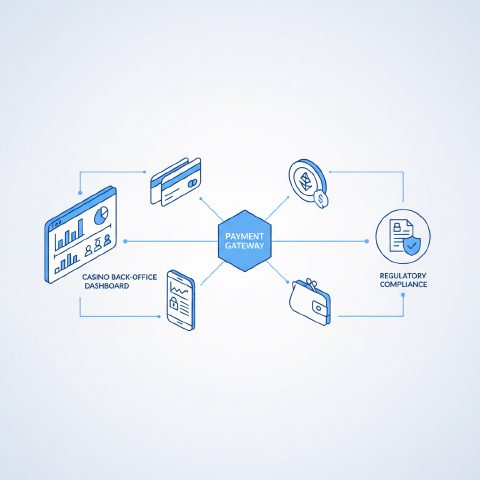
A crypto payment gateway handles the technical and compliance layer between a player's blockchain wallet and your casino's treasury. Unlike a card processor, it generates deposit addresses, monitors on-chain confirmations, converts crypto to fiat (or holds it natively), and pipes transaction data into your back office. The key difference is settlement mechanics: no card network, no chargeback window, no issuing bank to fight with.
Standard payment processors, think Worldpay, Nuvei, or even a local acquirer in LATAM, sit inside the card network rails. Every transaction touches Visa or Mastercard's fraud and chargeback infrastructure. For casino operators, that infrastructure is a liability: chargeback rates above 1% can get your MID terminated, and high-risk MCC codes mean processing fees of 3-6% even before rolling reserves. A crypto gateway bypasses all of that. Transactions are peer-to-peer on-chain; once confirmed, they are effectively final.
That said, a crypto gateway is not a magic compliance bypass. It still needs to generate a unique deposit address per transaction (or per user), track wallet provenance, and flag high-risk addresses against OFAC and commercial blacklists like Chainalysis or Elliptic. The better gateways, CoinsPaid and TripleA, for example, bundle this screening into their API. Cheaper or self-hosted solutions leave it to you, which means you need to either license a blockchain analytics tool separately or build your own screening logic. That gap is where operators get caught out at license renewal.
The settlement flow matters more than most operators realize during vendor selection. Some gateways hold crypto natively and require you to manually convert to fiat, which exposes you to BTC/ETH price volatility between deposit and conversion. Others offer auto-conversion at the point of deposit, locking in a fiat equivalent immediately. For a casino running on EUR or USD operational accounts, auto-conversion is almost always the right call, it simplifies accounting, eliminates FX exposure, and keeps your finance team sane. Just check the conversion spread the gateway charges; it's often where the real margin hit hides.
Which crypto payment gateway providers actually serve online casinos in 2026?
The short list of providers with genuine iGaming track records includes CoinsPaid, TripleA, Utorg, Coingate, and BitPay for Business. Each has different coverage in terms of supported coins, jurisdictional restrictions, and compliance tooling. A handful of generic crypto processors exist but lack the gaming-specific features, chargeback-proof settlement reporting, bonus abuse flagging, and back-office API depth, that operators actually need.
CoinsPaid is the most widely cited among European and offshore operators. They process a claimed $700M+ monthly (figures from their own 2023 disclosures, treat with appropriate skepticism, but the scale is real). Their back-office integration supports over 30 cryptocurrencies, they have a dedicated iGaming team, and their AML module includes wallet risk scoring out of the box. Fees sit around 0.8-1.2% depending on volume tier, with a setup fee that's negotiable at scale. They're integrated natively into SoftSwiss, EveryMatrix, and several other major platforms, which matters if you're on a white-label.
TripleA targets operators who want a cleaner fiat-conversion experience. They're MAS-licensed in Singapore and have EU regulatory coverage, which makes them appealing for MGA operators who want a crypto layer without a compliance headache. Their model is closer to a payment processor than a raw gateway, they absorb the crypto volatility risk and settle you in fiat, typically within 24 hours. The trade-off is a slightly higher spread (around 1-1.5%) and fewer supported altcoins. If your player base is primarily BTC and ETH depositors, that's fine.
Utorg and Coingate are worth considering for operators targeting emerging markets or running a crypto-native brand. Utorg supports 150+ currencies and has a strong presence in CIS and LATAM markets where stablecoin deposits (USDT on TRC-20, specifically) are the dominant player preference. Coingate has a simpler API and lower minimum volumes, making it accessible for early-stage operators who aren't yet at CoinsPaid's volume thresholds. The compliance tooling on both is thinner, so you'll need to layer in your own transaction monitoring.
| Provider | iGaming Focus | Auto Fiat Conversion | AML/TMS Built-in | Approx. Fee Range | Notable Integrations |
|---|---|---|---|---|---|
| CoinsPaid | Yes, dedicated iGaming team | Yes | Yes (wallet risk scoring) | 0.8-1.2% | SoftSwiss, EveryMatrix, Softgamings |
| TripleA | Partial, iGaming accepted | Yes (fiat settlement) | Partial | 1.0-1.5% spread | Custom API, some aggregators |
| Utorg | Yes, crypto-native brands | Yes | Basic screening | 0.9-1.3% | Custom API, Slotegrator |
| Coingate | Partial, general merchant | Yes | Basic | 0.5-1.0% | WooCommerce, custom API |
| BitPay for Business | Partial, US-friendly | Yes | Partial | 1.0% | Custom API, some US platforms |
What does a crypto payment gateway actually cost an online casino operator?
Expect to pay 0.5-1.5% per transaction in gateway fees, plus a setup fee ranging from zero to $5,000 depending on the provider and your negotiating leverage. That's the visible cost. The hidden costs, blockchain network fees passed through to you, FX conversion spreads, and the compliance tooling you'll need to layer on top, can push your real all-in cost to 2-3% per transaction at lower volumes.
Most providers quote a clean percentage fee, but that number rarely tells the whole story. Blockchain network fees (gas fees on Ethereum, miner fees on Bitcoin) fluctuate with network congestion. Some gateways absorb these into their percentage; others pass them through as a separate line item. During peak network periods in 2021 and again in late 2024, ETH gas fees spiked enough to make small deposits economically unviable, a problem that stablecoin-on-Tron (TRC-20 USDT) largely solves, since fees are fractions of a cent. Confirm explicitly how your gateway handles network fee pass-through before you sign.
Setup and integration costs vary. CoinsPaid and similar enterprise-tier providers charge a one-time onboarding fee, typically $1,000-$3,000 for standard integrations, negotiable for high-volume operators. If you're building a custom integration from their API documentation, budget 40-80 hours of developer time on your side. If you're on a platform that already has the gateway pre-integrated (SoftSwiss with CoinsPaid is the obvious example), your integration cost is essentially zero, but you're locked into that provider's volume tiers and you may not be able to negotiate rates independently.
The compliance layer is the cost most operators underestimate. A standalone blockchain analytics subscription (Chainalysis Reactor, Elliptic, or TRM Labs) runs $15,000-$60,000 per year depending on query volume and features. If your gateway includes basic wallet screening, you might be able to start with that and upgrade later, but don't assume basic screening satisfies your licensing body's AML requirements. Curaçao's 2023 framework update and the MGA's ongoing AML guidance both reference transaction monitoring obligations that go beyond simple blacklist checks. Budget for a proper TMS or choose a gateway that provides one.
| Cost Component | Typical Range | Notes |
|---|---|---|
| Gateway transaction fee | 0.5-1.5% per transaction | Negotiable above ~$500K/month volume |
| Setup / onboarding fee | $0-$5,000 | Often waived for high-volume operators |
| Developer integration time | 40-80 hours | Lower if platform has native integration |
| Blockchain network fees | Variable / pass-through | Confirm whether absorbed or passed through |
| FX conversion spread | 0.3-0.8% | Applies if using auto-fiat-conversion |
| Blockchain analytics / TMS | $15,000-$60,000/year | Required by MGA, Curaçao 2023+ framework |
| Ongoing compliance reporting | Internal cost or ~$500-$2,000/month outsourced | Varies by jurisdiction |
How do regulators like Curaçao, MGA, and Anjouan treat crypto payments on casino licenses?
All three jurisdictions now have explicit or operationally enforced requirements around crypto payments. None of them prohibit crypto outright, but they all expect operators to treat crypto deposits with the same AML rigor as fiat, wallet screening, source-of-funds checks above certain thresholds, and documented transaction monitoring policies. Ignoring this at launch is a license-renewal risk that materializes 12-18 months later.
Curaçao's Gaming Control Board (GCB), which replaced the old sublicense model under the new National Ordinance framework that came into force in late 2023, explicitly requires operators to have AML/CFT policies covering all payment methods including virtual assets. The GCB can request evidence of your transaction monitoring procedures during audits. Operators running crypto payments under the old 8048/JAZ sublicense structure were largely flying blind on this, the new framework tightened it up considerably. If you're applying for a new Curaçao license in 2025-2026, expect the application to ask about your crypto payment stack and your TMS provider.
The MGA (Malta Gaming Authority) has been the most explicit of the major offshore/EU regulators. Their 2021 Virtual Financial Assets guidance, combined with ongoing AML compliance assessments, means MGA operators accepting crypto need to treat it as a regulated financial activity. In practice, this means your crypto gateway must support wallet address screening, you need documented enhanced due diligence (EDD) procedures for large crypto deposits, and your compliance officer needs to understand on-chain analytics. Several MGA operators have received compliance warnings for accepting crypto without adequate monitoring, it's not theoretical enforcement.
Anjouan (COMOROS) is the newer offshore option that's grown in popularity partly because its licensing fees are lower and its requirements are less prescriptive. That cuts both ways: you have more operational flexibility, but you also have less regulatory clarity on crypto. The license is increasingly accepted by payment providers and game studios, but if you're targeting European players, the MGA or even a Curaçao license provides more credibility. For crypto-native offshore brands targeting emerging markets, Anjouan is a viable option, just don't assume the lighter regulatory touch means you can skip AML procedures entirely. Banking relationships and payment provider onboarding still require you to demonstrate compliance.
What cryptocurrencies should a casino actually support, and does the gateway choice limit your options?
Bitcoin and USDT (primarily TRC-20) account for the majority of casino crypto volume in most markets. ETH, LTC, and BNB cover a significant secondary segment. Beyond the top five, the marginal volume gain from adding more coins rarely justifies the compliance and treasury management overhead, unless you're specifically targeting a crypto-native audience where altcoin variety is a differentiator.
The practical reality is that player behavior is heavily concentrated. In my experience reviewing operator payment data, BTC and USDT together typically represent 60-75% of crypto deposit volume. USDT on TRC-20 specifically has become dominant in LATAM and CIS markets because the near-zero network fees make small deposits viable, a $20 deposit on ETH mainnet becomes economically absurd when gas is elevated. If you're launching in those markets, TRC-20 USDT support isn't optional; it's baseline.
ETH support matters for European and North American crypto audiences, particularly players who hold ETH natively rather than converting to BTC. LTC has a loyal niche of privacy-conscious players and tends to show up disproportionately in crypto-native casino brands. BNB (BEP-20) is growing, particularly on platforms with existing Binance integrations. Beyond these, you're into diminishing returns, XRP, DOGE, and various altcoins generate marginal volume and add compliance complexity because each chain requires its own wallet infrastructure and monitoring.
Your gateway choice directly constrains your coin coverage. CoinsPaid supports 30+ currencies, which is more than most operators need. Coingate supports a similar range. TripleA is more conservative, primarily BTC, ETH, and stablecoins, which is actually fine for most operators but can be limiting if you want to market altcoin support as a brand feature. Utorg's strength is stablecoin coverage across multiple chains, which aligns well with the LATAM/CIS player profile. Before finalizing your gateway, map your target player demographics to their likely preferred coins, then verify the gateway's support list. Don't assume, check the API documentation.
How does crypto gateway integration actually work with a white-label or turnkey casino platform?
On most white-label platforms, the crypto gateway is pre-integrated at the platform level, you're using the platform's merchant account with the gateway, not your own. That means faster go-live but less control over rates, settlement timing, and AML configuration. Turnkey builds give you more flexibility to negotiate directly with the gateway, but add integration time and technical overhead.
SoftSwiss is probably the clearest example of the white-label crypto integration model. CoinsPaid is their default crypto processor, and it's deeply integrated into the SoftSwiss back office, deposits and withdrawals appear in the same transaction ledger as fiat payments, and the AML screening runs through CoinsPaid's module automatically. For an operator launching on SoftSwiss, this is genuinely convenient. The downside is that you're on SoftSwiss's volume tier with CoinsPaid, not your own, which means you can't negotiate rates independently until you're doing enough volume to justify a separate merchant account.
EveryMatrix's CashierEngine supports multiple crypto gateways through their payment aggregator layer, which gives operators more flexibility to choose or switch providers. This is a more mature model for operators who expect crypto to be a meaningful share of their payment mix and want to optimize over time. The integration complexity is higher, you need to configure each gateway separately within CashierEngine, but the operational control is worth it at scale.
For custom or turnkey builds, you're integrating directly against the gateway's API. This is where the 40-80 developer hours I mentioned earlier come from. The integration itself is typically straightforward, REST APIs, webhook callbacks for deposit confirmations, address generation endpoints. The complexity is in the edge cases: handling unconfirmed transactions, managing address reuse policies, building the back-office UI for compliance staff to review flagged transactions. Budget for this properly. I've seen operators go live with a crypto integration that worked fine for deposits but had no withdrawal flow tested, that's a support nightmare on day one.
What AML and KYC obligations apply specifically to crypto deposits at online casinos?
Crypto deposits trigger the same KYC thresholds as fiat, typically €2,000 cumulative or single-transaction thresholds under most licensing frameworks, but they add a layer of on-chain due diligence that fiat doesn't require. You need to screen the source wallet address against risk databases and, above enhanced due diligence thresholds, be prepared to ask players for source-of-funds documentation on crypto holdings.
The FATF Travel Rule, which requires originating and beneficiary information to travel with crypto transactions above certain thresholds (typically $1,000 / €1,000), is increasingly relevant for casino operators as more jurisdictions implement it. The EU's Transfer of Funds Regulation (TFR) extended Travel Rule requirements to crypto asset service providers in 2024. For casino operators accepting crypto from EU players, this means your gateway needs to capture and transmit VASP (Virtual Asset Service Provider) data where the deposit originates from a regulated exchange. CoinsPaid and TripleA both have Travel Rule compliance modules, verify this is active on your account, not just available as an add-on.
Source-of-funds checks on crypto are more complex than fiat because the 'source' can be opaque on-chain. A player depositing BTC that passed through a mixer or a high-risk exchange (flagged by Chainalysis or Elliptic) requires enhanced scrutiny regardless of the deposit amount. Your compliance procedures should define escalation paths: what wallet risk score triggers a manual review, who conducts it, what documentation is acceptable (exchange withdrawal confirmations, staking records, etc.), and what happens if the player can't provide it. This isn't theoretical, regulators audit these procedures, and 'we relied on the gateway's screening' is not a sufficient answer if the gateway only does basic blacklist checks.
One practical recommendation: run a parallel review of your crypto AML procedures with a compliance consultant before you go live, especially if your licensing body has been active on enforcement. The cost of a one-day compliance review ($2,000-$5,000) is trivial compared to the cost of a license suspension or a mandatory remediation project 18 months into your operation. The MGA in particular has been issuing compliance improvement directives that are expensive and operationally disruptive, prevention is cheaper.
How do crypto payments affect player conversion and deposit rates at online casinos?
In markets where card acquiring is difficult, parts of LATAM, Southeast Asia, and offshore-facing European players, adding crypto can lift deposit conversion meaningfully, sometimes by 15-30% among crypto-holding player segments. In mature card-accessible markets, crypto is a retention tool for a specific high-value player segment rather than a broad conversion driver.
The conversion impact is highly market-dependent. In Brazil, for example, PIX dominates and crypto is a secondary option, adding a crypto gateway there is about serving a niche, not moving the aggregate conversion needle. In markets like Peru or Colombia where card acceptance rates for offshore gambling are low and local payment options are limited, crypto can be a primary acquisition channel for a meaningful player segment. LATAM operators I've worked with have reported that USDT deposits from crypto-native players in these markets tend to be higher average deposit values than card deposits, the player who has already converted fiat to crypto is more committed to the deposit.
Withdrawal speed is often the conversion driver that operators underestimate. Players who deposit via crypto expect crypto withdrawals, and they expect them fast. A casino that processes crypto withdrawals in 15 minutes will get better reviews and higher retention among crypto players than one that batches withdrawals daily. This is an operational decision as much as a technical one, your treasury management process needs to support it. Some gateways offer automated withdrawal processing with configurable limits; above a threshold, withdrawals queue for manual review. Get this right at launch, because crypto players talk to each other and withdrawal speed is a visible differentiator.
Bonus abuse via crypto is a real operational risk worth flagging. Crypto's pseudo-anonymity makes multi-accounting easier, players can generate new wallet addresses trivially. Your fraud stack needs to account for this: device fingerprinting, behavioral analytics, and IP/geolocation checks become more important when you can't rely on card network identity signals. This isn't a reason to avoid crypto, but it's a reason to have your fraud tooling configured before you open crypto deposits, not after you've had your first wave of bonus abuse.
What are the biggest mistakes operators make when launching crypto payments at their casino?
The most common and costly mistakes are: launching without a transaction monitoring system in place, choosing a gateway based on fees alone without checking iGaming-specific compliance features, and failing to test the withdrawal flow before go-live. A close fourth is not verifying that your licensing body accepts crypto payments at all, some US state licenses explicitly prohibit it.
The TMS gap is the one I see most often. Operators focus on the deposit experience, fast, seamless, multi-coin, and treat AML as something to sort out later. 'Later' tends to arrive as a compliance audit or a license renewal review. The cost of retrofitting proper transaction monitoring into a live operation is significantly higher than building it in from the start: you're not just adding tooling, you're also reviewing historical transactions, potentially filing retrospective suspicious activity reports, and retraining staff. Do it right at launch.
Choosing a gateway on fees alone without checking iGaming-specific features is a mistake that bites operators six months in. A generic crypto processor might charge 0.5% versus CoinsPaid's 1%, but if it doesn't support the back-office reporting your compliance team needs, doesn't have a dedicated iGaming support team, and doesn't have the wallet screening your regulator expects, the fee saving is illusory. I've seen operators switch gateways mid-operation, it's disruptive, expensive, and avoidable.
On the US side specifically: if you're operating under a state license, New Jersey, Pennsylvania, Michigan, or any other regulated US state, crypto payments are almost certainly not permitted. US state gaming regulators have been slow to approve crypto payment methods, and most current licenses either prohibit them explicitly or require separate approval that hasn't been granted. Don't assume that because crypto is legal in the US generally, it's legal on your gaming license. Check with your gaming attorney before you touch it. This is not an area where asking forgiveness later is an option.
How should operators evaluate and onboard a crypto payment gateway, what does the process actually look like?
The onboarding process for a B2B crypto gateway typically takes 2-6 weeks from application to live transactions. It involves KYB (Know Your Business) documentation, a compliance review of your gaming license and AML policies, API integration and testing, and a sandbox validation period. The timeline is longer if your documentation is incomplete or your licensing jurisdiction is unfamiliar to the provider.
Start with the business documentation package. Every reputable crypto gateway will require: certificate of incorporation, beneficial ownership documentation (UBOs above 25%), your gaming license, AML/KYC policy documents, and sometimes a business plan or player volume projections. Providers like CoinsPaid have a dedicated iGaming onboarding team that knows what a Curaçao license looks like, this speeds things up. Generic crypto processors may flag your gaming business as high-risk and require additional review, adding weeks to the timeline.
The technical integration phase runs in parallel with compliance review in most cases. You'll get sandbox API credentials early, which lets your development team start building while the compliance review completes. Budget 2-4 weeks for integration and testing, including deposit flows, withdrawal flows, webhook handling, and back-office reconciliation. If you're on a platform with a native integration, this phase shrinks to configuration rather than development, sometimes as little as 2-3 days.
Before going live, run a formal test checklist: small deposits across each supported coin, withdrawal processing end-to-end, wallet screening triggering correctly on test addresses, and back-office reporting showing the correct transaction data. Get your compliance officer to sign off on the AML configuration, specifically that wallet risk scoring thresholds are set correctly and that flagged transactions route to the right review queue. Then do a soft launch: open crypto deposits to a limited player segment before full rollout. This surfaces edge cases (unconfirmed transaction handling, deposit address reuse, currency conversion timing) before they become support tickets at scale.


Comments
No comments yet, be the first.