How to Start a White Label Casino in 2026: The 7-Step Operator Playbook

What exactly is a white label casino and how does it differ from a turnkey build?
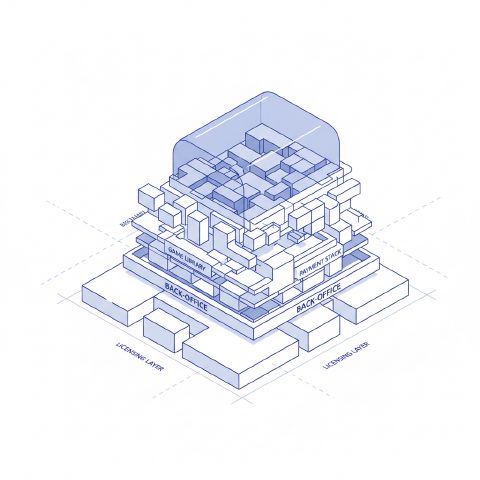
A white label casino is a ready-made gambling platform — software, game library, payment layer and back-office — that you brand and operate under a revenue-share or flat-fee agreement with the provider. You control the brand, marketing and player relationships. The provider owns the tech stack, the sub-licence and often the master gambling licence. A turnkey build gives you the same speed but you own the software licence outright and typically hold your own regulatory licence.
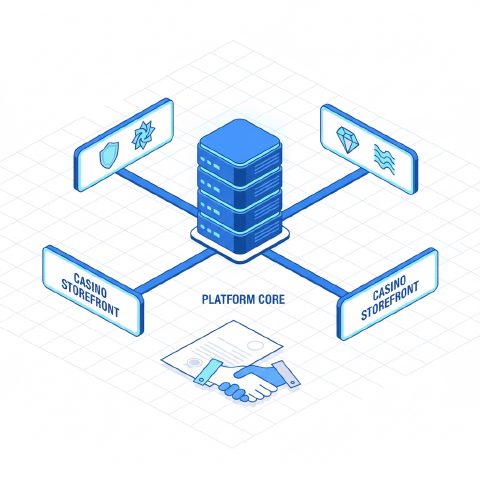
The practical difference matters enormously at the P&L level. On a white label deal, you are essentially a branded reseller sitting on top of someone else's infrastructure. Providers like SoftSwiss, EveryMatrix, Pronet Gaming and Digitain all offer white label packages, and they structure deals as a percentage of GGR — typically 15–35% depending on volume commitments and market. That share compounds painfully once you scale. A casino doing €500K GGR per month at a 25% rev-share is handing €125K back to the platform every month, forever.
A turnkey solution — think SoftSwiss's standalone Casino Engine licence or EveryMatrix's CardsChat-style full ownership path — means you pay a larger upfront licence fee (often $50K–$200K+) and a much lower ongoing fee (flat monthly or a single-digit GGR percentage). You also need your own regulatory licence, which adds 3–6 months to your timeline. The trade-off is obvious: white label is cheaper and faster to start, turnkey is cheaper to operate once you hit meaningful revenue. Most operators I advise cross that break-even point somewhere between $300K and $600K monthly GGR, though it depends heavily on the specific contract terms.
There is a third hybrid category worth knowing: sub-licensing. Providers like White Hat Gaming and Aspire Global let you operate under their MGA or UKGC master licence while using their platform. You get regulatory cover included in the deal, which is genuinely valuable for operators who cannot yet afford a direct licence application. The cost is that you are deeply dependent on the master licensee's compliance decisions — if they exit a market or lose their licence, you go dark overnight. That risk is not theoretical; it has happened.
| Factor | White Label | Turnkey (Own Licence) | Sub-Licence |
|---|---|---|---|
| Time to launch | 4–12 weeks | 3–6 months | 6–10 weeks |
| Upfront cost (approx.) | $10K–$50K setup | $50K–$200K+ licence fee | $5K–$20K setup |
| Ongoing platform cost | 15–35% GGR rev-share | Flat monthly + low % GGR | 20–40% GGR rev-share |
| Regulatory licence | Provider's (sub-licence) | Own licence required | Master licensee's |
| Tech ownership | None | Full | None |
| Scalability ceiling | Medium — rev-share drag | High | Low — dependent on master |
Step 1: Which jurisdiction should you licence under before approaching any platform?
Pick your target player market first, then work backwards to the licence that lets you serve it legally. Curaçao is the fastest and cheapest entry point for offshore operators targeting LATAM, Africa or non-regulated Asian markets. MGA covers EU players with the most credible brand signal. If you are targeting a specific regulated market — Colombia, Peru, Mexico, any US state — you need that jurisdiction's licence directly, and no white label shortcut exists.
Curaçao restructured its licensing framework in 2023, replacing the old master-sublicence model with a National Online Gambling Ordinance (NOL) that requires operators to hold their own licence directly from the Curaçao Gaming Control Board (GCB). The new licences cost roughly $25K–$35K all-in for the first year including application fees, registered agent and compliance setup — cheaper than MGA but the bank account and payment processing challenges are real. Many acquiring banks still treat Curaçao-licensed operators as high-risk, which means you will pay elevated MDRs (merchant discount rates) of 4–8% rather than the 1.5–3% a EU-licensed operator sees.
MGA (Malta Gaming Authority) remains the gold standard for EU-facing operations. The application fee is €25,000, annual licence fee €25,000, and you should budget another €30K–€60K for compliance consultants, AML/KYC system setup and legal review. Timeline is 4–6 months if your application is clean. The payoff is better payment processing, easier banking relationships, and the ability to market in most EU member states without additional local licences (with notable exceptions — Germany, Sweden, Netherlands and Denmark all require local licences on top of MGA).
For LATAM specifically: Coljuegos in Colombia and MINCETUR in Peru both require local entity incorporation, local server infrastructure in some cases, and significant responsible gambling tooling. These are not jurisdictions where a quick white label launch works — budget 12–18 months and $200K+ for a compliant Colombian licence. Mexico's SEGOB licence is similarly complex and politically opaque. I generally advise operators new to LATAM to start with a Curaçao licence targeting non-regulated markets, prove the concept, then invest in a local licence once the business model is validated.
Step 2: How do you evaluate and choose the right white label casino platform provider?
Shortlist providers based on three non-negotiable criteria: the depth of their game aggregation (number of integrated studios and live casino providers), the quality of their payment module in your target geography, and the contract terms around revenue share and exit clauses. Everything else — UI templates, bonus engine features, CRM tools — is secondary and largely comparable across the main vendors.
The major white label platforms you will encounter in RFPs are SoftSwiss Casino Platform, EveryMatrix CasinoEngine, Pronet Gaming, Digitain, BetConstruct, Slotegrator and GamMatrix. Each has genuine strengths. SoftSwiss has deep crypto integration and is a natural fit for crypto casino launches — they power hundreds of brands and their back-office tooling is mature. EveryMatrix has arguably the best game aggregation layer (GameHub) with 20,000+ titles from 200+ studios, and their OddsMatrix sportsbook is solid if you want a combined product. Pronet is strong in Africa and LATAM. Digitain and BetConstruct both have deep sportsbook DNA and are worth considering if sports betting is your primary vertical.
When you review contracts, the clauses that matter most are: (1) the rev-share percentage and whether it steps down at volume thresholds, (2) the minimum monthly fee — many providers charge a floor of $5K–$15K/month regardless of GGR, which destroys early-stage economics, (3) the exclusivity terms around player data (you need to own your player data to migrate later), and (4) the exit notice period. I have seen contracts with 12-month exit clauses, which is essentially a trap. Push hard for 3 months maximum.
Do a technical due diligence call with their integrations team, not just the sales team. Ask specifically: what is the average API uptime SLA, how are game provider outages handled, what is the process for adding a new payment method and how long does it take? Vendors who struggle to answer these concretely are telling you something about their operational maturity. Also ask for a reference call with two or three live operators on their platform — any serious provider will accommodate this.
Step 3: What game content strategy should a new white label casino launch with?
Launch with a curated library of 500–1,500 titles from five to eight proven studios rather than trying to offer everything on day one. Players do not browse 10,000 slots — they search for specific titles. Prioritise the studios your target market actually plays: Pragmatic Play and Evolution are non-negotiable globally; regional studios like Caleta (LATAM), Wazdan (Eastern Europe) or Hacksaw Gaming (Nordics) add genuine differentiation.
Most white label platforms give you access to their aggregated game library as part of the deal, which is convenient but means you have no direct relationships with studios. That matters because direct studio deals — even for a mid-size operator — unlock better revenue share on game GGR (typically 15–20% to the studio on an aggregated deal versus 10–15% direct), priority access to exclusive content windows, and co-marketing opportunities. If your platform uses an aggregator layer like Relax Gaming's Silver Bullet or Pariplay's Fusion, you are paying an additional aggregation fee on top of the studio's cut, which further compresses your margins.
Live casino is the highest-margin, highest-retention vertical in online casino — do not treat it as an afterthought. Evolution Gaming dominates the live dealer market and is essentially mandatory. Pragmatic Play Live is a credible second option and often more commercially flexible for new operators. Ezugi (owned by Evolution) and Vivo Gaming are worth considering for LATAM-specific live tables with Spanish-speaking dealers. Budget for a dedicated live casino section in your UI from day one; operators who bolt it on later see significantly lower live casino adoption.
On the compliance side, make sure every game in your library has a valid RTP certificate for your licence jurisdiction. MGA requires certified RTP data for every title. Curaçao's new NOL framework is tightening similar requirements. Your platform provider should handle this, but verify it explicitly — I have seen operators go live with uncertified titles and face regulatory notices within weeks.
Step 4: How do you build a payment stack that actually converts in your target market?
Your payment stack is where most white label launches quietly fail. Generic global PSPs get declined by local issuing banks at rates of 20–40% in many markets. You need at least one local acquirer with a domestic banking relationship in your primary market, a crypto option (increasingly expected), and an e-wallet solution relevant to your players — Skrill and Neteller for EU, PIX or Boleto for Brazil, SPEI for Mexico.
White label platforms typically come with a pre-integrated set of payment providers — usually a mix of global PSPs like Nuvei, Payroc or Checkout.com, plus some crypto processors. The problem is that 'integrated' does not mean 'optimised for your market.' A Curaçao-licensed operator targeting Brazilian players needs PIX integration (Brazil's instant payment system, which processes 140+ million transactions daily as of 2024) and a PSP with a Brazilian acquiring bank relationship. Without it, your card approval rates will be 30–50% at best. That means half your depositing players are bouncing at checkout.
Crypto payment processing is no longer a niche feature — it is table stakes for offshore operators. Processors like CoinsPaid (which SoftSwiss spun out as a standalone product), BitPay and NOWPayments all integrate with major white label platforms. The operational advantage of crypto beyond the obvious anonymity angle is settlement speed and the absence of chargebacks, which is a significant risk-management benefit for new operators without chargeback history to show acquirers.
Build your payment stack in layers: primary card acquiring, backup card acquiring (critical — if your primary PSP suspends your account, which happens to new gambling merchants, you need a live backup within hours, not weeks), at least one e-wallet, crypto, and a local instant payment method if your market has one. Budget for MDR costs carefully: crypto typically costs 0.5–1.5%, e-wallets 1–3%, local instant payments 0.5–1.5%, and card acquiring 3–8% depending on your risk profile and licence jurisdiction. These costs compound — at 5% average blended MDR on $1M monthly deposit volume, you are paying $50K/month in payment processing fees before you have paid the platform or the studios.
| Payment Method | Typical MDR | Chargeback Risk | Best For Markets | Integration Complexity |
|---|---|---|---|---|
| Card (Visa/MC) — EU acquirer | 1.5–3.5% | Medium | EU, UK (with UKGC licence) | Low (via platform PSP) |
| Card (Visa/MC) — offshore acquirer | 4–8% | High | LATAM, Africa, Asia | Medium |
| Crypto (BTC, ETH, USDT) | 0.5–1.5% | None | Global offshore | Low (via CoinsPaid etc.) |
| PIX (Brazil) | 0.5–1.2% | Very Low | Brazil | Medium — needs local PSP |
| SPEI (Mexico) | 0.3–1.0% | Very Low | Mexico | Medium — needs local PSP |
| Skrill / Neteller | 1.9–3.5% | Low | EU, LATAM | Low (via platform) |
| Open Banking / Pay-by-Bank | 0.3–1.0% | Very Low | UK, Nordics, Germany | Medium-High |
Step 5: What does the technical integration and go-live process actually involve?
The technical go-live process on a white label is primarily configuration rather than development — you are customising a pre-built product, not building from scratch. Expect 4–8 weeks for a standard launch: brand setup and UI customisation in weeks one and two, game content configuration and payment integration in weeks three and four, QA and compliance review in weeks five and six, and soft launch with a limited player base before full marketing spend.
Most white label platforms give you a branded front-end built on their template system. You can customise colours, fonts, banners, lobby layout and the navigation structure, but you are working within their design framework. If you need a genuinely differentiated UI — custom lobby mechanics, unique gamification layers, a bespoke mobile experience — you will need a platform that exposes a headless API so your own front-end team can build on top of it. EveryMatrix's Headless Casino and SoftSwiss's API-first architecture both support this, but it adds 4–8 weeks of development time and requires a competent front-end team on your side.
The integration work that takes longer than operators expect is almost always on the payment side, not the game side. Adding a new PSP that is not already on the platform's approved list requires the platform's technical team to build the integration — timelines of 4–12 weeks are common, and some platforms charge $5K–$15K per custom payment integration. Map out your payment stack requirements before you sign the platform contract and confirm which providers are already integrated. If your critical local payment method is not on their list, factor in the delay and cost before committing.
KYC and AML tooling is the other integration that operators consistently underestimate. Your licence will require automated identity verification — providers like Sumsub, Onfido and Jumio all integrate with major casino platforms. Budget $0.50–$2.00 per verification depending on the provider and document type, and build your KYC flow carefully: too much friction at registration kills conversion, too little creates compliance exposure. The standard approach for a new offshore operator is a tiered KYC model — allow play up to a certain deposit threshold (often €150–€500) before triggering full document verification.
Step 6: How should you structure your bonus and CRM strategy on a white label platform?
On a white label, your bonus engine and CRM are among the few areas where you can genuinely outperform competitors on the same platform. A welcome offer alone does not drive retention — operators who win long-term build segmented lifecycle campaigns that trigger based on player behaviour, not just calendar dates. Budget 20–30% of your projected GGR for bonusing in the first six months, then optimise down as you gather data.
The welcome bonus market is saturated and expensive. A 100% match up to €200 with 35x wagering is now baseline in most markets — it does not differentiate you and it attracts bonus abusers. The operators I see building sustainable businesses are moving toward lower-friction, lower-cost welcome offers paired with strong second and third deposit incentives, plus a loyalty programme that rewards actual play rather than just deposits. Gamification layers — missions, tournaments, level-up mechanics — have measurable impact on session length and return visit rate, and most major white label platforms now include a basic version of these tools.
Email and SMS CRM is where white label operators consistently under-invest. Platforms like SoftSwiss include a basic CRM module, but serious operators integrate a dedicated tool — Optimove, Fast Track CRM, or even a well-configured Salesforce setup — to run proper lifecycle campaigns. The ROI on a well-segmented reactivation campaign for lapsed players (those who deposited once and did not return within 14 days) typically runs 8–15x the campaign cost. That is not a number to leave on the table because you did not want to spend $2K/month on a CRM tool.
Responsible gambling tooling is not optional and is increasingly a competitive signal, not just a compliance checkbox. Deposit limits, loss limits, session time alerts, self-exclusion integration with GAMSTOP (UK) or national exclusion registers — these need to be configured correctly before you take a single real-money deposit. Regulators are increasingly auditing these controls at licence renewal, and failing a responsible gambling audit is one of the fastest ways to lose your operating licence. Your platform provider should handle the technical implementation; your job is to set the parameters correctly and document the policies.
Step 7: What does a realistic launch budget and revenue timeline look like?
A realistic white label casino launch budget for an offshore operator targeting LATAM or non-regulated markets runs $80K–$200K in year one, covering licence, platform setup, payment integration, marketing and working capital. Profitability at the operator level (after platform rev-share, payment costs and bonusing) typically arrives between month 8 and month 18 for operators who execute well — not month 3, regardless of what vendor sales decks suggest.
Here is a realistic cost breakdown for a first-year offshore white label launch. Licensing (Curaçao NOL): $25K–$35K. Platform setup fee: $10K–$30K. Payment integration and merchant account setup: $5K–$20K. KYC/AML tooling setup: $3K–$8K. Legal and compliance consulting: $10K–$25K. UI customisation and front-end work: $5K–$20K. Marketing budget (SEO, affiliates, paid social): $30K–$100K. Working capital for bonus liability and payment float: $20K–$50K. Total: roughly $108K–$288K, with the wide range driven almost entirely by marketing spend, which is the variable you control most directly.
Revenue trajectory is highly market-dependent. In a competitive EU market with MGA licensing, a new brand with solid SEO and an affiliate programme might reach $50K–$100K GGR/month by month six if the product and bonusing are competitive. In a less saturated offshore market with strong local payment options, some operators reach $200K–$300K GGR/month within the same timeframe. These are not guarantees — they are the upper end of what I see from well-executed launches. The median outcome is slower. Many operators spend $100K+ and never reach profitability because they underinvested in marketing or chose the wrong market.
The unit economics to model before you launch: if your blended platform rev-share is 25%, payment processing costs average 4%, bonus cost runs 15% of GGR, and affiliate commissions run 25–35% of NGR — you need to understand what is left for operations and profit. Run the numbers at $50K, $100K, $200K and $500K monthly GGR. If the model does not work at $200K GGR, you need to renegotiate the platform deal or find a cheaper market before you launch, not after.
| Cost Category | Low Estimate | High Estimate | Notes |
|---|---|---|---|
| Curaçao NOL licence | $25,000 | $35,000 | New NOL framework as of 2023; includes registered agent |
| Platform setup fee | $10,000 | $30,000 | One-time; varies by provider and customisation scope |
| Payment integration | $5,000 | $20,000 | Higher if custom PSP integration required |
| KYC/AML tooling | $3,000 | $8,000 | Sumsub, Onfido or similar; plus per-verification costs |
| Legal & compliance | $10,000 | $25,000 | External counsel; higher for complex structures |
| UI/front-end work | $5,000 | $20,000 | Template customisation to headless build |
| Marketing (year 1) | $30,000 | $100,000 | SEO, affiliates, paid channels — biggest variable |
| Working capital / float | $20,000 | $50,000 | Bonus liability, payment float, operational buffer |
| Total (approx.) | $108,000 | $288,000 | Excludes ongoing platform rev-share and MDR costs |
What are the biggest operational risks operators discover after launch — not before?
The three risks that blindside operators most often after go-live are: payment processing instability (PSPs suspending accounts with no warning), bonus abuse at a scale that destroys early GGR margins, and platform dependency — discovering that a critical feature or market exit by your platform provider directly shuts down your business. All three are manageable with preparation; almost none of them appear on vendor sales decks.
Payment instability is the silent killer of early-stage casino operations. New gambling merchants are high-risk clients for PSPs, and account suspensions — sometimes with funds held for 90–180 days — happen with frustrating regularity. The mitigation is redundancy: never rely on a single PSP for more than 60% of your card volume, have a backup acquirer live and tested before you launch, and keep 30–60 days of operational expenses in a separate bank account not connected to your payment processing. Operators who skip this step and get suspended with $50K in the PSP settlement account have a very bad few months.
Bonus abuse — coordinated groups exploiting welcome offers, free spins or cashback promotions — is a predictable problem that new operators consistently underestimate. Abuse rings can drain $10K–$50K from a new brand within days of launch if your fraud controls are not configured correctly. Your platform's fraud tools (velocity checks, device fingerprinting, IP analysis) need to be active from day one, not added reactively. Consider integrating a dedicated fraud tool like Sardine, Kount or even a basic MaxMind setup alongside your platform's native tools for the first six months.
Platform dependency risk is structural and hard to fully mitigate on a white label model. If your platform provider loses a key game studio licence, exits a payment provider relationship, or — in the worst case — faces regulatory action against their master licence, your operation is affected immediately. The best protection is to negotiate player data ownership into your contract explicitly, maintain your own CRM database independent of the platform, and understand your exit rights. Operators who have done this can migrate to a new platform in 4–8 weeks. Operators who have not can lose their entire player database when they switch.
How does white label casino regulation differ between US states and offshore markets?
US iGaming regulation is the most complex and expensive in the world — and there is no white label shortcut. Each of the six states with legal online casino (New Jersey, Pennsylvania, Michigan, Connecticut, Delaware, West Virginia as of 2025) requires a direct operator licence, a local land-based casino partner in most cases, and technology certification for every piece of software you deploy. Offshore white label models do not apply here at all.
In New Jersey, the gold standard for US iGaming compliance, you need a Casino Service Industry Enterprise (CSIE) licence or a full Casino licence, a Division of Gaming Enforcement (DGE) approved platform, and every game title individually certified by a testing lab like GLI or BMM. The platform you use must itself be DGE-approved — which rules out most offshore white label providers. Pennsylvania's PGCB and Michigan's MGCB have similar requirements. This is not a market where you can launch in eight weeks on a Curaçao sub-licence.
The emerging US model for new entrants is a market access deal with a licensed land-based operator (who holds the 'skin' allocation) combined with a B2B technology provider certified in that state. Operators like Rush Street Interactive, Golden Nugget and BetMGM have gone this route. The investment required — $1M+ in licensing, compliance infrastructure and technology certification — means US iGaming is realistically only viable for well-capitalised operators or those with existing land-based relationships.
Offshore markets — Curaçao, Anjouan (COMOROS), Isle of Man, Gibraltar — are where white label models genuinely make sense for new entrants. Anjouan (operated by the Anjouan Gaming Board) has emerged as a low-cost alternative to Curaçao, with licence fees reportedly in the $10K–$20K range, though banking and payment processing challenges are even more pronounced than Curaçao. I would treat Anjouan as a stepping stone for operators testing a concept before investing in a more credible licence, not as a long-term foundation.



Comments
No comments yet, be the first.