iGaming Software Providers: The Operator's Ultimate Guide to Choosing Your Stack in 2026

What exactly is an iGaming software provider and what does the stack actually include?
An iGaming software provider supplies the technology layer — or layers — that power an online casino or sportsbook. That covers the gaming platform (back-office, CRM, wallet, bonus engine), the game content (RNG slots, live dealer, table games), and increasingly the payments, compliance and data tooling that regulators now require. The stack is rarely one vendor.
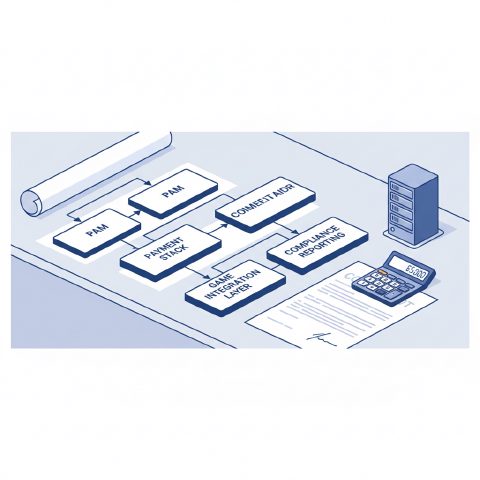
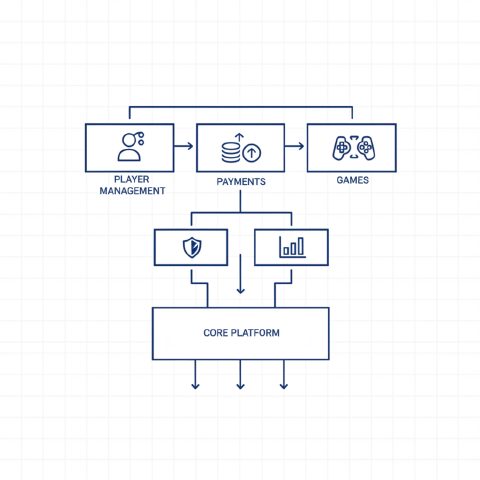
The term gets used loosely in vendor marketing to mean almost anything, so let's be precise. At the core sits the gaming platform — the engine that handles player accounts, session management, bonus logic, reporting and the API connections to game studios. Above that sits the content layer, either via a game aggregator's single integration or direct studio deals. Underneath both sits the payments layer — PSPs, crypto gateways, KYC/AML tooling — which is increasingly a product in its own right rather than a bundled afterthought.
Operators entering the market in 2026 face a more modular landscape than five years ago. SoftSwiss, for example, has evolved from a white-label shop into a full ecosystem covering the Game Aggregator (SGAW), the Sportsbook, and a standalone Jackpot Aggregator. EveryMatrix has similarly unbundled into CasinoEngine, OddsMatrix, MoneyMatrix and PlayerMatrix — you can license individual modules. That modularity is genuinely useful once you know what you need, but it creates a scoping problem for first-time operators who don't yet know which modules will be their bottleneck.
The practical implication: when a vendor says they're an 'all-in-one iGaming software provider,' ask them to map every function to a specific module and name the SLA on each. The gaps — usually in fraud tooling, responsible gambling controls or local payment methods — are where operators get surprised post-launch. A sharp platform contract review before signing saves you renegotiating under time pressure six months in.
White-label vs. turnkey vs. custom build — which iGaming platform model fits your launch?
White-label gets you live fastest (4–12 weeks) under the platform's master license, but you're renting their compliance posture and accepting their revenue-share terms. Turnkey gives you your own license and brand on a pre-built tech stack — more control, longer timeline (3–6 months). Custom builds are for operators with 7-figure tech budgets and a multi-year roadmap. Most new entrants should start white-label and plan their exit.
White-label platforms — SoftSwiss's Casino Management System, Income Access (now part of Paysafe's ecosystem), Digitain, and Turnkey Sport among others — bundle the license, the platform software, and a content catalog under one monthly fee. The appeal is obvious: you skip the 4–9 month Curaçao or MGA licensing process, inherit a certified game library, and focus on brand and acquisition. The cost is real though. You're typically paying a revenue share of 10–20% of GGR on top of a setup fee ($15k–$50k range is common) and monthly platform fees. At low GGR that's manageable; at €1M+ monthly it starts hurting badly.
Turnkey deployments — EveryMatrix, Softgamings, BetConstruct — give you a licensed entity, your own platform instance and full brand ownership, but you're responsible for your own licensing, which adds 3–6 months and $20k–$100k depending on the jurisdiction. Curaçao eGaming's new framework (post-2023 reform) and Anjouan are the fastest offshore routes; MGA runs 4–6 months and costs €25k+ in fees alone before legal bills. The upside is that your tech and player data are yours — you're not locked into a revenue share forever.
Custom builds make sense for tier-one operators expanding into regulated US states where platform certification requirements (GLI-11, GLI-19) are so state-specific that off-the-shelf solutions rarely pass cleanly. Scientific Games (now Light & Wonder), IGT and Everi have historically dominated the land-based-to-online transition in states like New Jersey and Pennsylvania, partly because they carry the certification history regulators trust. If you're building for Michigan or Connecticut, budget for a tech partner with existing state approvals — that certification timeline alone can run 12–18 months.
| Model | Time to Launch | Typical Setup Cost | Ongoing Cost Structure | License Ownership | Best Fit |
|---|---|---|---|---|---|
| White-Label | 4–12 weeks | $15k–$50k | Rev share 10–20% GGR + monthly SaaS | Platform's master license | Fast offshore/crypto launch, <€500k/mo GGR |
| Turnkey | 3–6 months | $30k–$120k | Monthly SaaS + lower rev share 5–10% | Operator holds own license | Scaling operator, MGA or Curaçao target |
| Custom Build | 12–24 months | $500k–$2M+ | Dev team + hosting + maintenance | Operator holds own license | US regulated markets, Tier-1 EU operators |
| Headless/Modular | 3–9 months | $50k–$200k | Per-module SaaS fees | Operator holds own license | Operators replacing legacy systems piece by piece |
Which casino software providers actually dominate market share in 2026?
SoftSwiss, EveryMatrix, Digitain and BetConstruct lead the white-label and turnkey segment for offshore and EU operators. In regulated US markets, Scientific Games (Light & Wonder), IGT, Kambi and GAN hold dominant positions. Game content is led by Pragmatic Play, Evolution Gaming (live), Play'n GO and NetEnt — these four studios appear in virtually every credible casino's lobby.
The platform layer and the content layer have very different competitive dynamics. On the platform side, SoftSwiss has built arguably the most operator-friendly white-label ecosystem for crypto and offshore markets — their SGAW aggregator connects 14,000+ games, and their Sportsbook module has matured enough to compete with standalone sportsbook providers. EveryMatrix is the go-to for operators who need MGA or UKGC-compatible infrastructure; their MoneyMatrix payment module is genuinely strong and reduces the need for a separate PSP integration layer.
Digitain and BetConstruct have carved out strong positions in LATAM and CIS markets, partly because they've invested in local payment method integrations (PIX in Brazil, local wallets in Colombia) that European-first platforms often treat as an afterthought. If your target market is Brazil post-regulation or Colombia under Coljuegos, that local payment depth matters more than brand recognition in London.
On the content side, Evolution Gaming is effectively a monopoly in live dealer — they acquired NetEnt, Red Tiger and Ezugi, and their live studio product is so far ahead that most operators treat it as a mandatory integration rather than a choice. Pragmatic Play has done the same in RNG slots, releasing 5–8 new titles per month and maintaining the broadest cross-jurisdictional certification of any studio. Play'n GO and Nolimit City punch above their weight in regulated EU markets where player LTV is higher and game quality matters more than catalog depth.
One pattern I consistently see: operators over-index on game count ("we need 5,000 titles at launch") and under-index on studio certification status in their target jurisdiction. A studio certified in Malta may not be approved in Ontario, New Jersey or Peru. Before you sign an aggregator deal, pull their certified studio list for your specific jurisdiction — the gap between their marketing deck and their actual approved library can be significant.
How do game aggregators work and when should you use one instead of direct studio deals?
A game aggregator — Relax Gaming, Pariplay (Aristocrat), Softswiss SGAW, Hub88 — gives you a single API integration that unlocks hundreds of studios simultaneously. It's the right call at launch and for operators under roughly €500k monthly GGR. Above that threshold, direct studio deals start making economic sense because aggregator fees (typically 1–3% of GGR on top of studio revenue share) compound fast.
The aggregator model works like a content distributor: they've already done the certification, integration and commercial negotiation with each studio. You pay them a platform fee or GGR override, and in return you skip 6–18 months of individual studio integrations. For a new operator, this is almost always the right call. The question is which aggregator — and that's where operators make expensive mistakes by choosing on game count alone.
Pariplay (owned by Aristocrat since 2021) has one of the strongest certification footprints for regulated markets — they're approved in New Jersey, Pennsylvania, Ontario, Malta, Romania and a growing list of others. If you're building a multi-jurisdiction strategy, their compliance infrastructure is genuinely valuable. Relax Gaming operates a 'Powered by Relax' white-label and aggregation hybrid that's popular with boutique operators targeting Scandinavian and UK players. Hub88 has grown quickly in the crypto-casino segment and connects well with SoftSwiss and Softgamings deployments.
The direct studio deal calculation is straightforward: aggregators charge roughly 1–3% GGR on top of the studio's own revenue share (typically 10–15% for slots, higher for live). On €1M GGR per month, that aggregator override costs you €10k–€30k. A direct integration with Pragmatic Play or Play'n GO costs engineering time upfront but removes that ongoing drag. Most operators should plan to migrate their top 5–10 studios to direct deals once they have the GGR to justify it — usually around month 12–18 of operation.
What does iGaming software actually cost — and what do vendors hide in the contract?
A realistic white-label launch budget is $30k–$80k in one-time setup fees, plus $15k–$40k per month in combined platform, content and payment costs before marketing spend. Turnkey adds licensing costs of $20k–$150k depending on jurisdiction. The hidden costs are in revenue-share escalators, minimum monthly fees, and exit clauses that lock you in for 3–5 years.
Let me be direct about what vendors understate. The setup fee is the easy number — it's in the proposal and it's negotiable. The dangerous numbers are in the ongoing structure. Revenue share agreements with white-label platforms often have minimum monthly fee floors — meaning even if your GGR is zero in month two because your acquisition campaign flopped, you still owe the platform €10k–€20k. I've seen operators burn through their runway in months three and four because they didn't model the downside scenario.
Content costs are similarly underestimated. A typical aggregator deal will cost 12–18% of slots GGR and 15–20% of live dealer GGR in combined studio + aggregator fees. On a €200k GGR month, that's €30k–€40k in content costs alone — before platform fees, PSP fees (typically 2–5% of deposits), KYC/AML tooling ($0.50–$2.00 per verification), hosting and your own team. The P&L math gets tight fast, which is why operators who launch on €150k total budget almost always run out of money before they've built enough player base to be self-sustaining.
Exit clauses deserve special attention. SoftSwiss and similar platforms typically include 12–24 month minimum commitment periods and data portability restrictions that make migrating your player database to a new platform legally complex. EveryMatrix is generally cleaner on data portability. Before signing, have a lawyer review the IP ownership clauses — specifically who owns the player data, the CRM segments and the bonus history. That data is your most valuable asset and some contracts are deliberately vague about it.
On the positive side, platform pricing has become more competitive since 2022 as the market matured. Setup fees that were €80k+ in 2020 are now negotiable to €30k–€50k for credible operators with a clear business plan. If a vendor won't negotiate on setup fees, negotiate on the revenue share floor or the minimum commitment period — there's always room.
| Cost Item | One-Time / Setup | Ongoing Monthly | Notes |
|---|---|---|---|
| White-label platform fee | $15k–$50k | $5k–$15k SaaS + 10–20% GGR rev share | Minimum monthly floors common |
| Game aggregator (e.g. Pariplay, Hub88) | Integration included | 12–18% of slots GGR | On top of studio's own share |
| Live dealer (Evolution) | Negotiated | 15–20% of live GGR | Table minimums may apply |
| PSP / payment processing | $0 | 2–5% of deposit volume | Crypto gateways often 0.5–1% |
| KYC / AML tooling (e.g. Sumsub, Onfido) | $0–$5k setup | $0.50–$2.00 per verification | Volume discounts above 5k/mo |
| Curaçao eGaming license | $15k–$30k | $5k–$10k/year | Post-2023 reform fees higher |
| MGA license | $25k–$35k in fees | $25k/year + compliance costs | 4–6 month timeline |
| Hosting / CDN | $0 (bundled in WL) | $2k–$8k (turnkey/custom) | AWS, GCP or platform-managed |
How does licensing jurisdiction affect your choice of iGaming software provider?
Your target license dictates which platforms and studios are even available to you. MGA and UKGC require certified software from approved suppliers — not every platform qualifies. Curaçao and Anjouan are more permissive but still require basic technical standards. US state licenses (NJ, PA, MI) demand GLI-certified platforms with specific responsible gambling controls baked in at the software level.
This is the connection most new operators miss until it's too late. They choose a platform based on features and price, then discover their preferred platform isn't certified in their target jurisdiction. SoftSwiss's platform, for instance, is excellent for Curaçao and Anjouan operations but does not carry MGA certification for its core CMS — operators targeting Malta need to look at EveryMatrix, Softgamings or BetConstruct, all of which have invested in MGA-compliant builds. The certification process for an MGA B2B license takes 6–12 months and costs the platform provider significant resources, so not every vendor bothers.
For US markets, the situation is more fragmented. New Jersey's Division of Gaming Enforcement (DGE) and Pennsylvania's Gaming Control Board (PGCB) each maintain their own approved supplier lists. A platform certified in NJ may need a separate application in PA. Scientific Games (Light & Wonder), IGT, GAN and Kambi have invested years building those state-by-state approval histories — which is a genuine competitive moat that newer platforms can't easily replicate. If you're planning a US launch, your platform choice is essentially constrained to vendors with existing state approvals unless you have 18+ months and $500k+ to wait for a new certification.
LATAM is more nuanced. Colombia (Coljuegos) and Peru (MINCETUR) have formal licensing regimes with technical certification requirements, but they're less prescriptive about specific platform vendors than US states. Mexico (SEGOB) operates under a concession model that's been notoriously slow to update its technical standards. Brazil's new regulated market (effective January 2025) is still establishing its full technical certification framework under SECAP — operators entering Brazil now are making a bet on which platform will clear Brazilian certification first, and that's a real risk to model.
What should operators look for in an iGaming platform's payment stack?
The payment stack is where operators lose 10–20% of potential revenue to friction, failed transactions and currency mismatch. Your platform's built-in PSP roster is almost never optimized for your specific market. Evaluate the platform's payment module on local method coverage, crypto support, chargeback management tools and the ability to add third-party PSPs without a six-month dev project.
EveryMatrix's MoneyMatrix is the strongest built-in payment module I've seen from a platform vendor — it supports 200+ payment methods, has a solid fraud scoring layer, and the merchant account setup is cleaner than most standalone PSPs. SoftSwiss integrates CoinsPaid natively for crypto, which is genuinely useful for their core offshore operator base. Outside those two, most platform payment modules are adequate for European card processing and weak everywhere else.
If your target market is LATAM, you need PIX (Brazil), PSE (Colombia), PagoEfectivo (Peru), OXXO (Mexico) and ideally local wallet integrations. Almost no white-label platform covers all of these out of the box. The practical solution is to integrate a specialist LATAM payment aggregator — dLocal, Pagsmile or PayRetailers — as a secondary payment layer. Budget for the integration work (typically 4–8 weeks of dev time if your platform supports third-party PSP plugins) and the additional fee layer (dLocal charges 2.5–4% depending on method and country).
Crypto is a different conversation. In 2026, crypto payments are table stakes for offshore operators targeting European and Asian recreational players. CoinsPaid processes the majority of crypto casino volume in the European market; B2BinPay and Coinspaid compete on fee structures (typically 0.5–1% per transaction vs. 2–4% for card processing). The conversion uplift from adding crypto — particularly Bitcoin, ETH and USDT — in offshore markets is real. I've seen operators report 20–35% of deposit volume shifting to crypto within 90 days of enabling it, with higher average deposit sizes and lower chargeback rates.
One underrated factor: chargeback management tooling. Card-accepting operators targeting markets with high dispute rates (certain LATAM corridors, some Eastern European markets) need a platform that either has built-in chargeback automation or integrates cleanly with tools like Chargebacks911 or Verifi. Platforms that treat chargebacks as a manual back-office process will cost you staff time and merchant account health at scale.
How do you evaluate and compare iGaming software providers before signing a contract?
Evaluate on five axes: technical certification fit for your target jurisdiction, payment method coverage in your markets, content library certification status, contract flexibility (exit clauses, data portability, minimum commitments), and reference operators you can actually call. Vendor demos are marketing — reference calls with live operators on the same platform are intelligence.
The demo-to-reality gap in iGaming platform sales is real. Every platform's sales deck shows a slick back-office, smooth bonus engine and a 10,000-game lobby. What the demo doesn't show is how the platform performs during a promotional spike at 50x normal traffic, how long their support team takes to respond to a critical payment issue at 2am on a Saturday, or what happens when a game provider has a disputed round and you need audit logs in a format your regulator accepts.
Build a structured RFP that forces vendors to answer specific operational questions: What is your average P1 incident response time? Name three operators in my target jurisdiction currently live on your platform who I can speak with. Provide your last 12 months' platform uptime SLA reports. What is your process for adding a new PSP to my instance? These questions separate platforms that have real operational depth from those that are essentially a resold white-label with a thin support layer on top.
Contract review is non-negotiable. Have an iGaming-specialist lawyer review the revenue share structure, the IP and data ownership clauses, the exit terms and the SLA remedies. The SLA remedies section is particularly important — many platform contracts promise 99.9% uptime but the remedy for a breach is a service credit worth a fraction of your lost GGR. That's not a real protection. Push for GGR-linked remedies or the right to terminate for persistent SLA failure.
| Evaluation Axis | What to Ask | Red Flags |
|---|---|---|
| Regulatory certification | List your approved jurisdictions and certification dates | Vague answers; no MGA/GLI certs for regulated targets |
| Payment coverage | Show your live payment methods by country for my target market | Only Visa/MC + one crypto option for LATAM target |
| Content library | Provide certified studio list for my specific jurisdiction | Quoting total game count, not certified game count |
| Contract flexibility | What are exit terms, data portability rights, minimum commitment? | 3+ year lock-in, no data export clause, high exit fees |
| Operational references | Give me 3 live operators I can call in the next 48 hours | Only willing to provide written testimonials |
| Support SLA | What is your P1 response time and escalation path? | No named support contact; ticket-only system |
What are the biggest mistakes operators make when choosing an iGaming software provider?
The most common and costly mistakes are: choosing a platform based on game count rather than certified game count, underestimating the total cost of ownership beyond setup fees, signing long-term contracts without data portability clauses, and launching in a jurisdiction the platform's software isn't actually certified for. Each of these can cost six figures to unwind.
The game count mistake is endemic. An aggregator quotes 8,000 games; the operator launches in Ontario; half those studios aren't approved by the Alcohol and Gaming Commission of Ontario (AGCO). The operator's lobby looks thin, players churn, and the fix requires 4–6 months of studio certification work they didn't budget for. The correct question is always: how many of your games are certified and live in my specific target jurisdiction today?
Underestimating total cost of ownership is the one that kills early-stage operators. I've watched founders with €200k launch budgets sign platform contracts where the combined platform + content + payment fees on a modest €150k GGR month eat €40k–€50k. That leaves €100k–€110k for player acquisition, team and operations. At a CPA of €200–€400 per depositing player (realistic for competitive European markets), that buys 250–550 new players per month — not enough to build a self-sustaining business before the runway runs out. Model your unit economics before you sign, not after.
The data portability issue is subtler but strategically critical. Your player database — their preferences, deposit history, bonus responses, responsible gambling flags — is the core asset of your business. Some platform contracts treat that data as jointly owned or make export technically difficult. When you want to migrate to a better platform at year two, you discover you're either locked in or facing a legal dispute over your own player records. This is not hypothetical; it's a conversation I've had with multiple operators who signed without reading that clause carefully.
Finally, launching in a jurisdiction where your platform software isn't certified is more common than it should be. Operators in a hurry take vendor assurances at face value — 'we're in the process of getting certified in X' — and launch anyway, only to face regulator enforcement or forced platform migration 12 months in. Verify certification status independently through the regulator's own approved supplier registry, not the vendor's sales deck.
How is AI and automation changing iGaming software platforms in 2026?
AI is moving from a marketing buzzword to operational infrastructure in iGaming platforms. The real applications in 2026 are responsible gambling detection, bonus abuse prevention, dynamic content personalization and automated KYC/AML decisioning — not the chatbot features vendors lead with. Operators who leverage these tools reduce operational costs and improve regulatory compliance simultaneously.
The responsible gambling application is where AI delivers the clearest ROI for operators in regulated markets. MGA, UKGC and increasingly Curaçao under its reformed framework require operators to demonstrate proactive harm minimization — not just reactive self-exclusion tools. Platforms like EveryMatrix have integrated behavioral risk scoring that flags at-risk players based on session patterns, deposit velocity and game-switching behavior, triggering automated interventions before a player reaches a crisis point. This isn't just ethics — it's license protection. Regulators in the UK and Malta have issued multi-million euro fines for operators who had the data to identify problem gamblers and didn't act on it.
Bonus abuse detection is the other high-ROI application. Bonus abusers — players who exploit welcome offers and disappear — are a real cost center, particularly on platforms with generous no-deposit or free-spin offers. AI-driven risk scoring at the registration and first-deposit stage, using device fingerprinting, behavioral signals and network analysis, can cut bonus abuse rates significantly. Vendors like Sardine and Featurespace offer standalone fraud and bonus abuse tools that integrate via API with most major platforms.
Dynamic personalization — showing different game tiles, promotions and lobby layouts based on player behavior — is the feature every vendor is pitching in 2026. The honest assessment: it works, but the lift is incremental (typically 5–15% improvement in session length or deposit frequency) and it requires a player base of meaningful size before the models have enough data to be useful. Don't let a personalization demo be the deciding factor in your platform choice at launch — it matters at scale, not at 500 monthly active players.




Comments
No comments yet, be the first.