The Real Cost to Start an Online Casino in 2026: Hidden Fees Operators Discover Too Late

What is the realistic total cost to start an online casino in 2026?
The realistic total cost to start an online casino ranges from roughly $80,000 for a lean offshore white-label to well over $1 million for a regulated US state or MGA-licensed turnkey build. Most operators dramatically underestimate because vendor quotes cover only the core platform — not the integration, compliance, payment, and operational layers that make the business actually run.
When operators come to me with a vendor deck showing a $50K all-in launch cost, I know what's missing before I even read page two. Platform license fees, game aggregator revenue share, and a hosting package are the easy line items. What those decks rarely itemize are the integration engineering hours, the PSP setup fees, the AML software subscription, the legal retainer, the affiliate platform, the CRM tool, and the customer support infrastructure. Add those up and the number looks very different.
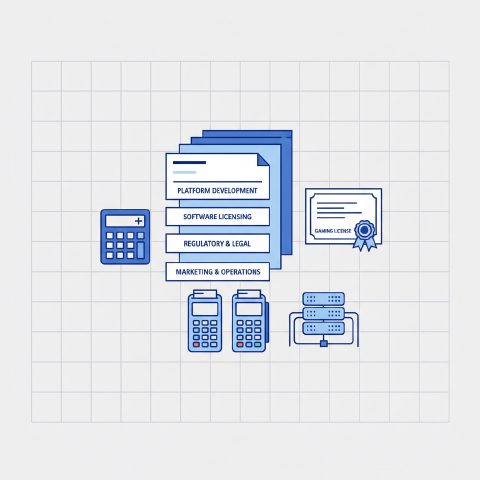
A realistic budget framework for 2026 breaks into four layers: regulatory and legal (license acquisition, legal counsel, ongoing compliance), technology (platform, game content, payment gateway, back-office tools), marketing and acquisition (affiliate network setup, SEO, paid media, bonus budget), and operations (support staff, fraud team, finance). Vendors quote on layer two. Layers one, three, and four are almost entirely your problem.
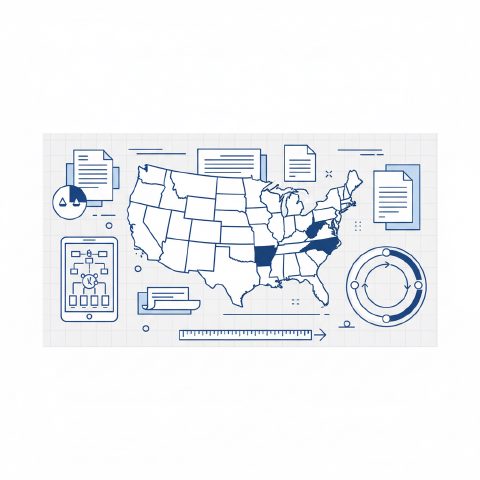
For context: a Curaçao sub-license white-label with a provider like SoftSwiss or EveryMatrix typically runs $80K–$150K in year one when you include the license fee, platform setup, payment integration, basic CRM and a modest player acquisition budget. An MGA-licensed turnkey operation — where you own the license and have direct contracts — routinely lands between $400K and $800K in year one. A US state license (New Jersey, Pennsylvania, Michigan) requires a land-based partnership, a multi-year application process and compliance infrastructure that pushes initial investment above $1M before you acquire a single player.
The honest answer is that no vendor quote gives you the full picture, and any operator who hasn't stress-tested their budget against real integration timelines is going to hit a cash-flow wall around month four or five of build. Plan for 30–40% over every quoted figure and you'll be closer to reality.
| Launch Model | Jurisdiction Examples | Estimated Year-One Cost | Key Cost Drivers |
|---|---|---|---|
| White-label (sub-license) | Curaçao, Anjouan | $80K – $150K | Platform rev-share, PSP fees, sub-license fee |
| Turnkey (own license) | MGA, Curaçao master | $300K – $800K | License acquisition, compliance stack, direct contracts |
| Regulated US state | NJ, PA, MI, WV | $1M – $3M+ | Land-based partner, multi-year application, state taxes |
| LATAM regulated | Colombia (Coljuegos), Peru (MINCETUR) | $250K – $600K | Local legal entity, local payment rails, Spanish-language ops |
| Crypto/offshore minimal | Anjouan, no license | $30K – $70K | Platform only, high payment risk, no banking access |
What does an online casino license actually cost — and what fees come after?
License fees are the visible tip of the iceberg. A Curaçao master license runs roughly $30K–$50K to obtain; an MGA license costs €25K in application fees plus a €25K annual fee. But the real licensing cost includes legal counsel, compliance officer salaries, KYC/AML tooling, and the ongoing regulatory reporting burden — which can easily double or triple the headline fee in year one.
Operators fixate on the application fee because it's a concrete number. What they underestimate is the legal preparation cost that precedes it. A competent iGaming lawyer to prepare your MGA application, draft your AML policy, and review your technical documentation will charge $15K–$40K depending on jurisdiction and complexity. For US state applications — New Jersey's Division of Gaming Enforcement is the benchmark for rigor — legal fees alone can run $100K–$300K over the application period, which stretches 12–24 months.
Then there's the compliance infrastructure you're required to maintain post-license. The MGA mandates a certified responsible gambling system, a transaction monitoring solution, and regular third-party audits. Providers like Neccton (now part of Kindred's spinout), BetBlocker integrations, and game fairness certifications from BMM or GLI each carry their own price tags. Budget $2K–$8K per month for the ongoing compliance software stack under MGA or equivalent regulated jurisdictions.
Curaçao's new 2024 licensing framework (replacing the old master/sub model) has added meaningful compliance requirements that operators on the old sub-license model weren't used to. The new Curaçao Gaming Authority structure requires direct licensing, AML officer appointments and stricter technical standards. Costs have risen — a new Curaçao license now runs $25K–$45K in fees plus setup, and the days of a $5K sub-license are over. Anjouan (AGCO) remains cheaper but carries more banking and payment friction as a trade-off.
One cost operators almost always miss: the license renewal and annual compliance audit cycle. MGA renewals involve a compliance review that can trigger remediation requirements — and remediation costs money. Build a recurring compliance budget line from day one, not as an afterthought when the regulator sends a letter.
How much does an online casino platform and game content cost?
Platform fees from providers like SoftSwiss, EveryMatrix, Pronet Gaming or Digitain typically include a setup fee ($10K–$50K) plus a monthly SaaS fee ($3K–$15K) plus a revenue share on GGR (often 15–25%). Game content from aggregators like Relax Gaming Hub or Softswiss Game Aggregator adds another 10–20% revenue share on top — meaning your game and platform layer alone can consume 30–40% of gross revenue.
The platform revenue share model sounds operator-friendly until you model it against real GGR. At 15% to the platform and 15% to the aggregator, you're handing 30 cents of every dollar in gross revenue to your tech stack before you pay staff, PSPs, bonuses or marketing. At modest GGR volumes — say $200K/month — that's $60K gone before operations. At scale it becomes a serious margin problem, which is why operators who hit $1M+ monthly GGR almost always start evaluating direct game studio deals or proprietary platform builds.
Setup fees vary enormously by provider and scope. EveryMatrix's CasinoEngine has a well-documented setup process; expect $20K–$40K for initial integration, API configuration and front-end skinning. SoftSwiss (now Betby/SoftSwiss ecosystem) bundles more out of the box but charges accordingly. Pronet Gaming and Digitain are popular in LATAM and Eastern Europe and sometimes offer more negotiable commercial terms for operators bringing volume commitments. Always negotiate the rev-share floor — most providers have flexibility they don't advertise.
Game content is the other variable. An aggregator like the SoftSwiss Game Aggregator or Relax Gaming Hub gives you access to 5,000–15,000 titles through a single integration, which is efficient but expensive. Direct deals with studios like Pragmatic Play, Evolution or Play'n GO require separate contracts, separate technical integrations and minimum monthly guarantees — typically $2K–$10K per studio per month at launch. Direct deals make sense at scale; at launch, an aggregator is almost always the right call despite the higher rev-share.
Don't overlook the live casino cost specifically. Evolution Gaming is effectively mandatory for a credible live casino offering, and their commercial terms are notoriously non-negotiable for small operators. Expect 12–18% revenue share on live casino GGR with Evolution, plus minimum monthly commitments that can be $5K–$20K depending on your table allocation. Some operators use white-label live studios (Ezugi, Vivo Gaming) as a lower-cost entry point, accepting a quality trade-off.
| Provider Type | Example Providers | Setup Fee | Monthly SaaS/Min | Rev-Share on GGR |
|---|---|---|---|---|
| Full-service platform (white-label) | SoftSwiss, EveryMatrix | $15K – $40K | $3K – $10K | 15–25% |
| Turnkey platform (own license) | Pronet Gaming, Digitain | $30K – $80K | $5K – $15K | 10–20% |
| Game aggregator | Relax Hub, SoftSwiss GA, Slotegrator | $5K – $20K | $2K – $5K | 10–18% |
| Direct studio deal (e.g. Pragmatic Play) | Pragmatic Play, Play'n GO | $5K – $15K | $2K – $10K min | 8–15% |
| Live casino (Evolution) | Evolution Gaming | N/A (bundled) | $5K – $20K min | 12–18% |
Why are payment processing costs so much higher than operators expect?
Payment processing is where online casino budgets quietly hemorrhage. The headline merchant discount rate (MDR) of 3–6% on card transactions is just the start. Add chargeback fees, rolling reserves (5–10% held for 180 days), FX conversion losses, PSP setup costs, and the cost of maintaining multiple processors for redundancy — and your blended payment cost routinely lands at 6–12% of deposit volume.
Most operators launching their first casino think of payment costs as a single percentage. In reality it's a stack. Your acquiring bank charges an MDR. Your payment gateway charges a transaction fee. Chargebacks cost $20–$100 per dispute plus the lost transaction value. Your PSP holds a rolling reserve — typically 5–10% of monthly volume for 90–180 days — which is cash you cannot touch and which creates a real working capital problem in months two through six of operation. And if you're processing in multiple currencies, FX conversion eats another 1–2% on cross-currency transactions.
iGaming is classified as a high-risk merchant category by Visa and Mastercard, which means standard payment processors won't touch you. You're in the specialist high-risk PSP market: providers like Payvision, Safecharge (now Nuvei), Paysafe, Praxis Tech, or Stripe-adjacent solutions that operate through intermediaries. These providers charge a premium for the risk category — MDRs of 4–7% for cards are standard, and some smaller operators with no processing history pay 6–9% at launch until they demonstrate chargeback rates below 1%.
Alternative payment methods — e-wallets like Skrill and Neteller (both Paysafe), crypto processors like CoinsPaid or BitPay, and local bank transfer solutions for specific markets — are essential for conversion but each adds integration cost and a separate commercial agreement. A mature payment stack for a multi-market operator realistically involves 8–15 active payment methods, each with its own fee structure, integration maintenance cost and compliance requirement. Budget $15K–$40K in year one just for payment integration engineering and provider setup fees, separate from the transaction costs.
One thing vendors absolutely gloss over: the rolling reserve impact on cash flow. If you process $300K in deposits in month three and your PSP holds 7% for 180 days, that's $21K locked up. Do that for six months and you have $100K+ in reserves that aren't accessible. Operators who don't model this run out of operational cash even when the business is technically profitable on paper. I've seen this sink otherwise viable launches.
What are the hidden technology costs beyond the platform fee?
Beyond the platform, operators face a layer of mandatory and near-mandatory technology costs that rarely appear in initial vendor quotes: CRM and bonus engine tools, fraud and AML monitoring software, KYC verification APIs, CDN and hosting infrastructure, affiliate tracking platforms, and customer support tooling. Together these add $5K–$20K per month in SaaS spend before a single marketing dollar is deployed.
A white-label platform includes the core casino engine, but it does not include everything you need to run a compliant, converting operation. CRM tools — Optimove, Fast Track, or custom-built solutions — are essential for lifecycle marketing and retention, and they're priced separately. A mid-tier CRM like Fast Track runs $2K–$6K/month for a small operator. Bonus engine tools, if not bundled in your platform, add another $1K–$3K/month. These aren't optional; without them, your player retention collapses and your bonus abuse exposure skyrockets.
KYC and identity verification is a mandatory cost in any regulated market and a practical necessity even in offshore markets to manage fraud. Providers like Jumio, Onfido, Sumsub or Veriff charge per-verification — typically $0.50–$3.00 per check depending on depth — plus monthly minimums. At modest volume (5,000 verifications/month), this is manageable. At scale it becomes significant. AML transaction monitoring — required under MGA, Curaçao's new framework, and virtually every regulated jurisdiction — adds another $1K–$5K/month for tools like Napier, ComplyAdvantage or SEON.
Affiliate tracking is another one operators underestimate. Running an affiliate program without proper tracking software is operationally impossible at any scale. Income Access (now Paysafe), MyAffiliates, or TUNE/HasOffers are the standard options; expect $500–$2,000/month plus setup. If you're building your affiliate program from scratch, add $5K–$15K for initial setup, creative assets and outreach. Affiliates drive the majority of player acquisition in most markets — this is not a place to cut corners.
Hosting and infrastructure costs are often bundled into platform quotes but can become variable costs as traffic scales. AWS or GCP hosting for a mid-size casino operation runs $2K–$8K/month, and CDN costs for serving game content globally add on top. Cybersecurity — DDoS protection, penetration testing (required annually under MGA), SSL infrastructure — adds another $1K–$3K/month. None of this is glamorous, but all of it is non-negotiable.
How much should operators budget for marketing and player acquisition?
Marketing is where the real online casino investment lives. Player acquisition in competitive markets costs $200–$800 per depositing player via paid channels, and affiliate commissions run 25–45% of net revenue. A realistic first-year marketing budget for a new operator targeting EU or LATAM markets is $150K–$400K — and that's before factoring in the welcome bonus cost, which directly subsidizes acquisition.
New operators almost universally underfund marketing. They spend heavily on technology and licensing, then discover they have $30K left for player acquisition in a market where established brands spend millions. The result is a beautifully built casino with no players. The cost to start an online casino is inseparable from the cost to acquire players, and those two budgets need to be planned together from day one.
Affiliate marketing dominates iGaming acquisition — typically 60–80% of new depositing players come through affiliate channels for a new operator. The standard deal is CPA (cost per acquisition, $100–$400 per depositing player) or revenue share (25–40% of net revenue for the player's lifetime). Revenue share sounds cheaper upfront but compounds into a significant long-term liability as your player base grows. Negotiate hybrid deals — CPA for the first 30 days, then rev-share — to balance cash flow risk. And budget for the affiliate platform, creative assets, and a dedicated affiliate manager from month one.
Welcome bonuses are acquisition costs masquerading as marketing spend. A 100% match bonus up to $200 with a 30x wagering requirement sounds generous, but the theoretical bonus cost (accounting for wagering contribution and game margins) is real cash out the door. Bonus abuse — players who exploit welcome offers and withdraw — is a constant drain. Budget 15–25% of first-deposit GGR as net bonus cost in year one while you tune your bonus terms and fraud filters. Operators who don't model this are always surprised when their gross revenue and net revenue diverge sharply in the first six months.
SEO and content marketing are the long game — they don't generate players in month one, but by month 18–24 they become your cheapest acquisition channel. Budget $3K–$8K/month for SEO content, link building and technical optimization. In regulated markets like the UK or Sweden, only licensed operators can rank for real-money terms, which creates a meaningful moat once you're established. In offshore markets, the SEO competition is fierce but the barriers are lower.
What ongoing operational costs do new operators consistently underestimate?
Ongoing operational costs — customer support, fraud and risk management, finance and compliance staff, and software subscriptions — typically run $30K–$80K per month for a small-to-mid-size operator. These costs are largely fixed regardless of revenue, which means they're existential in the early months when player volume is still building.
Customer support is the most visible operational cost. A 24/7 live chat and email support operation for a multi-language casino requires at minimum 6–10 agents across shifts, even at low player volumes. Outsourced support through specialist providers (Playsafe, Ventrata, or regional BPOs) runs $15–$25 per agent-hour, or $8K–$20K/month for basic coverage. In-house teams cost more in benefits and management overhead but give you better quality control for VIP handling. Most operators start outsourced and bring critical functions in-house as they scale.
Fraud and risk management is non-negotiable and chronically underfunded. Bonus abuse, multi-accounting, card fraud and money laundering attempts start on day one of operation — sometimes before, from bots probing your registration flow. A dedicated risk analyst costs $40K–$70K/year. Fraud tooling (SEON, Kount, or similar) adds $1K–$3K/month. Without this function staffed and tooled from launch, you'll lose 5–15% of gross revenue to fraud in the first year, which is a business-threatening number at early-stage volumes.
Finance and compliance overhead is the unglamorous reality of running a regulated gambling business. A part-time CFO or financial controller, a compliance officer (required under most licenses), accountants familiar with gambling revenue recognition, and ongoing legal retainer for regulatory correspondence — budget $8K–$20K/month for this layer depending on jurisdiction and whether you're using in-house staff or outsourced specialists. The MGA, for instance, requires a designated compliance officer who meets specific qualification criteria; you can't just appoint your operations manager.
Technology maintenance and platform updates are costs that appear in year two and three but rarely in year-one projections. Platform providers push mandatory updates, payment integrations break and need rebuilding, and regulatory changes require technical remediation. Budget 10–15% of your initial platform build cost as an annual technology maintenance reserve. Operators who don't do this find themselves paying emergency development rates to fix critical issues at the worst possible time.
How do costs differ between white-label, turnkey, and custom-build models?
White-label has the lowest entry cost ($80K–$150K) but the highest long-term revenue share burden. Turnkey (own license, third-party platform) costs more upfront ($300K–$800K) but gives you better margins and control at scale. A custom build is a $1M+ multi-year project that only makes sense for operators with proven volume and a specific product differentiation thesis.
The white-label model — where you operate under a provider's master license and use their platform — is the fastest and cheapest path to market. SoftSwiss, EveryMatrix and Turnkey Casino Solutions all offer variants of this. The trade-off is permanent revenue share dependency: you're paying 20–35% of GGR to the white-label provider indefinitely, and you have limited control over platform features, payment options and compliance decisions. For operators testing a new market or brand concept, white-label is the right starting point. For operators with ambitions above $500K monthly GGR, the economics eventually force a migration.
The turnkey model means you acquire your own license (MGA, Curaçao, or jurisdiction-specific) and contract a platform provider directly rather than operating under their license. This costs more upfront — license acquisition, legal setup, direct PSP contracts — but your ongoing revenue share to the platform drops to 10–20% of GGR, and you retain full commercial and compliance control. Providers like Pronet Gaming, Digitain, and Softswiss (in its standalone platform configuration) serve this model. The migration from white-label to turnkey typically happens at 18–36 months for successful operators.
A custom build — proprietary platform, in-house game studio, direct bank acquiring — is the endgame for large operators but a trap for anyone who hasn't yet proven their business model. Development costs for a serious proprietary platform start at $500K and run to $2M+ over two to three years. You need a CTO, a development team, and the patience to build while your competitors are already acquiring players. The operators who succeed with custom builds (bet365, PokerStars at their origins) had either massive funding or a specific technical moat. For most new entrants in 2026, it's the wrong bet.
| Model | Year-One Cost | Time to Launch | GGR Rev-Share to Vendor | Operator Control | Best For |
|---|---|---|---|---|---|
| White-label | $80K – $150K | 2–4 months | 20–35% | Low | Market testing, first launch |
| Turnkey (own license) | $300K – $800K | 4–9 months | 10–20% | High | Scaling operators, $200K+ monthly GGR target |
| Custom build | $1M – $3M+ | 18–36 months | 0–5% (infra only) | Full | Established operators with proven volume |
What taxes and financial obligations affect online casino investment returns?
Tax treatment varies dramatically by jurisdiction and is one of the most consequential — and most overlooked — cost factors in online casino investment. GGR taxes range from 1% in some offshore jurisdictions to 51% in some US states. Add corporate tax, withholding taxes on player winnings in certain markets, and VAT on B2B services, and the effective tax burden can consume 20–40% of net revenue.
Operators targeting US states face the most punishing tax structures in the global market. Pennsylvania taxes online slots GGR at 54% — the highest in the world for a regulated digital market. New Jersey sits at 15% for online casino GGR, Michigan at 20–28% depending on game type. These are taxes on gross gaming revenue, not profit, which means you pay them regardless of your operating expenses. Modeling a US launch without putting GGR tax at the top of your P&L is a fundamental error I see repeatedly in business plans.
In EU-regulated markets, the picture is more varied. Malta (MGA-licensed operators) benefits from Malta's corporate tax regime, which offers effective rates as low as 5% after shareholder refunds — a meaningful advantage. The UK Gambling Commission's point-of-consumption tax is 21% on GGR for remote operators. Sweden's Spelinspektionen market carries an 18% GGR tax. These are significant but manageable compared to US state rates, and they're priced into the competitive dynamics of those markets.
Offshore jurisdictions (Curaçao, Anjouan) have minimal GGR taxes — often 2–5% or flat annual fees — which is a primary reason operators choose them for early-stage operations. The trade-off is banking friction, payment processing difficulty and reputational limitations with affiliates and players in regulated markets. The tax saving is real, but so is the revenue ceiling imposed by operating without a tier-one license.
VAT on B2B services is a cost that surprises operators sourcing technology from EU-based vendors. If your platform provider is Malta-based (most are) and you're an EU-registered entity, VAT applies to their service fees. The reverse-charge mechanism handles this in most B2B contexts, but it creates cash flow timing issues and requires proper VAT registration in your operating entity's jurisdiction. Get a tax advisor who specifically knows iGaming corporate structures before you sign your first platform contract.
What is a realistic break-even timeline for a new online casino?
Most new online casinos operating in competitive markets don't reach operational break-even until month 12–24. White-label offshore operations with lean teams can break even in 8–14 months with strong affiliate partnerships. Regulated market operators with high fixed compliance costs typically need 18–30 months. Operators who undercapitalize — a common mistake — hit a cash-flow wall before they reach break-even regardless of trajectory.
Break-even analysis for an online casino needs to account for the ramp-up curve in player acquisition, the front-loaded nature of technology and compliance costs, and the working capital tied up in PSP rolling reserves. A typical white-label operation spending $120K to launch and $25K/month in fixed operating costs needs to reach roughly $80K–$100K/month in net revenue (after platform rev-share and payment costs) to cover ongoing operations. Getting there requires a meaningful active player base — typically 500–1,500 depositing players per month depending on average deposit size and game margins.
The operators who break even fastest share a few characteristics: they launch with an established affiliate network already committed (not prospecting), they choose a niche or geography with lower competition rather than attacking the UK or German market head-on, and they have a CFO-level person managing cash flow from day one rather than discovering the rolling reserve problem in month five. Market selection matters enormously — a focused LATAM strategy targeting Brazil or Mexico with local payment methods and Spanish-language content can reach break-even faster than a generic English-language casino competing against 500 established brands.
Operators targeting US states should plan for a 36–60 month path to profitability. The compliance infrastructure, tax burden, and player acquisition costs in states like New Jersey or Pennsylvania are substantial, and the market is dominated by DraftKings, FanDuel, BetMGM and Caesars with marketing budgets that dwarf anything a new entrant can deploy. The US opportunity is real but it's a long game requiring deep capitalization and a genuine differentiation strategy — typically a specific vertical (poker, live dealer, sports-integrated) rather than a generic casino offering.
What financial reserves should operators hold before launching?
Operators should hold a minimum of 12 months of fixed operating costs as a cash reserve before launch, separate from the launch budget itself. Regulators in jurisdictions like Malta and New Jersey explicitly require player fund segregation and proof of financial adequacy. Even in offshore jurisdictions, running out of operational cash before reaching break-even is the single most common cause of early-stage casino failure.
The reserve requirement isn't just a regulatory formality — it's the difference between surviving the inevitable slow months and going dark. The MGA requires operators to maintain segregated player funds at all times, meaning you cannot use player balances as working capital. This is correct from a consumer protection standpoint, but it means your operational cash and your player liability account must be funded separately. Operators who don't model this correctly discover they're technically solvent on paper but can't make payroll.
A practical reserve framework: hold your full launch budget plus six months of projected operating costs in liquid accounts before you go live. If your monthly burn rate is $40K and your launch cost is $120K, you should have $360K available ($120K launch + $240K six-month reserve) before you accept the first deposit. This sounds conservative, but player acquisition ramp-up is almost always slower than projected, and regulatory delays — a two-month hold on a payment integration, a KYC audit that triggers a platform update — can push your revenue timeline back by three to six months without warning.
Player liability management is an ongoing reserve obligation, not a one-time calculation. As your bonus balances and player wallet balances grow, your segregated player fund obligation grows with them. Operators who run aggressive welcome bonus campaigns discover that their bonus liability can reach 30–50% of their monthly GGR in the first few months, which creates a real balance sheet obligation. Model your bonus cost and player liability weekly, not monthly, in the first year.


Comments
No comments yet, be the first.