Best iGaming Software Providers 2026: Stack Comparisons, Platform Trade-Offs & Vendor Selection Guide
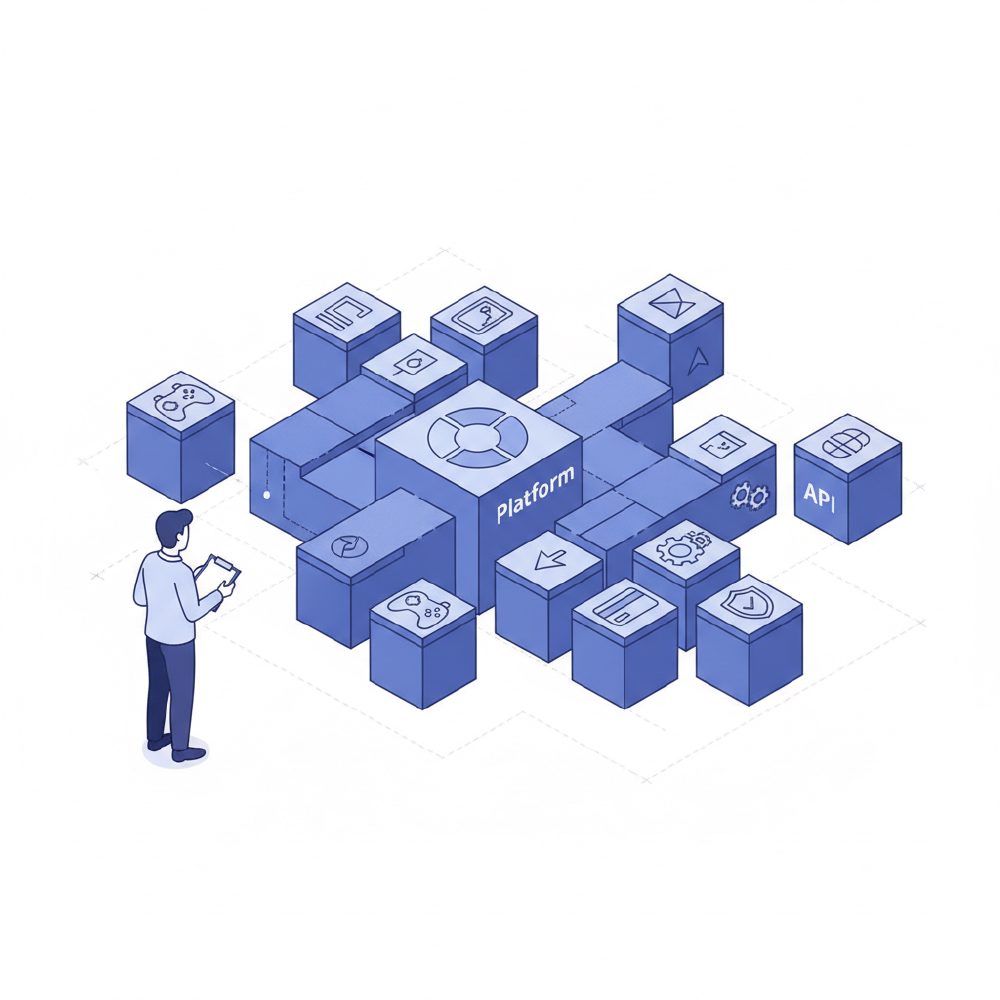
What should operators actually look for in an iGaming software provider in 2026?
The right provider depends on three variables most vendor sales decks ignore: your target jurisdiction's technical certification requirements, your projected GGR within 18 months, and whether you need a managed service or a raw API. Get those three anchors right before you evaluate any platform feature list.
Every major platform vendor will show you a demo with 8,000 game titles, a slick back-office and a compliance badge. What they won't volunteer is which of those games are actually certified for your target market, what the SLA looks like when the payment gateway goes down at 11 PM on a Saturday, or what happens to your player data if you want to migrate off their platform in year three. These are the questions that separate a good vendor evaluation from an expensive mistake.
Start with jurisdiction fit. A platform built for Curaçao sub-licensing is not the same product as one certified for the MGA or for a US state supplier license. SoftSwiss, for example, holds MGA certification and operates under Curaçao eGaming, which covers a wide range of offshore deployments. EveryMatrix is MGA-licensed and has invested heavily in modular compliance tooling for regulated EU markets. Neither is a plug-and-play solution for New Jersey or Pennsylvania without additional GLI testing and state-level supplier registration — a process that adds 6–12 months and $100K+ in compliance costs depending on the state.
Second, be honest about your GGR trajectory. White-label platforms make sense at launch because they absorb infrastructure costs and compress your timeline. But most white-label agreements include a revenue-share component — typically 15–25% of GGR — that becomes painful once you're generating real volume. Operators who project $1M+ monthly GGR within two years should be modeling the cost of migrating to a turnkey or proprietary build from day one, not discovering it after the fact. The migration cost (data, player wallet, game content re-certification) is real and often underestimated.
Third, evaluate API maturity. In 2026, the platforms worth serious consideration expose clean REST or GraphQL APIs for player management, wallet, bonus engine and reporting. Vendors still running SOAP integrations or requiring custom middleware for every PSP connection are a red flag — not because SOAP is inherently broken, but because it signals a legacy codebase that will slow every future integration you need.
Which are the top iGaming software platforms to compare in 2026?
SoftSwiss, EveryMatrix, Digitain, Altenar (for sportsbook), and BetConstruct are the platforms I'd put in front of any serious operator evaluating a full-stack solution. Each has distinct strengths by market segment, licensing environment and commercial model — none is universally best.
SoftSwiss (now rebranded under the SOFTSWISS umbrella with Casino Platform, Game Aggregator and Jackpot Aggregator as distinct products) remains one of the most complete white-label and turnkey offerings available offshore. Their platform underpins hundreds of brands operating under Curaçao and MGA licenses. The back-office is genuinely mature — bonus engine, KYC workflow, affiliate system and payment routing are all native, not bolted on. The trade-off is that their revenue-share model on white-label deployments can be aggressive, and their contract terms on game aggregator access are bundled in ways that make it hard to swap out individual components later.
EveryMatrix takes a more modular approach with its CasinoEngine, MoneyMatrix (payments), OddsMatrix (sportsbook) and PlayerMatrix (CRM) products. You can license them individually or as a suite, which gives operators genuine flexibility to mix and match. MoneyMatrix in particular is one of the more sophisticated payment orchestration layers in the B2B market — it handles 200+ PSP connections with intelligent routing logic. The downside is that modularity adds integration complexity and the per-module pricing can stack up quickly if you're not careful during contract negotiation.
Digitain is worth considering for operators targeting LATAM and Eastern Europe, where their sportsbook product has strong local league coverage and their platform is priced more competitively than the tier-one vendors. BetConstruct has a similar profile — strong in emerging markets, solid sportsbook, and a Spring platform that handles casino, live dealer and virtual sports under one roof. Neither has the same depth of MGA compliance tooling as SoftSwiss or EveryMatrix, which matters if EU regulated markets are in your roadmap.
| Platform | Best Fit Market | Licensing Coverage | Commercial Model | Approx. Setup Cost | API Maturity |
|---|---|---|---|---|---|
| SoftSwiss Casino Platform | Offshore, MGA, Crypto | Curaçao, MGA, Anjouan | Revenue share + setup fee | $15K–$50K setup; 15–25% GGR share | High — REST APIs, full back-office |
| EveryMatrix (CasinoEngine) | MGA, EU Regulated | MGA, UKGC-compatible modules | Per-module SaaS + rev share | $30K–$80K depending on modules | High — modular, well-documented |
| Digitain | LATAM, Eastern Europe | Curaçao, local partnerships | Turnkey license fee + rev share | $20K–$60K setup | Medium-High |
| BetConstruct (Spring) | Emerging markets, Asia | Curaçao, Isle of Man | Turnkey or white-label | $25K–$70K setup | Medium |
| Slotegrator (Turnkey) | Offshore, crypto | Curaçao, Anjouan | Revenue share or flat license | $10K–$30K setup | Medium |
How do game aggregators compare — and when does a direct studio deal make more sense?
A game aggregator gives you a single API connection to thousands of titles from hundreds of studios, which is the right call for any operator under roughly $500K monthly GGR. Above that threshold, the aggregator's revenue cut (typically 2–5% of GGR on top of studio royalties) starts to justify the operational overhead of direct studio deals.
The major aggregators in 2026 are SOFTSWISS Game Aggregator (formerly BGaming's distribution arm, now a standalone product), Relax Gaming, Slotegrator, and Pariplay (now part of Aristocrat's digital division). Each carries a different studio roster and has different certification coverage by jurisdiction. Relax Gaming, for instance, has strong MGA and UKGC-certified content and a Power Series model that gives smaller studios distribution reach — which means you get access to genuinely differentiated content rather than the same Pragmatic Play and Evolution titles every competitor has. Slotegrator is the go-to for operators who need Curaçao-licensed content quickly and cheaply; their API integration is relatively fast but the studio roster skews toward mid-tier providers.
The aggregator fee structure is something operators frequently misread. You're paying the aggregator a percentage of GGR (or a flat per-game fee in some models), and the studio royalty sits underneath that. Total content cost through an aggregator typically runs 18–28% of GGR depending on the studio mix. Direct deals with tier-one studios like Pragmatic Play, Evolution or Play'n GO will get you to 15–20% of GGR at scale, but require separate technical integrations for each studio, dedicated account management, and minimum revenue guarantees that most early-stage operators can't meet. Evolution in particular requires a certified platform before they'll even discuss a direct deal — they're not going to pipe live dealer content into an uncertified back-end.
My practical recommendation: launch with an aggregator, negotiate a clean API exit clause so you can pull specific studios to direct deals later, and revisit the economics at the 12-month mark. The operators who try to go direct from day one almost always underestimate the integration timeline and end up with a thinner game lobby at launch than they planned.
What does a high-converting iGaming payment stack look like in 2026?
A performant payment stack in 2026 is not a single PSP — it's a layered architecture with a primary card processor, at least two alternative payment method (APM) providers, a crypto gateway if your license permits, and an orchestration layer that routes transactions intelligently based on BIN, geography and failure rates.
The single biggest conversion killer I see in operator launches is an underdeveloped payment stack. You can have the best platform and the deepest game lobby, but if a player's deposit fails at checkout, they're gone — and most won't retry. Industry benchmarks suggest a well-optimized payment stack converts 85–92% of deposit attempts; a poorly configured one sits at 60–70%. That gap is pure revenue walking out the door.
For a Curaçao or Anjouan-licensed offshore operator targeting European and LATAM players, a functional 2026 stack looks something like this: a primary card acquirer (Payvision, Nuvei, or a specialist iGaming acquirer like Paymentwall), a crypto gateway (CoinsPaid or BitPay for BTC/ETH/USDT), and local APMs by region. For Brazil specifically — now a regulated market after the federal framework took effect in 2025 — you need PIX integration. PIX is not optional; it accounts for the majority of digital payment volume in Brazil and players expect instant settlement. For Mexico and Colombia, OXXO cash vouchers and PSE bank transfers respectively are similarly non-negotiable for meaningful market penetration.
EveryMatrix's MoneyMatrix is the most sophisticated orchestration layer available as a standalone product — it handles cascading retry logic, BIN-based routing and PSP failover out of the box. SoftSwiss's native payment module is solid for operators on their platform but doesn't offer the same standalone flexibility. For operators building on a custom or turnkey stack, Nuvei and Trustly both offer iGaming-specific payment orchestration with pre-built connections to 200+ APMs, which can compress your payment integration timeline significantly.
One cost operators consistently underestimate: chargeback management. iGaming merchants operate in a high-risk category, and most acquirers will impose monthly chargeback thresholds (typically 1% of transaction volume). Exceeding those thresholds triggers reserve requirements or account termination. Budget for a fraud and chargeback management tool — Kount, Sift or Ethoca — from day one. It's a $1,500–$5,000/month line item that protects a far more expensive asset.
How do Curaçao, MGA and Anjouan licenses compare for software and platform requirements?
Curaçao remains the most permissive and fastest offshore license for platform certification; MGA imposes the strictest technical standards but unlocks EU banking and payment relationships; Anjouan (AGCL) has emerged as a credible crypto-first alternative with lower costs and faster issuance, though it carries less banking weight than either.
The license you hold directly constrains which platform vendors will work with you, which PSPs will onboard you, and which game studios will supply you. This is not a soft consideration — it's a hard dependency that shapes your entire vendor stack. Platform vendors like SoftSwiss and EveryMatrix will work with operators holding Curaçao, MGA or Anjouan licenses. They will not onboard operators with no license or with licenses from jurisdictions that appear on FATF grey lists. If you're evaluating a platform vendor and they're not asking about your license status early in the conversation, that's a red flag about their compliance posture.
Curaçao eGaming (now operating under the revised 2023 framework with the Curaçao Gaming Control Board replacing the master license system) requires platforms to meet basic RNG certification and responsible gambling standards. The technical bar is lower than MGA, which is why most offshore operators start here. Timeline to license issuance is typically 4–8 weeks under the new framework, with costs running $15,000–$30,000 in government fees plus legal costs. The revised framework has tightened AML requirements, so operators who treated Curaçao as a rubber stamp are in for a rude awakening.
MGA (Malta Gaming Authority) certification requires full GLI or BMM technical audit of your platform, which adds 3–6 months and $50,000–$150,000 in audit and compliance costs on top of the license fee. The payoff is access to European banking relationships, better PSP terms, and the ability to market in EU jurisdictions where Curaçao-licensed operators face advertising restrictions. If your 3-year plan includes Germany, the Netherlands or Sweden, MGA is the right anchor — just model the timeline and cost correctly from the start.
Anjouan (AGCL — Anjouan Gaming Commission) issued its first licenses in 2022 and has grown quickly as a crypto-friendly alternative. License fees are roughly $10,000–$15,000 with faster issuance than Curaçao. The honest limitation is that AGCL-licensed operators face harder conversations with traditional payment processors and some game studios won't supply directly to AGCL-only operators. For a crypto-native operator running primarily on stablecoins and BTC with CoinsPaid or similar, these constraints are manageable. For a fiat-first operator, they're a real friction point.
| License | Platform Vendor Compatibility | PSP Access | Studio Direct Deals | Approx. License Cost | Time to Issue |
|---|---|---|---|---|---|
| Curaçao (GCB) | SoftSwiss, EveryMatrix, Digitain, BetConstruct, Slotegrator | Moderate — specialist iGaming PSPs; mainstream acquirers harder | Most aggregators; selective direct studios | $15K–$30K fees + legal | 4–8 weeks |
| MGA (Malta) | All major vendors; required for some EU-facing products | Strong — mainstream acquirers, Trustly, open banking | All tier-1 studios including Evolution direct | $25K–$50K fees + $50K–$150K audit | 6–12 months |
| Anjouan (AGCL) | SoftSwiss, Slotegrator, select vendors | Limited — crypto PSPs strong; fiat acquirers difficult | Aggregators mainly; limited direct studio access | $10K–$15K fees | 2–4 weeks |
| US State (NJ/PA/MI) | GLI/BMM certified vendors only — very short list | State-approved processors only | State-certified studios only | $100K–$500K+ all-in compliance | 12–24 months |
What does iGaming software procurement look like for US operators in 2026?
US iGaming software procurement operates under a completely different rulebook. Every platform vendor, game studio and payment processor must hold a state-level supplier license and pass GLI or BMM technical certification before they can legally supply to a licensed operator. The vendor shortlist is short by design — and that's not changing soon.
If you're entering the US market — New Jersey, Pennsylvania, Michigan, Connecticut, or any of the states that have regulated or are actively moving toward regulation — you need to recalibrate your vendor expectations immediately. The offshore platform vendors that dominate the Curaçao market are largely absent from the US regulated stack. SoftSwiss does not hold US state supplier licenses. EveryMatrix has been building toward US certification but as of early 2026 is not yet operational in US regulated states. The vendors that are active in the US — Scientific Games (now Light & Wonder), IGT, Everi, GAN, Kambi for sportsbook — come from a land-based or B2B enterprise background with pricing and contract structures that reflect it.
The technical certification process in the US is not a checkbox. GLI (Gaming Laboratories International) and BMM Testlabs conduct source-code audits, RNG certification, and security penetration testing. A platform that has never been through this process should budget $200,000–$500,000 and 12–18 months for initial certification, with ongoing annual recertification costs on top. This is why most US operators end up licensing a platform from a vendor that has already done the work — the economics of going through certification independently only make sense for very large operators with long time horizons.
Payment processing in US regulated states is equally constrained. PayPal operates in NJ, PA and MI. ACH via VIP Preferred (Everi) is the dominant deposit method. Visa and Mastercard have inconsistent policies by state and by issuing bank. Crypto is not an accepted payment method in any currently regulated US state for real-money gaming. If your platform vendor doesn't have existing integrations with these specific processors, that's a significant gap — not something you can solve by calling Stripe.
How should operators evaluate iGaming vendor contracts and API standards before signing?
Read the data portability clause, the revenue-share escalator, and the termination notice period before you evaluate any feature. Those three contract terms will define your operational leverage — or your lack of it — more than anything in the product demo.
Vendor contracts in iGaming are written by people who have watched operators try to leave, and the terms reflect that experience. The most dangerous clauses are the ones that look harmless during the sales process. Data portability is the big one: if your contract doesn't explicitly guarantee that you can export your full player database — including encrypted passwords, wallet balances, bonus histories and transaction records — in a standard format upon termination, you are effectively renting your player base rather than owning it. I've seen operators discover this limitation only when they're trying to migrate to a new platform and finding that their 'owned' player data is locked in a proprietary schema the vendor has no contractual obligation to export.
Revenue-share escalators are the second trap. Many white-label agreements start at a competitive GGR share (say, 15%) with escalation clauses that kick in at volume thresholds. Read these carefully. An agreement that moves from 15% to 22% at $500K monthly GGR is a significant margin compression at exactly the point when your business is starting to work. Some vendors will negotiate fixed-rate structures or revenue-share caps in exchange for longer contract terms — that trade is often worth taking if you have conviction in your growth trajectory.
On API standards: insist on documented REST APIs with versioning commitments, sandbox environments and published SLAs for API uptime (99.9% is table stakes; anything below that for payment or game APIs is unacceptable). Ask specifically about webhook reliability for payment events — this is where a lot of platforms cut corners, and unreliable payment webhooks translate directly into deposit and withdrawal failures that your support team will be fielding at 2 AM. Vendors who can't show you their API documentation before contract signing are telling you something important about how they treat technical transparency.
Which iGaming software providers are strongest for LATAM and Brazil in 2026?
For LATAM broadly, Digitain, BetConstruct and SoftSwiss have the deepest local content and payment coverage. For Brazil specifically — now a regulated market with SIGAP oversight under the federal framework — the platform shortlist narrows to vendors with PIX integration, Portuguese-language back-office support and the ability to operate under a Brazilian federal license.
Brazil's regulated market, which came into full operational effect in 2025 under the Ministry of Finance's SIGAP framework, is the most significant new iGaming market to open in years. Estimates for the Brazilian GGR market range from $2B to $6B annually — the spread reflects genuine uncertainty about how the regulated market will develop, not analyst hedging. What's not uncertain is that the technical requirements for operating legally in Brazil are specific and non-trivial: operators need a Brazilian federal license (issued by the Secretaria de Prêmios e Apostas, SPA/MF), their platform must integrate with SIGAP's central monitoring system, and PIX must be supported as a payment method.
Very few offshore platform vendors had SIGAP integration ready at the market's formal opening. SoftSwiss and EveryMatrix have both announced Brazilian market roadmaps, but operators evaluating these vendors for Brazil should ask pointed questions about SIGAP integration status, not accept 'coming soon' as a delivery commitment. Local Brazilian technology providers — including some that emerged specifically for the regulated market — may offer faster SIGAP compliance at the cost of a less mature platform overall. It's a genuine trade-off that depends on your timeline and risk tolerance.
For the broader LATAM market (Mexico under SEGOB, Colombia under Coljuegos, Peru under MINCETUR), the platform requirements are less technically demanding but local payment coverage is critical. OXXO for Mexico, PSE and Nequi for Colombia, and BCP/Yape for Peru are the APMs that drive real conversion. Any platform vendor claiming LATAM strength should be able to show you live integrations with these payment methods, not just logos on a slide. Digitain has historically had the strongest LATAM payment coverage among the mid-tier vendors; EveryMatrix's MoneyMatrix covers most of these through its PSP network.
What are the real costs of launching on a white-label casino platform versus building turnkey in 2026?
White-label gets you live in 4–8 weeks for $15,000–$50,000 upfront but costs you 15–25% of GGR indefinitely. Turnkey builds run $80,000–$300,000 upfront with a 6–12 month timeline but give you full ownership and a revenue-share structure that typically drops to 5–10% of GGR or a flat monthly fee. The crossover point is usually around $300K–$500K monthly GGR.
The white-label versus turnkey decision is fundamentally a question of capital efficiency versus long-term margin. White-label platforms — where the vendor hosts the software, manages infrastructure and handles most compliance tooling — are the right choice for operators who need to validate a market or brand concept before committing full capital. The setup costs are manageable, the timeline is fast, and the operational burden is low. The cost is the revenue share, which is not a one-time payment — it compounds with every dollar of GGR you generate for the life of the contract.
Model it out concretely: at $200K monthly GGR with a 20% revenue share, you're paying $40K/month — $480K/year — to your platform vendor. A turnkey build that costs $150K upfront and carries a 7% GGR share or flat $15K/month SaaS fee saves you $300K+ annually at that volume. The math gets more dramatic at higher GGR. Most operators I work with underestimate this because they're focused on the launch cost, not the operational cost curve. Build a 3-year P&L model before you sign a white-label agreement, and make sure the exit terms allow you to migrate without losing your player base.
Turnkey builds — where you license the software and operate it on your own infrastructure (or a managed cloud environment) — require more upfront investment in technical staff or a development partner, and the compliance burden sits more squarely on you. The platforms that offer genuine turnkey options include SoftSwiss (their Casino Management System can be deployed in turnkey mode), EveryMatrix, and several newer vendors like Pronet Gaming and Hub88. The key question to ask any turnkey vendor is what's included in the base license versus what requires additional integration work — the gap between the demo and the production-ready deployment is often wider than the sales process suggests.
How do iGaming API standards and back-office software affect long-term operator flexibility?
API quality is the single most underrated factor in platform selection. Operators who sign with vendors running legacy integration architectures spend 30–50% of their engineering budget on middleware and workarounds rather than product development. In 2026, REST with OAuth 2.0, documented webhooks and sandbox parity with production are the minimum bar.
Back-office software is where operators spend most of their working hours, and it's the area vendors invest least in showcasing during the sales process. The demo always shows the player-facing product. What you should be asking to see is the affiliate management module, the bonus engine configuration interface, the KYC workflow and the payment reconciliation dashboard — because these are the tools your operations team will use every day. A back-office that requires a support ticket to make a bonus rule change is not a minor inconvenience; it's a competitive handicap when you're trying to respond to market conditions in real time.
The API architecture question matters most when you're integrating third-party tools — CRM platforms, BI dashboards, fraud detection systems, affiliate networks. Platforms that expose comprehensive APIs for player events, transaction data and game session data give you the flexibility to build a best-of-breed operational stack. Platforms that gate data behind proprietary reporting tools or charge for data exports are effectively taxing your ability to run your own business intelligently. This is not hypothetical — I've seen operators locked into platform-native analytics that couldn't answer basic cohort retention questions because the underlying data wasn't accessible.
In 2026, the platforms with the strongest API ecosystems are EveryMatrix (their developer documentation is genuinely good), SoftSwiss (solid REST APIs, active developer community), and GAN (for US regulated markets). The platforms with the weakest API coverage tend to be older white-label providers who built their products before API-first architecture was standard — they've added REST endpoints as an afterthought over SOAP foundations, and it shows in the integration experience. If a vendor can't give you API documentation to review before contract signing, walk away.
- SoftSwiss Casino Platform — Full-stack white-label and turnkey platform with native game aggregator, bonus engine and payment module. Strong offshore and MGA coverage. Best for operators wanting a complete managed solution with a large existing studio network.
- EveryMatrix (CasinoEngine + MoneyMatrix) — Modular platform suite with best-in-class payment orchestration via MoneyMatrix. Strongest for MGA-licensed EU operators who need sophisticated PSP routing and compliance tooling. Higher setup cost but genuine flexibility to mix and match modules.
- Digitain — Competitive full-stack platform with strong sportsbook and solid LATAM/Eastern Europe coverage. More aggressively priced than tier-one vendors. Good fit for operators in emerging markets who don't need MGA-grade compliance tooling from day one.
- BetConstruct (Spring Platform) — Integrated platform covering casino, live dealer, sportsbook and virtual sports. Strong in Asia and emerging markets. Curaçao and Isle of Man licensed. Solid choice for operators wanting a single vendor for a multi-vertical product.
- Slotegrator — Aggregator-first vendor that also offers turnkey casino solutions. Fastest and cheapest entry point for Curaçao-licensed offshore operators. Studio roster skews toward mid-tier providers; API integration is straightforward. Best for operators prioritizing speed to market over platform depth.
- GAN (US Markets) — One of the few B2B platform vendors with active supplier licenses across multiple US regulated states. Supplies both casino software and sports betting technology to US licensed operators. Pricing and contract structures reflect the enterprise US market — not comparable to offshore vendors on cost.
- Relax Gaming (Aggregator) — Premium game aggregator with strong MGA and UKGC-certified content and the Power Series distribution model for independent studios. Best aggregator choice for operators targeting EU regulated markets who want differentiated content beyond the standard Pragmatic/Evolution lineup.




Comments
No comments yet, be the first.