iGaming Payment Processing in 2026: How to Choose the Right Stack, PSPs and Integrations
Why is iGaming payment processing harder than standard e-commerce?
Online gambling sits under MCC 7995 — the Merchant Category Code that most card networks treat as inherently high-risk. That single classification triggers blanket declines from most mainstream acquirers, mandatory reserve requirements, elevated interchange fees, and heightened chargeback scrutiny. Before you evaluate any PSP, you need to understand that the acquiring problem is structural, not just a paperwork issue.
Visa and Mastercard set the rules at the network level, and those rules are unambiguous: gambling transactions require specific acquirer registration, country-by-country merchant registration fees (Visa's GBPP program charges acquirers per-country, per-year), and operator-level licensing verification. An acquirer that processes gambling without proper registration faces fines and potential network termination — which is why most regional banks and payment facilitators simply refuse the category entirely rather than navigate the compliance overhead.
The practical consequence for operators is a much shorter list of viable acquiring partners. You're looking at specialist iGaming PSPs — Nuvei, Paysafe (Skrill/Neteller/Paysafecard), Trustly, Worldpay (iGaming vertical), Payvision and a handful of offshore acquirers — rather than Stripe, Braintree or Square. Each of these specialists charges a premium for the risk: processing fees for card transactions in iGaming typically run 3–5% for credit cards and 1.5–3% for debit, versus sub-1% in low-risk e-commerce. Reserve requirements of 5–10% of monthly volume held for 90–180 days are standard at onboarding and only release after you've demonstrated stable chargeback ratios.
On top of acquiring complexity, operators face regulatory fragmentation. A payment method that works perfectly in the UK under a UKGC license may be explicitly prohibited in the Netherlands under KSA rules (Dutch regulators banned credit card deposits in 2021). Pix is the dominant real-money transfer rail in Brazil but requires local entity relationships. US states each have their own approved payment method lists tied to their licensing frameworks. Your payment stack has to be modular enough to switch methods on and off by jurisdiction — which is exactly why cashier middleware platforms exist.
What is a cashier platform and which one should you integrate: PaymentIQ, Praxis or a bundled cashier?
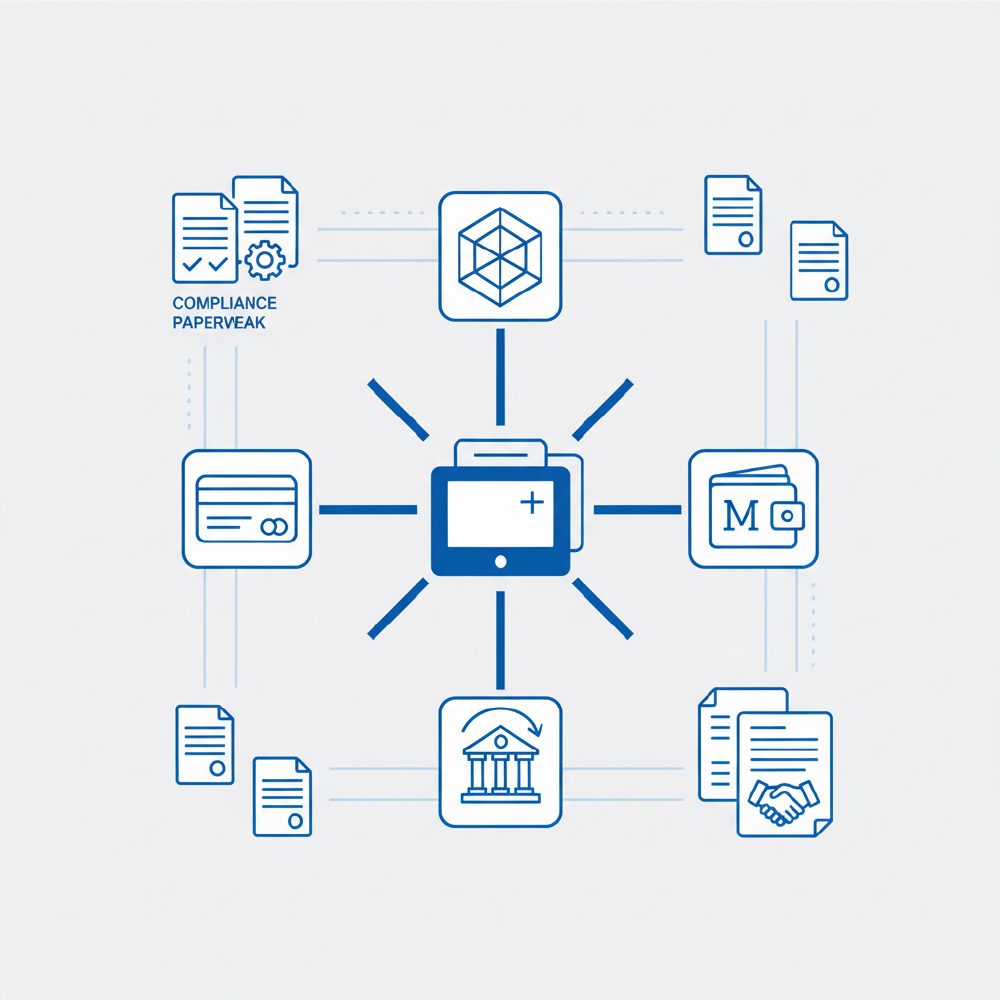
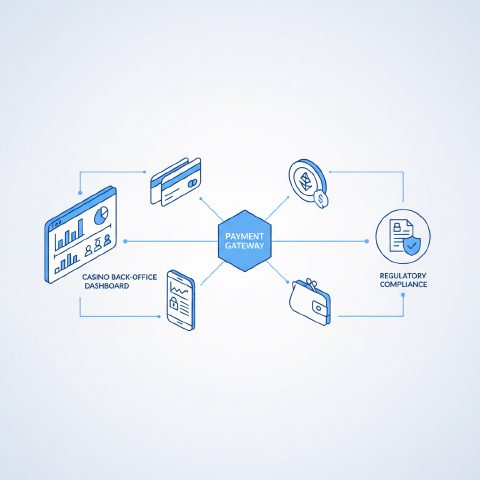
A cashier platform is the middleware layer that sits between your casino back-office and every PSP, handling routing logic, transaction state management, KYC triggers and reporting. The three realistic choices are PaymentIQ (DevCode/Everymatrix), Praxis Cashier, or the native cashier bundled with your white-label or turnkey platform. The right answer depends on your provider roster ambitions, technical team capacity and how quickly you need to go live.
PaymentIQ is the market-leader in the regulated EU space. It ships with pre-built connectors to over 500 payment providers, handles 3DS2 flows natively, and integrates directly into platforms like EveryMatrix, SoftSwiss and BetConstruct. The integration is well-documented and the provider roster is genuinely broad. The trade-off: licensing PaymentIQ as a standalone product costs roughly €2,000–€5,000/month depending on volume tiers, and the SLA for adding a net-new provider that isn't already in their library can run 4–8 weeks. If you're operating in a market that requires a niche local APM, you may be waiting.
Praxis Cashier positions itself as the faster-to-market alternative with a lighter integration footprint. It's popular with smaller operators and crypto-first platforms because its provider network skews toward offshore-friendly PSPs and crypto processors. The UI customization is more flexible out of the box, and the commercial model is typically transaction-fee-based rather than flat monthly, which suits early-stage operators with unpredictable volume. The downside is a shallower provider roster in some regulated EU markets and less robust fraud tooling compared to PaymentIQ's enterprise tier.
Bundled cashiers — the native cashier that comes with SoftSwiss's BGCS, EveryMatrix's CasinoEngine, or Turnkey Sport — are the path of least resistance at launch. You get a working cashier on day one, pre-integrated with the platform's preferred PSP roster. The hidden cost is lock-in: if you want to add a PSP the platform doesn't support, you're dependent on their roadmap. I've seen operators spend 3–4 months waiting for a platform to integrate a PSP that was critical for their target market. If you have strong views on your payment stack, negotiate PSP portability before you sign the platform contract — not after.
| Criteria | PaymentIQ | Praxis Cashier | Bundled (e.g. SoftSwiss/EveryMatrix) |
|---|---|---|---|
| Provider roster | 500+ pre-built connectors | 200+ connectors, strong crypto/offshore | Platform-dependent, typically 50–150 |
| Commercial model | Monthly license (~€2k–€5k) + volume tiers | Transaction-fee based | Included in platform fee or rev-share |
| Time to add new PSP | 4–8 weeks (if not in library) | 2–6 weeks | Platform roadmap dependent (weeks to months) |
| Fraud/chargeback tooling | Advanced (rules engine, 3DS2, RG tools) | Moderate | Basic to moderate |
| Best fit | Regulated EU, high-volume, multi-market | Crypto, offshore, lean tech team | Fast launch, single-market operators |
| Independence from platform | High — standalone product | High — standalone product | Low — tied to platform vendor |
Which PSPs actually approve iGaming merchants in 2026?
The PSPs that consistently approve and retain iGaming merchants are those built specifically for the vertical: Nuvei, Paysafe, Trustly, Worldpay iGaming, Payvision, and a tier of offshore-specialist acquirers. Generic payment processors almost universally decline MCC 7995 merchants at underwriting. Your shortlist should start with specialists and work backward to fit your licensed jurisdiction.
Nuvei (formerly SafeCharge) has become one of the most operator-friendly acquiring options in the regulated space. They hold acquiring licenses across EU, UK, and North America, support 600+ payment methods, and have deep integrations with most major cashier platforms. Their iGaming-specific onboarding typically takes 4–8 weeks with a valid gambling license in hand. Fees are negotiable at volume but expect 2.5–4% for card processing at launch. They're one of the few acquirers that will discuss US iGaming acquiring for state-licensed operators — though each state relationship is separate.
Trustly dominates the Open Banking / bank transfer space across Europe. For operators in Sweden, Finland, Germany and the Netherlands, Trustly's Pay N Play product is transformative: it combines instant bank transfers with identity verification, letting players deposit and verify in a single flow without a traditional registration form. Conversion rates on Pay N Play can run 20–35% higher than standard card flows in Nordic markets. The trade-off is geographic concentration — Trustly's coverage thins out significantly outside Europe, and they're not a card acquirer, so you still need a separate card solution.
For offshore and crypto-forward operators, the acquiring landscape is different. Providers like Paykassma, Interkassa, and several Malta-based boutique acquirers serve operators with Curaçao or Anjouan licenses. These relationships typically involve higher fees (4–7% card processing is not unusual), rolling reserves of 10–15%, and less stable long-term relationships — acquirers in this tier get de-risked by their own banking partners periodically. Build redundancy into your stack from the start: running two acquirers in parallel for card processing is not paranoid, it's operational hygiene.
How does chargeback management work in online casino payment processing?
Chargebacks in online gambling are structurally higher than most e-commerce categories because players dispute transactions they made voluntarily — so-called 'friendly fraud.' Visa's 1% and Mastercard's 0.9% chargeback-to-transaction thresholds are the hard limits; breach them and you enter monitoring programs that escalate to fines and eventual termination. Proactive dispute management has to be built into your stack, not handled manually.
The mechanics: a player deposits €200, loses it, then calls their bank and disputes the charge as unauthorized. The bank reverses the transaction, debits your merchant account, adds a chargeback fee (typically $20–$40 per dispute), and your chargeback ratio ticks up. At scale, even a 0.5% chargeback rate on a €1M/month processing volume means €5,000 in lost revenue plus €2,000+ in fees monthly — before you account for the acquiring relationship risk. The problem compounds because dispute resolution windows are short (typically 30 days to respond) and the evidence requirements are specific.
Effective chargeback management in iGaming requires three layers. First, preventive: strong KYC at deposit (verifying card ownership, not just identity), 3DS2 authentication on all card transactions (shifts liability to the issuing bank when authenticated), and clear transaction descriptors so players recognize the charge on their statement. Second, responsive: a dispute management tool like Chargebacks911 or Verifi's Order Insight integrated into your cashier, which allows you to respond to disputes with session logs, geolocation data and player communication records automatically. Third, analytical: monitoring chargeback ratios by PSP, payment method, country and player segment weekly — not monthly — so you can cut off high-dispute channels before you breach network thresholds.
One operator mistake I see repeatedly: treating chargebacks as a finance problem rather than a product problem. If a specific deposit flow, bonus mechanic or withdrawal delay is generating a cluster of disputes, the fix is in the product, not just the dispute response. Withdrawal delays above 48 hours are a consistent chargeback trigger — players who can't get their money out will take it back via their bank instead. Fast withdrawals aren't just a player experience feature; they're a chargeback mitigation strategy.
What alternative payment methods should iGaming operators prioritize by market?
APM selection is market-specific and should be driven by local player behavior data, not vendor sales decks. In Europe, Open Banking (Trustly, Volt, Tink) and e-wallets (Skrill, Neteller) are table stakes. In LATAM, Pix in Brazil and OXXO in Mexico are dominant. In the US, ACH and Play+ cards lead. Getting this wrong means building a checkout that looks complete but converts at 30–40% below market rate.
Brazil is the most important LATAM market to get right in 2026, following the country's regulated online gambling framework that took effect in January 2025. Pix — the Brazilian instant payment system run by Banco Central do Brasil — is the payment method for Brazilian players. It's instant, free for consumers, and has near-universal adoption. Operators need a local Brazilian entity or a licensed payment aggregator (PagSeguro, Mercado Pago, or specialist iGaming processors like Pay4Fun or LevPay) to access Pix rails. Trying to serve Brazilian players without Pix is like trying to serve UK players without debit cards — you'll process some volume but you'll leave the majority on the table.
In Mexico, OXXO cash vouchers and SPEI bank transfers dominate alongside cards. OXXO is particularly important for reaching the unbanked segment. Colombia (regulated by Coljuegos since 2016) has a mature market where PSE bank transfers and Nequi digital wallet are standard. Peru (MINCETUR) and Chile are developing markets where card acceptance is improving but local bank transfers remain essential. Each of these markets also has specific AML reporting requirements for operators — payment method choices affect your compliance obligations, not just your conversion rate.
In Asia-Pacific, the picture is dominated by local e-wallets and bank transfer methods that vary by country: GCash and Maya in the Philippines, PromptPay in Thailand, UPI in India. Most of these markets are either unregulated or in early regulatory development, which means operator access to these payment methods often runs through offshore-licensed platforms and regional payment aggregators rather than direct relationships. The risk profile is higher and the acquiring relationships are less stable — factor that into your market entry calculus.
| Market | Primary APMs | Card Acceptance | Key Regulatory Body | Notes |
|---|---|---|---|---|
| UK | Faster Payments, PayPal, Skrill/Neteller | Debit only (credit cards banned since 2020) | UKGC | Open Banking growing via Trustly/Volt |
| Sweden | Trustly Pay N Play, Swish | Cards accepted | Spelinspektionen | Pay N Play is near-mandatory for conversion |
| Germany | Sofort, Klarna, SEPA | Cards accepted but restricted | GGL | Deposit limits €1k/month per operator |
| Brazil | Pix, boleto bancário | Cards accepted | SPA/MF (SECAP) | Pix dominant since 2020; regulated market Jan 2025 |
| Mexico | OXXO, SPEI, cards | Cards accepted | SEGOB | OXXO critical for unbanked segment |
| US (NJ/MI/PA) | ACH, Play+, VIP Preferred, PayNearMe | Limited card acceptance | State DGEs | UIGEA compliance required; no PayPal in most states |
| Colombia | PSE, Nequi, cards | Cards accepted | Coljuegos | Mature regulated market since 2016 |
| Canada (Ontario) | Interac e-Transfer, cards | Cards accepted | iGO (AGCO) | Interac is dominant rail |
How do crypto casino payments work and which providers should operators evaluate?
Crypto payment processing for casinos solves the acquiring problem — there's no MCC 7995 classification on blockchain transactions — but introduces AML/KYC obligations, exchange rate risk and regulatory scrutiny that operators underestimate. The leading B2B crypto payment processors for iGaming are CoinsPaid, TripleA, NOWPayments and BitPay. Each handles conversion, custody and wallet infrastructure differently.
CoinsPaid is the most iGaming-native crypto processor in the market. They process a significant share of global crypto gambling volume (they've publicly cited handling over $700M/month across their network, though I can't independently verify current figures), support 50+ cryptocurrencies, and offer instant conversion to fiat to eliminate exchange rate exposure. Their integration is available via PaymentIQ and Praxis, which means adding CoinsPaid to an existing cashier stack is a configuration exercise rather than a development project. They also offer a white-label crypto wallet product for operators who want branded wallets for players.
The AML dimension is where operators get caught out. Accepting crypto doesn't exempt you from AML obligations — it adds them. Under FATF guidance (adopted into law in most regulated jurisdictions), crypto transactions require Travel Rule compliance for transfers above threshold amounts, blockchain analytics screening (Chainalysis, Elliptic or Crystal Blockchain are the standard tools), and enhanced due diligence for high-value crypto depositors. MGA-licensed operators in particular have faced enforcement actions for inadequate crypto AML controls. If you're running a crypto-forward platform under a regulated license, budget for a blockchain analytics subscription — typically $2,000–$8,000/month depending on transaction volume and tool tier.
For offshore operators (Curaçao, Anjouan), crypto is often the primary payment rail because card acquiring is difficult to obtain and maintain. The practical model is: accept BTC/ETH/USDT directly, convert to USD or EUR via CoinsPaid or a similar processor, and settle to your operating account. Stablecoin deposits (USDT, USDC) are increasingly preferred by both operators and players because they eliminate the volatility problem while keeping the speed and borderless nature of crypto rails. One caution: Curaçao's updated gaming framework (effective 2024–2025) has tightened AML requirements specifically around crypto, so 'offshore' no longer means 'no AML scrutiny.'
What does US iGaming payment processing actually require in 2026?
US iGaming payments are the most operationally complex in the world. UIGEA (2006) prohibits unlicensed gambling payment processing at the federal level, but state-licensed operators in New Jersey, Pennsylvania, Michigan, Connecticut, West Virginia and Delaware can access a limited set of approved payment methods. Card acceptance is patchy, ACH is the workhorse, and you need state-specific payment relationships — not a generic global PSP.
The Unlawful Internet Gambling Enforcement Act doesn't make online gambling illegal — it makes processing payments for unlicensed gambling illegal. For state-licensed operators, this means your payment stack must be explicitly compliant with your state gaming authority's approved payment method list and your PSP must be comfortable with the state-licensed iGaming category. In practice, this narrows the field dramatically. Visa and Mastercard card acceptance rates in US iGaming run 40–70% depending on the issuing bank — many US banks still decline gambling transactions even for licensed operators, because their internal policies are stricter than the network rules.
ACH (Automated Clearing House) transfers are the backbone of US iGaming payments. VIP Preferred (a product of Global Payments Gaming Solutions) is the dominant ACH solution for US online casinos — it combines ACH with identity verification and player account linking, and is approved in most licensed states. PayNearMe allows cash deposits via convenience stores, which is important for players without bank accounts or who prefer cash. Play+ is a prepaid card solution that several US operators use as a deposit/withdrawal vehicle to sidestep card decline rates. None of these are glamorous, but they're what converts in the US market.
The geographic complexity is real. A payment integration that works in New Jersey may need separate approval in Pennsylvania, and Michigan has its own nuances. Operators entering multiple US states need to budget for state-specific payment compliance work — not just a single integration. Wire transfers and checks are still used for high-value withdrawals in some states because faster digital options aren't universally available. If you're building a US iGaming payment stack, talk to a payments consultant who has actually operated in the target state, not just one who has read the regulations.
What are the real costs of an iGaming payment stack at launch?
The honest answer: payment infrastructure costs for a new operator launching in a regulated market typically run $15,000–$60,000 in one-time setup and integration costs, plus $3,000–$10,000/month in platform and tool fees before transaction processing costs. Most operators underbudget this by 40–60% because vendor quotes don't include reserve requirements, integration labor or compliance tooling.
Breaking it down: cashier platform licensing (if you choose PaymentIQ or Praxis standalone) runs €2,000–€5,000/month. PSP onboarding fees are typically $500–$2,000 per provider, and you'll want at least three PSPs at launch — a primary card acquirer, an e-wallet solution, and a local APM for your target market. Rolling reserves are the hidden cash flow killer: if you're processing €500,000/month in cards, a 10% reserve held for 90 days means €50,000 tied up in reserve accounts before you see it. That's working capital you need to plan for, not a fee line you can negotiate away.
Integration development costs depend heavily on your technical setup. If you're on a white-label platform with a bundled cashier, the PSP integrations are largely pre-built and your costs are configuration and testing — typically $5,000–$15,000 in development time. If you're building on a custom or semi-custom platform and integrating PaymentIQ from scratch, budget $20,000–$50,000 in development and QA, plus 2–3 months of timeline. Transaction processing fees — the ongoing cost — run 2.5–5% for cards, 1–2% for e-wallets, 0.5–1.5% for bank transfers, and 0.5–1% for crypto (plus exchange spread). At €1M/month in deposits, you're spending €25,000–€50,000/month in processing fees alone.
Chargeback management tooling (Chargebacks911 or similar) adds $1,000–$3,000/month. Blockchain analytics for crypto AML adds $2,000–$8,000/month if you're processing significant crypto volume. Fraud prevention tools (3DS2 is often included in the cashier, but dedicated fraud scoring like Kount or SEON runs $1,500–$5,000/month). The fully loaded payment stack cost for a serious regulated-market operator is rarely below $8,000/month in fixed costs before you process a single transaction. Anyone who tells you otherwise is either operating offshore with minimal compliance overhead or hasn't done it yet.
| Cost Category | One-Time / Setup | Monthly Ongoing | Notes |
|---|---|---|---|
| Cashier platform (PaymentIQ/Praxis) | $0–$5,000 integration | €2,000–€5,000 | Standalone license; bundled cashier = $0 extra |
| PSP onboarding fees (3 PSPs) | $1,500–$6,000 | — | Per-provider setup fees |
| Rolling reserves (10% of card volume) | — | Tied up capital, not a fee | €50k reserve on €500k/month card volume |
| Card processing fees | — | 2.5–5% of card volume | Negotiates down at volume |
| Chargeback management tooling | $0–$2,000 setup | $1,000–$3,000 | Chargebacks911, Verifi, etc. |
| Blockchain analytics (if crypto) | $0 | $2,000–$8,000 | Chainalysis, Elliptic, Crystal |
| Fraud prevention (dedicated) | $0–$2,000 setup | $1,500–$5,000 | Kount, SEON, etc. |
| Development/integration labor | $5,000–$50,000 | — | Depends on custom vs white-label |
How should operators structure their payment stack for multi-market expansion?
Multi-market payment architecture requires a cashier platform with genuine modularity — the ability to activate and deactivate payment methods by jurisdiction, apply market-specific deposit limits, and route transactions to different acquirers based on player geography. Building this correctly at launch costs more but saves 6–12 months of re-engineering when you enter your second market.
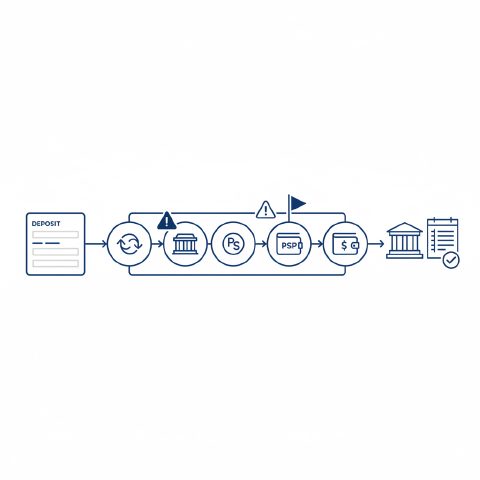
The routing logic is where most operators underinvest. A mature payment stack routes card transactions to the acquirer with the highest approval rate for that card's issuing country — not just to your primary acquirer. A UK-issued Visa card routed through a Malta-based acquirer will have a different approval rate than the same card routed through a UK-registered acquirer. PaymentIQ's routing engine handles this natively with waterfall logic: if Acquirer A declines, automatically retry with Acquirer B before presenting an error to the player. This alone can lift card approval rates by 8–15 percentage points in markets where you're not using a local acquirer.
Deposit limit enforcement is a regulatory requirement in most licensed markets, not a nice-to-have. Germany's GGL requires €1,000/month cross-operator limits enforced via LUGAS (the national player database). Sweden's Spelinspektionen requires operators to enforce player-set deposit limits in real time. The Netherlands' KSA has its own CRUKS exclusion database. Your cashier platform needs to integrate with these national systems — not all cashier platforms have these integrations pre-built, so verify before you sign. Adding a LUGAS or CRUKS integration post-launch is a 2–3 month project that blocks your ability to operate compliantly.
Currency handling is the unglamorous part of multi-market expansion. Processing in local currencies (BRL, COP, MXN, SEK) rather than converting everything to EUR or USD at deposit improves player experience and reduces FX friction, but requires your PSP relationships to support local currency settlement. Some operators run a hybrid: accept deposits in local currency, convert to USD/EUR at the cashier, settle in USD/EUR. This simplifies treasury but adds FX cost. For markets with currency controls (Argentina is the obvious example), the payment architecture gets significantly more complex and typically requires specialist local advisors.
What compliance and licensing obligations affect your choice of payment providers?
Your gambling license dictates which payment methods are permitted, which AML controls are mandatory, and in some cases which payment providers are explicitly approved or banned. MGA, UKGC and regulated US states all have payment-specific compliance requirements that must be reflected in your PSP contracts and cashier configuration — not just your internal policies.
The UKGC's 2020 credit card ban is the most-cited example, but the compliance obligations go further. UKGC-licensed operators must verify the source of funds for large depositors, which means your payment stack needs to support document collection workflows triggered by deposit thresholds. The UKGC also requires operators to have processes for identifying customers in financial difficulty — which means transaction monitoring that looks at deposit velocity and patterns, not just AML red flags. Your PSP contracts need to explicitly permit sharing transaction data with your responsible gambling systems.
Under MGA rules (Malta Gaming Authority), operators must ensure all payment service providers used are themselves appropriately licensed and compliant with EU AML directives (currently AMLD6). The MGA has issued specific guidance on crypto payments requiring enhanced due diligence. MGA-licensed operators using unlicensed or non-compliant PSPs face license suspension — this is not a theoretical risk, the MGA has enforced it. When evaluating a PSP for an MGA-licensed operation, verify their own licensing status and AML compliance certifications, not just their sales pitch.
For Curaçao-licensed operators under the updated 2024–2025 framework (Curaçao Gaming Control Board replacing the old master license structure), payment compliance requirements have tightened significantly. The new framework requires operators to maintain documented AML policies, conduct enhanced due diligence on high-value transactions, and report suspicious transactions. The era of 'Curaçao license = minimal payment compliance' is over. Operators who built their payment stack assuming offshore = no scrutiny are going to face expensive remediation as the new framework matures.


Comments
No comments yet, be the first.