How Much Does It Cost to Start an Online Casino in 2026: A Stack-by-Stack Breakdown for Operators
What is the total cost to start an online casino in 2026?
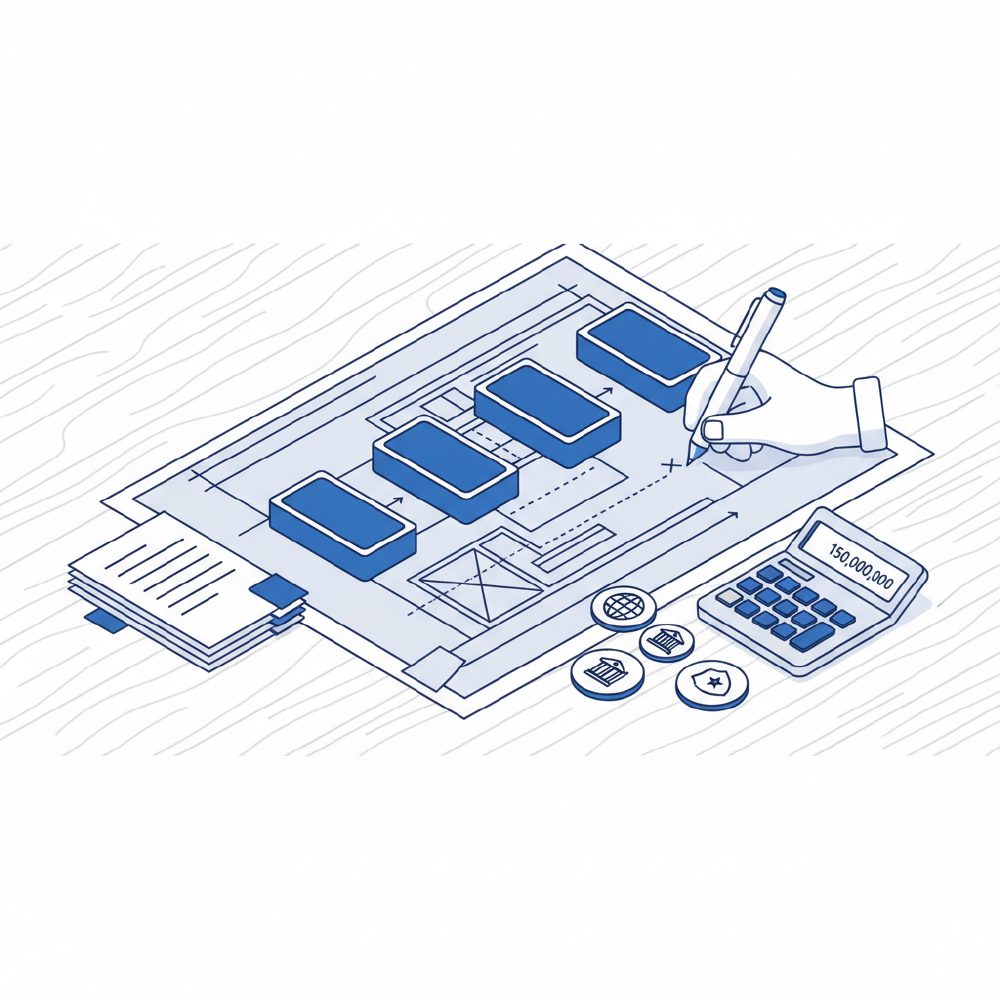
A realistic offshore white-label launch costs $150K–$300K in year one, covering licensing, platform setup, game content, payment integration, and working capital. An MGA-regulated turnkey or custom build in a mature EU market pushes that figure to $500K–$1M+. The gap is almost entirely explained by your technology stack choice and the regulatory jurisdiction you target.
The single biggest mistake I see first-time operators make is treating "casino cost" as a single number rather than a stack of layered decisions. Your platform choice determines your revenue share obligations for years. Your licensing jurisdiction determines your compliance overhead. Your payment stack determines how much cash gets frozen in rolling reserves before you even process your first real-money deposit. These aren't independent line items — they compound.
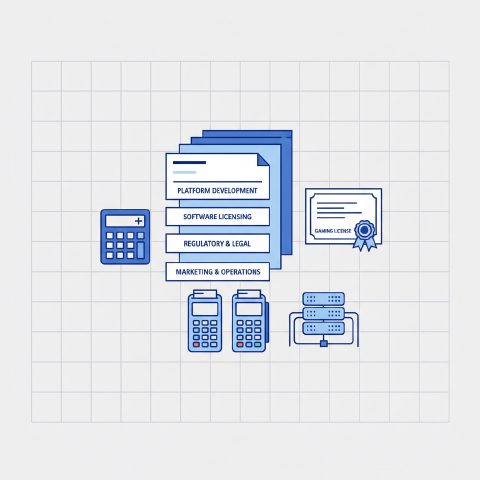
At the bottom of the range, a Curaçao-licensed white-label built on a platform like SoftSwiss or EveryMatrix can be live in 8–12 weeks with $50K–$80K in platform and setup costs, $15K–$25K in licensing, $20K–$40K in game content minimums, and $50K–$150K in working capital and PSP reserves. That's your $150K–$300K range. It's real, it's achievable, and it comes with meaningful trade-offs in terms of market access and brand control.
At the top of the range, a custom-built platform targeting the UK, Sweden, or a US state like New Jersey requires proprietary software, responsible gambling tooling, certified RNG audits, and a compliance team on payroll before you open for business. I've seen operators burn $800K in pre-launch costs and still not be live 18 months later. That's not a horror story — that's the median experience for a greenfield regulated-market build. Budget accordingly or pick a turnkey solution that's already certified in your target jurisdiction.
| Stack Type | Platform Setup | Year-1 Licensing | Working Capital (est.) | Total Year-1 Range | Time to Launch |
|---|---|---|---|---|---|
| White-Label (Curaçao) | $30K–$80K + rev share | $15K–$30K | $50K–$150K | $150K–$300K | 8–14 weeks |
| Turnkey Offshore | $80K–$200K | $15K–$30K | $75K–$200K | $200K–$450K | 12–20 weeks |
| Turnkey EU Regulated (MGA) | $100K–$250K | $25K–$50K | $150K–$300K | $400K–$700K | 6–12 months |
| Custom Build (any market) | $500K–$2M+ | $25K–$150K+ | $200K–$500K | $800K–$3M+ | 12–30 months |
White-label vs. turnkey vs. custom build: which stack actually costs less?
White-label is cheapest upfront but most expensive long-term because of revenue share — typically 15–35% of GGR paid to the platform provider indefinitely. Turnkey gives you more control for a higher setup fee but lower ongoing share. Custom builds have the highest initial cost but zero ongoing platform tax. The break-even point between white-label and custom is usually around $3M–$5M annual GGR.
White-label providers like SoftSwiss (their SOFTSWISS Casino Platform), EveryMatrix (CasinoEngine), and Turnkey Casino Solutions bundle the platform, game aggregation, and sometimes payment processing into a single contract. You pay a setup fee — typically $30K–$80K — and then surrender a percentage of your gross gaming revenue every month. That percentage sounds manageable at launch when GGR is low, but at $500K/month GGR, a 25% rev share costs you $125K/month. That's $1.5M/year to a vendor for infrastructure you don't own.
Turnkey platforms occupy the middle ground. Providers like SoftSwiss's turnkey offering, Digitain, or EveryMatrix's full-stack solution charge higher upfront fees ($80K–$250K) but lower ongoing revenue share (sometimes 10–20%, or a flat SaaS fee). You typically get your own back-office, branded CMS, and more flexibility to negotiate direct game studio deals as you scale. The compliance tooling is usually pre-built for specific jurisdictions, which matters enormously if you're targeting MGA or UKGC markets.
Custom builds — whether in-house or outsourced to a development studio — are the only path to true platform independence. You own the code, you control the roadmap, and you pay no ongoing platform tax. The catch: you're also responsible for every security audit, every RNG certification, every payment gateway integration, and every compliance update. I've worked with operators who underestimated this by 300%. If you're not already running a tech team with iGaming-specific experience, the custom path will cost you more in the first three years than any white-label rev share ever would.
How much does a Curaçao casino license cost compared to MGA or other regulators?
A Curaçao gaming license under the new GCB framework costs roughly $15K–$30K in year-one fees and takes 3–6 months. An MGA license runs $25K–$35K in regulatory fees alone, plus $100K+ in annual compliance infrastructure. US state licenses (NJ, PA, MI) are in a different category entirely — $500K+ in fees, bonding, and pre-approval costs are common.
Curaçao reformed its licensing regime in 2023 under the new Gaming Control Board (GCB), replacing the old master license sublicense model. As of 2026, operators apply directly to the GCB for a single National Gaming License. Application fees run approximately $5K–$10K, with annual license fees around $10K–$20K depending on your business model. Add legal fees for a local representative, AML compliance documentation, and technical certification and you're realistically at $25K–$35K all-in for year one. Curaçao remains the most accessible offshore jurisdiction for new operators — but "accessible" also means competitive and, in some markets, less trusted by players and banks.
The Malta Gaming Authority (MGA) is the gold standard for EU-facing operations and commands genuine player trust. The B2C license application fee is €5,000, with an annual compliance contribution starting at €25,000 for smaller operators. That sounds manageable until you factor in the mandatory €100,000 player fund requirement, the cost of a locally-based compliance officer, and the technical audit your platform must pass before approval. Realistic all-in year-one cost: $200K–$400K when you include the compliance infrastructure the MGA actually requires you to have.
Other jurisdictions worth knowing: Anjouan (Comoros) has emerged as an ultra-low-cost offshore option at roughly $10K–$15K, but PSP access is significantly harder with an Anjouan license. Isle of Man and Gibraltar are premium EU-adjacent jurisdictions at $50K–$100K+ in fees but with strong banking relationships. For LATAM, Colombia's Coljuegos license requires a local entity and a COP 1 billion (~$250K) guarantee deposit — serious capital commitment for a market that's genuinely worth it. Peru's MINCETUR and Mexico's SEGOB have their own complexity. The licensing cost is rarely the whole story; the operational compliance overhead that follows is usually two to three times the licensing fee itself.
| Jurisdiction | Regulator | Year-1 Fees (est.) | Compliance Overhead | Time to License | Market Access |
|---|---|---|---|---|---|
| Curaçao | GCB | $15K–$30K | Low–Medium | 3–6 months | Global (offshore) |
| Anjouan | AGCC | $10K–$15K | Low | 4–8 weeks | Limited |
| Malta (MGA) | MGA | $50K–$120K | High | 6–12 months | EU + global |
| Isle of Man | GSC | $50K–$100K | High | 6–12 months | EU + global |
| Colombia | Coljuegos | $250K+ (deposit) | Very High | 12–18 months | Colombia only |
| New Jersey (US) | DGE | $500K+ | Very High | 18–36 months | NJ only |
What does online casino software actually cost — platform fees, APIs, and integrations?
Platform software costs range from $30K setup plus 15–35% GGR rev share on white-label deals, to $80K–$250K setup with lower ongoing fees on turnkey contracts. API integration costs — connecting payment gateways, KYC providers, and game studios — add $10K–$50K in development time that most vendor proposals bury in small print.
When a white-label vendor quotes you a "setup fee," they're typically describing the cost of configuring your branded front-end on their existing infrastructure. What that fee rarely covers: custom payment gateway integrations beyond their standard stack, bespoke bonus engine rules, custom reporting dashboards, or any front-end development that deviates from their templates. Every one of those customizations is a change order, and change orders in iGaming software contracts are priced at $150–$300/hour. I've seen operators add $40K in change orders in the first 90 days because they didn't read the scope carefully.
On the API side, the real costs are in the connections you need that aren't pre-built. A standard white-label platform will include integrations to 2–5 payment gateways and a game aggregator. If you want a specific PSP that converts better in your target market — say, a local e-wallet dominant in LATAM or a crypto payment rail — you're looking at custom API development. Budget $5K–$20K per non-standard integration, plus ongoing maintenance. KYC/AML providers like Sumsub, Veriff, or Onfido charge $1–$3 per verification on top of their monthly platform fee, which adds up fast at scale.
Turnkey providers like EveryMatrix give you more modular control — you can plug their CasinoEngine into your own front-end, or use their full stack. Their pricing is typically SaaS-based with a per-active-player or GGR component rather than a flat rev share, which can be more favorable at mid-scale. SoftSwiss charges differently depending on whether you're using their white-label product or their standalone casino platform; their standalone pricing is negotiated and generally not published, but industry contacts put it in the $10K–$30K/month range for mid-tier operators. Always push vendors for a fully itemized cost model covering at least 24 months — the month-12 and month-24 numbers are what you actually need to evaluate.
How much do game aggregators cost, and when should you go direct to studios?
Game aggregators like Relax Gaming, Pariplay, and Hub88 typically charge a $5K–$15K monthly platform fee plus 2–5% of GGR from aggregated content. Direct studio deals (NetEnt, Pragmatic Play, Evolution) require $10K–$30K minimum monthly guarantees and are only cost-effective above roughly $1.5M–$2M monthly GGR.
The aggregator model exists because connecting directly to every game studio is operationally brutal — each studio has its own API, its own certification requirements, and its own commercial team that won't return your calls until you're doing serious volume. Aggregators like Hub88, Pariplay (part of Aristocrat), Relax Gaming, and SoftSwiss's own aggregator solve this with a single integration that gives you access to hundreds or thousands of titles. You pay a blended fee that covers both the aggregator's margin and the underlying studio's royalty. That blended fee on GGR is typically 15–25% of game revenue, which sounds high but is competitive with what you'd pay in studio minimums if you went direct at low volume.
The math changes dramatically at scale. Once you're generating $2M+ in monthly GGR from slots, a direct deal with Pragmatic Play — which dominates the market with titles like Gates of Olympus and Sweet Bonanza — becomes financially rational. Pragmatic's direct licensing typically requires a $15K–$30K monthly minimum guarantee against a royalty of 10–15% of GGR from their content. At $500K/month in Pragmatic GGR, that's $50K–$75K in royalties — still cheaper than the aggregator's blended rate on the same volume, and you get better SLA terms and earlier access to new releases.
For live casino content, Evolution Gaming is effectively a monopoly on the premium end, and their pricing reflects that. Live casino integration through an aggregator adds a further layer of cost — you're better off pursuing a direct Evolution deal from day one if live casino is central to your product. Expect $20K–$50K in setup fees and revenue share negotiations that start at 15% and move based on volume commitments. One thing vendors won't tell you upfront: aggregator contracts often include exclusivity clauses or MFN (most-favored-nation) pricing provisions that complicate your ability to go direct later. Read those clauses before you sign.
What are the real costs of casino payment processing and PSP setup?
PSP setup fees range from free to $5K per gateway, but the real cost is the rolling reserve: most high-risk processors hold 5–10% of monthly turnover for 90–180 days, which can lock up $50K–$200K in cash before you're profitable. Processing fees on card transactions run 3–8% for gambling merchants — three to four times e-commerce rates.
Payment processing is the most consistently underestimated cost in an iGaming startup budget. Operators focus on the transaction fee percentage and miss the structural cash drain of rolling reserves. Here's how it works: your PSP withholds a percentage of your gross turnover — not GGR, turnover — as a reserve against chargebacks and fraud. At 5% rolling reserve on $1M/month in deposits, that's $50K sitting in an account you can't touch for six months. If you're processing $3M/month in deposits, you have $150K in frozen capital at any given time. For a startup with $300K in total working capital, this is existential.
Card processing fees for gambling merchants are genuinely punishing. Interchange-plus pricing for high-risk categories typically lands at 3.5–6% on Visa/Mastercard transactions, versus 1.5–2.5% for standard e-commerce. Add the PSP's margin and you're at 4–8% per card transaction. This is why serious operators diversify aggressively into alternative payment methods: e-wallets (Skrill, Neteller, MuchBetter) at 1–3%, bank transfer solutions, and crypto rails (typically 0.5–2% on-chain fees) that carry no chargeback risk and no rolling reserve requirement. Crypto-native casinos have a structural payment cost advantage that's real and material.
On the provider side, Nuvei, Payvision, and Praxis Tech are commonly used iGaming PSPs. Nuvei has built a strong iGaming vertical with pre-built connections to major operators and a relatively smooth onboarding process for Curaçao-licensed operators. Praxis is a payment orchestration layer rather than a processor — it sits above your PSPs and routes transactions to maximize approval rates, which is genuinely valuable. Expect $5K–$15K in Praxis setup fees plus a monthly platform fee. The approval rate improvement (from, say, 65% to 80% on card deposits) often pays for itself within the first month at meaningful volume, but you have to have the volume first.
How much working capital does an online casino actually need before launch?
Most operators need $100K–$300K in dedicated working capital beyond setup costs — covering PSP rolling reserves, bonus liability, player withdrawals during the first 60–90 days, and operational runway before GGR turns positive. Undercapitalization is the single most common reason new casinos fail in the first six months.
Working capital in iGaming has two components that most startup budgets treat as one: operational runway and structural cash requirements. Operational runway is straightforward — you need enough cash to pay staff, platform fees, and marketing costs while GGR ramps up. Structural cash requirements are less obvious and more dangerous. Rolling reserves, bonus liability reserves (the cash you owe players for pending bonus wagering), and player withdrawal buffers all represent real cash that must be available on demand.
Bonus liability is particularly tricky. If you launch with an aggressive welcome bonus — say, a 100% match up to $500 with 30x wagering — and 1,000 players claim it in month one, you've created $500K in theoretical liability. Most of it will be lost through wagering, but a meaningful percentage won't, and you need to be able to pay those players immediately. Operators who launch with a big bonus and thin capital reserves find themselves in a liquidity crunch within 60 days. I've seen it happen more than once. The fix is either a smaller bonus, tighter wagering requirements, or more working capital — ideally all three.
My rule of thumb for a new offshore operator targeting $500K/month in GGR within 12 months: budget $150K–$200K in working capital on top of your setup and licensing costs. That covers three months of PSP reserves at moderate volume, a conservative bonus liability buffer, and withdrawal float. If you're targeting faster growth or a higher-volume market, scale that number up proportionally. And keep a credit facility in reserve — even if you never draw on it, having a $100K line of credit available is the difference between a manageable cash crunch and an existential one.
What are the ongoing monthly operating costs once an online casino is live?
Monthly operating costs for a live casino typically run $30K–$150K depending on scale, covering platform/rev share, game content fees, PSP processing, compliance, staff, and marketing. The largest variable is marketing — operators in competitive markets often spend 30–50% of GGR on player acquisition, which can exceed all other costs combined.
Once you're live, the cost structure shifts from capital-intensive setup to recurring operational spend. A mid-size offshore casino doing $300K/month in GGR might have a cost structure that looks roughly like this: platform rev share at 25% = $75K; game content fees at 15% of game GGR = $30K–$45K; PSP processing at 4–6% of deposits = $20K–$40K (assuming $500K in monthly deposits); compliance and KYC = $5K–$15K; staff (customer support, risk, finance) = $15K–$30K; hosting and infrastructure = $2K–$5K. That's $150K–$200K in fixed and semi-fixed costs against $300K in GGR — a 50–67% cost ratio before you spend a dollar on marketing.
Marketing is where the economics either work or don't. Affiliate marketing dominates iGaming customer acquisition, and affiliate commissions typically run 25–40% of referred player GGR on revenue share deals, or $100–$300 CPA (cost per acquisition) on flat deals. A new casino with no brand recognition and no existing affiliate relationships will struggle to attract quality affiliates without offering aggressive terms — often 35–40% rev share to top affiliates, which eats deeply into already-thin margins. Budget marketing as a percentage of target GGR, not as a fixed number. In competitive markets (UK, Canada, Germany), 40–60% of GGR going to affiliate and paid acquisition is not unusual in year one.
The operators who survive year one are usually the ones who got their platform costs under control before launch. A 25% rev share to a white-label provider plus 35% to affiliates plus 15% to game studios leaves you with 25% of GGR to cover PSP fees, staff, and compliance. That math only works if your GGR is growing fast enough that the absolute dollar margin is meaningful. If it's not, you're subsidizing your white-label provider's profit with your investors' capital. This is the core argument for moving to a lower-rev-share turnkey or custom build as quickly as your volume justifies it.
How do iGaming startup costs differ for US state markets versus offshore?
US state-licensed iGaming is a fundamentally different cost category. New Jersey, Pennsylvania, and Michigan require $500K–$2M+ in pre-launch fees, bonding, and compliance infrastructure — plus a mandatory partnership with a land-based licensee in most states. Offshore white-label launches cost 10–20x less but have zero access to US regulated markets.
US iGaming regulation is state-by-state, and each state that has legalized online casino gambling (currently New Jersey, Pennsylvania, Michigan, Delaware, West Virginia, and Connecticut as of 2026) has its own licensing framework, fee structure, and technical requirements. New Jersey's Division of Gaming Enforcement (DGE) is the most established and the most demanding. Initial license fees for an internet gaming permit run $400K for a five-year term, and that's before you've paid for the background investigation ($50K–$150K), the technical compliance audit of your platform (another $50K–$100K), and the mandatory hosting within New Jersey's borders.
The structural requirement that makes US iGaming expensive is the "skin" model: in most states, online operators must partner with a land-based casino licensee and operate as a "skin" on that licensee's license. That partnership typically costs 15–25% of GGR paid to the land-based partner, on top of the state's own gaming tax (which ranges from 15% in New Jersey to 36% in Pennsylvania). Stack those obligations and you're paying 50–60% of GGR in taxes and partnership fees before you cover a single operational cost. The market is enormous — New Jersey alone generates $200M+ monthly in online casino GGR — but the economics require massive scale to work.
For operators coming from offshore markets, the honest answer is: US regulated iGaming is not a startup market. It's an institutional market where the minimum viable operation requires $5M–$10M in capitalization and a multi-year runway. The operators winning in NJ and PA are well-funded companies with existing brand equity (BetMGM, Caesars, DraftKings) or well-capitalized European operators who spent years building the compliance infrastructure. If you're a first-time operator with $500K to deploy, Curaçao is your market. Build there, prove your model, and use the cash flow to fund a US market entry in three to five years.
Which platform vendors offer the best value for new operators: SoftSwiss, EveryMatrix, or others?
SoftSwiss suits operators who want a fully managed white-label with integrated game aggregation and payments — fast to launch, high ongoing rev share. EveryMatrix is better for operators who want modular components and more long-term control. For crypto-native operations, platforms like Sportsbet.io's B2B arm or dedicated crypto casino builders offer a third path with lower PSP friction.
SoftSwiss is the market leader in white-label casino infrastructure for a reason: their platform is genuinely mature, their game aggregator (SOFTSWISS Game Aggregator) covers 20,000+ titles, and their onboarding process is well-documented. For a new operator who wants to be live in 10–12 weeks without a dedicated tech team, SoftSwiss is a rational choice. The trade-off is the revenue share — SoftSwiss's white-label terms are not publicly disclosed, but industry consensus puts the blended platform and game aggregation fee at 20–30% of GGR for small operators, with room to negotiate below 20% once you're doing meaningful volume. Their Curaçao licensing support is also genuinely useful for first-time operators navigating the new GCB framework.
EveryMatrix takes a more modular approach. Their CasinoEngine is a standalone game aggregation and management layer that you can integrate into your own front-end, while their full-stack offering competes directly with SoftSwiss. The advantage of EveryMatrix's modularity is that you're not locked into their entire ecosystem — you can use CasinoEngine with a different payment solution, or swap their front-end for your own as you scale. Their pricing is generally SaaS-structured with a GGR component, and they have stronger pre-built compliance tooling for MGA and UKGC markets than most competitors. If you're planning an EU regulated launch, EveryMatrix's regulatory certifications are a genuine time-saver.
Beyond the top two, the market has matured considerably. Digitain offers competitive white-label pricing for operators targeting Eastern Europe and LATAM. Slotegrator is a lower-cost option that's popular with budget-conscious operators but comes with a less polished back-office. For crypto casinos specifically, platforms built on provably fair infrastructure — or hybrid fiat/crypto platforms — have different economics entirely, often with lower base fees because the payment processing friction (and associated cost) is dramatically reduced. The right vendor depends entirely on your target market, your technical capacity, and your 24-month volume projections. Don't let a vendor's sales deck drive that decision — model the rev share against your GGR projections and let the math tell you which contract is actually cheaper.
| Vendor | Model | Setup Cost (est.) | Ongoing Fee Structure | Best For | Regulatory Certifications |
|---|---|---|---|---|---|
| SoftSwiss | White-label / Turnkey | $30K–$80K | 20–30% GGR rev share | Fast offshore launch, crypto | Curaçao, MGA |
| EveryMatrix | Modular / Full-stack | $50K–$150K | SaaS + GGR component | EU regulated, scalable | MGA, UKGC, others |
| Digitain | White-label | $20K–$60K | Rev share (negotiated) | LATAM, Eastern Europe | Curaçao, limited EU |
| Slotegrator | White-label | $15K–$40K | Rev share / flat fee | Budget, emerging markets | Curaçao |
| Custom Build | Proprietary | $500K–$2M+ | None (own infrastructure) | High-volume, full control | Any (self-certified) |




Comments
No comments yet, be the first.