Slot Games Providers for Operators: The 2026 Sourcing Guide From Someone Who's Actually Signed These Contracts

What exactly is a slot games provider, and how does the B2B supply chain work?
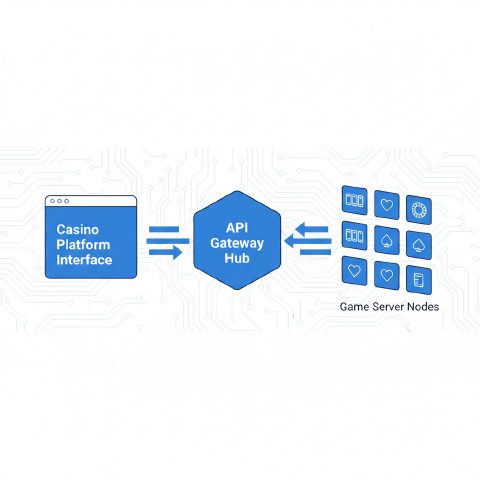
A slot games provider is a B2B studio or aggregator that licenses slot titles to online casino operators via an API integration. The chain typically runs: game studio → aggregator → operator platform → player. Studios build and certify the math models; aggregators package hundreds of studios under one contract; operators pick whichever layer fits their volume and technical capacity.
The distinction between a studio and an aggregator matters more than most first-time operators realize. A pure studio like Nolimit City or Hacksaw Gaming owns its math models, builds the front-end, and certifies each title with the relevant testing lab (BMM, GLI, eCOGRA, NMi). They license directly to large operators or through aggregators. An aggregator — think SoftSwiss Game Aggregator, EveryMatrix CasinoEngine, or Relax Gaming's Silver Bullet program — acts as a middleware layer, normalizing wallet calls and session management across dozens or hundreds of studios so you only need one API contract and one integration project.
The cost structure differs accordingly. A direct studio deal typically means a revenue share of 10–20% of GGR on their titles, sometimes with a monthly minimum guarantee. An aggregator adds its own layer — usually 2–4% GGR on top of whatever the studio takes — but saves you six to twelve months of individual integrations. For a new operator doing under $200K GGR per month, the aggregator surcharge almost always pays for itself in reduced engineering overhead and faster time to market.
There's a third tier worth knowing: the white-label or turnkey platform provider (SoftSwiss, EvolutionBet, BetConstruct, Digitain) that bundles platform software, a pre-integrated game library, payment processing, and sometimes a Curaçao or Anjouan sub-license into one monthly fee plus revenue share. This is effectively a ready-made slot games provider arrangement. You get speed, but you're renting someone else's infrastructure — and if you ever want to migrate, expect a painful data extraction negotiation.
By 2026, the lines have blurred further. Pragmatic Play now operates as both a studio and a partial aggregator through its Enhance platform, which layers live casino, virtual sports, and slots under one commercial agreement. Evolution acquired NetEnt, Red Tiger, and Big Time Gaming, meaning a single Evolution contract can cover a surprising breadth of content. Operators should map the full ownership tree before assuming they're diversifying their provider risk.
Which slot studios actually move the needle on player retention in 2026?
Pragmatic Play, Play'n GO, Nolimit City, Hacksaw Gaming, and Push Gaming are the five studios with the strongest cross-market retention data heading into 2026. Pragmatic alone accounts for a disproportionate share of slot GGR on most mid-tier European and LATAM casinos. The others punch above their title count because of distinctive math models that create genuine talk-value among players.
Pragmatic Play's dominance is hard to overstate. The Gates of Olympus franchise, Sweet Bonanza, and the Drops & Wins jackpot network give operators a ready-made promotional calendar. Their B2B commercial terms are aggressive — they push operators toward their full suite including live casino, which inflates the overall contract value. If you're a slot-first operator, make sure your negotiation separates slot RGS fees from live studio costs, because bundling favors Pragmatic's margin, not yours.
Nolimit City and Hacksaw Gaming occupy a different niche: high-volatility, high-max-win titles (xBomb, Tombstone RIP, Wanted Dead or a Wild from Nolimit; Chaos Crew, Mental from Hacksaw) that generate enormous social media content and attract the bonus-hunter segment. The risk for operators is that these games have wide GGR variance — a $5M max win on a $1 bet is theoretically possible on some titles, so your bankroll management and bet limits need to be set correctly at the platform level, not just trusted to the studio defaults.
Push Gaming (Fat Santa, Jammin' Jars series) and Big Time Gaming (Megaways mechanic, now licensed broadly) remain strong in the UK and Irish markets specifically. BTG's Megaways license has been sublicensed to dozens of studios, so you'll see Megaways variants everywhere — but the original BTG titles still carry brand recognition. Play'n GO is the workhorse for MGA and UKGC operators: their compliance track record is clean, their RTP documentation is thorough, and titles like Book of Dead remain perennial lobby staples six years after release.
A note on emerging studios worth watching: Relax Gaming's own-brand titles (Money Train series), Yggdrasil's YG Masters program content, and NoLimit's newer acquisitions are showing strong early metrics in regulated markets. Don't fill your lobby with 4,000 titles from unknown studios just because an aggregator offers them — player dwell time concentrates heavily in the top 50–100 titles. Quality curation beats raw catalog size every time.
| Studio | Best Market Fit | Signature Mechanic/Title | Typical Direct Rev Share | Aggregator Access |
|---|---|---|---|---|
| Pragmatic Play | Global, strong LATAM & EU | Drops & Wins, Gates of Olympus | ~15–18% GGR | Most major aggregators + direct |
| Play'n GO | MGA, UKGC, Nordics | Book of Dead, Rich Wilde series | ~12–16% GGR | Widely available via aggregators |
| Nolimit City | EU, crypto/offshore | xBomb mechanic, Tombstone RIP | ~15–20% GGR | Relax, SoftSwiss, others |
| Hacksaw Gaming | EU, high-volatility segment | Chaos Crew, Mental | ~15–18% GGR | Multiple aggregators |
| Push Gaming | UK, Ireland, Nordics | Jammin' Jars 2, Fat Santa | ~12–15% GGR | EveryMatrix, SoftSwiss, others |
| Evolution (incl. NetEnt/BTG) | Global | Megaways (BTG), Starburst (NetEnt) | Negotiated by suite | Partial — Evolution prefers direct |
Aggregator vs. direct studio deal: which model should you choose?
For operators under $500K monthly GGR, an aggregator almost always wins on total cost of ownership. Above that threshold, direct deals with your top five studios by revenue start to pencil out — but only if you have the engineering bandwidth to maintain separate integrations and the commercial volume to meet studio minimums. Most operators end up running a hybrid.
The aggregator's hidden cost isn't just the revenue share surcharge — it's the dependency on the aggregator's uptime, their wallet reconciliation accuracy, and their pace of adding new studios. If SoftSwiss Game Aggregator has a 20-minute outage on a Saturday night, every studio in their catalog goes dark for you simultaneously. That's a concentration risk that a direct integration with your top three studios partially hedges. The practical answer most mid-market operators land on: aggregate the long tail (studios 6–50 by revenue contribution) and go direct with the two or three studios that generate 40%+ of your slot GGR.
Commercial minimums are the real gating factor for direct deals. Pragmatic Play, Play'n GO, and Nolimit City all have minimum monthly GGR thresholds — exact figures aren't published and shift by market and negotiation leverage, but ballpark $5,000–$15,000/month per studio is a reasonable expectation for new operators. Below that, studios will either decline or route you through an aggregator partner. This is actually fine for a launch — you shouldn't be trying to manage five direct integrations on day one anyway.
The aggregator landscape itself has consolidated. The meaningful platforms in 2026 are: SoftSwiss Game Aggregator (strong in crypto and Curaçao-licensed operations), EveryMatrix CasinoEngine (strong EU compliance pedigree, MGA-licensed), Relax Gaming Silver Bullet (good for premium studio access), and Slotegrator (popular in CIS and emerging markets). Each has different studio rosters, different API documentation quality, and different SLA terms — do a proper technical due diligence call with your dev team before signing, not just a sales demo.
One thing aggregator sales teams consistently undersell: lobby management tooling. The best aggregators give you a back-office interface to configure game positioning, A/B test lobby layouts, and trigger free-round campaigns at the studio level. EveryMatrix's back-office is genuinely strong here. SoftSwiss has improved significantly since 2023. If live ops — tournaments, prize drops, free round bonuses — are central to your retention strategy, weight that tooling capability heavily in your evaluation, because the revenue impact of a well-run tournament calendar is measurable.
| Factor | Aggregator | Direct Studio Deal |
|---|---|---|
| Integration effort | Single API, 4–12 weeks | Per studio, 4–16 weeks each |
| Cost structure | Studio rev share + aggregator layer (2–4% GGR) | Studio rev share only (10–20% GGR) |
| Minimum volume | Low/none at aggregator level | $5K–$15K+/month per studio (typical) |
| Studio catalog breadth | 50–200+ studios in one contract | One studio per contract |
| Uptime risk | Single point of failure for all studios | Isolated per studio |
| Live ops tooling | Centralized, varies by aggregator quality | Studio-specific, often richer |
| Best for | Operators under $500K/month GGR | Operators with clear top-5 revenue studios |
What certifications and compliance requirements should your slot games provider hold?
Every slot title you offer in a regulated market must carry a certificate from an accredited testing lab — GLI, BMM, NMi, or eCOGRA are the recognized names. The jurisdiction dictates which labs are accepted. An MGA license requires MGA-approved lab certs; the New Jersey DGE runs its own approval process entirely. Confirm cert coverage before signing a studio contract, not after.
This is where operators get burned most often. A studio might have 500 titles certified for Curaçao or Malta but only 80 approved for New Jersey or Pennsylvania. If you're launching in a US state, you need to map your intended lobby against that state's approved game list — which is public and maintained by the relevant gaming control board. The DGE in New Jersey publishes its approved software providers list; Pennsylvania's PGCB does the same. Launching a title that isn't on the approved list is a compliance violation that can cost you your license.
For EU operators, the MGA's technical standards require certified RNG, verifiable RTP within declared ranges, and responsible gambling features (session limits, reality checks, self-exclusion integration) at the game level. Play'n GO and Pragmatic Play both have strong MGA compliance track records. Some smaller studios — particularly those originating in less-regulated markets — have RTP documentation that's technically compliant but difficult to audit independently. If your compliance team can't get a clear answer on the testing lab certificate number and scope, treat that as a red flag.
UKGC operators face the tightest slot-specific rules as of 2024–2026: the 2023 spin speed restrictions (minimum 2.5 seconds per spin), the ban on features that speed up play or celebrate near-misses, and the £2/spin stake limit for under-25s via age verification. Not every studio has updated all legacy titles to comply — verify with your account manager which specific titles are UK-compliant and get it in writing, because the operator bears the regulatory liability, not the studio.
In LATAM, the picture varies sharply. Coljuegos (Colombia) and MINCETUR (Peru) both require game certification from approved labs and explicit approval of each title. Argentina's provincial regulators (Buenos Aires province, LOTBA for the city) have their own approval processes. Brazil's new federal framework, coming into force in 2025, will add another certification layer. If LATAM is your target, budget 3–6 months for game approval timelines and prioritize studios that have already gone through the process in your target market — Pragmatic Play and Play'n GO have done the legwork in Colombia; smaller studios often haven't.
How much does it actually cost to source slot content for a new casino?
Realistic all-in content costs for a new operator run from 18–30% of slot GGR once you account for studio revenue shares, aggregator layers, and any minimum guarantees. On top of that, expect $15,000–$80,000 in one-time integration and certification costs depending on your technical setup. White-label arrangements fold most of this into a single revenue share but obscure the true per-title cost.
Let me break down what the numbers actually look like at launch. If you're going through an aggregator, you're typically paying the aggregator 2–4% of GGR as their cut, plus the underlying studio revenue shares which average 12–18% across a mixed lobby. So your blended content cost is roughly 14–22% of slot GGR before platform fees, payment processing, or bonusing costs. That's a significant chunk of your P&L — operators who model their unit economics on 10% content cost are in for a rude surprise.
One-time costs are easier to underestimate. A standalone API integration with a single aggregator typically runs 200–400 engineering hours if you're building on your own platform. At even a modest $100/hour blended dev rate, that's $20,000–$40,000 before QA and UAT. If you're on a white-label platform (SoftSwiss Casino Platform, BetConstruct, Digitain), the aggregator is pre-integrated and you're paying for it through your platform revenue share — typically 15–25% of GGR total for the full platform bundle, content included. That's expensive at scale but removes the upfront build cost entirely.
Monthly minimum guarantees are the budget line that kills undercapitalized operators. If you've signed direct deals with three studios each carrying a $10,000/month minimum, you're committed to $30,000/month in content costs before a single player deposits. Negotiate minimums carefully, push for a ramp period (zero or reduced minimums for the first 3–6 months), and be honest with yourself about your projected GGR trajectory. Studios are more flexible on minimums than their standard contracts suggest — especially for operators with a credible marketing plan and a regulated license.
There are also ongoing costs that don't show up in the headline revenue share: game update fees (some studios charge for major math model updates), promotional content fees (Pragmatic's Drops & Wins network has a buy-in cost), and sometimes a per-market certification fee when you expand to a new jurisdiction. Build a content cost model that includes these before you finalize your operator P&L — I've seen operators hit their GGR targets and still lose money because they didn't account for the full content cost stack.
What's the difference between a ready-made slot games provider and building a custom content stack?
A ready-made slot games provider — typically a white-label or turnkey platform with pre-integrated content — gets you live in 4–12 weeks with minimal technical lift. A custom content stack (direct studio deals on your own platform) takes 6–18 months but gives you full margin control, brand differentiation, and exit flexibility. The right choice depends almost entirely on your timeline and capitalization.
The ready-made route is exactly what it sounds like: a platform provider like SoftSwiss, EvolutionBet, or BetConstruct gives you a casino front-end, back-office, payment integrations, and a pre-cleared library of 5,000–10,000+ slot titles, all running on their infrastructure. You configure your brand skin, set your bonus rules, and go live. The tradeoff is that you're sharing infrastructure with potentially hundreds of other operators, your platform provider can see all your data, and your commercial terms are largely non-negotiable until you're doing serious volume.
The custom stack approach means you're licensing platform software (or building proprietary tech), signing individual aggregator and studio contracts, and managing each vendor relationship yourself. This is how the major operators — bet365, LeoVegas, DraftKings — operate. The margin benefit is real: stripping out the white-label platform layer can recover 5–10% of GGR that was going to the platform provider. At $1M monthly GGR, that's $50,000–$100,000/month in recovered margin. But you need the technical team, the compliance infrastructure, and the capital to absorb the build cost and the longer launch timeline.
A middle path worth considering: launch on a white-label to prove your market, then migrate to a custom stack once you've hit $200K–$500K monthly GGR and have real player data to justify the investment. The migration is painful — player account data, bonus history, and game session records all need to move — but it's done regularly. Build the data portability clause into your white-label contract from day one, because platform providers don't volunteer it.
How do slot providers handle regulated vs. offshore markets differently?
Studios tier their compliance investment by market. MGA, UKGC, and US state licenses get full compliance support and jurisdiction-specific game variants. Curaçao and Anjouan operators get the same titles but with less regulatory hand-holding from the studio side. The practical difference shows up in RTP documentation depth, responsible gambling feature completeness, and speed of game approvals.
In practice, every major studio maintains a 'regulated markets' track and an 'offshore' track. For MGA or UKGC operators, studios provide detailed RTP certificates, responsible gambling feature documentation, and rapid response to compliance queries — because a studio's own license is at stake if their content runs non-compliantly on an MGA-licensed operator. For Curaçao-licensed operators, the same studio might provide the same titles but with lighter documentation and slower compliance support, because the regulatory stakes are lower for them.
US state markets are the most demanding. New Jersey requires every game to be independently tested and approved by the DGE before it can go live. Pennsylvania's PGCB has a similar process. Michigan, Connecticut, and West Virginia each have their own approval workflows. Studios like Everi, IGT, and Scientific Games (now Light & Wonder) built their businesses around land-based compliance and have deep US regulatory relationships — they're often better positioned for US iGaming approvals than European studios that are newer to the US market. Pragmatic Play and Play'n GO have both invested heavily in US certifications since 2021, but their approved title counts in specific states still lag their full global catalogs.
LATAM regulated markets (Colombia, Peru, and now Brazil) require explicit game approval from the local regulator, not just a testing lab certificate. This means studios need to submit individual title applications, which takes months and costs money — so many studios prioritize only their top 50–100 titles for LATAM certification rather than their full catalog. If you're launching in Colombia under Coljuegos, confirm with your studio or aggregator exactly which titles are Coljuegos-approved, and don't assume that 'MGA certified' automatically transfers.
Offshore operators on Curaçao or Anjouan licenses have the broadest content access by title count but the least regulatory certainty. A studio can withdraw content from an offshore operator overnight if they determine the operator is targeting a locally-regulated market without the appropriate license — this has happened publicly with several studios restricting content for operators accepting German or Swedish players without local licenses. If you're running offshore, your content agreements need to clearly define which player geographies are permitted, and your studio or aggregator needs to contractually represent that the content is licensed for those markets.
What live ops and promotional tools should you demand from your slot provider?
In 2026, the baseline expectation from any serious slot provider is: free round (bonus buy) API, tournament engine, prize drop/jackpot network participation, and real-time GGR reporting by title. Providers that can't deliver at least three of these four are going to cost you retention share to competitors who can. Live ops tooling is now table stakes, not a premium feature.
Pragmatic Play's Drops & Wins network is the most recognizable example of a studio-level promotional network — operators pay a monthly participation fee and get access to a shared prize pool that runs across all participating casinos. The player-facing marketing value is real; the cost needs to be modeled explicitly. Relax Gaming has a similar structure with their Powered By Relax promotional framework. These cross-operator networks create genuine tournament buzz but also mean you're co-marketing with your competitors on the same titles.
Free round APIs (the ability to award free spins on specific titles via your bonus engine) are now standard across major studios, but implementation quality varies. Some studios require a separate API call per free round award; others support bulk awards via a single call. If your bonus engine triggers free rounds at high volume — say, a welcome bonus that awards 100 free spins on Book of Dead — you want a studio that can handle bulk calls without session errors. Test this in your staging environment before go-live; it's a common source of bonus fraud and player complaints when it fails silently.
Jackpot networks are worth evaluating separately from standard slot content. Pragmatic's Jackpot Play, Microgaming's Mega Moolah network, and Playtech's Age of the Gods progressive network all offer operators a way to display life-changing jackpot amounts that drive acquisition. The cost structure differs — some networks charge a participation fee, others take a percentage of bets that contribute to the pool. The player acquisition value of a visible €10M+ jackpot counter on your lobby is measurable, but make sure you understand the contribution mechanics and whether your players are funding a pool they're unlikely to win from given your traffic volume.
Real-time reporting is the operational capability that separates professional content stacks from amateur ones. You need per-title GGR, RTP actuals vs. theoretical, free round redemption rates, and session data — ideally in your own data warehouse via an API feed, not just a vendor dashboard you have to log into separately. EveryMatrix and SoftSwiss both offer data export APIs; some smaller aggregators don't. If you're building any kind of BI or player analytics capability, insist on raw data access in your contract before signing.
How do you evaluate and shortlist slot providers before signing?
Run a structured RFP covering five areas: technical integration specs, compliance certifications by target market, commercial terms including minimums and rev share tiers, live ops tooling, and reference operators in your target jurisdiction. Get demo API credentials and test the actual integration before committing. Sales decks are optimistic; API documentation tells the truth.
The RFP process sounds formal, but even a three-page questionnaire sent to four aggregators will surface meaningful differences you'd never catch in a sales call. Ask specifically: What is your uptime SLA and what was your actual uptime in the last 12 months? Which testing labs have certified your RNG, and for which jurisdictions? What is the process and timeline for adding a new studio to my contract after go-live? How do you handle wallet discrepancies and what is your dispute resolution process? These questions make vendor salespeople uncomfortable, which is exactly the point.
Demo API access is non-negotiable. Any serious aggregator or studio will give you a staging environment with test credentials. Have your technical lead spend a day actually calling the API — game launch, wallet debit, wallet credit, session close, free round award. The quality of the API documentation, the error handling, and the response times in staging will tell you more about the vendor's engineering culture than any sales presentation. I've seen operators skip this step and spend three months post-launch debugging wallet reconciliation errors that were visible in the first hour of staging testing.
Reference checks matter more in this industry than most. Ask the vendor for two or three operator references in your target market or license jurisdiction, and actually call them. Specific questions: How long did the integration actually take vs. the timeline you were quoted? How responsive is the support team when there's a production incident? Has the revenue share been calculated correctly and paid on time? Operators talk to each other — the iGaming community is smaller than it looks, and a 20-minute call with a reference operator can save you from a six-figure mistake.
Finally, have a lawyer review the content license agreement before signing. Key clauses to scrutinize: termination notice periods (some studios require 90–180 days notice, which is a long time to be stuck with a provider that's underperforming), data ownership (who owns the player game session data?), exclusivity restrictions (some agreements prohibit you from carrying competing studios in certain categories), and liability caps (what happens if a studio serves a game with a bug that overpays player winnings?). These clauses are negotiable, but only before you sign.
Which slot providers are best suited for crypto and offshore casino operators?
Crypto and offshore operators on Curaçao or Anjouan licenses have the broadest studio access but need providers comfortable with crypto wallet integrations and anonymous player sessions. Nolimit City, Hacksaw Gaming, BGaming, and Spinomenal all have strong crypto operator track records. SoftSwiss Game Aggregator is the dominant aggregator in this segment by market share.
The crypto casino segment has its own content preferences. High-volatility, high-max-win titles dominate — players on crypto casinos tend to be higher-risk tolerance, which is why Nolimit City and Hacksaw Gaming index so strongly in this segment. BGaming is worth a specific mention: they're one of the few studios that built crypto-native features (provably fair games, BTC-denominated displays) from the ground up, which resonates with the crypto-native player base. Their title count is smaller than Pragmatic's but their engagement metrics on crypto platforms are strong.
SoftSwiss Game Aggregator's dominance in the crypto operator space comes from their early positioning — they built the SoftSwiss Casino Platform specifically for crypto operators starting around 2012–2013, and the game aggregator grew out of that ecosystem. Their studio roster is strong (200+ studios as of 2025), their crypto wallet integrations are mature, and they understand Curaçao licensing requirements because most of their client base operates under it. The trade-off is that their platform and aggregator are deeply intertwined — if you're on a third-party platform, integration can be more complex than the sales deck suggests.
One risk specific to crypto operators: some studios are quietly restricting content from operators they perceive as targeting locally-regulated markets without appropriate licenses. If your Curaçao-licensed crypto casino is accepting players from Germany, the Netherlands, or Sweden — all of which have local licensing requirements — certain studios may have contractual rights to terminate your content agreement or withhold titles. This has become more common since 2022 as EU regulators have increased pressure on studios. Know your permitted territory list and make sure it's explicitly defined in your studio and aggregator contracts.
| Operator Type | Recommended Aggregator | Top Studios to Prioritize | Key Consideration |
|---|---|---|---|
| MGA-licensed EU operator | EveryMatrix CasinoEngine | Play'n GO, Push Gaming, Yggdrasil | Full MGA compliance documentation required |
| UKGC-licensed operator | EveryMatrix or direct deals | Play'n GO, Big Time Gaming, Pragmatic | Spin speed & stake limit compliance critical |
| US state (NJ/PA/MI) | Direct studio deals preferred | IGT, Light & Wonder, Everi, Pragmatic | State-by-state game approval process |
| Curaçao/crypto operator | SoftSwiss Game Aggregator | BGaming, Nolimit City, Hacksaw, Spinomenal | Permitted territory restrictions increasing |
| LATAM regulated (CO/PE) | Slotegrator or direct | Pragmatic Play, Play'n GO | Title-by-title regulator approval required |
| White-label/fast launch | Platform-bundled (SoftSwiss, BetConstruct) | Whatever platform pre-integrates | Less control, faster time to market |
What are the biggest mistakes operators make when selecting a slot games provider?
The three most expensive mistakes: signing a content agreement without confirming jurisdiction-specific game certifications, underestimating the true blended content cost in the P&L model, and locking into a white-label content bundle without a data portability clause. All three are avoidable with two weeks of proper due diligence before signing.
Certification gaps are the most operationally damaging. I've seen operators launch in a regulated market, go live with 500 titles, and then receive a compliance notice that 200 of those titles aren't approved for that jurisdiction. The remediation process — pulling titles, submitting for approval, waiting 3–6 months — is expensive and damages player trust. The fix is simple: before signing any content agreement, request a jurisdiction-specific approved title list from your studio or aggregator and cross-reference it against the regulator's public approved software list. Do this for every target market, not just your primary one.
Revenue share math errors are surprisingly common. Operators model their P&L with a 15% content cost assumption, then discover their blended rate — accounting for the aggregator layer, minimum guarantees, and promotional network participation fees — is actually 22–25%. At $300K monthly GGR, that's a $21,000–$30,000/month variance from plan. Build your content cost model bottom-up: list every studio you plan to carry, apply their individual rev share rates, add the aggregator layer, add any minimum guarantees, and add promotional network fees. Then stress-test it at 50% of your projected GGR.
The data portability trap is the slow-burn mistake. White-label operators who don't negotiate data portability upfront discover — when they want to migrate to their own platform — that their player game session history, bonus redemption records, and responsible gambling self-exclusion logs are held in the platform provider's database. Some providers will export this data for a fee; others make it practically impossible. This data is legally yours in most jurisdictions, but enforcing that right is costly. One paragraph in your initial contract negotiation prevents months of legal and technical headaches later.
Finally: don't sign a content agreement based solely on the sales team's assurances about studio roadmap, new title release cadence, or upcoming market certifications. If a studio tells you they'll have New Jersey DGE approval for 50 new titles by Q2 — get it in writing with a penalty clause, or don't factor it into your launch plan. Studios are perpetually optimistic about certification timelines. Build your lobby plan around titles that are certified today.




Comments
No comments yet, be the first.