Best Casino Game Aggregators for 2026: Reviewed and Ranked by an Operator Who's Actually Used Them

What exactly is a casino games aggregator and how does it work?
A casino games aggregator is a B2B middleware platform that connects an operator's casino to dozens or hundreds of game studios through a single, standardised API. Instead of negotiating separate contracts and integrating separate feeds for NetEnt, Pragmatic Play, Play'n GO and fifty others, you sign one deal with the aggregator and get them all — plus the back-office tools to manage them.
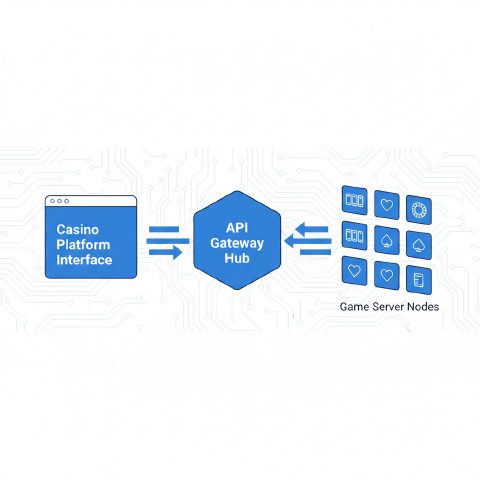
The mechanics are straightforward: the aggregator maintains certified, live connections to each studio's Remote Gaming Server (RGS). When a player launches a game on your site, the request routes through the aggregator's API to the studio's RGS, the spin result comes back, and the aggregator's wallet layer settles the transaction. You see one reconciliation report, one invoice, one technical support contact. That simplicity is the entire value proposition.
What operators underestimate is how much variation exists in the aggregator layer itself. Some platforms — SoftSwiss Game Aggregator is a good example — are deeply integrated with a broader casino platform ecosystem, meaning the wallet, bonus engine and game content share the same data layer. Others, like Hub88, are pure-play aggregators designed to bolt onto any existing platform via a clean REST or XML API. Neither model is universally better; the right choice depends on whether you're building on a third-party platform or a proprietary stack.
Revenue flow matters too. Studios typically charge operators 15–20% of GGR as a licence fee. The aggregator then adds its own layer — usually 1–4% of GGR, though some charge a flat monthly fee plus a smaller percentage. On a casino doing €500k GGR per month, a 3% aggregator cut is €15,000 monthly before you've paid for hosting, payments or staff. That's not a reason to avoid aggregators — direct studio deals require a minimum GGR guarantee most early-stage operators can't meet — but it's a number worth modelling before you sign.
Which casino game aggregator providers dominate the market in 2026?
EveryMatrix (CasinoEngine), SoftSwiss Game Aggregator, Relax Gaming, Hub88 and Slotegrator are the five names that appear on almost every operator shortlist in 2026. Each has carved out a distinct position: EveryMatrix leads on raw studio count and enterprise tooling; SoftSwiss dominates crypto-friendly and turnkey builds; Relax on premium content curation; Hub88 on flexibility; Slotegrator on entry-level accessibility.
EveryMatrix's CasinoEngine product claims connections to over 230 studios and 20,000+ game titles as of early 2026. That number is real, but the more useful metric is certified, live titles in your target jurisdiction — a studio might be connected but their games aren't certified for, say, Sweden or Ontario. EveryMatrix's compliance team is genuinely strong here; they maintain jurisdiction-specific game availability lists that save operators weeks of due diligence. The downside is pricing: EveryMatrix is an enterprise product, and their minimum revenue commitments reflect that. If your projected GGR in year one is under €1M, expect a harder negotiation.
SoftSwiss Game Aggregator is the natural choice if you're launching on the SoftSwiss Casino Platform, which remains the most widely deployed turnkey solution in the Curaçao-licensed offshore segment. The tight integration between their game aggregator, bonus engine and payment module reduces integration bugs significantly — I've seen operators on other stacks spend three months chasing wallet reconciliation errors that SoftSwiss handles natively. Their studio count sits around 180+ providers, slightly below EveryMatrix, but the quality of the integration is consistently higher than what you get from some of the larger but looser aggregator networks.
Relax Gaming occupies a different niche. They're primarily a studio themselves — producing titles like Money Train and Money Cart — but their Silver Bullet and Powered By programmes function as a curated aggregator layer. If your brand positioning is 'premium slots boutique' rather than 'everything casino', Relax gives you access to a hand-picked roster of independent studios (Push Gaming, Hacksaw Gaming, Nolimit City) that carry real player cachet. The trade-off is lower total title count and higher average revenue share per studio.
Hub88 and Slotegrator serve different ends of the market. Hub88 is the aggregator of choice for operators with a proprietary platform who need a clean, well-documented API without being locked into a broader ecosystem — their developer documentation is genuinely good, and their support SLA is one of the better ones I've tested. Slotegrator, meanwhile, is the most accessible entry point for operators on tighter budgets: lower minimums, faster onboarding, and a wide geographic footprint including CIS markets that some of the premium providers don't cover well. You trade some API sophistication for that accessibility.
| Provider | Approx. Studios | Best Fit | API Type | Licensing Held | Est. Aggregator Fee |
|---|---|---|---|---|---|
| EveryMatrix (CasinoEngine) | 230+ | Enterprise / regulated EU & US | REST | MGA B2B, multiple state supplier | 2–4% GGR + setup |
| SoftSwiss Game Aggregator | 180+ | Turnkey / crypto / Curaçao | REST/XML | Curaçao sublicence support | Bundled or ~2–3% GGR |
| Relax Gaming (Silver Bullet) | 60–80 curated | Premium boutique brands | REST | MGA, UKGC B2B | 3–5% GGR (studio-dependent) |
| Hub88 | 150+ | Proprietary platform operators | REST | Curaçao, MGA B2B | ~2–3% GGR |
| Slotegrator | 120+ | Entry-level / CIS / emerging markets | XML/REST | Curaçao, limited EU | Flat fee + ~1–2% GGR |
What does a casino aggregator platform integration actually look like, step by step?
A realistic aggregator integration runs through five stages: commercial negotiation and contract signing, technical scoping and sandbox access, wallet and session API build, compliance certification per jurisdiction, and UAT before go-live. End-to-end, budget 6–10 weeks for a competent development team — not the 2 weeks some vendors quote in discovery calls.
Stage one is commercial, and it's where operators lose leverage by moving too fast. Aggregator sales teams will push you toward standard rate cards; almost everything is negotiable if you come with projected GGR numbers, a credible launch timeline and a named licence. If you're entering a regulated market like Ontario or New Jersey, your aggregator needs to be certified as a supplier in that jurisdiction — confirm this before you sign, not after. EveryMatrix and SoftSwiss both hold the necessary credentials for most major markets; smaller aggregators may require you to sponsor their supplier registration, which adds 8–16 weeks to your timeline.
Technical integration centres on two core components: the game launch flow and the wallet API. The game launch flow is straightforward — your platform calls the aggregator's game URL endpoint with a session token, the aggregator authenticates the player and launches the RGS session. The wallet API is where complexity lives. The aggregator will call your platform's wallet endpoints (debit, credit, rollback, balance) in real time during gameplay. If your wallet response times exceed ~300ms consistently, you'll see session errors and, worse, reconciliation gaps. I've reviewed post-mortems on three casino launches where wallet latency was the root cause of player complaints in the first week. Test this under load before you go live.
Compliance certification varies by jurisdiction. For MGA-licensed operators, every game title must be certified by an approved test lab (BMM, GLI, eCOGRA). The aggregator typically holds these certificates at the studio level, but you need to verify that the specific RTP variant you're deploying matches the certificate. Some studios offer multiple RTP configurations — 94%, 96%, 98% — and the wrong one deployed in a regulated market is a licence risk. A good aggregator's back-office will let you filter by certified jurisdiction and RTP variant; if yours doesn't, that's a red flag.
How do aggregator revenue-share structures compare, and where do operators get burned?
Most aggregators charge either a percentage of GGR (typically 1–4%) or a hybrid of monthly platform fee plus a lower GGR percentage. The danger isn't the headline rate — it's the stacking effect when you add the studio's own 15–20% GGR licence fee on top, plus payment processing costs. Model your total content cost as a percentage of GGR before you sign anything.
Here's the maths operators miss: if a studio charges 18% GGR and your aggregator charges 3% GGR, your total content cost is 21% of GGR before a single marketing euro is spent. On a €200k GGR month, that's €42,000 going to content alone. Add 3–5% for payment processing, 10–15% for bonuses, and your operator margin before operating costs is already thin. This is why direct studio deals matter at scale — but direct deals require minimum GGR guarantees (often €50k–€100k per month per studio) that most operators can't meet in year one.
The aggregator fee structure also affects cash flow differently. A pure percentage model means your content cost scales with revenue — predictable, but you pay more as you grow. A flat monthly fee model (some aggregators charge €5,000–€15,000/month for platform access) hits harder in low-revenue months but gets relatively cheaper as GGR grows. Hybrid models are common and often the most operator-friendly if you can negotiate a reasonable fixed component and a lower GGR percentage.
Where operators consistently get burned is in the minimum commitment clause buried in the contract. Some aggregators require a minimum monthly fee regardless of GGR — if your casino does €50k GGR in month two and the minimum is €8,000, you've just paid 16% of GGR for aggregation alone. Always model the minimum commitment against your conservative revenue projection, not your optimistic one. And read the exit clause: some aggregators have 6–12 month notice periods with continued minimum fee obligations, which makes switching providers painful if performance disappoints.
| Fee Model | Typical Structure | Best For | Risk |
|---|---|---|---|
| Pure % GGR | 2–4% of monthly GGR | Early-stage operators, unpredictable revenue | High cost at scale; no savings as you grow |
| Flat monthly fee | €5k–€15k/month, no GGR % | High-volume operators with stable GGR | Heavy fixed cost in low-revenue months |
| Hybrid (fee + %) | €2k–€5k/month + 1–2% GGR | Mid-market operators scaling steadily | Minimum fee risk if GGR drops; negotiate carefully |
| Per-game licence | Fixed fee per title per market | Operators targeting specific studios only | Complexity; doesn't scale with catalogue growth |
What jurisdictional and licensing requirements affect your aggregator choice?
Your target market determines which aggregator you can legally use — not the other way around. Regulated markets like the MGA (Malta), UKGC, Coljuegos (Colombia), MINCETUR (Peru) and US states all require both the operator and the B2B game supplier to hold jurisdiction-specific certifications. An aggregator without the right B2B supplier licence in your target market is a compliance liability, full stop.
In the EU's regulated markets, the aggregator must hold a B2B gaming supplier licence in each jurisdiction where their games are served. EveryMatrix holds MGA B2B credentials and has supplier registrations in Sweden (Spelinspektionen), Denmark (Spillemyndigheden) and several others. SoftSwiss has strong Curaçao infrastructure but thinner EU regulatory coverage — if you're launching in a fully regulated EU market, verify their specific credentials rather than assuming their MGA presence covers everything. Relax Gaming, being MGA and UKGC licensed as a studio, has solid EU coverage for their own content but the Silver Bullet aggregated content carries the underlying studio's certifications, not Relax's.
For US operators, the picture is more fragmented. Each state — New Jersey (DGE), Michigan (MGCB), Pennsylvania (PGCB), Connecticut (CAGC) — requires a separate supplier licence for each game provider. EveryMatrix has invested heavily in US compliance infrastructure and is the most credible aggregator choice for multi-state US launches. Most other aggregators are effectively locked out of the US market or limited to a single state, which matters if your growth plan includes US expansion. Don't let a vendor tell you they're 'working on' US licensing if you need to launch in 18 months — 'working on' in a US state context means 12–24 months minimum.
Offshore markets (Curaçao, Anjouan, Isle of Man) are more permissive, but Curaçao's 2023–2024 regulatory reform under the new National Ordinance on Offshore Games of Hazard (NOOGH) framework tightened B2B supplier requirements. Aggregators operating under the old master licence sublicence model need to have transitioned to the new framework by mid-2024. If you're signing with an aggregator for a Curaçao-licensed operation in 2026, confirm they're operating under the new regime — the old sublicence structure is no longer valid, and operators caught on non-compliant infrastructure face licence revocation.
How do you evaluate game catalogue quality beyond raw title count?
Title count is a vanity metric. What matters operationally is the percentage of titles that are certified for your target market, the depth of premium studio coverage (Pragmatic Play, Evolution, Play'n GO, Hacksaw), the quality of the aggregator's game metadata and thumbnail assets, and whether the back-office lets you merchandise the catalogue effectively with lobby management tools.
The gap between 'connected' studios and 'live and certified' studios is larger than most aggregators advertise. I've seen aggregators claim 200+ providers where fewer than 120 had certified content available for a specific EU market. Always ask for a jurisdiction-specific game list before signing, and verify that the studios you care most about — typically Pragmatic Play, Evolution, Play'n GO, Hacksaw Gaming, Nolimit City and NetEnt — are fully live, not 'coming soon'. Those six studios alone account for a disproportionate share of player activity on most casino verticals.
Lobby management tools are underrated in the evaluation process. A good aggregator back-office lets you build custom game categories, set featured game slots, control which titles appear for which player segments, and A/B test lobby layouts. EveryMatrix's CasinoEngine has one of the more mature lobby management interfaces in the market; SoftSwiss's back-office is solid for operators on their full platform stack. If you're evaluating a smaller aggregator, ask specifically for a demo of the lobby merchandising tools — some platforms still require a developer ticket to change lobby order, which is operationally painful.
Game metadata quality matters more than operators realise until they're live. Missing thumbnail assets, incorrect RTP values in the metadata, wrong volatility tags — these create CMS headaches and, in regulated markets, potential compliance issues if displayed RTPs don't match certified values. Hub88 has invested in metadata standardisation and it shows; their game data feeds are cleaner than several larger competitors. Ask any aggregator prospect for a sample metadata export and check the completeness yourself before signing.
What are the key technical red flags to watch for in an aggregator API?
The three technical red flags that cause the most post-launch pain are: wallet API response time SLAs below 99.9% uptime with no financial penalty, lack of a proper rollback/refund mechanism for failed transactions, and missing or poorly documented callback retry logic. These aren't edge cases — they're the failure modes that generate player complaints and regulator scrutiny.
Wallet API reliability is non-negotiable. During a slot spin, the aggregator calls your wallet to debit the bet and credit the win. If either call fails, the aggregator's rollback endpoint fires to reverse the transaction. If your platform doesn't handle rollbacks correctly — or if the aggregator's retry logic is poorly documented — you end up with phantom credits or missing funds. I've reviewed one operator's incident log where a 200ms wallet latency spike during a promotional period caused 1,400 rollback events in 48 hours. Most resolved correctly; 23 didn't. Those 23 became player disputes and a regulator inquiry. Test rollback scenarios explicitly in UAT.
Check the SLA terms carefully. A 99.9% uptime SLA sounds strong but allows ~8.7 hours of downtime per year. More importantly, check whether the SLA covers the aggregator's own infrastructure or includes the underlying studio RGS — because studio outages are common, and an aggregator that doesn't contractually commit to handling studio downtime gracefully (by failing the game launch cleanly rather than hanging) will cause player-facing errors you can't explain or compensate quickly.
Documentation quality predicts support quality. Before signing with any aggregator, ask for their API documentation and have a developer review it. Look for: completeness of error code definitions, clarity of the authentication flow, presence of a sandbox environment with test game modes, and availability of SDK libraries for common languages. Hub88 and EveryMatrix both maintain developer portals with genuinely useful documentation. Some smaller aggregators hand you a PDF spec written in 2019 and call it done. That PDF will cost you weeks of back-and-forth during integration.
When does it make sense to go direct with studios instead of using an aggregator?
Direct studio deals make financial sense once you can guarantee a studio their minimum monthly GGR threshold — typically €50,000–€100,000 per studio per month for tier-one providers. Below that threshold, aggregators are almost always more cost-effective despite their fee layer. Above it, the maths shifts, and the aggregator fee becomes a meaningful margin drag worth eliminating.
The break-even point varies by studio. Pragmatic Play, the most widely distributed studio in the market, typically requires a minimum GGR commitment in the €75k–€100k/month range for a direct deal. Play'n GO is similar. Smaller independents like Hacksaw Gaming or Nolimit City may negotiate at lower thresholds given their growth ambitions, but you're still looking at meaningful minimums. Until your casino is generating enough GGR per studio to justify those commitments, an aggregator is the right vehicle — even at 2–3% GGR cost.
There's a strategic argument for hybrid approaches at mid-scale: use an aggregator for the long tail of 150+ studios, but negotiate direct deals with your two or three highest-performing studios once you cross the threshold. This requires your platform to support multiple simultaneous game integrations — some turnkey platforms make this difficult — but it's the model that maximises margin at scale without the operational overhead of managing 30 direct studio relationships.
One thing direct deals give you beyond cost is relationship depth. Direct studio partners will give you early access to new game releases, exclusive bonus buy features for your players, and dedicated account management that responds faster than aggregator support chains. For a brand competing on premium content positioning, that relationship value has real commercial worth beyond the saved GGR percentage. Factor it in when you're modelling the switch.
How do the top aggregators handle live casino content specifically?
Live casino is a separate content category with different integration economics. Evolution Gaming dominates the live vertical globally and operates largely outside the aggregator model — most operators integrate Evolution directly. Aggregators like EveryMatrix and SoftSwiss do carry live casino content from providers like Pragmatic Play Live, Ezugi and Vivo Gaming, but Evolution's market-leading tables are almost always a direct deal.
This matters for your integration planning. If you're building on a white-label or turnkey platform, the platform provider may already have an Evolution direct integration that you inherit — SoftSwiss Casino Platform includes Evolution access for operators on their stack, for example. If you're on a proprietary build using a pure-play aggregator like Hub88, you'll likely need to negotiate Evolution separately, which means a separate contract, separate compliance certification and a separate technical integration. Budget for this: Evolution's setup fees and minimum commitments are among the highest in the content supply chain.
For operators who can't meet Evolution's minimums at launch — which is most of them — Pragmatic Play Live is the credible alternative. Pragmatic Play Live content is widely available through aggregators, the table quality is genuinely competitive, and Pragmatic's minimum requirements are more accessible for early-stage operators. The player perception gap between Evolution and Pragmatic Play Live has narrowed considerably in 2024–2025, particularly for game show formats. Starting on Pragmatic Play Live via aggregator and migrating to direct Evolution once you hit volume is a sensible sequencing strategy.
What should operators look for in an aggregator's responsible gambling and compliance tooling?
In regulated markets, your aggregator must support jurisdiction-specific responsible gambling (RG) controls at the game level: session time limits, loss limits, reality checks, and self-exclusion list integration (GAMSTOP in the UK, OASIS in Germany, CRUKS in the Netherlands). If the aggregator can't pass these controls through the API to the RGS, you have a compliance gap that can cost you your licence.
The technical mechanism matters here. RG controls need to be enforced at the RGS level, not just in your platform's front end — a player who bypasses your lobby and launches a game directly through a bookmarked URL should still hit the same limits. This requires the aggregator to pass player-level limit parameters to the studio's RGS in the game session initialisation call. Not all aggregators implement this consistently across all studios in their network. Ask specifically: 'For every studio in your catalogue, do you pass session limit parameters to the RGS, and how do you verify studio compliance?' If the answer is vague, that's a problem.
Self-exclusion list integration is equally critical. In the UK, GAMSTOP integration is mandatory — your platform must check the GAMSTOP register before allowing a player to launch a game. In Germany, the OASIS system performs a similar function. EveryMatrix has built GAMSTOP and OASIS integration into CasinoEngine at the platform level. If you're using a standalone aggregator, this check typically sits in your platform layer, but confirm the game launch flow doesn't allow any bypass. Regulators in both markets have issued fines to operators whose self-exclusion checks had gaps in the game launch path specifically.
- EveryMatrix (CasinoEngine) — Best for enterprise operators and regulated EU/US markets. 230+ studios, strong compliance infrastructure, mature lobby management tools. Higher pricing reflects the enterprise positioning — negotiate hard on minimum commitments.
- SoftSwiss Game Aggregator — Best for turnkey and crypto casino launches on the SoftSwiss platform. Deep integration with their bonus engine and payment module reduces reconciliation issues. Strong Curaçao infrastructure; thinner standalone EU regulated market coverage.
- Relax Gaming (Silver Bullet / Powered By) — Best for premium boutique casino brands. Curated roster of high-cachet independents (Hacksaw, Push Gaming, Nolimit City) rather than volume. Higher average revenue share per studio; lower total title count. MGA and UKGC B2B licensed.
- Hub88 — Best for operators with proprietary platforms who need a clean, well-documented API without ecosystem lock-in. 150+ providers, strong developer documentation, good metadata quality. Curaçao and MGA B2B credentials. Mid-market pricing.
- Slotegrator — Best entry-level option for operators in CIS, emerging markets and early-stage launches with tighter budgets. Lower minimums, faster onboarding, wide geographic footprint. API sophistication and support SLA below premium competitors — acceptable trade-off at this price point.
- Pariplay (Fusion) — Strong mid-market option with 200+ studios and a well-regarded bonus and free-round toolset built into the aggregation layer. Particularly strong in the UK and Southern European regulated markets. Acquired by Aspire Global (now Evoke) — worth noting in vendor stability assessments.





Comments
No comments yet, be the first.