White Label Crypto Casino Solutions: Real Costs, Providers and Trade-Offs for 2026

What exactly is a white label crypto casino and how does it differ from a turnkey build?
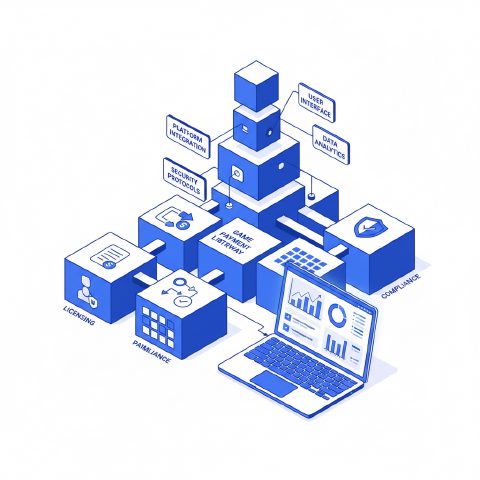
A white label crypto casino is a pre-built gambling platform you license from a B2B provider, brand as your own, and operate under a shared or sub-license. You get the front-end, game library, payment layer and back-office on day one. A turnkey crypto casino is similar but usually implies you own the license and have more configuration freedom, though the line between the two terms has blurred considerably in vendor marketing.
The practical difference comes down to three things: license ownership, revenue share structure, and how much you can actually customize the product. In a true white label arrangement, the master license sits with the platform provider. You operate as a sub-licensee, which means faster launch (the provider has already cleared the regulator's technical audit) but permanent exposure to that provider's compliance standing. If their master license gets suspended, your casino goes dark too. I have seen this happen to operators on older Curaçao sub-licenses when the master holder failed to renew under the new 2023 framework.
A turnkey crypto casino typically means the provider builds and configures the platform, hands you the keys, and you hold your own license. SoftSwiss's turnkey product works this way. You pay a higher upfront fee (often $50,000-$150,000 all-in for a mid-tier build) but your revenue share to the platform drops significantly after year one. For operators serious about building a long-term brand, the turnkey path almost always wins on unit economics past the 18-month mark.
The word 'crypto' adds another layer. A crypto casino white label must handle wallet-based deposits, on-chain transaction verification, and provably fair game certification, none of which traditional fiat white labels were built for. Platforms like SoftSwiss and Slotegrator have invested heavily in native crypto rails. Others bolt on a third-party crypto payment gateway and call it a crypto casino. Ask any prospective vendor whether crypto settlement is native or API-bridged. The answer tells you a lot about their actual architecture.
What does a white label crypto casino actually cost in 2026?
Expect a setup fee of $15,000-$80,000, a monthly platform fee or minimum guarantee of $2,000-$10,000, and a revenue share of 30-50% of GGR going back to the provider. Licensing adds $15,000-$35,000 upfront for Curaçao or Anjouan. Total first-year spend before marketing commonly lands between $120,000 and $300,000 for a properly resourced launch.
The setup fee is the number vendors lead with in their decks because it looks manageable. What they bury is the revenue share. At 40% of GGR, a casino generating $500,000 in gross gaming revenue sends $200,000 back to the platform before you pay for payment processing, bonusing, customer support, or affiliate commissions. I reviewed a contract last year where the revenue share stepped down from 45% to 35% only after the operator hit $1 million GGR per month. Most new operators never reach that threshold in year one.
Licensing is a real cost line that surprises first-timers. A Curaçao Gaming Control Board license under the post-2023 framework costs roughly $17,000-$22,000 in government fees plus $8,000-$15,000 in legal and compliance preparation. Anjouan (ACGC) runs cheaper, around $10,000-$15,000 total, and has become a popular fallback for crypto-first operators who want a fast path. Neither license gives you access to regulated EU markets. If you want German, Swedish or UK players, you need the relevant national license and a white label provider who supports those jurisdictions, which narrows your options sharply.
Do not forget the hidden cost of game content. Most white label providers bundle a game aggregator with 3,000-10,000 titles, but the aggregator takes a cut of GGR on top of the platform's share. EveryMatrix's GameMatrix aggregator, for example, charges game content fees that typically add another 5-15% of GGR depending on the studios in play. Your effective take-rate on a $500,000 GGR month can fall below 40% of revenue once all layers are stacked. Model this before you sign anything.
| Cost Item | Low Estimate | High Estimate | Notes |
|---|---|---|---|
| Platform setup fee | $15,000 | $80,000 | One-time; varies by provider tier |
| Monthly platform/minimum fee | $2,000 | $10,000 | Often offset against rev-share |
| Platform revenue share (GGR) | 30% | 50% | Steps down at volume milestones |
| Game content fees (aggregator) | 5% | 15% of GGR | On top of platform rev-share |
| Curaçao license (govt + legal) | $25,000 | $37,000 | One-time; annual renewal ~$10k |
| Anjouan license (govt + legal) | $10,000 | $15,000 | Faster issuance, lower prestige |
| KYC/AML tooling (annual) | $6,000 | $24,000 | Sumsub, Veriff or similar |
| Payment gateway integration | $0 | $8,000 | Many platforms include crypto rails |
| Year-one total (excl. marketing) | $120,000 | $300,000 | Rough operator range |
Which white label crypto casino providers should operators actually evaluate?
SoftSwiss, EveryMatrix, Slotegrator and Turnkey Casino are the four platforms worth a serious RFP in 2026. Each has genuine crypto payment infrastructure, a defensible game library and a track record of live operator deployments. Several smaller vendors claim crypto capability but are running fiat infrastructure with a crypto payment plugin bolted on.
SoftSwiss is the market leader for crypto-native casino operations. Their platform was built with Bitcoin in mind from the start and powers well-known brands in the offshore space. They offer both a white label (sub-license under their Curaçao master) and a full turnkey product. The tradeoff: they are selective about who they onboard, their setup fees are on the higher end, and their revenue share negotiations are less flexible than smaller competitors. If you have a credible business plan and a realistic marketing budget, they are worth the conversation.
EveryMatrix is a strong choice if you want a modular architecture. Their CasinoEngine, MoneyMatrix (payments) and GameMatrix (aggregator) products can be licensed separately or as a bundle. This matters for crypto operators because MoneyMatrix has direct integrations with BitPay, CoinsPaid and several other crypto processors. EveryMatrix holds MGA and multiple other licenses, which makes them a viable path for operators who want to eventually move into regulated EU markets. Their white label product is less crypto-native than SoftSwiss but more flexible for multi-currency, multi-jurisdiction builds.
Slotegrator is popular with operators entering LATAM and CIS markets on a tighter budget. Their setup fees are lower (often $15,000-$30,000) and they have a faster onboarding process. The trade-off is a less polished back-office and a smaller direct support team. Turnkey Casino (the brand, not the product category) sits in a similar tier. For a first-time operator who wants to prove the concept before committing to a premium platform, either can work, but plan for a platform migration within 24 months if the business gains traction.
| Provider | Crypto Native? | Setup Fee Range | Rev-Share Range | License Included? | Best For |
|---|---|---|---|---|---|
| SoftSwiss | Yes (built-in) | $40,000-$80,000 | 35-45% GGR | Sub-license option | Serious operators, crypto-first brands |
| EveryMatrix | Partial (MoneyMatrix) | $30,000-$70,000 | 30-45% GGR | No (own license req.) | Multi-jurisdiction, EU expansion plans |
| Slotegrator | Partial (API gateway) | $15,000-$35,000 | 35-50% GGR | Sub-license option | Budget launches, LATAM/CIS focus |
| Turnkey Casino | Partial | $20,000-$40,000 | 40-50% GGR | Sub-license option | First-time operators, MVP testing |
| BetConstruct | Yes (B2Core wallet) | $35,000-$65,000 | 30-40% GGR | Sub-license option | Sports + casino combined product |
What licensing options are realistic for a bitcoin casino white label in 2026?
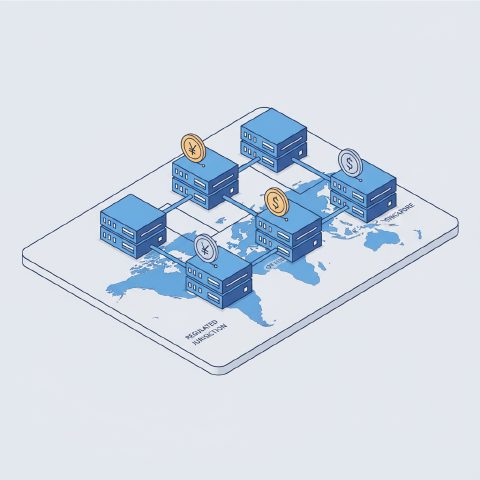
Curaçao eGaming (under the 2023 National Ordinance framework) and Anjouan are the two most accessible options for crypto-first operators. Both allow crypto deposits and withdrawals without mandating fiat conversion. MGA and UKGC are viable but require substantially more compliance infrastructure and effectively prohibit anonymous crypto play, which undermines a core crypto casino value proposition.
Curaçao went through a significant regulatory overhaul in 2023. The old sub-licensing model, where a master license holder could spin up unlimited sub-licensees with minimal oversight, is being phased out. By 2025, operators needed to apply for their own Curaçao Gaming Control Board license directly. The process is more rigorous than the old model but the license is now more defensible. Government fees run approximately $17,000-$22,000 with annual renewal around $10,000. Crypto deposits are explicitly permitted. The license does not give you access to most regulated EU markets, but for offshore crypto casino operations targeting LATAM, Africa, or Asia, it is the credible standard.
Anjouan (issued by the Anjouan Council for Gaming Control) is faster and cheaper. Some operators get licensed in 6-8 weeks for a total cost under $15,000. The jurisdiction is less recognized by payment processors and banking partners, which creates friction if you ever want to add fiat payment methods. For a pure-crypto operation with no fiat ambitions, Anjouan is a legitimate option. For anything more ambitious, Curaçao is worth the extra cost and time.
Malta Gaming Authority (MGA) licensing is the gold standard for EU operator credibility, but it is genuinely incompatible with anonymous crypto play. MGA requires full KYC before any deposit, source-of-funds checks above certain thresholds, and responsible gambling tooling that adds significant operational overhead. The license costs roughly $25,000 in application fees plus $25,000+ in annual compliance costs, before you factor in the legal and technical work. If your product thesis is built around pseudonymous crypto gambling, MGA is the wrong license. If you want to serve German or Swedish players legally, it is the right one and you need to accept what that means for your crypto UX.
How long does it take to launch a white label crypto casino?
With a white label provider who offers a sub-license, a realistic timeline from contract signing to soft launch is 6-12 weeks. Obtaining your own Curaçao license in parallel adds 8-16 weeks to that path. A turnkey build with a new license from scratch typically runs 4-6 months. Anyone promising a fully compliant, custom-branded crypto casino in under 30 days is selling you something incomplete.
The fastest legitimate path is a white label with a sub-license bundled in. SoftSwiss and Slotegrator both offer this. You sign the platform agreement, complete the provider's own due diligence (KYC on the beneficial owner, corporate structure review, source-of-funds declaration), and the platform activates your sub-license. Technical setup, domain configuration, payment gateway activation and game library curation typically take 4-8 weeks. Add 2-3 weeks for QA, responsible gambling tool configuration and a soft launch with limited traffic. You can realistically be taking bets within 10-12 weeks of signing.
The constraint most operators underestimate is their own internal readiness. You need a corporate entity in a compatible jurisdiction (BVI, Malta, Isle of Man and Curaçao itself are common), a bank account that will accept gaming revenue (harder than it sounds), a compliance officer or outsourced compliance function, and a customer support setup. None of these happen automatically. I have seen operators extend their timelines by 6-8 weeks simply because they did not start the banking piece early enough. Crypto-native operations have more flexibility here because you can operate entirely on-chain for deposits and withdrawals, but you still need fiat off-ramps for paying staff and vendors.
If you are applying for your own Curaçao license rather than using a sub-license, the GCB's current processing time runs 10-16 weeks. You can run parallel workstreams: start the license application while the platform is being configured. The risk is spending $30,000+ on platform setup before the license is confirmed. Most experienced operators accept that risk because the alternative is a 6-month sequential delay. Just make sure your platform agreement has a termination clause if the license is denied.
What crypto payment infrastructure does a white label platform need to include?
At minimum, a white label crypto casino needs native support for Bitcoin, Ethereum, Litecoin and at least one stablecoin (USDT or USDC). The payment layer should handle on-chain confirmation tracking, wallet generation per user, and automatic credit to player accounts. Anything that routes crypto through a fiat conversion before crediting the account adds latency and fee drag that players notice immediately.
The best-integrated crypto payment solutions in the white label space right now are CoinsPaid (used natively by SoftSwiss), B2BinPay and NOWPayments. CoinsPaid supports 50+ cryptocurrencies, handles exchange rate locking at deposit time (protecting the operator from volatility between deposit and settlement), and has direct integrations with most major platforms. Their processing fees run 0.4-1% per transaction, which is dramatically lower than card processing at 1.5-3.5%. For a high-volume crypto casino, this fee differential alone can represent hundreds of thousands of dollars in annual savings.
Stablecoin support has become non-negotiable in 2025-2026. A significant share of crypto casino players prefer USDT on Tron (TRC-20) because transaction fees are fractions of a cent and settlement is near-instant. If your platform only supports Bitcoin and Ethereum, you are losing depositors to competitors who accept USDT. Ask every prospective white label provider specifically which networks they support for USDT: ERC-20, TRC-20, BEP-20 and Polygon are the four that matter most by volume.
One thing operators consistently overlook is the hot wallet management and cold storage policy. Your platform provider controls the wallet infrastructure on a white label. Ask them directly: what percentage of player funds are held in cold storage? What is the insurance or bonding arrangement? What happens to player balances if the provider is hacked or becomes insolvent? These are not hypothetical questions. Several crypto casino operators lost player funds in 2022-2023 when their platform providers had security incidents. Get the answers in writing before you sign.
What are the real KYC and AML obligations for a crypto casino operator?
Regardless of which blockchain you use, operating a crypto casino under any legitimate license requires KYC verification of players above defined thresholds and an AML compliance program. Curaçao's 2023 framework explicitly requires operators to implement FATF-aligned AML procedures. The idea that crypto casinos operate outside AML rules is outdated and, in most jurisdictions, legally wrong.
Under the Curaçao 2023 National Ordinance on Offshore Games of Hazard, licensed operators must verify player identity at or before a cumulative deposit threshold (the specific figure is set in the operator's compliance manual, but $2,000 equivalent is a common benchmark). They must also file suspicious transaction reports, maintain transaction records for five years, and conduct enhanced due diligence on high-value players. This is substantively similar to what MGA requires, just with less prescriptive implementation guidance.
In practice, most crypto casino operators use one of three KYC vendors: Sumsub, Veriff or Jumio. Sumsub is the most common in the crypto space because of their crypto-specific AML screening modules and competitive pricing for high-volume operations. Their API integrates directly with SoftSwiss and several other white label platforms. Expect to pay $3-8 per verification at volume, plus a monthly platform fee. For an operator processing 500 new KYC verifications per month, annual KYC costs run $20,000-$50,000 depending on document types and the level of liveness checking required.
The enforcement risk is real and increasing. The Financial Action Task Force (FATF) has been pushing member jurisdictions to apply the Travel Rule to crypto transactions above $1,000 since 2019. By 2025, several Curaçao-licensed operators received compliance notices related to inadequate AML documentation. The operators who had invested in proper KYC tooling and documented compliance programs weathered those reviews. The ones running minimal KYC faced license suspension threats. Do not treat compliance as an optional cost line to defer until you are profitable.
How does a white label crypto casino compare to building a custom platform?
White label wins on speed and upfront cost. Custom wins on margin, differentiation and long-term control. For most first-time operators, white label is the right starting point, but you should enter the arrangement knowing that you will likely want to migrate to a custom or semi-custom build within 3-5 years if the business succeeds.
A custom crypto casino build from scratch costs $300,000-$1,500,000 depending on scope, the development team's location and whether you are building proprietary games or just integrating via aggregator. Timeline runs 12-24 months for a production-ready product. The margin benefit is significant: instead of giving 35-50% of GGR to a platform provider, you pay fixed infrastructure costs that do not scale with revenue. At $2 million GGR per year, a custom platform paying $200,000 in fixed tech costs keeps 90% more revenue than a white label paying 40% rev-share ($800,000). The math is straightforward; the execution risk is not.
The semi-custom or headless white label approach is worth considering. Providers like EveryMatrix offer an API-first architecture where you build your own front-end and player account management system on top of their game aggregation and payment infrastructure. You get a custom player experience and brand differentiation while avoiding the cost of building game integrations from scratch. This path typically costs $150,000-$400,000 in development and integration work, with ongoing API fees rather than a GGR rev-share. For operators with development resources and a clear product vision, it is often the best middle ground.
The honest answer about custom builds is that most operators who say they want one in year one do not have the operational maturity to specify what they actually need. A white label forces you to learn the business: what game categories drive your player LTV, which payment methods your specific audience uses, what your support ticket volume looks like, where your fraud exposure sits. After 18-24 months of running a white label, you know enough to write a meaningful RFP for a custom build. Starting with custom is usually a way to spend a lot of money building the wrong product.
| Factor | White Label | Turnkey (own license) | Custom Build |
|---|---|---|---|
| Time to launch | 6-12 weeks | 4-6 months | 12-24 months |
| Upfront cost | $30,000-$100,000 | $80,000-$200,000 | $300,000-$1,500,000 |
| Ongoing platform cost | 30-50% GGR rev-share | 15-25% GGR or flat fee | Fixed infra + dev ($50k-$200k/yr) |
| License ownership | Sub-license (provider) | Operator-owned | Operator-owned |
| Customization | Limited (template-based) | Moderate | Full |
| Crypto native support | Depends on provider | Depends on provider | Fully configurable |
| Risk profile | Platform dependency | Moderate | Execution and technical risk |
| Best for | First launch, MVP | Growth stage, brand building | Scaled operators, >$2M GGR/yr |
What are the most common mistakes operators make when launching a white label crypto casino?
The four mistakes I see most often: signing a rev-share contract without modeling the break-even point, skipping the banking and fiat off-ramp setup until after launch, underestimating the cost of player acquisition in a saturated crypto casino market, and choosing a provider based on the demo rather than the live product's uptime and support track record.
Revenue share math is the one that kills operators quietly. A 40% platform rev-share sounds manageable when you are projecting $100,000 GGR per month, but after you subtract the aggregator's game content fees (another 10-12%), your affiliate commissions (25-35% of NGR is standard in crypto casino), and your bonus cost (typically 15-25% of GGR for a competitive welcome offer), you are looking at a business that generates almost no margin at moderate scale. I have reviewed P&Ls where the operator was doing $300,000 GGR per month and netting less than $10,000 after all cost layers. Model the full cost stack before you sign.
The banking problem is underappreciated because crypto operators assume they can avoid it entirely. You cannot. You need to pay staff salaries, server costs, software licenses, affiliate payouts (many affiliates want fiat) and legal fees. Without a bank account that accepts gaming revenue, you are paying everything through personal accounts or crypto, which creates tax and compliance exposure. EMIs (Electronic Money Institutions) like Paytah, Genome or Mistertango serve gaming businesses in Europe. Getting approved takes 4-8 weeks and requires your gaming license. Start this process before launch, not after.
Player acquisition in the crypto casino space is significantly more competitive and expensive than it was in 2019-2021. The major crypto casino affiliate networks (Affpapa, Income Access, Cellxpert) have CPAs running $150-$400 per depositing player for crypto casino traffic. Organic SEO takes 12-18 months to generate meaningful volume. If your business plan assumes cheap traffic from crypto communities, it needs to be stress-tested against real affiliate rates. The operators who succeed are the ones who either have a pre-existing audience, a strong affiliate network relationship, or a genuinely differentiated product that generates word-of-mouth. Pure paid acquisition at current rates is very difficult to make profitable on a white label margin structure.
Are white label crypto casinos legal and what markets can they target?
A white label crypto casino is legal to operate in most of the world if it holds a valid gaming license and complies with its jurisdiction's AML requirements. The markets it can legally serve depend on that license. Curaçao and Anjouan licenses cover offshore play in most of LATAM, Africa, Asia and parts of Eastern Europe. They explicitly do not cover the US, UK, most EU member states, or Australia.
The US is the most important market to understand clearly. Online gambling regulation in the US is state-by-state. New Jersey, Michigan, Pennsylvania, Connecticut and West Virginia have legal, licensed online casino markets. Operating a crypto casino targeting US players without a state-specific license is a federal violation under the Wire Act and potentially the Unlawful Internet Gambling Enforcement Act (UIGEA). No offshore Curaçao or Anjouan license makes this legal. Several offshore operators have learned this the hard way through DOJ enforcement actions. If you want US players, you need a US state license, and the path to getting one is long, expensive and not available in most states.
LATAM is the most accessible growth market for a Curaçao-licensed crypto casino right now. Brazil legalized sports betting and is in the process of licensing online casino operators as of 2025-2026 (SECAP/MF is the relevant regulator). Mexico's SEGOB issues federal gaming licenses. Colombia's Coljuegos has an established online licensing framework. Peru's MINCETUR regulates online gaming. None of these regulators currently accept crypto-only operations without fiat options, but a Curaçao-licensed operator can serve these markets in a gray zone while local regulation matures. That gray zone is narrowing as local regulators become more active.
The EU is the most legally fragmented market. Germany (GGL), Sweden (Spelinspektionen), Netherlands (KSA) and Denmark (Spillemyndigheden) all require local licenses and have active enforcement against unlicensed operators. Blocking orders, payment processor pressure and advertising restrictions are the enforcement tools. A Curaçao-licensed operator targeting German or Swedish players is taking real legal and reputational risk. If EU markets are in your roadmap, build toward an MGA license from day one and choose a platform provider (EveryMatrix being the clearest example) that supports that path.



Comments
No comments yet, be the first.