US iGaming Legal Map 2026: How to Start an Online Casino in the 7 Legal States (and What the Other 39 Mean for Your Business)
Which US states actually allow online casino gambling right now?
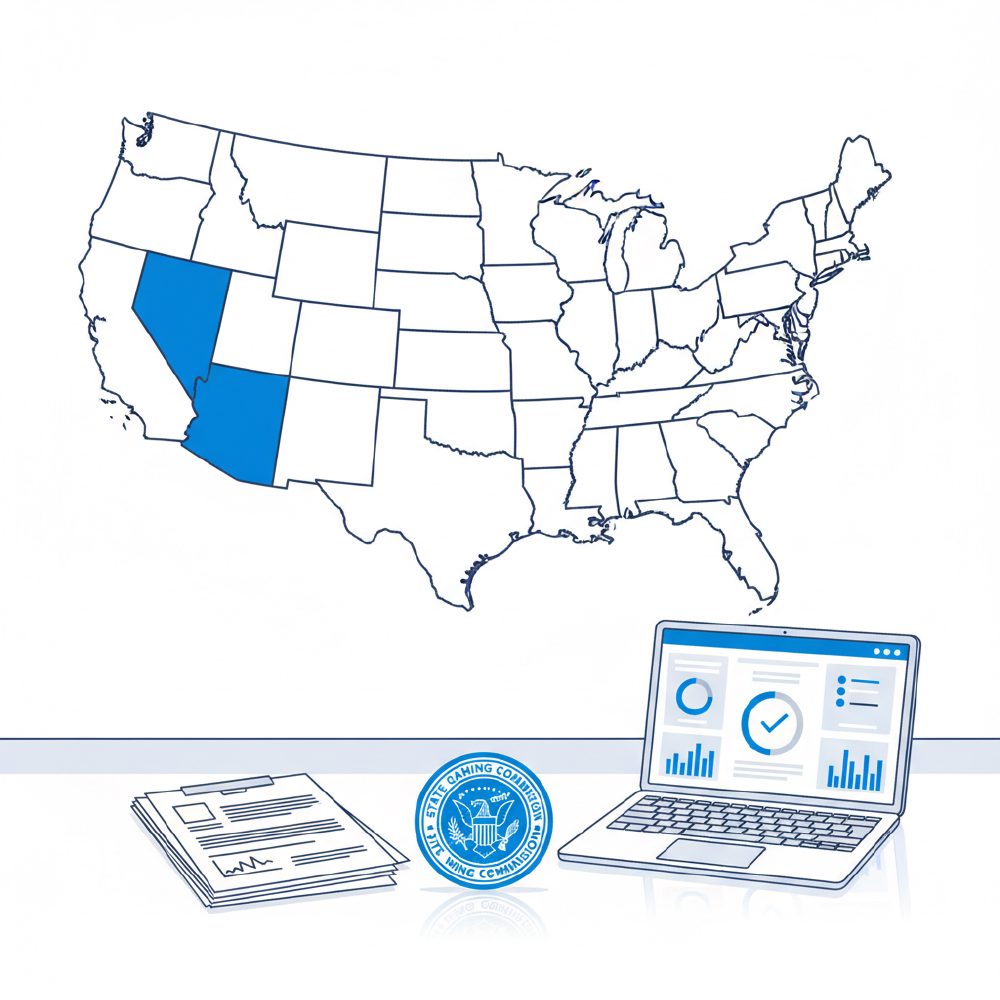
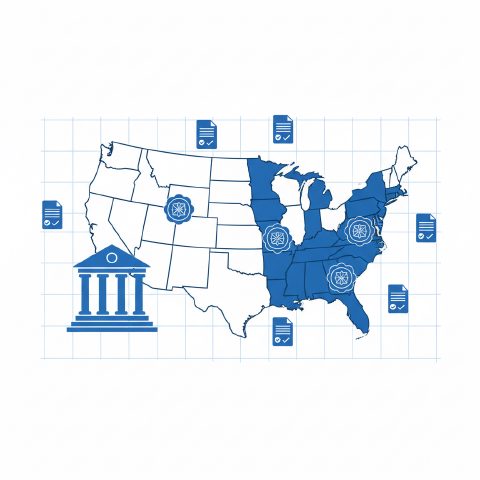
As of mid-2026, seven states have enacted legislation permitting real-money online casino gambling: New Jersey, Pennsylvania, Michigan, West Virginia, Connecticut, Delaware, and Rhode Island. That is the entire legal market. Every other state either prohibits it outright or has only authorized sports betting, which is a legally separate product category.
New Jersey was the pioneer, launching regulated iGaming in November 2013 under the Division of Gaming Enforcement (DGE). It remains the largest single-state market by revenue, generating over $2 billion in annual GGR as of 2025. Pennsylvania followed in 2019 and quickly became the second-largest market, partly because the state's brick-and-mortar casino infrastructure gave existing license holders a fast ramp. Michigan launched in January 2021 and has grown aggressively, with Detroit's tribal and commercial operators all active online. West Virginia passed enabling legislation in 2019 but had a slow rollout; the active operator count remains small. Connecticut launched in 2021 through a duopoly arrangement between the Mohegan Tribe and the Mashantucket Pequot Tribe. Delaware has run a state-managed online casino since 2013 but the market is tiny. Rhode Island authorized iGaming in 2023 and went live in 2024 through IGT as the exclusive platform provider.
The practical implication for a new operator: your addressable US iGaming market is these seven states, and each one has its own licensing regime, tax rate, and platform certification requirements. There is no federal iGaming license. You cannot get licensed in one state and serve players in another. This is a state-by-state build, and the compliance overhead per state is substantial.
Several states have been in legislative discussion for years without passing. New York has introduced iGaming bills repeatedly; the tax rate debate (proposals have floated 54% or higher) keeps stalling it. Illinois, Indiana, and Maryland are also watched closely. Operators who want to be ready for a new-state launch should be monitoring these jurisdictions now, because the window between bill passage and market open can be as short as 12 months, and pre-certification with platform providers like GAN, Scientific Games (now Light and Wonder), or Kambi takes time.
| State | Launch Year | Regulator | GGR Tax Rate (approx.) | Key Operators Active |
|---|---|---|---|---|
| New Jersey | 2013 | NJ Division of Gaming Enforcement | 15% slots / 8% table games | BetMGM, Caesars, DraftKings, FanDuel, Borgata |
| Pennsylvania | 2019 | PA Gaming Control Board | 54% slots / 16% table games | BetMGM, Caesars, DraftKings, Hollywood |
| Michigan | 2021 | MI Gaming Control Board | 20-28% (varies by type) | BetMGM, FanDuel, Barstool, PokerStars |
| West Virginia | 2020 | WV Lottery Commission | 15% | BetMGM, DraftKings, FanDuel |
| Connecticut | 2021 | CT Department of Consumer Protection | 18% (commercial) / tribal compact | Mohegan Sun, FanDuel (Mashantucket) |
| Delaware | 2013 | DE Lottery / DGE oversight | State-managed | 888 (platform), state-run |
| Rhode Island | 2024 | RI Lottery | State-managed via IGT | IGT platform, Twin River brand |
Why do 38 states have sports betting but not online casino gambling?
Sports betting and online casino gambling are legally distinct products, regulated under separate statutes. The Supreme Court's 2018 Murphy v. NCAA ruling struck down PASPA and freed states to legalize sports wagering, but it said nothing about casino games. States choose independently. Many legislatures that passed sports betting bills faced far more resistance to casino expansion, so they stopped at sports.
The political economy here matters to operators. Sports betting was sold to state legislatures as a relatively contained product with a low house edge and a cultural tie to existing sports fandom. Online casino gambling, particularly slots, carries a different political profile: higher hold percentages, faster play cycles, and stronger opposition from problem-gambling advocates and brick-and-mortar casino lobbies who fear cannibalization. That combination has blocked iGaming bills in states like Ohio, Tennessee, and Arizona, all of which have active sports betting markets.
From a licensing standpoint, a DraftKings or FanDuel sports betting license in a given state does not carry over to casino products. The operator must apply separately, meet different technical certification standards, and in most cases partner with a land-based casino licensee (the so-called 'tethering' requirement). Pennsylvania requires online operators to be affiliated with a licensed PA casino. New Jersey requires an Atlantic City casino partnership. Michigan requires a Detroit commercial casino or a tribal gaming compact. If you are planning a standalone online casino brand with no brick-and-mortar affiliate, the US legal market is effectively closed to you without that partnership structure.
The practical read for a new operator: do not build a US go-to-market plan around the sports betting state count. Thirty-eight states with sports betting does not mean thirty-eight addressable markets for your casino product. It means seven, with a handful of potential additions over the next two to four years. Budget and timeline accordingly.
| State | Sports Betting Legal | Online Casino Legal | Status / Notes |
|---|---|---|---|
| New Jersey | Yes | Yes | Most mature dual market |
| Pennsylvania | Yes | Yes | Highest casino tax rate in legal states |
| Michigan | Yes | Yes | Tribal and commercial operators active |
| New York | Yes | No | iGaming bill stalled over tax rate |
| Ohio | Yes | No | Casino expansion politically blocked |
| Illinois | Yes | No | Bill introduced; outcome uncertain |
| Arizona | Yes | No | Tribal compacts complicate expansion |
| Texas | No | No | Broad gambling prohibition |
| California | No | No | Failed referenda; tribal opposition |
| Florida | Disputed | No | Seminole compact under legal challenge |
What does it actually cost to get licensed in a legal US iGaming state?
Getting licensed in a single US iGaming state typically requires $500,000 to $2 million in upfront costs before you take a single bet. That figure covers application fees, background investigation costs, legal counsel, technical certification, and the required land-based partnership fee or deposit. Pennsylvania and New Jersey sit at the higher end. West Virginia is cheaper but the market is thin.
Application fees alone vary widely. New Jersey charges a $400 transactional waiver fee for internet gaming, but the real cost is the DGE background investigation, which can run $150,000 to $500,000 in legal and compliance preparation depending on the complexity of your corporate structure. Pennsylvania charges a $10 million interactive gaming license fee for a standalone iGaming license, which is one of the highest in the world and effectively limits entry to well-capitalized operators. Michigan's licensing fees are more moderate, but you still need a Detroit commercial casino partner, and those partnerships carry their own commercial terms.
Beyond the license fee, operators need to budget for platform and game certification. Every game offered to US players must be tested and certified by an approved independent testing laboratory: GLI (Gaming Laboratories International), BMM Testlabs, or iTech Labs are the main players. Certifying a full game library of 500+ titles can take 6 to 18 months and cost $100,000 to $300,000 in lab fees. If you are using a platform like GAN or Everi, some of this work is already done, but you still need state-specific sign-off.
Then there is the ongoing cost structure. Pennsylvania's 54% GGR tax on slots is the most punishing in the world for a regulated market. New Jersey's blended rate is more manageable, but you are competing against well-funded incumbents who have years of player data and loyalty program integration. West Virginia's 15% rate is attractive on paper, but the addressable player population is small. Operators who model US entry on offshore margin assumptions will be badly surprised. A 54% tax plus a 15-20% platform revenue share plus payment processing costs of 3-5% can leave you with an effective margin under 20% of GGR before marketing.
How does the tethering requirement affect how to start an online casino in the US?
Tethering means your online casino brand must be legally affiliated with a licensed land-based casino in that state. You cannot launch as a standalone digital operator. The tethering requirement exists in New Jersey, Pennsylvania, Michigan, and Connecticut. It is the single most common structural barrier operators underestimate when planning US market entry.
In New Jersey, every iGaming operator must hold an Internet Gaming Permit issued through an Atlantic City casino licensee. The casino acts as the primary licensee; the online operator is a secondary or 'skin' operator. This is why brands like BetMGM, Caesars, and Borgata dominate: they own the underlying casino license. Third-party brands can operate as skins under a casino's permit, but the casino takes a revenue share, typically 15-25% of GGR, on top of the state tax. That commercial layer adds up fast.
In Pennsylvania, the $10 million license fee is paid by the land-based casino, not the online operator directly. So if you want to enter PA without owning a casino, you negotiate a skin deal with an existing licensee. Those deals are competitive and the casino partners know their leverage. Expect to give up 20-30% of GGR to the land-based partner, on top of the 54% state tax on slots. The economics only work if you have a strong existing player database or a differentiated product that justifies the acquisition cost.
Michigan offers a slightly different path through tribal gaming compacts, but tribal operators have their own licensing and technology requirements under the Tribal-State Gaming Compact. Working with a Michigan tribal operator as a technology provider requires its own approval process through the Michigan Gaming Control Board. The tribal market is not a shortcut; it is a separate regulatory track with its own timeline and requirements.
The practical recommendation: before spending anything on US market entry, identify your land-based partner first. The tethering requirement is not a compliance checkbox you solve at the end. It is the foundation of your entire license structure, and the commercial terms of that partnership will define your unit economics for the life of the agreement.
Can you use a white-label or turnkey platform to launch in the US?
White-label and turnkey platforms can accelerate technical delivery, but they do not solve the licensing problem. Every platform, game, and payment method must be approved by the relevant state regulator independently of what the vendor has certified elsewhere. Vendors like GAN, Everi, and SG Digital have US-certified technology stacks, which helps, but the operator still needs its own license.
GAN (now part of a broader ecosystem after its Coolbet acquisition) has been one of the most active B2B platform providers in the US legal market, powering casino products for operators in New Jersey, Pennsylvania, and Michigan. Its platform is pre-certified in those states, which reduces your technical certification timeline. SG Digital (Scientific Games / Light and Wonder) powers Delaware's state-run system and has certifications across multiple states. Everi and IGT are entrenched in the land-based and lottery-adjacent space. None of these vendors will hand you a license. What they give you is a certified technology layer that the regulator has already reviewed, which shaves months off your go-live timeline.
The European white-label model, where a provider like SoftSwiss or EveryMatrix gives you a fully operational casino under their Curaçao or MGA license, does not translate to the US. There is no equivalent structure in US gaming law. Each state requires the operator to hold its own license or operate as a registered skin under a primary licensee. A SoftSwiss-powered brand cannot legally take real-money bets from New Jersey players just because it has an MGA license. Any vendor who tells you otherwise is either confused or misleading you.
That said, for operators preparing for a US launch, working with a platform vendor that has existing state certifications is a smart move. The certification process for a new, uncertified platform can add 12 to 24 months to your timeline. If GAN or a comparable provider is already certified in your target state, you are building on a foundation that the regulator knows. Your legal counsel and the regulator's technical staff will both appreciate it, and that goodwill has real timeline value.
What is the federal legal framework operators must understand before entering the US?
Three federal laws define the ceiling of US iGaming legality: the Wire Act of 1961, the Unlawful Internet Gambling Enforcement Act (UIGEA) of 2006, and the Illegal Gambling Business Act. The Wire Act's scope has been contested since a 2011 DOJ opinion and a reversed 2018 opinion. Operators must understand all three before taking a dollar from a US player.
UIGEA is the most operationally relevant for operators. It does not criminalize gambling itself; it prohibits financial institutions from processing payments for unlawful internet gambling. The practical effect is that payment processors, banks, and card networks will decline transactions flagged as online gambling if the underlying activity is not legal in the player's state. This is why US-facing offshore operators have historically relied on cryptocurrency, e-wallets, and payment facilitators with looser compliance controls. It also explains why US-licensed operators spend heavily on payment infrastructure: getting Visa and Mastercard to process your transactions requires demonstrating state licensure to the card networks' own compliance teams.
The Wire Act question matters for multi-state operations. The 2011 DOJ opinion held that the Wire Act applied only to sports betting, not to other forms of online gambling. That interpretation enabled the New Jersey iGaming launch and the interstate poker liquidity sharing agreements between NJ, PA, MI, and DE. A 2018 DOJ opinion reversed course and argued the Wire Act applied broadly to all internet gambling. That opinion was challenged in court, and the First Circuit Court of Appeals in 2021 largely sided with the narrower interpretation. The situation is not fully settled, and any operator running technology or financial flows across state lines should have current legal advice on Wire Act exposure.
The Illegal Gambling Business Act creates federal criminal liability for operating a gambling business that violates state law. This is the statute that gives federal prosecutors jurisdiction over offshore operators targeting US players. The enforcement risk is real: the DOJ has indicted offshore operators under this statute, and the penalties include asset forfeiture. Operators considering an offshore-to-US strategy should treat this not as a theoretical risk but as a concrete cost of doing business that needs to be priced into their risk model.
What does the offshore operator path look like for US players in 2026?
Offshore operators serving US players from Curaçao, Anjouan, or similar jurisdictions operate in a legal gray zone at best and outright illegality at worst under US federal law. The market exists and generates real revenue, but the enforcement risk, payment friction, and player trust problems are significant. This is not a recommended path for a serious operator building long-term value.
The offshore model works commercially because enforcement against individual players is essentially nonexistent, and a meaningful segment of the US population is willing to use unlicensed sites. Curaçao e-Gaming licenses (now transitioning to the new Curaçao Gaming Authority framework as of 2023) and Anjouan licenses are cheap to obtain, typically $15,000 to $30,000 in setup costs versus millions for a US state license. Platforms like SoftSwiss and EveryMatrix will serve operators with these licenses, and the game libraries from providers like Pragmatic Play, Play'n GO, and Hacksaw Gaming are available offshore. So the product can be competitive.
The payment problem is where offshore US-facing operators bleed. Visa and Mastercard decline rates on offshore gambling transactions from US cards run 60-80% or higher. Operators compensate with cryptocurrency (Bitcoin, Ethereum, USDT), third-party payment facilitators, and e-wallet solutions. Crypto acceptance has become essentially standard for offshore US-facing operators, and some have built their entire brand around it. The conversion friction from payment declines still hurts acquisition economics significantly.
The enforcement risk has increased. The DOJ has pursued offshore operators, and the FinCEN has flagged crypto-based gambling payments for AML scrutiny. More practically, US state regulators have issued cease-and-desist orders to offshore operators and have worked with payment networks to cut off their processing. An operator building a serious brand should not bet its business on continued regulatory inaction. The offshore path is a short-term arbitrage, not a sustainable business model for the US market.
Which states are most likely to legalize iGaming next, and how should operators prepare?
New York, Illinois, Indiana, and Maryland are the most-watched near-term candidates for iGaming legalization. New York is the biggest prize by population, but its tax rate debate has stalled progress repeatedly. Illinois has a large commercial casino base that would benefit from online expansion. Operators who want to be ready for a new-state launch should start the pre-certification process 18 months before expected passage.
New York is the market everyone is watching. The state already generates over $1.5 billion annually in sports betting GGR, the largest in the country. Governor Hochul has expressed openness to iGaming, and the state's budget pressures create a revenue argument. The sticking point is the proposed tax rate: some proposals have floated 54% (matching Pennsylvania) or higher. At that rate, the market is profitable only for operators with massive existing player databases who can minimize acquisition cost. A new entrant without a NY sports betting player base would struggle to build a sustainable casino business at 54% GGR tax.
Illinois is interesting because it has a large commercial casino ecosystem and a history of pragmatic gambling expansion. The state added sports betting in 2019 and has expanded retail casino licenses. An iGaming bill has been introduced but has not advanced past committee. The tribal gaming compact dynamic is less complex in Illinois than in states like Arizona or California, which makes the legislative path cleaner. Operators with existing Illinois sports betting operations (DraftKings, FanDuel, BetRivers) would be best positioned for a fast launch.
For operators preparing for a next-wave state, the key actions are: first, identify your land-based partner in that state now, before the bill passes. Casino partners will have more leverage and higher commercial expectations once legalization is certain. Second, begin the platform pre-certification conversation with your technology vendor. Third, engage a state-specific gaming attorney to monitor the bill language and ensure your corporate structure will qualify under whatever licensing framework emerges. The operators who win new-state launches are the ones who treated preparation as a pre-legalization activity, not a post-passage scramble.
How do US iGaming payment stacks differ from offshore or European setups?
US-licensed iGaming payment stacks are built around bank ACH transfers, PayPal, Play+, and online banking apps like VIP Preferred. Credit card acceptance is limited and varies by state. Cryptocurrency is not accepted by US-licensed operators in most states. This is a fundamentally different stack from European or offshore setups and requires specific integrations that many platform vendors do not have pre-built.
PayPal is the most trusted deposit method among US online gamblers and has been available on licensed US casino platforms since around 2020. Getting PayPal enabled requires the operator to apply directly to PayPal's gambling merchant program and demonstrate state licensure. The approval process takes 2 to 4 months. Play+ is a prepaid card product offered by Sightline Payments, widely used across NJ, PA, and MI because it sidesteps bank decline issues while remaining fully compliant. VIP Preferred (owned by NRT Technology) enables ACH deposits directly from a player's bank account and is deeply integrated with several land-based casino loyalty programs.
Online banking via ACH is the workhorse of US iGaming deposits. The decline rate is lower than cards, the transaction fees are lower (typically 0.5-1.5% versus 2.5-3.5% for cards), and the regulatory profile is clean. The downside is that ACH withdrawals take 3 to 5 business days, which creates player experience friction compared to European instant bank transfers or e-wallets. Operators who want to compete on withdrawal speed need to either prefund a withdrawal float or integrate with same-day ACH providers, which adds cost and complexity.
Credit card acceptance for online gambling is restricted in New Jersey and effectively unavailable in most states due to card network rules. Visa and Mastercard both have policies that make US online gambling transactions difficult to process on credit lines. Debit cards work better but still face issuer-level declines. The net result is that a US-licensed operator's payment stack looks nothing like a European operator's stack, and any platform vendor who tells you their European payment integrations will cover you in the US is oversimplifying. Budget for US-specific payment integrations as a distinct line item in your launch plan.
What are the responsible gambling and AML compliance requirements for US-licensed operators?
US-licensed iGaming operators face some of the most demanding responsible gambling and AML requirements in the world. Every state requires self-exclusion integration with the state registry, deposit limits, session time limits, and player verification. AML obligations under FinCEN's Bank Secrecy Act rules apply from day one and require a written compliance program, transaction monitoring, and suspicious activity reporting.
Responsible gambling requirements vary by state but share a common core. Every operator must integrate with the state's self-exclusion database. In New Jersey, that is the Casino Self-Exclusion Program maintained by the DGE. In Pennsylvania, it is the Pennsylvania Voluntary Self-Exclusion Program. Players on these lists must be blocked from registering and playing, and any operator who allows a self-excluded player to deposit faces significant fines. The technical integration with these databases is not optional and must be tested as part of your platform certification.
AML compliance is where operators most often underinvest. The Bank Secrecy Act requires online casinos to file Currency Transaction Reports (CTRs) for cash transactions over $10,000 and Suspicious Activity Reports (SARs) for transactions that appear structurally designed to evade reporting thresholds or that have no apparent lawful purpose. In practice, this means your platform needs transaction monitoring logic that flags unusual deposit patterns, velocity checks, and source-of-funds verification for high-value players. FinCEN has issued specific guidance for online gaming, and state regulators have their own AML program requirements layered on top.
KYC (Know Your Customer) requirements in US-licensed states are stricter than most offshore jurisdictions. Full identity verification, including Social Security Number validation and geolocation confirmation that the player is physically inside the state at the time of play, is mandatory. Geolocation is typically handled by GeoComply, which holds approvals in all seven legal iGaming states and is effectively the only viable vendor for this function in the US market. Budget for GeoComply's per-transaction fees as a fixed cost of operating in the US. It is not optional, and there is no comparable alternative with equivalent regulatory acceptance.



Comments
No comments yet, be the first.