License Finder Quiz: Match Your Turnkey iGaming Solution to the Right Jurisdiction in 2026
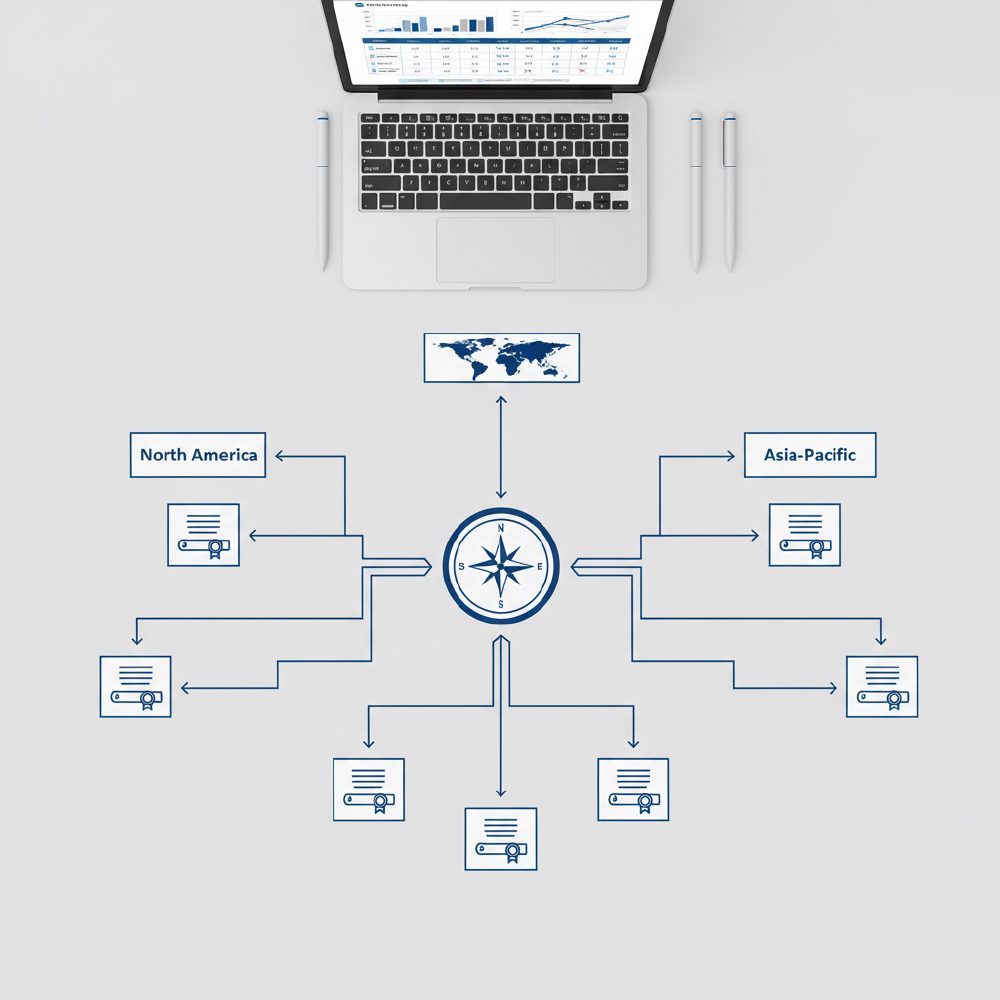
Why does jurisdiction choice make or break a turnkey iGaming launch?
Jurisdiction is not an administrative formality. It determines which payment processors will onboard you, which game studios will sign direct deals, which markets you can legally acquire players from, and what your ongoing compliance overhead looks like. Get it wrong and your turnkey platform is live but commercially paralyzed.
I have watched operators spend $80,000 on a SoftSwiss white-label setup, go live under a Curaçao sub-license, then discover their primary target market was Germany. German players require a DESH (Gemeinsame Glücksspielbehörde der Länder) license, and no Curaçao master license covers that. The result: a fully built casino that cannot legally market to its intended audience, with payment processors refusing to process German cards. That is not a hypothetical, it is a pattern I see at least twice a year.
The jurisdiction also shapes your game library. Studios like NetEnt, Pragmatic Play, and Evolution have per-license content restrictions. Some will not supply content to operators holding only an Anjouan license for markets they consider sensitive. If your turnkey solution is built on a game aggregator like Relax Gaming's Silver Bullet or EveryMatrix's CasinoEngine, those aggregators have their own license compatibility matrices that your jurisdiction must clear before content goes live.
Payment processing is the third lever. Acquiring banks and PSPs tier their risk appetite by license. A UK Gambling Commission license gets you Visa and Mastercard direct acquiring at reasonable rates. A Curaçao license gets you a narrower pool of PSPs, often at higher MDRs, and crypto becomes a more central part of your stack by necessity. That is not always bad, crypto-native operators targeting LATAM or Southeast Asia often prefer it, but it needs to be a deliberate choice, not a surprise.
What is the license finder quiz and how does it work?
The quiz is a decision tree built around five operator-specific variables: target geography, launch budget, acceptable timeline, business model (B2C casino, sportsbook, crypto, or B2B), and risk tolerance for regulatory scrutiny. Each answer narrows the viable jurisdiction shortlist from roughly 30 options down to two or three realistic candidates.
Most operators arrive at a licensing conversation with a jurisdiction already in mind, usually because a vendor sales rep mentioned it or they saw a competitor using it. The quiz forces a different sequence: define the commercial reality first, then let the jurisdiction follow. It sounds obvious, but the vendor-first approach is how most bad licensing decisions happen.
The five variables interact in non-obvious ways. A $50,000 total launch budget with a 90-day timeline and a target market of Brazil sounds like a Curaçao case. But if the operator wants to run a sportsbook with live betting on Brazilian football, Curaçao's master license holders have varying content permissions, and some explicitly exclude sports betting from sub-license scope. In that case, a newer offshore option like Anjouan (AJSC) or even a Costa Rica registration (not a license, technically) might be operationally simpler, while the operator builds toward a proper Brazil federal license once SIGAP's framework is fully operational post-2025.
The quiz also surfaces the "hidden third option" that operators miss: not all turnkey providers require you to hold your own license. SoftSwiss's casino-as-a-service model, for example, allows operators to launch under SoftSwiss's own Curaçao master license as a sub-licensee, which cuts year-one cost and timeline dramatically. The trade-off is less operational control and a revenue share that compounds over time. The quiz makes that trade-off explicit rather than leaving it buried in a vendor pitch deck.
Quiz Step 1: Which geographic markets are you actually targeting?
Define your player acquisition geography before anything else. Regulated markets like the UK, Germany, Sweden, and US states require local licenses regardless of what offshore license you hold. If more than 30% of your projected revenue comes from a regulated market, you need that market's license, full stop.
Operators routinely underestimate how aggressively regulators enforce geo-blocking requirements. The UK Gambling Commission has fined operators millions of pounds for accepting UK players without a UKGC license, even when the operator held a valid offshore license and claimed geo-blocking was in place. The UKGC's position is simple: if a UK IP can reach your site and deposit money, you are operating in the UK. Fines issued between 2021 and 2024 ranged from £500,000 to over £17 million for mid-size operators.
For LATAM, the picture is more fragmented. Colombia (Coljuegos) and Peru (MINCETUR) have functional online licensing regimes that require local entities and local payment integrations. Argentina is province-by-province, with Buenos Aires province (LOTBA) the most commercially significant. Brazil's federal online gambling framework under SIGAP began issuing licenses in late 2024 with a BRL 30 million (~$6M) license fee, a serious barrier that filters out all but well-capitalized operators. Mexico under SEGOB remains technically accessible via existing concessions but enforcement is inconsistent, which is why many operators use Curaçao there and accept the payment friction.
For Southeast Asia and Africa, offshore licenses (Curaçao, Isle of Man, Anjouan) remain the practical default because local licensing infrastructure is either absent or inaccessible to foreign operators. The risk calculus is different: regulatory action is less likely, but payment processing and banking relationships become the binding constraint instead.
| Target Market | Required License | Offshore Viable? | Notes |
|---|---|---|---|
| United Kingdom | UKGC | No | Offshore operators are actively enforced against; fines are substantial |
| Germany | DESH / GGL | No | Slots require national license; sports betting also regulated |
| Sweden | Spelinspektionen | No | Channelization rate tracked; unlicensed operators blocked by banks |
| Colombia | Coljuegos | No | Local entity required; revenue share model with Coljuegos |
| Peru | MINCETUR | No | Full local licensing regime since 2020 |
| Brazil | SIGAP | Short-term grey | Federal licensing live late 2024; BRL 30M fee; transition period ongoing |
| Mexico | SEGOB concession | Partial | Curaçao used widely; payment friction is real |
| LATAM tier-3 (Ecuador, Paraguay, etc.) | Offshore | Yes | Curaçao or Anjouan standard; local enforcement minimal |
| Southeast Asia | Offshore | Yes | PAGCOR (Philippines) for B2B; Curaçao for B2C grey markets |
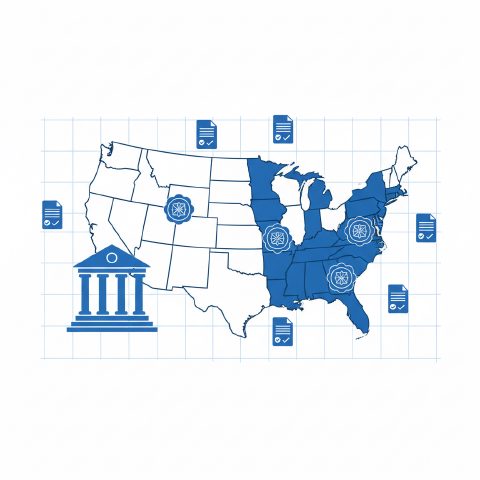
| US (NJ, PA, MI, etc.) | State-specific | No | Each state requires its own license; multi-state = multi-license |
Quiz Step 2: What is your realistic all-in budget for year one?
Year-one licensing costs range from roughly $15,000 for a basic Curaçao sub-license to over $500,000 for a US state license when you include legal, compliance infrastructure, and the license fee itself. Budget is a hard filter, it eliminates options before any other variable comes into play.
The figures operators see in vendor brochures are almost always the government fee only. They exclude legal counsel (typically $5,000-$25,000 depending on jurisdiction complexity), corporate structuring (a Curaçao setup requires a local NV entity, a local director, and a local bank account, each with setup and annual costs), AML/KYC compliance software, and the internal compliance officer salary or outsourced compliance retainer. For MGA, the Malta Gaming Authority charges a €25,000 non-refundable application fee plus a €25,000 compliance contribution for a B2C license. Add legal, local representation, and compliance infrastructure and year-one all-in is realistically €80,000-€150,000.
Anjouan (issued by AJSC, the Anjouan Gambling Authority) has emerged as a credible low-cost alternative since 2022. The license fee is roughly $15,000-$25,000 with a faster issuance timeline (4-8 weeks is achievable). It is accepted by a growing number of PSPs and crypto processors, and SoftSwiss and EveryMatrix both support it. The trade-off: it carries less brand credibility than MGA or UKGC, and some game studios still decline to supply content to Anjouan-licensed operators. For a crypto-first operator targeting grey markets, Anjouan is a rational choice. For an operator trying to build a premium brand, it is a liability.
US state licenses are in a different cost category entirely. A New Jersey DGE license requires a substantial application fee, a responsible gaming fund contribution, a $400,000 surety bond, and ongoing compliance costs that typically require a dedicated compliance team. Pennsylvania and Michigan are similarly demanding. Operators entering the US market without $2M+ earmarked for licensing, legal, and compliance should not be in that conversation yet. The US is not a market you enter on a shoestring and figure out later.
| Jurisdiction | Gov. Fee (approx.) | Year-One All-In (approx.) | Timeline | Best For |
|---|---|---|---|---|
| Curaçao (own master) | $25,000-$35,000 | $50,000-$90,000 | 3-5 months | Mid-budget offshore B2C |
| Curaçao (sub-license via SoftSwiss etc.) | $5,000-$15,000 | $15,000-$30,000 | 4-8 weeks | Lean launch, less control |
| Anjouan (AJSC) | $15,000-$25,000 | $30,000-$60,000 | 4-8 weeks | Crypto-first, grey markets |
| Malta (MGA) | €25,000 app + €25,000 compliance | €80,000-€150,000 | 4-9 months | EU-facing premium brand |
| Gibraltar (GRA) | £50,000 app fee | £100,000-£200,000 | 6-12 months | Established operators, UK-adjacent |
| Isle of Man (GSC) | £5,000 app + annual duty | £60,000-£120,000 | 3-6 months | B2B software, some B2C |
| Kahnawake (KGC) | CAD $25,000 | $40,000-$80,000 | 3-5 months | North America-facing grey ops |
| US State (NJ/PA/MI) | $100,000-$400,000+ fees | $500,000-$2M+ | 12-24 months | Regulated US market entry |
Quiz Step 3: How does your business model affect which license you need?
A pure-play casino, a sportsbook, a crypto casino, and a B2B platform provider each face different licensing requirements. Many jurisdictions issue separate license categories for each vertical, and your turnkey solution's feature set must match the license scope you actually hold.
This is where operators using turnkey solutions from providers like BtoBet, Kambi, or SBTech for sportsbook functionality run into problems. A Curaçao eGaming license covers both casino and sports betting in principle, but the sub-license agreement with your master license holder may restrict sports betting or require a separate addendum. Always read the sub-license scope, not just the master license scope. I have seen operators go live with a full sportsbook only to receive a notice from their master license holder three months in that sports betting was not covered and the product had to be suspended.
Crypto casinos occupy a specific niche. If you are accepting only cryptocurrency (Bitcoin, Ethereum, stablecoins) and not fiat currency, some jurisdictions treat you differently. Curaçao and Anjouan are both crypto-friendly and do not require a separate payment institution license for crypto processing. MGA, by contrast, requires crypto-accepting operators to comply with the same AML/KYC standards as fiat operators, which in practice means integrating a blockchain analytics tool like Chainalysis or Elliptic alongside your standard KYC stack. That adds cost and complexity but also adds credibility with payment partners.
B2B platform providers, game studios, and aggregators need a different license category entirely. MGA's B2B Critical Gaming Supply license, the Isle of Man's Software Supplier license, and Gibraltar's Remote Gambling Software License are designed for companies supplying technology to licensed operators rather than operating player-facing products. If you are building a white-label platform to sell to other operators, you need a B2B license, not a B2C operator license. The distinction matters because B2B licenses typically have lower player-protection compliance requirements but stricter technical audit requirements.
Quiz Step 4: What timeline can you realistically work with before launch?
If you need to be live in under 90 days, your options are limited to sub-licensing under an existing master license holder or launching under Anjouan. If you have 6-12 months, MGA and Isle of Man become viable. US state licenses require planning horizons of 12-24 months minimum.
Timeline pressure is the variable that most often forces operators into sub-licensing arrangements they later regret. Sub-licensing under a SoftSwiss or EveryMatrix master license gets you live fast, but it binds you to their platform, their payment relationships, and their compliance framework. Migrating to your own license later means re-papering every supplier agreement, re-integrating payment methods, and potentially rebuilding parts of the platform. The migration cost is rarely discussed upfront because vendors have no incentive to raise it.
For operators who genuinely need speed, the Anjouan route is worth serious consideration in 2026. The AJSC has streamlined its application process and the required documentation is less onerous than MGA. A clean application with a proper business plan, AML policy, and corporate structure can realistically be approved in 4-6 weeks. The license is recognized by a growing list of PSPs including some that declined it two years ago. It is not a long-term solution for an operator targeting EU-regulated markets, but as a launch vehicle while a parallel MGA application is in process, it is pragmatic.
One timing trap operators hit with MGA specifically: the 4-9 month estimate assumes a clean application with no queries. In practice, MGA issues Requests for Information (RFIs) that can add 2-4 months to the process. Budget for 9-12 months if you are not working with a local Maltese gaming lawyer who has a track record with MGA applications. The same principle applies to UKGC, their published timelines are optimistic, and applications with complex corporate structures or UBOs from certain jurisdictions routinely take 12+ months.
Quiz Step 5: How much ongoing compliance overhead can your team handle?
Compliance overhead scales directly with jurisdiction prestige. A Curaçao or Anjouan license requires basic AML/KYC processes and annual renewal documentation. An MGA or UKGC license requires a dedicated compliance officer, quarterly regulatory reporting, responsible gambling tools, and regular technical audits. Understaffing compliance is the most common post-launch failure mode.
The UKGC's Social Responsibility and Anti-Money Laundering compliance requirements have expanded significantly since 2019. Operators need automated affordability checks, interaction triggers, self-exclusion integration with GAMSTOP, and detailed transaction monitoring. The minimum viable compliance team for a UKGC-licensed operator is one full-time compliance officer plus a part-time MLRO (Money Laundering Reporting Officer). At UK salary rates, that is £80,000-£120,000 per year in personnel costs before software tools. Operators who try to run UKGC compliance as a part-time responsibility of their operations manager get fined.
MGA compliance is slightly less intensive than UKGC but still requires a locally resident compliance officer or a licensed Maltese compliance service provider (typically €24,000-€48,000 per year for outsourced compliance). MGA also requires annual system audits by an approved testing laboratory, eCOGRA, BMM, or GLI are the common choices, which cost €5,000-€15,000 per audit depending on scope. These are recurring costs, not one-time setup costs. They need to be in your unit economics from day one.
For operators launching with a lean team on a Curaçao or Anjouan license, the compliance overhead is manageable with the right software stack. A KYC provider like Jumio or Onfido, a transaction monitoring tool, and a documented AML policy reviewed by a gaming lawyer covers the baseline. The risk is not regulatory action from Curaçao itself, enforcement from the island is historically light, but rather losing payment processing relationships if a PSP audits your compliance posture and finds it inadequate. PSP compliance requirements have become more stringent than regulator requirements in many offshore jurisdictions.
How do turnkey iGaming solution providers align with specific jurisdictions?
Major turnkey providers have built their platforms around specific license types and have compliance modules, payment integrations, and game libraries pre-configured for those jurisdictions. Choosing a provider whose platform is not pre-certified for your target license adds months of integration work and five-figure costs.
SoftSwiss is the clearest example of a jurisdiction-aligned turnkey provider. Their platform is built around Curaçao licensing, and their sub-licensing model (operating under SoftSwiss's own Curaçao master license) is the fastest route to market for offshore B2C operators. Their game aggregator includes RNG certificates valid for Curaçao, Anjouan, and several other jurisdictions. For MGA or UKGC, SoftSwiss can support the license but the compliance module configuration requires additional work and their sales team will tell you the MGA path is more complex. That is honest of them.
EveryMatrix has a stronger EU orientation. Their CasinoEngine aggregator and OddsMatrix sportsbook are pre-certified for MGA and have UKGC-compatible responsible gambling tools built in. Their payment solution, PaymentIQ, has direct integrations with PSPs that specifically require MGA or UKGC licensing. If your target market is EU-regulated, EveryMatrix is a more natural fit than SoftSwiss. The trade-off: EveryMatrix's licensing and setup costs are higher, and their minimum revenue commitments in platform agreements are more demanding.
For US-facing operators, the picture is different again. Scientific Games (now Light and Wonder), IGT's platform division, and Kambi are the dominant suppliers in regulated US states because they have gone through the technical certification process required by state gaming labs (GLI, BMM). A turnkey provider that has not been certified in New Jersey, Pennsylvania, or Michigan cannot legally supply software to a licensed US operator in those states. This is a hard technical and regulatory barrier, not a commercial preference. Operators entering the US market should start with the list of state-approved suppliers and work backward to platform selection.
What are the tax implications of different gambling license jurisdictions?
Tax treatment varies dramatically. Malta offers a flat gaming tax of 5% of gross gaming revenue (GGR) capped at €466,000 per year, making it highly attractive for mid-to-large operators. Curaçao and Anjouan have minimal local gaming taxes but your home country tax treatment of offshore profits is the real variable.
The MGA's tax cap is one of the most underappreciated advantages of a Malta license. An operator generating €10M GGR pays the same €466,000 in Maltese gaming tax as one generating €50M GGR. Above a certain revenue threshold, the effective gaming tax rate becomes negligible. This is why virtually every major European operator has a Malta entity in their corporate structure. The caveat: Malta also has a 35% corporate income tax rate, partially offset by a refund mechanism that can bring the effective rate down to 5% for non-resident shareholders, but the refund mechanism requires careful structuring and is under ongoing EU scrutiny.
Curaçao's gaming tax is a flat 2% of net gaming revenue for master license holders, with sub-licensees typically paying nothing to the Curaçao government directly (their tax obligation flows through the master license holder). This makes Curaçao attractive on paper, but operators need to account for their home country's controlled foreign corporation (CFC) rules. A US-based founder operating a Curaçao casino does not escape US federal income tax on those profits. A UK-based operator faces similar issues under UK CFC legislation. The offshore tax advantage is real for operators domiciled in low-tax jurisdictions, but it is frequently overstated in vendor marketing for operators based in high-tax countries.
For US-regulated states, gaming taxes are set at the state level and are substantial. Pennsylvania taxes online slots at 54% of GGR, which is among the highest in the world for a regulated market. New Jersey taxes online casino GGR at 15%, plus 2.5% for the Atlantic City Alliance. Michigan is 8-28% depending on game type. These are not licensing fees, they are ongoing operating costs that fundamentally change the unit economics of a US market entry compared to an offshore operation.
What are the most common licensing mistakes operators make in 2026?
The top mistakes are: choosing a jurisdiction based on a vendor recommendation rather than market analysis, underbudgeting compliance costs, launching without understanding sub-license scope restrictions, and treating the license as a one-time task rather than an ongoing compliance program.
The vendor recommendation problem is pervasive. A SoftSwiss account manager will naturally guide you toward Curaçao because their platform is optimized for it and their sub-licensing model generates them revenue. An MGA-focused consulting firm will push Malta. Neither is giving you bad advice exactly, but neither is starting from your commercial reality. The quiz framework in this article is designed to invert that dynamic: define your geography, budget, timeline, and model first, then evaluate which jurisdiction and which platform provider fit those parameters.
Underbudgeting compliance is the mistake I see most often among first-time operators. The license fee is visible and finite. Compliance costs are ongoing and scale with revenue. A Curaçao operator doing $500,000 GGR per month with a lean team can manage compliance for $5,000-$10,000 per month in tools and outsourced support. The same operator at $5M GGR per month is a target for PSP audits, payment network scrutiny, and potentially regulatory attention from the jurisdictions where their players are located. Compliance investment needs to scale with revenue, and operators who do not budget for that growth hit a wall when their payment processing gets pulled.
The sub-license scope problem is specific but costly. When you operate under a master license holder's Curaçao license, you are bound by their sub-license agreement, not just the master license terms. Some master license holders restrict the countries you can accept players from, the game types you can offer, or the payment methods you can use. I have seen sub-license agreements that prohibit the sub-licensee from accepting players from more than 40 countries, including several that were core to the operator's acquisition strategy. Read the sub-license agreement in full before signing. If the master license holder will not show you the full agreement before you commit, walk away.



Comments
No comments yet, be the first.