KYC and AML Compliance for Online Casinos: Your 2026 iGaming Fraud Prevention Solution Guide

What exactly does KYC mean for an online casino operator?
KYC (Know Your Customer) is the process of verifying that a depositing player is who they claim to be, is of legal gambling age, is not on a sanctions list, and is not using a stolen identity. For operators, it is the front gate of the entire fraud prevention and AML program. Get it wrong and every subsequent compliance layer is built on sand.
At the platform level, KYC breaks into three distinct moments: onboarding verification, enhanced due diligence (EDD) triggered by deposit or behavior thresholds, and ongoing periodic re-verification. Most white-label and turnkey platforms like SoftSwiss and EveryMatrix have a basic document-upload flow baked in, but that flow is almost never sufficient on its own for a regulated market. You still need a third-party identity verification (IDV) engine sitting behind it.
The practical documents collected vary by jurisdiction. A Curaçao-licensed operator typically requires a government-issued ID and proof of address at a threshold around EUR 2,000 in deposits, though the 2023 National Ordinance reforms pushed that threshold lower and added a selfie-liveness check requirement. An MGA-licensed operator faces stricter obligations: full document verification before any withdrawal, with EDD kicking in around EUR 2,000 in a rolling 30-day period. US state-licensed operators (New Jersey, Michigan, Pennsylvania) follow FinCEN's Bank Secrecy Act rules, meaning KYC is mandatory before any real-money play, full stop, with Currency Transaction Reports (CTRs) filed for cash-equivalent transactions above USD 10,000.
The operators who get burned are the ones who treat KYC as a one-time onboarding event. A player who passed a basic ID check in 2022 could be on a sanctions list added in 2024. That is why the integrated igaming risk management platform concept matters: continuous screening against PEP (Politically Exposed Persons) and sanctions databases is not optional, it is the difference between a compliance program and a compliance decoration.
How does AML compliance differ from KYC, and why do operators confuse them?
KYC establishes who the player is. AML (Anti-Money Laundering) is the ongoing program that monitors whether that verified player is using the casino to launder proceeds of crime. They are related but distinct obligations. KYC is a data collection exercise; AML is a behavioral analytics and reporting discipline. Conflating them leads operators to over-invest in onboarding tools while leaving transaction monitoring almost empty.
The FATF (Financial Action Task Force) framework, which underpins most national AML legislation, requires casinos to apply a risk-based approach. That means segmenting your player base by risk level, applying proportionate monitoring, and filing Suspicious Activity Reports (SARs) or Suspicious Transaction Reports (STRs) when warranted. Under the EU's 6th Anti-Money Laundering Directive (6AMLD), online casinos are explicitly listed as obliged entities, which means operators licensed in MGA or any EU-adjacent jurisdiction carry direct criminal liability exposure, not just regulatory fines.
Transaction monitoring is where most operators under-build. The typical red flags in online gambling include: rapid deposit-withdrawal cycles with minimal play, structuring deposits just below KYC thresholds (a classic smurfing pattern), funding from multiple payment methods in quick succession, and high-value play on low-variance games like baccarat or roulette that can disguise layering. A manual compliance team cannot catch these patterns at scale. You need a rules engine or, increasingly, an ML-based anomaly detection layer.
The better integrated igaming risk management platforms, such as Featurespace ARIC or Hawk AI, apply adaptive behavioral models rather than static rule thresholds. The practical difference is meaningful: a static rule set flags every player who deposits three times in one hour; an adaptive model flags the player whose three deposits are unusual relative to their own historical pattern. Fewer false positives means less friction for legitimate high-value players and more analyst bandwidth focused on genuine risk.
Operators launching on a budget sometimes ask whether the AML module inside their platform (SoftSwiss has a basic one, for example) is sufficient. For a low-volume startup under a Curaçao license, it might be, temporarily. For any operator processing above roughly EUR 500,000 in monthly GGR, or targeting an MGA or US license, a standalone dedicated AML tool is not optional, it is a licensing requirement in practice.
Which KYC and AML vendors should operators actually consider in 2026?
The honest answer is that no single vendor covers the full compliance stack well. Identity verification, watchlist screening, transaction monitoring, and source-of-funds tooling each have specialist providers. The operator's job is assembling a stack that covers all four layers without creating an integration nightmare or adding so much friction that conversion collapses at onboarding.
For identity verification, Sumsub and Onfido are the two names that come up most often in operator RFPs, and for good reason. Sumsub has strong coverage of Eastern European and LATAM document types, which matters for operators targeting those markets. Onfido (now part of Entrust) has deeper integrations with UK and EU regulatory workflows. Both offer liveness detection, document OCR, and API-first architectures that slot reasonably well into most casino platforms. Jumio is a third option, typically preferred by larger operators with US state licenses because of its established relationship with compliance teams in regulated US markets.
For watchlist screening and ongoing PEP/sanctions monitoring, ComplyAdvantage and Refinitiv World-Check are the two dominant choices. ComplyAdvantage has a more modern API and faster data refresh cycles. World-Check has deeper coverage of obscure jurisdictions and is the preferred choice for operators who need to demonstrate regulatory-grade due diligence to a skeptical MGA inspector. Pricing for both is typically volume-tiered and negotiable above certain monthly check volumes.
Transaction monitoring is where the market fragments further. Featurespace, Hawk AI, and SEON all serve the iGaming vertical with varying degrees of ML sophistication. SEON is worth mentioning specifically because it offers a device fingerprinting and email intelligence layer that catches synthetic identity fraud at onboarding before a player even reaches the KYC step. That upstream filtering reduces the volume of expensive full KYC checks, which has a real impact on unit economics at scale.
| Vendor | Primary Function | iGaming Specialization | Typical Entry Cost | Best Fit |
|---|---|---|---|---|
| Sumsub | Identity verification + onboarding | High (dedicated iGaming tier) | From ~USD 500/mo + per-check | Mid-market operators, LATAM/CEE focus |
| Onfido (Entrust) | IDV + biometric liveness | Medium-High | Custom pricing, typically USD 1-3 per check | EU/UK-licensed operators |
| Jumio | IDV + compliance reporting | Medium | Enterprise contract, USD 2-4 per check est. | US state-licensed operators |
| ComplyAdvantage | AML screening + transaction monitoring | High (casino-specific rules) | From ~USD 1,500/mo | Operators needing fast PEP/sanctions refresh |
| Refinitiv World-Check | PEP/sanctions database | Medium (broad financial) | Enterprise licensing, negotiated | MGA/EU operators needing audit-grade data |
| SEON | Device intelligence + fraud scoring | High | From ~USD 0.10 per event | Operators wanting pre-KYC fraud filtering |
| Featurespace ARIC | ML transaction monitoring | Medium-High | Enterprise only, USD 50k+ setup est. | High-volume operators, MGA/UK compliance |
| Hawk AI | AML transaction monitoring + SAR filing | Medium | From ~USD 2,000/mo est. | Operators needing automated SAR workflows |
What does a compliant KYC workflow actually look like step by step?
A compliant KYC workflow is a sequenced series of checks triggered by player actions, not a single document upload at registration. The sequence varies by jurisdiction but the core structure is consistent: identity confirmation at registration, document verification before first withdrawal, and enhanced due diligence at defined monetary or behavioral thresholds. Each step should be automated where possible and documented for audit purposes.
Step one is email and device validation at registration. This is not technically KYC but it is the sensible first filter. A tool like SEON or MaxMind can score the registration event for synthetic identity signals before you invest in a full document check. Flagging a disposable email domain or a device fingerprint linked to 40 previous accounts costs fractions of a cent. Running a full biometric IDV on that same account costs orders of magnitude more.
Step two is age and identity verification, triggered either at registration (required in New Jersey and most US states) or at first deposit (common under Curaçao). The player submits a government-issued ID, the IDV engine runs OCR to extract data, cross-checks against the registration details, and runs a liveness selfie to confirm the document belongs to the submitting person. Typical automated pass rates run around 70-80% on first submission; the remainder require manual review, which is where your compliance team's time actually goes.
Step three is source-of-funds (SOF) verification, triggered at a defined cumulative deposit threshold. MGA guidance suggests this kicks in around EUR 2,000 in a rolling 30-day period for players who cannot otherwise explain their wealth level. SOF checks are the most friction-heavy part of the workflow: you are asking a player to upload payslips, bank statements, or a letter from their accountant. Conversion at this step is typically low, so the threshold calibration matters enormously for player lifetime value.
Step four is ongoing monitoring: continuous PEP and sanctions screening, behavioral anomaly detection, and periodic re-verification (typically annual or triggered by a change in risk profile). This is the layer most operators under-resource. The compliance program that impresses a regulator on day one needs to still be running correctly two years later, which means documented processes, staff training records, and audit trails that an inspector can actually follow.
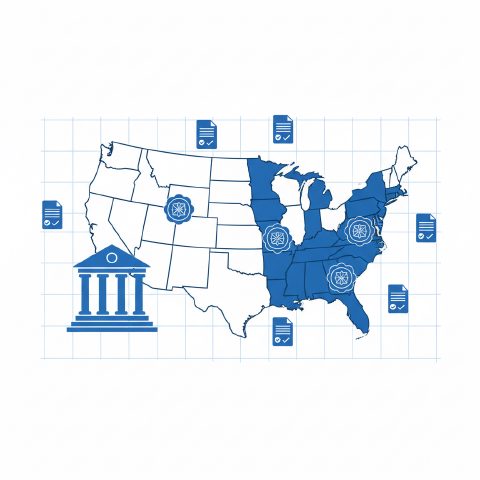
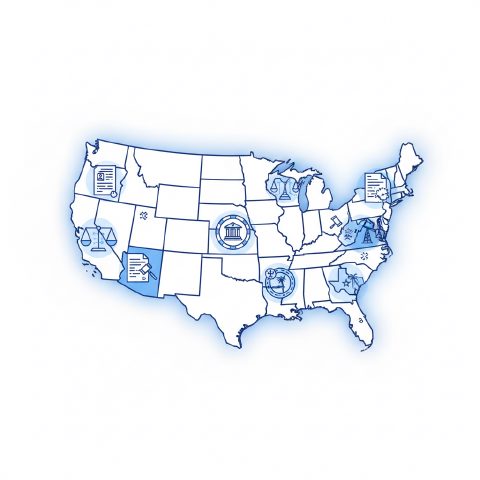
How do KYC and AML requirements differ across Curaçao, MGA, and US state licenses?
The gap between Curaçao and MGA requirements is substantial, and the gap between MGA and a US state license is wider still. Operators who build a compliance stack for one jurisdiction and then try to expand often discover the stack needs significant rebuilding. Understanding the differences before choosing your first license saves a six-figure rework.
Curaçao's framework, even post the 2023 National Ordinance reform that replaced the old master-license structure, remains the most permissive of the three. The new Curaçao Gaming Authority (CGA) requires documented KYC procedures, sanctions screening, and a compliance officer, but the practical enforcement intensity is lower than MGA or any US state. Operators can often launch with a lighter IDV tool and a basic AML policy document. The risk is that this creates compliance debt: if you later want to add an MGA license or enter a US state, you will need to rebuild your program from scratch rather than extend it.
The MGA (Malta Gaming Authority) sits in the middle tier. MGA operators must comply with Malta's Prevention of Money Laundering and Funding of Terrorism Regulations, which implement EU AML directives. That means a formal AML/CFT Business Risk Assessment, a documented compliance program, a designated MLRO (Money Laundering Reporting Officer), and mandatory SAR filing with the FIAU (Financial Intelligence Analysis Unit). MGA inspections do happen, and the authority has issued fines exceeding EUR 1 million for compliance failures. The compliance overhead is real and ongoing.
US state licenses are the most demanding. New Jersey's Division of Gaming Enforcement, Michigan's Gaming Control Board, and Pennsylvania's Gaming Control Board each require operators to follow FinCEN's Bank Secrecy Act rules, maintain formal AML programs, file CTRs and SARs with FinCEN, and submit to periodic state audits. The KYC threshold in all three states is effectively zero: identity must be verified before real-money play begins. Operators also face state-specific responsible gambling obligations that interact with the KYC workflow, such as self-exclusion list checks against the national GAMBAN database and state exclusion registries.
| Requirement | Curaçao (CGA) | MGA (Malta) | US State (NJ/MI/PA) |
|---|---|---|---|
| KYC before play | No (threshold-based) | Before first withdrawal | Yes, before real-money play |
| AML policy document | Required (post-2023) | Formal documented program | Formal BSA AML program |
| MLRO/Compliance Officer | Required | Required (MLRO) | Required (BSA Officer) |
| SAR/STR filing | Required | Required (FIAU) | Required (FinCEN) |
| PEP/Sanctions screening | Required | Required (ongoing) | Required (OFAC + FinCEN) |
| Source-of-funds checks | Risk-based | ~EUR 2,000 threshold | Risk-based + CTR at USD 10k |
| Audit/inspection frequency | Low-moderate | Moderate-high | High (state + federal) |
| Estimated annual compliance cost | USD 20k-60k | USD 80k-200k+ | USD 150k-500k+ |
What is an integrated igaming risk management platform and do you actually need one?
An integrated igaming risk management platform is a single system, or a tightly orchestrated set of APIs, that connects identity verification, transaction monitoring, fraud scoring, and AML reporting into one workflow with a unified case management interface. Whether you need one depends on your volume and license. Below roughly 10,000 active players, point solutions often work fine. Above that, the operational cost of managing three or four disconnected tools becomes the real problem.
The core value proposition of an integrated platform is case management efficiency. When a suspicious transaction alert fires, an analyst needs to see the player's full profile: their KYC documents, deposit history, device fingerprint, PEP/sanctions status, and previous alerts, all in one screen. If that data lives in four different vendor dashboards, each alert takes 15-20 minutes to investigate. Multiply that by 50 alerts a day at a mid-sized operator and you have a compliance team that is perpetually behind, which is exactly the condition that leads to missed SARs and regulatory exposure.
Providers that market themselves as integrated igaming risk management platforms include Jumio's end-to-end compliance suite, Sumsub's full KYC-plus-transaction-monitoring offering, and specialist iGaming platforms like BetConstruct's compliance module or the compliance layer inside SoftSwiss's BOSS back-office. The honest assessment is that most of these are better described as KYC platforms with transaction monitoring add-ons, rather than genuinely unified risk management systems. The ML transaction monitoring in a pure-play AML tool like Featurespace or Hawk AI is materially more sophisticated than what you get in a platform vendor's compliance module.
The practical recommendation for most operators is a two-vendor stack: one IDV provider for onboarding and ongoing screening, and one dedicated AML/transaction monitoring tool. Connect them through a case management layer, which can be as simple as a well-configured Jira workflow or as sophisticated as a purpose-built compliance case management system. The integration cost is real, typically 40-80 developer hours depending on API quality, but it is a one-time expense that pays back in analyst efficiency within months.
Operators targeting a US state license or MGA certification will likely need to demonstrate their integrated compliance architecture to regulators during the licensing review. Having a documented data flow diagram showing how KYC data feeds into transaction monitoring, how alerts are triaged, and how SARs are generated and filed is not just good practice. It is often a literal requirement of the application package.
What does igaming fraud prevention cost, and where do operators waste money?
Total compliance stack costs for a new operator typically run USD 15,000-60,000 in first-year setup and integration, plus ongoing per-verification and subscription fees that scale with player volume. The biggest waste is paying for enterprise-tier tools at startup volumes, and the second biggest is under-investing in transaction monitoring while over-spending on IDV.
Breaking down the cost structure: IDV tools like Sumsub or Onfido charge a per-check fee, typically USD 0.50 to USD 3.00 depending on check depth (basic OCR versus full biometric liveness plus database cross-check) and contracted volume. An operator processing 1,000 new KYC verifications per month at USD 1.50 per check is spending USD 1,500/month on IDV alone. That scales linearly until you hit a volume tier that unlocks a discount, usually somewhere around 5,000-10,000 checks per month.
AML screening tools like ComplyAdvantage typically charge a monthly platform fee plus per-search costs for ongoing monitoring. Entry-level contracts start around USD 1,500-2,000 per month for a small operator, though the figures I am quoting here are indicative and you should always get a direct quote because pricing changes. The trap operators fall into is signing an enterprise contract at a volume they do not yet have, locking in a high minimum commitment before they know their actual player acquisition rate.
The waste I see most often is operators spending heavily on the onboarding KYC layer, because it is visible to players and easy to demo to investors, while treating transaction monitoring as an afterthought. A fancy biometric selfie check at registration is useless if you have no system watching what that verified player does after they deposit. Regulators know this, which is why MGA and US state audits focus heavily on the AML program rather than just the KYC onboarding flow.
There is also a hidden cost in false positives. An overly aggressive fraud scoring model that flags 15% of legitimate players for manual review creates a customer service and compliance team bottleneck that costs real money in staff time and player churn. Calibrating your risk thresholds is ongoing work, not a one-time configuration. Budget for a compliance analyst or fractional MLRO from day one, not as an afterthought when the regulator asks who is responsible for your AML program.
How should operators handle source-of-funds checks without destroying player experience?
Source-of-funds checks are the highest-friction moment in the compliance workflow, and they are also unavoidable for regulated operators above certain deposit thresholds. The operators who handle them best treat SOF as a tiered, risk-based conversation rather than a sudden document demand. Proactive communication, clear timelines, and accepting a range of document types all reduce abandonment at this step.
The first design decision is threshold calibration. MGA guidance suggests EDD around EUR 2,000 in a rolling 30 days, but that is a floor, not a mandate. Operators with a high-value player segment sometimes raise the practical trigger to EUR 5,000-10,000 for players who have already demonstrated a consistent, explainable deposit pattern. The risk-based approach explicitly allows this, provided you document the rationale. Setting the threshold too low creates compliance overhead and player friction; setting it too high creates regulatory exposure. There is no perfect number, but you should be able to defend your choice to an auditor.
The second decision is what documents you accept. The broadest acceptable set includes payslips, bank statements (last 3 months), a letter from an employer or accountant, proof of a business sale or inheritance, or dividend/investment account statements. Operators who accept only payslips will lose self-employed players and business owners who are often the highest-value segment. Building a flexible document checklist with clear guidance on what is and is not acceptable reduces back-and-forth with your compliance team.
The third lever is communication timing. Operators who spring a SOF request on a player mid-session after a large deposit get much higher abandonment than operators who introduce the concept during onboarding with messaging like: deposits above a certain level may require income verification as part of our licensing obligations. Setting the expectation early means the request does not feel like an accusation when it arrives. Some operators use a staged approach: a soft notification at 50% of the threshold, a formal request at 100%. This gives high-intent players time to prepare documents rather than scrambling.
What are the most common AML compliance failures that get operators fined?
The failures that generate regulatory fines are almost never exotic. They are mundane operational breakdowns: SAR filing delays, incomplete customer risk assessments, transaction monitoring rules that were configured once and never updated, and compliance officers who exist on paper but have no real authority. Regulators have seen every version of these failures and their inspection checklists are built around them.
SAR filing failures are the most common. The obligation to file a SAR when you have reasonable grounds to suspect money laundering is not discretionary, and the threshold for 'reasonable grounds' is lower than most operators assume. You do not need proof. You need suspicion. Operators who wait for certainty before filing are already in breach. MGA's FIAU has fined multiple operators specifically for delayed or absent SAR filing, and the fines have been material: EUR 200,000 to EUR 1.2 million in documented cases from 2020-2024.
Transaction monitoring rule decay is a subtler problem. An operator launches with a set of AML rules: flag any deposit-withdrawal cycle within 24 hours with less than 5% wagering, flag structuring patterns just below the KYC threshold, and so on. Those rules are correct on day one. Two years later, the player base has evolved, new payment methods have been added, and no one has reviewed whether the rules still cover the actual risk patterns. An audit will ask for evidence of periodic rule review. If you cannot produce it, you have a compliance gap even if no actual laundering occurred.
The third common failure is the compliance officer who is also the CFO, the marketing director, or the CEO. Regulators are increasingly skeptical of multi-hatted compliance roles, particularly at the MGA and in US states. The MLRO or BSA Officer needs to have genuine independence, documented authority to file SARs without board approval, and enough time to actually run the compliance program. A compliance officer who spends 90% of their time on other duties is a liability in an inspection.
How do responsible gambling obligations interact with KYC and AML compliance?
Responsible gambling (RG) and KYC/AML share data but serve different regulatory masters. KYC confirms identity; AML monitors financial crime; RG monitors harm indicators. The overlap is significant: both require behavioral monitoring, both use deposit thresholds as triggers, and both feed into the same player profile. Operators who run them as completely separate silos create duplicate work and miss cross-signal opportunities.
The practical overlap is most visible in the player risk profile. An AML alert for unusual deposit-withdrawal cycling might also be a responsible gambling signal for a player in financial distress. A player who passes source-of-funds checks easily but shows erratic betting patterns might not be a money laundering risk but is clearly a responsible gambling concern. Sharing data between the AML transaction monitoring system and the RG monitoring layer means one analyst can see the full picture rather than two teams working from partial data.
Self-exclusion list screening is the other major intersection. US state operators must check new registrations against state self-exclusion registries (New Jersey's NJSEA list, Michigan's MGCB exclusion list, etc.) before allowing play. This check sits logically alongside the KYC verification step. Operators who build it as a separate manual process create both compliance risk and operational inefficiency. The better IDV platforms are starting to offer self-exclusion screening as an add-on, though coverage of US state-specific lists varies and you should verify before assuming.
UK operators face the most integrated RG-KYC obligations globally. The UKGC's Customer Interaction guidance, updated in 2023, requires operators to use financial vulnerability data (credit reference agency signals, open banking data) as part of affordability assessments that sit alongside traditional KYC. This is effectively a fourth layer on top of identity, AML, and source-of-funds. Operators targeting the UK market need to budget for open banking API integrations and credit reference agency data feeds, which adds meaningful cost and complexity to an already demanding compliance stack.
What should operators look for when evaluating an igaming compliance technology vendor?
Evaluate compliance vendors on five criteria: jurisdictional coverage, API quality, false positive rate, audit trail completeness, and the vendor's own regulatory standing. Sales decks are useless for this evaluation. Ask for a sandbox environment, a sample audit report, and reference calls with operators in your target jurisdiction. Any vendor who cannot provide all three is not ready for a serious operator.
Jurisdictional coverage is the starting point. A vendor with strong Western European document coverage may have poor results on LATAM or African ID documents. If your player acquisition strategy includes Brazil, Colombia, or Nigeria, test the IDV tool against real document samples from those markets before signing. Pass rates on non-Western documents are frequently 15-20 percentage points lower than the headline figures vendors quote, which are usually derived from UK and German document sets.
API quality matters more than most operators expect. A poorly documented API with inconsistent error handling will cost your development team weeks of debugging and create fragile integrations that break during platform updates. Ask for the API documentation before the contract is signed. Look for RESTful architecture, webhook support for async verification results, and a proper sandbox environment with realistic test cases. Vendors who cannot provide a working sandbox are telling you something important about their engineering culture.
False positive rate is the metric vendors rarely volunteer. Ask specifically: what is the average false positive rate for operators in the iGaming vertical, and how is it measured? A tool that flags 20% of legitimate players for manual review is operationally expensive even if it catches every fraudster. The best vendors will share benchmark data and allow you to tune thresholds in the sandbox before going live. The ones who deflect this question are probably hiding a high false positive rate behind impressive fraud detection numbers.
Finally, check the vendor's own regulatory standing. Is the IDV provider certified under ISO 27001? Do they have SOC 2 Type II reports available? Are they listed as an approved vendor by any of your target regulators? The MGA does not maintain a formal approved vendor list, but they do scrutinize the third-party tools operators use during licensing reviews. A vendor with documented certifications and a clean regulatory history is a much easier sell to a licensing authority than an obscure startup with no audit history.




Comments
No comments yet, be the first.